

3 months 3 weeks ago
Some things are in our control and others not. Things in our control are opinion, pursuit, desire, aversion, and, in a word, whatever are our own actions. Things not in our control are body, property, reputation, command, and, in one word, whatever are not our own actions.
▼
Source
source
(1).

3 months 1 week ago
Society is undergoing a silent revolution, which must be submitted to, and which takes no more notice of the human existences it breaks down than an earthquake regards the houses it subverts. The classes and the races, too weak to master the new conditions of life, must give way. But can there be anything more puerile, more short-sighted, than the views of those Economists who believe in all earnest that this woeful transitory state means nothing but adapting society to the acquisitive propensities of capitalists, both landlords and money-lords?
▼
Source
source
"Forced Emigration," New York Daily Tribune, 22 March 1853.

3 days ago
Philosophy complains that Custom has hoodwinked us, from the first; that we do everything by Custom, even Believe by it; that our very Axioms, let us boast of Free-thinking as we may, are oftenest simply such Beliefs as we have never heard questioned. Nay, what is Philosophy throughout but a continual battle against Custom; an ever-renewed effort to transcend the sphere of blind Custom, and so become Transcendental?
▼
Source
source
Bk. III, ch. 8.

3 months 2 weeks ago
Even in those cities which seem to enjoy the blessings of peace, and where the arts florish, the inhabitants are devoured by envy, cares and anxieties, which are greater plagues than any experienced in a town when it is under siege.
2 months 3 days ago
It is questionable whether there does not exist in man an obscure and blind will to make war; an impulse towards change, towards emergence from the familiarities of everyday life and from the stabilities of well-known conditions - something like a will to death as a will to annihilation and self-sacrifice, a vague enthusiasm for the upbuilding of a new world.
2 months 2 weeks ago
We are far more liable to catch the vices than the virtues of our associates.
▼
Source
source
As quoted in Thesaurus of Epigrams: A New Classified Collection of Witty Remarks, Bon Mots and Toasts (1942) by Edmund Fuller
3 months 1 week ago
Confession frees, but power reduces one to silence; truth does not belong to the order of power, but shares an original affinity with freedom: traditional themes in philosophy, which a political history of truth would have to overturn by showing that truth is not by nature free--nor error servile--but that its production is thoroughly imbued with relations of power. The confession is an example of this.
▼
Source
source
Vol. I, p. 60
3 days ago
If Governments neglect to invite what noble intellect there is, then too surely all intellect, not omnipotent to resist bad influences, will tend to become beaverish ignoble intellect; and quitting high aims, which seem shut up from it, will help itself forward in the way of making money and such like; or will even sink to be sham intellect, helping itself by methods which are not only beaverish but vulpine, and so "ignoble" as not to have common honesty.
3 months ago
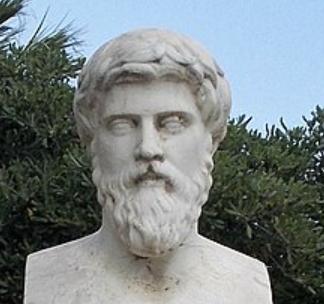
For many, as Cranton tells us, and those very wise men, not now but long ago, have deplored the condition of human nature, esteeming life a punishment, and to be born a man the highest pitch of calamity; this, Aristotle tells us, Silenus declared when he was brought captive to Midas.
1 month 3 weeks ago
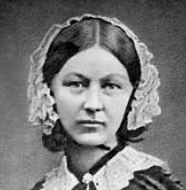
The great reformers of the world turn into the great misanthropists, if circumstances or organisation do not permit them to act. Christ, if He had been a woman, might have been nothing but a great complainer. Peace be with the misanthropists! They have made a step in progress; the next will make them great philanthropists; they are divided but by a line. The next Christ will perhaps be a female Christ. But do we see one woman who looks like a female Christ? or even like "the messenger before" her "face", to go before her and prepare the hearts and minds for her? To this will be answered that half the inmates of Bedlam begin in this way, by fancying that they are "the Christ." People talk about imitating Christ, and imitate Him in the little trifling formal things, such as washing the feet, saying His prayer, and so on; but if anyone attempts the real imitation of Him, there are no bounds to the outcry with which the presumption of that person is condemned.
3 months 2 weeks ago
It is error only, and not truth, that shrinks from inquiry.

1 month 3 weeks ago
By relieving the brain of all unnecessary work, a good notation sets it free to concentrate on more advanced problems, and in effect increases the mental power of the race..
▼
Source
source
ch. 5
1 month 4 weeks ago
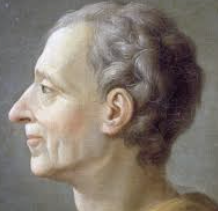
In France there are three kinds of professions: the church, the sword, and the long robe. Each hath a sovereign contempt for the other two. For example, a man who ought to be despised only for being a fool is often so because he is a lawyer.
▼
Source
source
No. 44 (Usbek writing to Rhedi)

2 months 1 week ago
People crushed by law, have no hopes but from power. If laws are their enemies, they will be enemies to laws; and those who have much to hope and nothing to lose, will always be dangerous.
▼
Source
source
Letter to Charles James Fox

2 months 1 week ago
The obsession with suicide is characteristic of the man who can neither live nor die, and whose attention never swerves from this double impossibility.

3 months 1 week ago
I do not think it possible to get anywhere if we start from scepticism. We must start from a broad acceptance of whatever seems to be knowledge and is not rejected for some specific reason.
▼
Source
source
p. 200

3 months 1 week ago
'Our kingdom go' is the necessary and unavoidable corollary of 'Thy kingdom come.' For the more there is of self, the less there is of God.
▼
Source
source
Chapter VI - Mortification, Non-Attachment, Right Livelihood

3 months 1 week ago
When equality is treated not as a medicine or a safety-gadget, but as an ideal, we begin to breed that stunted and envious sort of mind which hates all superiority. That mind is the special disease of democracy, as cruelty and servility are the special diseases of privileged societies. It will kill us all if it grows unchecked. The man who cannot conceive a joyful and loyal obedience on the one hand, nor an unembarrassed and noble acceptance of that obedience on the other - the man who has never even wanted to kneel or to bow - is a prosaic barbarian. But it would be wicked folly to restore these old inequalities on the legal or external plane. Their proper place is elsewhere.
2 months 5 days ago
This is the pure form of servitude: to exist as an instrument.
▼
Source
source
p. 33
3 days ago
Again, and again, we say, the great, the creative and enduring is ever a secret to itself; only the small, the barren and transient is otherwise.
▼
Source
source
Characteristics.

3 months 2 weeks ago
Monopoly of one kind or another, indeed, seems to be the sole engine of the mercantile system.
▼
Source
source
Chapter VII, Part Third, p. 684.

2 months 2 weeks ago
To keep our eyes open longer were but to set our Antipodes. The Huntsmen are up in America, and they are already past their first sleep in Persia. But who can be drowsy at that hour which freed us from everlasting sleep? or have slumbering thoughts at that time, when sleep itself must end, and as some conjecture all shall awake again?
▼
Source
source
Ch. 5
3 months 2 weeks ago
Every time a man is begotten and born, the clock of human life is wound up anew to repeat once more its same old tune that has already been played innumerable times, movement by movement and measure by measure, with insignificant variations.
▼
Source
source
Vol. I, Ch. 4, The World As Will: Second Aspect, as translated by Eric F. J. Payne (1958) p. 322

2 months 1 week ago
Is there in the whole world a being who would have the right to forgive and could forgive? I don't want harmony. From love for humanity I don't want it. I would rather be left with the unavenged suffering. I would rather remain with my unavenged suffering and unsatisfied indignation, even if I were wrong. Besides, too high a price is asked for harmony; it's beyond our means to pay so much to enter on it. And so I hasten to give back my entrance ticket, and if I am an honest man I am bound to give it back as soon as possible. And that I am doing. It's not God that I don't accept, Alyosha, only I most respectfully return him the ticket.
▼
Source
source
Book II, Chapter 4: Rebellion (trans. Constance Garnett)
2 months 1 week ago
I think the devil doesn't exist, but man has created him, he has created him in his own image and likeness.

4 months 1 week ago
Miniaturization doesn't actually make sense unless you miniaturize the very atoms of which matter is composed. Otherwise a tiny brain in a man the size of an insect, composed of normal atoms, is composed of too few atoms for the miniaturized man to be any more intelligent than the ant. Also, miniaturizing atoms is impossible according to the rules of quantum mechanics.
1 month 4 weeks ago
The jargon of authenticity ... is a trademark of societalized chosenness, ... sub-language as superior language.
▼
Source
source
pp. 5-6

2 months 1 week ago
If insistence on them tends to unsettle established systems ... self-evident truths are by most people silently passed over; or else there is a tacit refusal to draw from them the most obvious inferences.
▼
Source
source
Ethics (New York:1915), § 14, pp. 38-39
1 month 3 weeks ago
Rather, power is most powerful, most stable, where it creates a feeling of freedom and where it does not need to resort to violence.
4 weeks ago
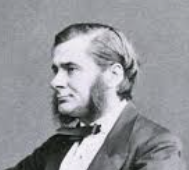
The known is finite, the unknown infinite; intellectually we stand on an islet in the midst of an illimitable ocean of inexplicability. Our business in every generation is to reclaim a little more land, to add something to the extent and the solidity of our possessions.

1 month 1 week ago
And see, a kind, refined lady will devour the carcasses of these animals with full assurance that she is doing right, at the same time asserting two contradictory propositions: First, that she is, as her doctor assures her, so delicate that she cannot be sustained by vegetable food alone, and that for her feeble organism flesh is indispensable; and, secondly, that she is so sensitive that she is unable, not only herself to inflict suffering on animals, but even to bear the sight of suffering. Whereas the poor lady is weak precisely because she has been taught to live upon food unnatural to man; and she cannot avoid causing suffering to animals - for she eats them.
▼
Source
source
Ch. IX
2 months 1 week ago
Vice itself lost half its evil by losing all its grossness.
▼
Source
source
Volume iii, p. 332

1 week ago
Colonization on a grand scale is a political necessity of absolutely the first order. A nation that does not colonize is irrevocably vowed to socialism, to war between rich and poor. The conquest of a nation of inferior race by a superior race, which establishes itself as the ruler, has nothing shocking about it.
▼
Source
source
92-93
3 months 1 week ago
Of all evils of war the greatest is the purely spiritual evil: the hatred, the injustice, the repudiation of truth, the artificial conflict.
▼
Source
source
Justice in War-Time (1916), p. 27
2 months 1 week ago
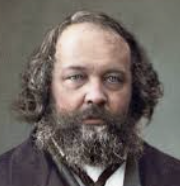
The peoples' revolution .... will arrange its revolutionary organisation from the bottom up and from the periphery to the centre, in keeping with the principle of liberty.
1 month 5 days ago
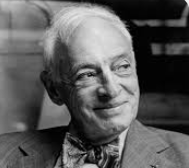
It seems hard for the American people to believe that anything could be more exciting than the times themselves. What we read daily and view on the TV has thrust imagined forms into the shadow. We are staggeringly rich in facts, in things, and perhaps, like the nouveau riche of other ages, we want our wealth faithfully reproduced by the artist.
▼
Source
source
Facts That Put Fancy to Flight (1962), p. 67
2 months 3 weeks ago
Time is the wisest of all things that are; for it brings everything to light.
▼
Source
source
As quoted in Diogenes Laërtius, The Lives and Opinions of Eminent Philosophers, I, 35

1 month 1 week ago
The unformulated message of an assembly of news items from every quarter of the globe is that the world today is one city. All war is civil war. All suffering is our own.
▼
Source
source
p. 291

4 months 2 weeks ago
One must have a good memory to be able to keep the promises one makes.

2 months 5 days ago
Blessed art thou, Simon Barjona: for flesh and blood hath not revealed it unto thee, but my Father which is in heaven. And I say also unto thee, That thou art Peter, and upon this rock I will build my church; and the gates of hell shall not prevail against it. And I will give unto thee the keys of the kingdom of heaven: and whatsoever thou shalt bind on earth shall be bound in heaven: and whatsoever thou shalt loose on earth shall be loosed in heaven.
▼
Source
source
16:17-19 (KJV)
4 months 1 week ago
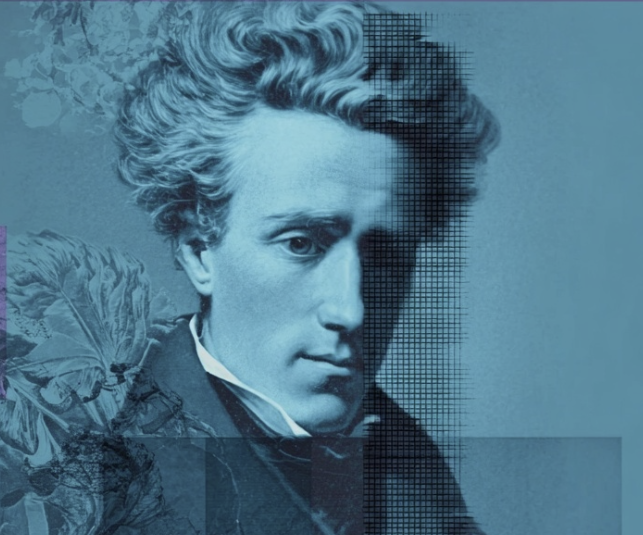
A genius and an Apostle are qualitatively different, they are definitions which each belong in their own spheres: the sphere of immanence, and the sphere of transcendence.

3 months 1 week ago
When all is said and done, we are in the end absolutely dependent on the universe; and into sacrifices and surrenders of some sort, deliberately looked at and accepted, we are drawn and pressed as into our only permanent positions of repose. Now in those states of mind which fall short of religion, the surrender is submitted to as an imposition of necessity, and the sacrifice is undergone at the very best without complaint. In the religious life, on the contrary, surrender and sacrifice are positively espoused: even unnecessary givings-up are added in order that the happiness may increase. Religion thus makes easy and felicitous what in any case is necessary; and if it be the only agency that can accomplish this result, its vital importance as a human faculty stands vindicated beyond dispute. It becomes an essential organ of our life, performing a function which no other portion of our nature can so successfully fulfill.
▼
Source
source
Lecture II, "Circumscription of the Topic"

1 month 3 weeks ago
The child shows its individual tendencies in its plays, in its questions, in its association with people and things. But it has to struggle with everlasting external interference in its world of thought and emotion. It must not express itself in harmony with its nature, with its growing personality. It must become a thing, an object. Its questions are met with narrow, conventional, ridiculous replies, mostly based on falsehoods; and, when, with large, wondering, innocent eyes, it wishes to behold the wonders of the world, those about it quickly lock the windows and doors, and keep the delicate human plant in a hothouse atmosphere, where it can neither breathe nor grow freely.
2 months 1 week ago
Equity knows no difference of sex. In its vocabulary the word man must be understood in a generic, and not in a specific sense.
▼
Source
source
Pt. II, Ch. 16 : The Rights of Women
1 month 2 weeks ago
Analytic philosophers - both in the 'constructivist' camp and in the camp that studies 'the ordinary use of words' - are disturbingly unanimous in regarding 2-valued logic as having a privileged position: privileged, not just in the sense of corresponding to the way we do speak, but in the sense of having no serious rival for logical reasons. If the foregoing analysis is correct, this is a prejudice of the same kind as the famous prejudice in favor of a privileged status for Euclidean geometry (a prejudice that survives in the tendency to cite 'space has three dimensions' as some kind of 'necessary' truth). One can go over from a 2-valued to a 3-valued logic without totally changing the meaning of 'true' and 'false'; and not just in silly ways, like the ones usually cited (e.g. equating truth with high probability, falsity with low probability, and middlehood with 'in between' probability).
▼
Source
source
"Three-valued logic"

1 month 4 weeks ago
In order to obey God, one must receive his commands. How did it happen that I received them in adolescence, while I was professing atheism? To believe that the desire for good is always fulfilled - that is faith, and whoever has it is not an atheist.
▼
Source
source
Last Notebook (1942) p. 137
1 month 1 day ago
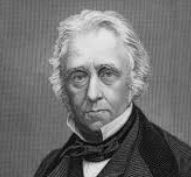
Joe Hume talked to me very earnestly about the necessity of an union of Liberals. He said much about Ballot and the Franchise. I told him that I could easily come to some compromise with him and his friends on these matters, but that there were other questions about which I feared that there was an irreconcileable difference, particularly the vital question of national defence. He seemed quite confounded, and had absolutely nothing to say. I am fully determined to make them eat their words on that point, or to have no political connection with them.
▼
Source
source
Journal entry (November 1852), quoted in George Otto Trevelyan, The Life and Letters of Lord Macaulay, Volume II (1876), p. 368

2 weeks 5 days ago
The mass political movements of the 20th century were vehicles for myths inherited from religion, and it is no accident that religion is reviving now that these movements have collapsed.
2 days ago
Here is a fulfillment of long centuries of civilization and culture; here, in romantic love, more than the triumph of thought or the victories of power is the topmost reach of human beings.
▼
Source
source
Ch. 2 : On Youth
1 month 1 week ago
Without an understanding of causality there can be no theory of communication. What passes as information theory today is not communication at all, but merely transportation.
▼
Source
source
(p. 362)
CivilSimian.com created by AxiomaticPanic, CivilSimian, Kalokagathia