

2 months 1 week ago
To require that all of these must be reducible to a single version is to make the mistake of supposing that 'Which are the real objects?' is a question that makes sense independently of our choice of concepts.
▼
Source
source
Lecture I: Is There Still Anything to Say about Reality and Truth?
1 week 4 days ago
To the question whether I am a pessimist or an optimist, I answer that my knowledge is pessimistic, but my willing and hoping are optimistic.
▼
Source
source
Epilogue, p. 242
1 month 3 weeks ago
We mustn't forget how quickly the visions of genius become the canned goods of intellectuals.
▼
Source
source
Herzog (1964) [Penguin Classics, 2003, ISBN 0-142-43729-8], p. 82
2 months 1 week ago
What makes our poetry so contemptible nowadays is its paucity of ideas. If you want to be read, invent. Who the Devil wouldn't like to read something new?
▼
Source
source
D 62
2 months 3 weeks ago
There is no original truth, only original error.
▼
Source
source
A Retrospective Glance at the Lifework of a Master of Books

2 months 1 week ago
You've got the temperament of a scholar, and you live on your own and write books. You don't have anything to do with civilization. You've been in London a few days and you can't wait to get back home. But how about the people who can't write books -- people there's no outlet for in this civilization? What about your new men who don't know what to do?
▼
Source
source
p. 200
2 weeks 2 days ago
There were nowhere more docile disciples of Lenin, Trotsky and Stalin than the Nazis were.
2 months 3 weeks ago
We can never legitimately cut loose from our archetypal foundations unless we are prepared to pay the price of a neurosis, any more than we can rid ourselves of our body and its organs without committing suicide.
▼
Source
source
J.B. Priestley, Times Literary Supplement, London

2 months 3 weeks ago
We replace God as best we can; for every god is good, provided he perpetuates in eternity our desire for a crucial solitude. . . .

4 months 2 weeks ago
The perfection of the effect demonstrates the perfection of the cause, for a greater power brings about a more perfect effect. But God is the most perfect agent. Therefore, things created by Him obtain perfection from Him. So, to detract from the perfection of creatures is to detract from the perfection of divine power.
▼
Source
source
III, 69, 15
1 week 1 day ago
Those who are wise won't be busy, and those who are too busy can't be wise.
▼
Source
source
p. 150

4 months 1 day ago
I think if I had met him [Lenin] without knowing who he was, I should not have guessed that he was a great man; he struck me as too opinionated and narrowly orthodox. His strength comes, I imagine, from his honesty, courage, and unwavering faith-religious faith in the Marxian gospel, which takes the place of the Christian martyr's hopes of Paradise, except that it is less egotistical... I went to Russia a Communist; but contact with those who have no doubts has intensified a thousandfold my own doubts, not as to Communism in itself, but as to the wisdom of holding a creed so firmly that for its sake men are willing to inflict widespread misery.
▼
Source
source
Part I, Ch. 3: Lenin, Trotsky and Gorky

4 months 4 days ago
The love of God consists in an ardent desire to procure the general welfare, and reason teaches me that there is nothing which contributes more to the general welfare of mankind than the perfection of reason.
▼
Source
source
Closing sentence of the Preface to the general science (1677) (in P. Wiener (ed.), Leibniz Selections, Macmilland Press Ltd, 1951).

1 month 1 week ago
Talk of secularism is meaningful when it refers to the weakness of traditional religious belief or the lack of power of churches and other religious bodies. That is what is meant when we say Britain is a more secular country than the United States, and in this sense secularism is an achievable condition. But if it means a type of society in which religion is absent, secularism is a kind of contradiction, for it is defined by what it excludes. Post-Christian secular societies are formed by the beliefs they reject, whereas a society that had truly left Christianity behind would lack the concepts that shaped secular thought.
▼
Source
source
Post-Apocalypse: After Secularism (pp. 267-8)

4 months 1 week ago
You must not murder. (Exodus 20:13) Q. What does this mean? A. We should fear and love God so that we may not hurt or harm our neighbor in his body, but help and befriend him in every bodily need [in every need and danger of life and body].

5 months 1 day ago
There must have been many who had a relationship to Jesus similar to that of Barabbas (his name was Jesus Barrabas). The Danish "Barrabas" is about the same as "N.N." [Mr. X or John Doe], filius patris, his father's son. - It is too bad, however, that we do not know anything more about Barrabas; it seems to me that in many ways he could have become a counterpart to the Wandering Jew. The rest of his life must have taken a singular turn. God knows whether or not he became a Christian. - It would be a poetic motif to have him, gripped by Christ's divine power, step forward and witness for him.
3 months 3 weeks ago
Plato has preserved in the Theaetetus - the story is that Thales, while occupied in studying the heavens above and looking up, fell into a well. A good-looking and whimsical maid from Thrace laughed at him and told him that while he might passionately want to know all things in the universe, the things in front of his very nose and feet were unseen by him." Plato added: "This jest also fits all those who become involved in Philosophy." Therefore, the question, What is a thing?" must always be rated as one that causes housemaids to laugh.
▼
Source
source
p. 3

3 weeks ago
He who first shortened the labor of copyists by device of movable types was disbanding hired armies, and cashiering most kings and senates, and creating a whole new democratic world: he had invented the art of printing.
▼
Source
source
Bk. I, ch. 5.
4 months 1 week ago
There is no more lovely, friendly and charming relationship, communion or company than a good marriage.
▼
Source
source
292

2 months 3 weeks ago
Woe unto you, lawyers! for ye have taken away the key of knowledge: ye entered not in yourselves, and them that were entering in ye hindered. And as he said these things unto them, the scribes and the Pharisees began to urge him vehemently, and to provoke him to speak of many things: Laying wait for him, and seeking to catch something out of his mouth, that they might accuse him.
▼
Source
source
11:52
2 months 3 weeks ago
This idea is that laws which purport to be statements of what actually occurs are statistical in character as distinct from so-called dynamic laws that are abstract and mathematical, and disguised definitions. Recognition of the statistical nature of physical laws was first effected in the case of gases when it became evident that generalizations regarding the behavior of swarms of molecules were not descriptions or predictions of the behavior of any individual particle. A single molecule is not and cannot be a gas. It is consequently absurd to suppose that a scientific law is about the elementary constituents of a gas. It is a statement of what happens when a large number of such constituents interact with one another under certain conditions.

4 months 1 day ago
Did you not read our articles about the June revolution, and was not the essence of the June revolution the essence of our paper? Why then your hypocritical phrases, your attempt to find an impossible pretext? We have no compassion and we ask no compassion from you. When our turn comes, we shall not make excuses for the terror. But the royal terrorists, the terrorists by the grace of God and the law, are in practice brutal, disdainful, and mean, in theory cowardly, secretive, and deceitful, and in both respects disreputable.
▼
Source
source
The final issue of Neue Rheinische Zeitung (18 May 1849)''Marx-Engels Gesamt-Ausgabe, Vol. VI, p. 503
2 months 3 weeks ago
To try curing someone of a "vice," of what is the deepest thing he has, is to attack his very being, and this is indeed how he himself understands it, since he will never forgive you for wanting him to destroy himself in your way and not his.
2 months 3 weeks ago
This morning I thought, hence lost my bearings, for a good quarter of an hour.
4 months 2 days ago
Though you give no countenance to the complaints of the querulous, yet take care to curb the insolence and ill nature of the injurious. When you observe it yourself, reprove it before the injur'd party: but if the complaint be of something really worth your notice, and prevention another time, then reprove the offender by himself alone, out of sight of him who complain'd and make him go and ask pardon, and make reparation; which ooming thus, as it were from himself, will be the more cheerfully performed, and more kindly receiv'd, the love strenghten'd between them, and a custom of civility grow familiar amongst your children.
▼
Source
source
Sec. 109
2 months 3 weeks ago
In which the technical apparatus of production and distribution (with an increasing sector of automation) functions, not as the sum-total of mere instruments which can be isolated from their social and political effects, but rather as a system which determines a priori the product of the apparatus as well as the operations of servicing and extending it. In this society, the productive apparatus tends to become totalitarian to the extent to which it determines not only the socially needed occupations, skills, and attitudes, but also individual needs and aspirations. It thus obliterates the Opposition between the private and public existence, between individual and social needs.
▼
Source
source
p. xlvii

3 months 1 day ago
The present state of France was ten times worse than a tyranny. The new constitution was said to be an experiment but the assertion was not true. It had already been tried, and had been found to be only productive of evils. They would go on from tyranny to tyranny, from oppression to oppression, till at last the whole system would terminate in the destruction of that miserable and deluded people... He sincerely hoped that no member of that House would ever barter the constitution of this country, the eternal jewel of their souls, for a wild and visionary system, which could only lead to confusion and disorder.
▼
Source
source
Speech in the House of Commons (6 May 1791), quoted in The Parliamentary History of England, From the Earliest Period to the Year 1803, Vol. XXIX (1817), column 397
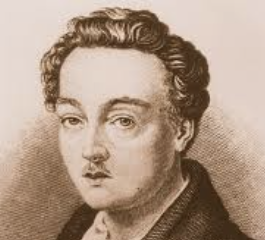
3 months ago
The statue of Freedom has not been cast yet, the furnace is hot, we can all still burn our fingers.
▼
Source
source
Act I.
4 months 1 day ago
There is no logical impossibility in the hypothesis that the world sprang into being five minutes ago, exactly as it then was, with a population that "remembered" a wholly unreal past. There is no logically necessary connection between events at different times; therefore nothing that is happening now or will happen in the future can disprove the hypothesis that the world began five minutes ago.
▼
Source
source
The Analysis of Mind (1921), Lecture IX: Memory, p. 159

3 months 5 days ago
The foremost, or indeed the sole condition which is required in order to succeed in centralizing the supreme power in a democratic community, is to love equality, or to get men to believe you love it. Thus the science of despotism, which was once so complex, is simplified, and reduced as it were to a single principle.
▼
Source
source
Book Four, Chapter IV.

4 months 1 week ago
Malice sucks up the greatest part of its own venom, and poisons itself.
▼
Source
source
Of Repentance, Book III, Ch. 2

4 months ago
All war propaganda consists, in the last resort, in substituting diabolical abstractions for human beings. Similarly, those who defend war have invented a pleasant sounding vocabulary of abstractions in which to describe the process of mass murder.
▼
Source
source
"Pacifism and Philosophy", 1936
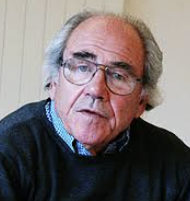
2 months 3 days ago
Our entire linear and accumulative culture collapses if we cannot stockpile the past in plain view. "
▼
Source
source
The Precession of Simulacra," p. 10
4 months 1 day ago
The theory of Communism may be summed up in the single sentence: Abolition of private property.
▼
Source
source
Section 2, paragraph 13.
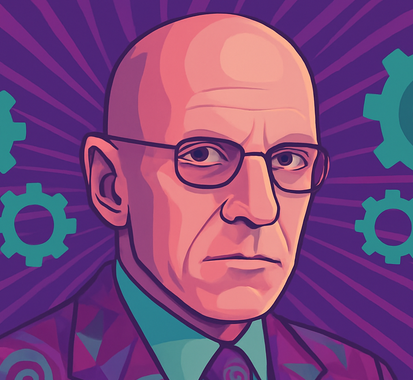
3 months 3 weeks ago
In the history of madness, two events signal this change with singular clarity: in 1657, the founding of the Hôpital Général, and the Great Confinement of the poor; and in 1794, the liberation of the mad in chains at Bicêtre. Between these two singular and symmetrical events, something happened, whose ambiguity has perplexed historians of medicine: blind repression in an absolutist regime, according to some, and, according to others, the progressive discovery, by science and philanthropy, of madness in its positive truth. In fact, beneath these reversible meanings, a structure was taking shape, which did not undo that ambiguity but was decisive for it. This structure explains the passage from the medieval and humanist experience of madness to the experience that is our own, which confines madness in mental illness.
▼
Source
source
Preface to 1961 edition
2 weeks 1 day ago
As the French say, there are three sexes - men, women, and clergymen.
▼
Source
source
Vol. I, ch. 9, p. 313
3 weeks 6 days ago
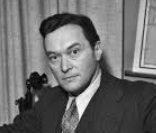
In a free society the state does not administer the affairs of men. It administers justice among men who conduct their own affairs.
▼
Source
source
Ch. XII: "The Political Principles of Liberalism", §6, p. 267
2 months 1 week ago
What I am saying, then, is that elements of what we call "language" or "mind" penetrate so deeply into what we call "reality" that the very project of representing ourselves as being "mappers" of something "language-independent" is fatally compromised from the very start. Like Relativism, but in a different way, Realism is an impossible attempt to view the world from Nowhere. In this situation it is a temptation to say, "So we make the world," or "our language makes up the world," or "our culture makes up the world"; but this is just another form of the same mistake. If we succumb, once again we view the world-the only world we know-as a product. One kind of philosopher views it as a product from a raw material: Unconceptualized Reality. The other views it as a creation ex nihilo. But the world isn't a product. It's just the world.
▼
Source
source
"Realism with a Human Face"

4 months 4 weeks ago
It pays to be obvious, especially if you have a reputation for subtlety.

2 weeks 1 day ago
I do not trust my eyes to tell me what a man is: I have a better and more trustworthy light by which I can distinguish what is true from what is false: let the mind find out what is good for the mind.
▼
Source
source
De Vita Beata (On the Happy Life): cap. 2, line 2 Alternate translation: I do not distinguish by the eye, but by the mind, which is the proper judge of the man. (translator unknown).
Just now
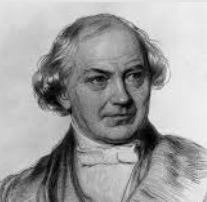
In the Ancient Period of Science, Technical Terms were formed in three different ways:-by appropriating common words and fixing their meaning;-by constructing terms containing a description;-by constructing terms containing reference to a theory.
4 months 1 day ago
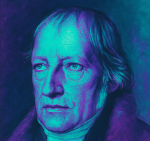
Aims, principles, &c., have a place in our thoughts, in our subjective design only; but not yet in the sphere of reality. That which exists for itself only, is a possibility, a potentiality; but has not yet emerged into Existence. A second element must be introduced in order to produce actuality - viz. actuation, realization; and whose motive power is the Will - the activity of man in the widest sense.

Just now
And even should the cloud of barbarism and despotism again obscure the science and libraries of Europe, this country remains to preserve and restore light and liberty to them. In short, the flames kindled on the fourth of July, 1776, have spread over too much of the globe to be extinguished by the feeble engines of despotism; on the contrary, they will consume these engines and all who work them.
▼
Source
source
Letter to John Adams, 12 September 1821

3 months 4 weeks ago
Perfect humility dispenses with modesty.
3 months 3 weeks ago
The human being is not the lord of beings, but the shepherd of Being.
▼
Source
source
Letter on Humanism
4 months 1 day ago
Poetry is the universal art of the spirit which has become free in itself and which is not tied down for its realization to external sensuous material; instead, it launches out exclusively in the inner space and the inner time of ideas and feelings.
▼
Source
source
As quoted in the Introduction to Aesthetics (1842), translated by T. M. Knox, (1979), p. 89

Just now
A community is the mental and spiritual condition of knowing that the place is shared, and that the people who share the place define and limit the possibilities of each other's lives. It is the knowledge that people have of each other, their concern for each other, their trust in each other, the freedom with which they come and go among themselves.
▼
Source
source
The Loss of the Future
2 months 3 weeks ago
If any man will come after me, let him deny himself, and take up his cross, and follow me. For whosoever will save his life shall lose it: and whosoever will lose his life for my sake shall find it. For what is a man profited, if he shall gain the whole world, and lose his own soul? or what shall a man give in exchange for his soul? For the Son of man shall come in the glory of his Father with his angels; and then he shall reward every man according to his works. Verily I say unto you, There be some standing here, which shall not taste of death, till they see the Son of man coming in his kingdom.
▼
Source
source
16:24-28 (KJV)

1 month 3 weeks ago
Propaganda:
Good = God (take a letter)
Evil = Devil (add a letter)
😁🚀📖
2 months 2 weeks ago
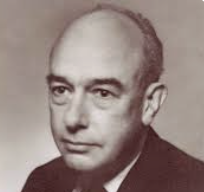
We cannot stem linguistic change, but we can drag our feet. If each of us were to defy Alexander Pope and be the last to lay the old aside, it might not be a better world, but it would be a lovelier language.
▼
Source
source
Quiddities: An Intermittently Philosophical Dictionary (1987), p. 231
CivilSimian.com created by AxiomaticPanic, CivilSimian, Kalokagathia