

2 weeks 6 days ago
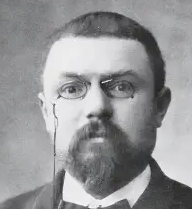
We can not... escape the conclusion that the rule of reasoning by recurrence is irreducible to the principle of contradiction. ...Neither can this rule come to us from experience... This rule, inaccessible to analytic demonstration and to experience, is the veritable type of the synthetic a priori judgment. On the other hand, we can not think of seeing in it a convention, as in some of the postulates of geometry. ...it is only the affirmation of the power of the mind which knows itself capable of conceiving the indefinite repetition of the same act when once this act is possible. The mind has a direct intuition of this power, and experience can only give occasion for using it and thereby becoming conscious of it.
▼
Source
source
Ch. I. (1905) Tr. George Bruce Halstead
2 months 3 weeks ago
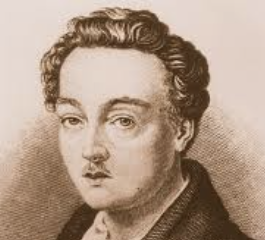
The revolutionary government is the despotism of liberty against tyranny.
▼
Source
source
Act I.

3 months 3 weeks ago
Your questions refer to words; so I have to talk about words. You say: The point isn't the word, but its meaning, and you think of the meaning as a thing of the same kind as the word, though also different from the word. Here the word, there the meaning.
▼
Source
source
§ 120
3 months 2 weeks ago
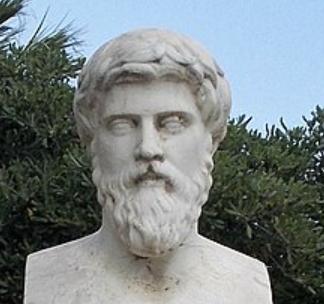
Valour, however unfortunate, commands great respect even from enemies: but the Romans despise cowardice, even though it be prosperous.
▼
Source
source
Aemilius Paulus 26 (Tr. Stewart and Long)

3 months 3 weeks ago
It seems to me that the current political task in a society like ours is to criticize the working of institutions that are apparently the most neutral and independent, to criticize these institutions and attack them in such a way that the political violence that exercises itself obscurely through them becomes manifest, so that one can fight against them.
▼
Source
source
Debate with Noam Chomsky, École Supérieure de Technologie à Eindhoven, November 1971

2 months 3 weeks ago
He laid it down as a maxim, that monarchy was the basis of all good government and the nearer to monarchy any government approached, the more perfect it was, and vice versa; and he certainly in his wildest moments, never had so far forgotten the nature of government, as to argue that we ought to wish for a constitution that we could alter at pleasure, and change like a dirty shirt. He was by no means anxious for a monarchy with a dash of republicanism to correct it. But the French constitution was the exact opposite of the English in every thing, and nothing could be so dangerous as to set it up to the view of the English, to mislead and debauch their minds.
▼
Source
source
Speech in the House of Commons (6 May 1791), quoted in The Parliamentary History of England, From the Earliest Period to the Year 1803, Vol. XXIX (1817), column 385
1 week 5 days ago
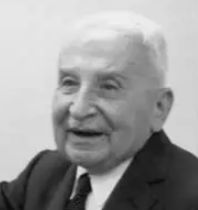
Socialism is the watchword and the catchword of our day. The socialist idea dominates the modem spirit. The masses approve of it. It expresses the thoughts and feelings of all; it has set its seal upon our time. When history comes to tell our story it will write above the chapter "The Epoch of Socialism." As yet, it is true, Socialism has not created a society which can be said to represent its ideal. But for more than a generation the policies of civilized nations have been directed towards nothing less than a gradual realization of Socialism.
▼
Source
source
Introduction : The Success of Socialist Ideas
1 week ago
Macbeth's self-justifications were feeble - and his conscience devoured him. Yes, even Iago was a little lamb too. The imagination and the spiritual strength of Shakespeare's evildoers stopped short at a dozen corpses. Because they had no ideology.
▼
Source
source
The Gulag Archipelago


2 months 2 weeks ago
Blessed art thou, Simon Barjona: for flesh and blood hath not revealed it unto thee, but my Father which is in heaven. And I say also unto thee, That thou art Peter, and upon this rock I will build my church; and the gates of hell shall not prevail against it. And I will give unto thee the keys of the kingdom of heaven: and whatsoever thou shalt bind on earth shall be bound in heaven: and whatsoever thou shalt loose on earth shall be loosed in heaven.
▼
Source
source
16:17-19 (KJV)

4 months 1 week ago
Superstition is now in her turn cast down and trampled underfoot, whilst we by the victory are exalted high as heaven.
▼
Source
source
Book I, lines 78-79 (tr. W. H. D. Rouse)

3 months 3 weeks ago
The more you obey your conscience, the more your conscience will demand of you.
▼
Source
source
Book IV, Chapter 8, "Is Christianity Hard or Easy?"

3 months 3 weeks ago
The governors of the world believe, and have always believed, that virtue can only be taught by teaching falsehood, and that any man who knew the truth would be wicked. I disbelieve this, absolutely and entirely. I believe that love of truth is the basis of all real virtue, and that virtues based upon lies can only do harm.

3 months 3 weeks ago
The believing we do something when we do nothing is the first illusion of tobacco.
▼
Source
source
1859
3 months 3 weeks ago
You always hear people say that philosophy makes no progress and that the same philosophical problems which were already preoccupying the Greeks are still troubling us today. But people who say that do not understand the reason why it has to be so. The reason is that our language has remained the same and always introduces us to the same questions. ... I read: "philosophers are no nearer to the meaning of 'Reality' than Plato got,...". What a strange situation. How extraordinary that Plato could have got even as far as he did! Or that we could not get any further! Was it because Plato was so extremely clever?
▼
Source
source
p. 15e

3 months 4 weeks ago
My basis is supported by the authority of the greatest moralist of modern times; for such, undoubtedly, J. J. Rousseau is,-that profound reader of the human heart, who drew his wisdom not from books, but from life, and intended his doctrine not for the professorial chair, but for humanity; he, the foe of all prejudice, the foster-child of nature, whom alone she endowed with the gift of being able to moralise without tediousness, because he hit the truth and stirred the heart.
▼
Source
source
Part III, Ch. VIII, 9, p. 230
1 week ago
I have suggested that behind almost all myth lies the mono-plot of the game of hide-and-seek.
▼
Source
source
The Two Hands of God : The Myths of Polarity (1963), p. 29
4 days ago
One can learn such a lot and enjoy such a lot in seventy years, and three generations is a long, long time to see human follies and acquire human wisdom. Anyone who is wise and has lived long enough to witness the changes of fashion and morals and politics through the rise and fall of three generations should be perfectly satisfied to rise from his seat and go away saying, "It was a good show," when the curtain falls.
▼
Source
source
p. 23-24
3 months 3 weeks ago
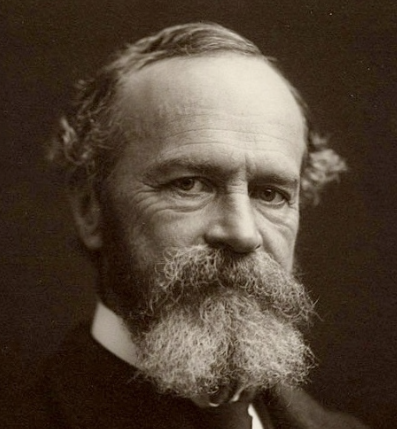
Every one is familiar with the phenomenon of feeling more or less alive on different days. Every one knows on any given day that there are energies slumbering in him which the incitements of that day do not call forth, but which he might display if these were greater. Most of us feel as if we lived habitually with a sort of cloud weighing on us, below our highest notch of clearness in discernment, sureness in reasoning, or firmness in deciding. Compared with what we ought to be, we are only half-awake. Our fires are damped, our drafts are checked. We are making use of only a small part of our possible mental and physical resources.
▼
Source
source
The Energies of Men
3 months 4 weeks ago
The light dove, cleaving the air in her free flight, and feeling its resistance, might imagine that its flight would be still easier in empty space.
▼
Source
source
B 8

1 month 3 weeks ago
The invention of printing did away with anonymity, fostering ideas of literary fame and the habit of considering intellectual effort as private property.
▼
Source
source
(p. 122)

4 months ago
When the happiness or misery of others depends in any respect upon our conduct, we dare not, as self-love might suggest to us, prefer the interest of one to that of many. The man within immediately calls to us, that we value ourselves too much and other people too little, and that, by doing so, we render ourselves the proper object of the contempt and indignation of our brethren. Neither is this sentiment confined to men of extraordinary magnanimity and virtue. It is deeply impressed upon every tolerably good soldier, who feels that he would become the scorn of his companions, if he could be supposed capable of shrinking from danger, or of hesitating, either to expose or to throw away his life, when the good of the service required it.
▼
Source
source
Chap. III.

2 weeks 3 days ago
We may, to be more precise, have to relinquish the notion, explicit or implicit, that changes of paradigm carry scientists and those who learn from them closer and closer to the truth.
▼
Source
source
p. 170

3 months 3 weeks ago
Reason has always existed, but not always in a rational form.
▼
Source
source
Letter from Marx to Arnold Ruge, September 1843
3 months 3 weeks ago
The painter is turning his eyes towards us only in so far as we happen to occupy the same position as his subject. We, the spectators, are an additional factor. Though greeted by that gaze, we are also dismissed by it, replaced by that which was always there before we were: the model itself. But, inversely, the painter's gaze, addressed to the void confronting him outside the picture, accepts as many models as there are spectators; in this precise but neutral place, the observer and the observed take part in a ceaseless exchange.
▼
Source
source
Las Menias

3 months 3 weeks ago
The essence of totalitarian government, and perhaps the nature of every bureaucracy, is to make functionaries and mere cogs in the administrative machinery out of men, and thus to dehumanise them.
▼
Source
source
As quoted in Ideas in literature: Ten things Hannah Arendt said that are eerily relevant in today's political times
2 months 1 week ago
No tyranny is more cruel than the one practiced in the shadow of the laws and under color of justice - when, so to speak, one proceeds to drown the unfortunate on the very plank by which they had saved themselves.
▼
Source
source
See Chap. XIV of Considérations sur les causes de la grandeur des Romains et de leur décadence. Considerations on the Causes of the Greatness of the Romans and their Decline (1734), p. 89.

4 months 1 week ago
Thus, in this universal catastrophe, the sufferings of Christians have tended to their moral improvement, because they viewed them with eyes of faith.
▼
Source
source
I, 9
3 months 3 weeks ago
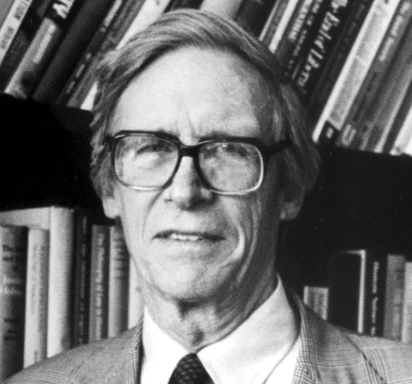
There are infinitely many variations of the initial situation and therefore no doubt indefinitely many theorems of moral geometry.
▼
Source
source
Chapter III, Section 21, pg. 126

3 months 3 weeks ago
A man who has trained himself in goodness come to have certain direct intuitions about character, about the relations between human beings, about his own position in the world - intuitions that are quite different from the intuitions of the average sensual man.
▼
Source
source
Ch. 14, p. 333 [2012 reprint]
3 months 3 weeks ago
We cannot overstate our debt to the Past, but the moment has the supreme claim. The Past is for us; but the sole terms on which it can become ours are its subordination to the Present. Only an inventor knows how to borrow, and every man is or should be an inventor. We must not tamper with the organic motion of the soul.
▼
Source
source
Quotation and Originality
3 months 3 weeks ago
I call upon you, young men, to obey your heart, and be the nobility of this land. In every age of the world, there has been a leading nation, one of a more generous sentiment, whose eminent citizens were willing to stand for the interests of general justice and humanity, at the risk of being called, by the men of the moment, chimerical and fantastic. Which should be that nation but these States? Which should lead that movement, if not New England? Who should lead the leaders, but the Young American?

2 months 3 weeks ago
Neither a person nor a nation can exist without some higher idea. And there is only one higher idea on earth, and it is the idea of the immortality of the human soul, for all other "higher" ideas of life by which humans might live derive from that idea alone.
▼
Source
source
A Writer's Diary, Vol. 1: 1873-1876, ed. Kenneth Lantz (1994), p. 734


4 months 5 days ago
Sir Henry Wotton used to say that critics are like brushers of noblemen's clothes.
▼
Source
source
No. 64
1 month 2 weeks ago
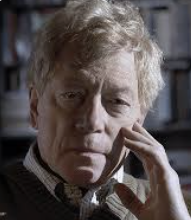
I've never been an optimist but that's fine because pessimists have the possibility of being agreeably surprised, and that's a reason for being pessimistic, but I've always defended a certain kind of pessimism because what is known as optimism is really a collection of illusions and I think one must recognise what all religious people know, which is that human beings are imperfect and fallen and there's no way in which they can alone surmount the problems which they themselves create.
▼
Source
source
From an interview with George Eaton "The Roger Scruton interview: the full transcript", New Statesman
2 months 3 weeks ago
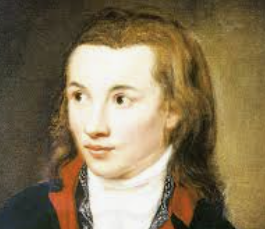
Friends, the soil is poor, we must sow seeds in plenty for us to garner even modest harvests.
▼
Source
source
Motto
2 months 2 weeks ago
Are ye also yet without understanding? Do not ye yet understand, that whatsoever entereth in at the mouth goeth into the belly, and is cast out into the draught? But those things which proceed out of the mouth come forth from the heart; and they defile the man. For out of the heart proceed evil thoughts, murders, adulteries, fornications, thefts, false witness, blasphemies: These are the things which defile a man: but to eat with unwashen hands defileth not a man.
▼
Source
source
15:16-20 (KJV)
3 months 3 weeks ago
The aggregate capital appears as the capital stock of all individual capitalists combined. This joint stock company has in common with many other stock companies that everyone knows what he puts in, but not what he will get out of it.
▼
Source
source
Vol. II, Ch. XX, p. 437.
2 months 2 weeks ago
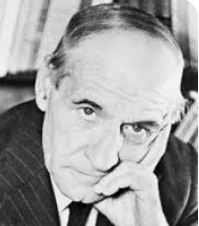
The most immediate result of this unbalanced specialisation has been that to-day, when there are more "scientists" than ever, there are much less "cultured" men than, for example, about 1750. And the worst is that with these turnspits of science not even the real progress of science itself is assured. For science needs from time to time, as a necessary regulator of its own advance, a labour of reconstitution, and, as I have said, this demands an effort towards unification, which grows more and more difficult, involving, as it does, ever-vaster regions of the world of knowledge. Newton was able to found his system of physics without knowing much philosophy, but Einstein needed to saturate himself with Kant and Mach before he could reach his own keen synthesis. Kant and Mach - the names are mere symbols of the enormous mass of philosophic and psychological thought which has influenced Einstein.
▼
Source
source
Chapter XII: The Barbarism Of "Specialisation"

2 weeks 3 days ago
Grave talk and grave humor with the doers of the craft. Building, walling, is an operation that beyond most other manual ones requires incessant consideration - even new invention. I have heard good judges say that he excelled in it all persons they had seen.
2 months 3 weeks ago
Do you know that ages will pass and mankind will proclaim in its wisdom and science that there is no crime and, therefore no sin, but that there are only hungry people. "Feed them first and then demand virtue of them!" - that is what they will inscribe on their banner which they will raise against you and which will destroy your temple.
1 week 5 days ago
All rational action is economic. All economic activity is rational action. All rational action is in the first place individual action. Only the individual thinks. Only the individual reasons. Only the individual acts.
▼
Source
source
Part II : The Economics of a Socialist Community, § I : The Economics of an Isolated Socialist Community, Ch. 5 : The Nature of Economic Activity, p. 97
1 month 3 weeks ago
Speech structures the abyss of mental and acoustic space...it is a cosmic, invisible architecture of the human dark.
▼
Source
source
(p. 13)

2 months 1 week ago
Stories on digital platforms like Facebook or Instagram are not genuine stories. They have no narrative duration. Rather, they are just sequences of momentary impressions that do not tell us anything.

2 weeks 4 days ago
Before a man can do things there must be things he will not do.
▼
Source
source
Eugene H. Peterson, A Long Obedience in the Same Direction (IVP, 1980), Ch 2
3 months 3 weeks ago
The hell to be endured hereafter, of which theology tells, is no worse than the hell we make for ourselves in this world by habitually fashioning our characters in the wrong way.
▼
Source
source
Ch. 4
2 months 3 weeks ago
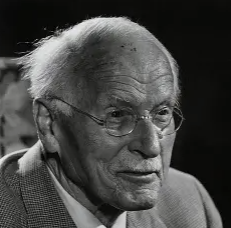
For a woman, the typical danger emanating from the unconscious comes from above, from the "spiritual" sphere personified by the animus, whereas for a man it comes from the chthonic realm of the "world and woman," i.e., the anima projected on to the world.
▼
Source
source
"A Study in the Process of Individuation" (1934) In CW 9, Part I: The Archetypes and the Collective Unconscious. P. 559

2 months 3 weeks ago
Each of us is born with a share of purity, predestined to be corrupted by our commerce with mankind, by that sin against solitude.

3 months 1 week ago
The King that followeth Truth, and ruleth according to Justice, shall reign quietly: but he that doth the contrary, seeketh another to reign for him.
CivilSimian.com created by AxiomaticPanic, CivilSimian, Kalokagathia