


4 months 4 days ago
Habit is a second nature.
▼
Source
source
Book III, Ch. 10
3 months 2 weeks ago
Once when Phocion had delivered an opinion which pleased the people,... he turned to his friend and said, "Have I not unawares spoken some mischievous thing or other?"
▼
Source
source
55 Phocion
2 months 1 week ago
Such words as spontaneity, sincerity, gratuitousness, richness, enrichment - words which imply an almost total indifference to contrasts of value - have come more often from their [the surrealists'] pens than words which contain a reference to good and evil. Moreover, this latter class of words has become degraded, especially those which refer to the good, as Valéry remarked some years ago. Words like virtue, nobility, honor, honesty, generosity, have become almost impossible to use or else they have acquired bastard meanings; language is no longer equipped for legitimately praising a man's character.
▼
Source
source
"The responsibility of writers," p. 168
3 months 3 weeks ago
What will happen once the authentic mass man takes over, we do not know yet, although it may be a fair guess that he will have more in common with the meticulous, calculated correctness of Himmler than with the hysterical fanaticism of Hitler, will more resemble the stubborn dullness of Molotov than the sensual vindictive cruelty of Stalin.
▼
Source
source
Part 3, Ch. 10, § 2
2 months 1 week ago
Imaginary evil is romantic and varied; real evil is gloomy, monotonous, barren, boring. Imaginary good is boring; real good is always new, marvelous, intoxicating.
▼
Source
source
p. 120
1 month 1 week ago
I have endeavoured to show that no absolute structural line of demarcation, wider than that between the animals which immediately succeed us in the scale, can be drawn between the animal world and ourselves; and I may add the expression of my belief that the attempt to draw a physical distinction is equally futile, and that even the highest faculties of feeling and of intellect begin to germinate in lower forms of life.
▼
Source
source
Ch.2, p. 129
3 months 3 weeks ago
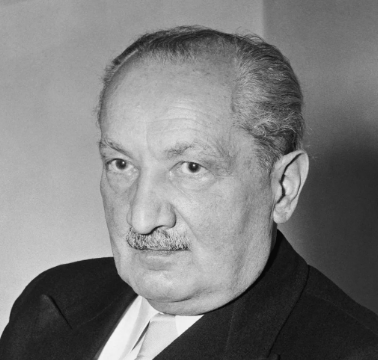
Do the essences of proposition and of the truth determine themselves from out of the essence of the thing, or does the essence of the thing determine itself from out of the essence of the proposition? The question is posed as an either/or. However does this either/or itself suffice? Are the essence of the thing and the essence of the proposition only built as mirror images because both of them together determine themselves from out of the same but deeper lying root? However, what and where can be this common ground for the essence of the thing and of the proposition and of their origin? The unconditioned (Unbedingt)? We stated at the beginning that what conditions the essense of the thing in its thingness can no longer itself be thing and conditioned, it must be an unconditioned (Un-bedingtes).
▼
Source
source
p. 47

3 months 1 day ago
The whole life of an American is passed like a game of chance, a revolutionary crisis, or a battle.
▼
Source
source
Chapter XVIII.
1 month 3 weeks ago
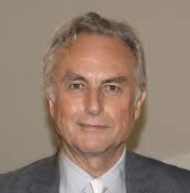
The river of my title is a river of DNA, and it flows through time, not space. It is a river of information, not a river of bones and tissues.
3 months 4 weeks ago
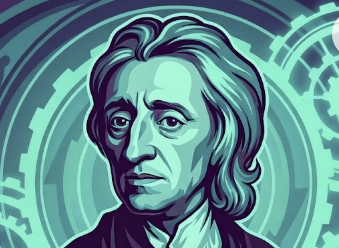
The boundaries of the species, whereby men sort them, are made by men.
▼
Source
source
Book III, Ch. 6, sec. 37
2 months 6 days ago
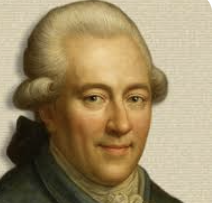
Body and soul: a horse harnessed beside an ox.
▼
Source
source
D 103

4 months ago
The ordinary surroundings of life which are esteemed by men (as their actions testify) to be the highest good, may be classed under the three heads - Riches, Fame, and the Pleasures of Sense: with these three the mind is so absorbed that it has little power to reflect on any different good. I, 3 Variant translation: The things which ... are esteemed as the greatest good of all ... can be reduced to these three headings, to wit : Riches, Fame, and Pleasure. With these three the mind is so engrossed that it cannot scarcely think of any other good.
4 months 4 days ago
The heathen really make their self-invented notions and dreams of God and idol. Ultimately, they put their trust in that which is nothing. So it is with all idolatry. For it happens not merely by erecting an image and worshipping it, but rather it happens in the heart. For the heart seeks help and consolation from creatures, saints, or devils. It neither cares for God, nor looks to Him for anything better than to believe that He is willing to help.
▼
Source
source
"On Infant Baptism," Large Catechism

4 months 3 weeks ago
It is important to remember that the viciousness and wrongs of life stick out very plainly but that even at the worst times there is a great deal of goodness, kindness, and day-to-day decency that goes unnoticed and makes no headlines.
4 months 4 days ago
Our stubbornness is right, because we want to preserve the liberty which we have in Christ. Only by preserving our liberty shall we be able to retain the truth of the Gospel inviolate.
▼
Source
source
Chapter 2
3 months 3 weeks ago
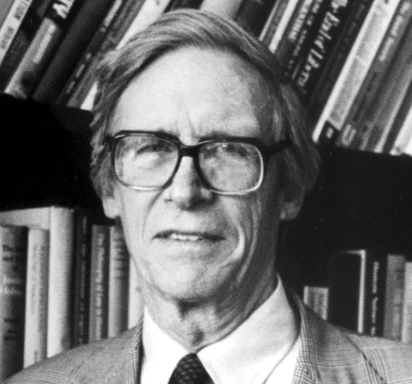
I am particularly grateful to Nozick for his unfailing help and encouragement during the last stages.
▼
Source
source
Preface, pg. xii
4 months 3 weeks ago
May not we then confidently pronounce that man happy who realizes complete goodness in action, and is adequately furnished with external goods? Or should we add, that he must also be destined to go on living not for any casual period but throughout a complete lifetime in the same manner, and to die accordingly, because the future is hidden from us, and we conceive happiness as an end, something utterly and absolutely final and complete? If this is so, we shall pronounce those of the living who possess and are destined to go on possessing the good things we have specified to be supremely blessed, though on the human scale of bliss.
4 months 1 week ago
Nature, which alone is good, is wholly familiar and common.


3 months 3 weeks ago
To talk about religion except in terms of human psychology is an irrelevance.
▼
Source
source
"One and Many," p. 3
2 months 2 weeks ago
Egos appear by setting themselves apart from other egos.

1 month 3 weeks ago
In order to correctly define art, it is necessary, first of all, to cease to consider it as a means to pleasure and consider it as one of the conditions of human life. ...Reflecting on it in this way, we cannot fail to observe that art is one of the means of affective communication between people.
4 months 2 weeks ago
The superior man accords with the course of the Mean. Though he may be all unknown, unregarded by the world, he feels no regret. It is only the sage who is able for this.
4 months 1 week ago
If the public thought elevates you above the generality of men, let the other humble you, and hold you in a perfect equality with all mankind, for this is your natural condition.
4 months 3 weeks ago
The single harmony produced by all the heavenly bodies singing and dancing together springs from one source and ends by achieving one purpose, and has rightly bestowed the name not of "disordered" but of "ordered universe" upon the whole.
4 months 2 weeks ago
The superior man is satisfied and composed; the mean man is always full of distress. The virtuous is frank and open; the non-virtuous is secretive and worrying.

3 months 4 weeks ago
The Theophilanthropists believe in the existence of God, and the immortality of the soul.
▼
Source
source
Introduction

3 months 4 weeks ago
When we hear news, we should always wait for the sacrament of confirmation.
▼
Source
source
Letter to Charles-Augustin Ferriol, comte d'Argental, 28 August 1760]]

4 months 3 weeks ago
It happens that the stage sets collapse. Rising, streetcar, four hours in the office or the factory, meal, streetcar, four hours of work, meal, sleep and Monday Tuesday Wednesday Thursday Friday and Saturday according to the same rhythm this path is easily followed most of the time. But one day the "why" arises and everything begins in that weariness tinged with amazement.
1 week ago
The more we struggle for life (as pleasure), the more we are actually killing what we love.
▼
Source
source
p. 32
4 months 5 days ago
The greatest error of all the rest is the mistaking or misplacing of the last or farthest end of knowledge: for men have entered into a desire of learning and knowledge, sometimes upon a natural curiosity and inquisitive appetite; sometimes to entertain their minds with variety and delight; sometimes for ornament and reputation; and sometimes to enable them to victory of wit and contradiction; and most times for lucre and profession; and seldom sincerely to give a true account of their gift of reason, to the benefit and use of men: as if there were sought in knowledge a couch whereupon to rest a searching and restless spirit; or a tarrasse, for a wandering and variable mind to walk up and down with a fair prospect; or a tower of state, for a proud mind to raise itself upon; or a fort or commanding ground, for strife and contention; or a shop, for profit or sale; and not a rich storehouse, for the glory of the Creator and the relief of man's estate.
▼
Source
source
Book I, v, 11
4 months 3 weeks ago
One recognizes one's course by discovering the paths that stray from it.
4 months 2 weeks ago
Cornered vessel without corners, strange cornered vessel, strange cornered vessel.
1 month 3 weeks ago
I cannot recall those years without horror, loathing, and heart-rending pain. I killed people in war, challenged men to duels with the purpose of killing them, and lost at cards; I squandered the fruits of the peasants' toil and then had them executed; I was a fornicator and a cheat. Lying, stealing, promiscuity of every kind, drunkenness, violence, murder - there was not a crime I did not commit... Thus I lived for ten years.
▼
Source
source
Pt. I, ch. 2

3 months 3 weeks ago
Political Economy regards the proletarian ... like a horse, he must receive enough to enable him to work. It does not consider him, during the time when he is not working, as a human being. It leaves this to criminal law, doctors, religion, statistical tables, politics, and the beadle. ... (1) What is the meaning, in the development of mankind, of this reduction of the greater part of mankind to abstract labor? (2) What mistakes are made by the piecemeal reformers, who either want to raise wages and thereby improve the situation of the working class, or - like Proudhon - see equality of wages as the goal of social revolution?.
▼
Source
source
First Manuscript - Wages of Labour, p. 6.
3 months 2 weeks ago
If I had to lay bets, my bet would be that everything is going to go to hell, but, you know, what else have we got except hope?
▼
Source
source
"Richard Rorty Interviewed by Gideon Lewis-Kraus." The Believer, June 2003.
2 months 2 weeks ago
All the cases in which means and ends are external to one another are non-esthetic.
▼
Source
source
p. 205

3 months 2 days ago
That children dream not the first half year, that men dream not in some countries, with many more, are unto me sick men's dreams, dreams out of the Ivory gate, and visions before midnight.

2 months 3 weeks ago
History proves nothing because it contains everything.

2 months 2 weeks ago
Beware of false prophets, which come to you in sheep's clothing, but inwardly they are ravening wolves.
▼
Source
source
Matthew 7:15 (KJV)
1 month 3 weeks ago
Such delusions of grandeur to think that a God with a hundred billion galaxies on his mind would give a tuppenny damn who you sleep with, or indeed whether you believe in him.
▼
Source
source
Richard Dawkins debates Rowan Williams
3 months 3 weeks ago
A scheme is unjust when the higher expectations, one or more of them, are excessive. If these expectations were decreased, the situation of the less favored would be improved.
▼
Source
source
Chapter II, Section 13, pg. 79

3 months 3 weeks ago
Slavery is disheartening; but Nature is not so helpless but it can rid itself of every last wrong. But the spasms of nature are centuries and ages and will tax the faith of short-lived men. Slowly, slowly the Avenger comes, but comes surely. The proverbs of the nations affirm these delays, but affirm the arrival. They say, "God may consent, but not forever." The delay of the Divine Justice - this was the meaning and soul of the Greek Tragedy, - this was the soul of their religion.
▼
Source
source
The Fugitive Slave Law, a lecture in NYC, March 7, 1854
3 months 4 weeks ago
Truth that has been merely learned is like an artificial limb, a false tooth, a waxen nose; at best, like a nose made out of another's flesh; it adheres to us only because it is put on. But truth acquired by thinking of our own is like a natural limb; it alone really belongs to us. This is the fundamental difference between the thinker and the mere man of learning. The intellectual attainments of a man who thinks for himself resemble a fine painting, where the light and shade are correct, the tone sustained, the colour perfectly harmonised; it is true to life. On the other hand, the intellectual attainments of the mere man of learning are like a large palette, full of all sorts of colours, which at most are systematically arranged, but devoid of harmony, connection and meaning.
▼
Source
source
Vol. 2, Ch. 22, § 261
2 months 3 weeks ago
What is not heartrending is superfluous, at least in music.

3 months 3 weeks ago
Political ideals must be based upon ideals for the individual life. The aim of politics should be to make the lives of individuals as good as possible.
2 months 3 weeks ago
To suffer is the great modality of taking the world seriously.
1 month 5 days ago
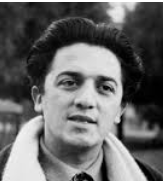
It's easier to be faithful to a restaurant than it is to a woman.
▼
Source
source
Fidelity

1 month 3 weeks ago
Literacy affects the physiology as well as the psychic life of the African.
▼
Source
source
(p. 38)

3 months 3 weeks ago
What would really satisfy us would be a God who said of anything we happened to like, "What does it matter so long as they are contented?" We want, in fact, not so much a Father in Heaven as a grandfather in heaven - a senile benevolence who, as they say, "liked to see young people enjoying themselves" and whose plan for the universe was simply that it might be truly said at the end of each day, "a good time was had by all".
CivilSimian.com created by AxiomaticPanic, CivilSimian, Kalokagathia