


3 months 3 weeks ago
Better to have beasts that let themselves be killed than men who run away.
▼
Source
source
Act 11, sc. 2

1 week 4 days ago
It is to this law that our souls must adjust themselves, this they should follow, this they should obey. Whatever happens, assume that it was bound to happen, and do not be willing to rail at Nature. That which you cannot reform, it is best to endure, and to attend uncomplainingly upon the God under whose guidance everything progresses; for it is a bad soldier who grumbles when following his commander.

4 months 1 week ago
Men are eager to tread underfoot what they have once too much feared.
▼
Source
source
Book V, line 1140 (tr. Rouse)
2 months 4 days ago
There are two ways in which a science develops; in response to problems which is itself creates, and in response to problems that are forced on it from the outside.
▼
Source
source
Chapter 1, An Absent Family Of Ideas, p. 4.
3 months 2 weeks ago
Themistocles being asked whether he would rather be Achilles or Homer, said, "Which would you rather be,-a conqueror in the Olympic games, or the crier that proclaims who are conquerors?"
▼
Source
source
48 Themistocles

4 months 4 days ago
A good marriage would be between a blind wife and a deaf husband.
▼
Source
source
Book III, Ch. 5
1 week ago
Bacon, Locke, Descartes, Hume, and all the others knew they were giving rights to vulgarity. But in so doing-in addition to caring for man's well-being-they were providing rights for themselves.
▼
Source
source
"Commerce and Culture," p. 289.

3 months 3 weeks ago
The soul is subject to dollars.
▼
Source
source
par. 6

3 months 3 weeks ago
Since the state must necessarily provide subsistence for the criminal poor while undergoing punishment, not to do the same for the poor who have not offended is to give a premium on crime.
▼
Source
source
Book V, Chapter XI, §13
1 week ago
There is always something taboo, something repressed, unadmitted, or just glimpsed quickly out of the corner of one's eye because a direct look is too unsettling. Taboos lie within taboos, like the skin of an onion.
▼
Source
source
Inside Information

3 months 3 weeks ago
Don't get involved in partial problems, but always take flight to where there is a free view over the whole single great problem, even if this view is still not a clear one.
▼
Source
source
Journal entry
3 months 3 weeks ago
The main characteristic of any event is that it has not been foreseen. We don't know the future but everybody acts into the future. Nobody knows what he is doing because the future is being done, action is being done by a "we" and not an "I." Only if I were the only one acting could I foretell the consequences of what I'm doing. What actually happens is entirely contingent, and contingency is indeed one of the biggest factors in all history.

2 months 1 week ago
Life is an offensive, directed against the repetitious mechanism of the Universe.
▼
Source
source
p. 102.

2 months 2 weeks ago
Dialectical thought understands the critical tension between "is" and "ought" first as an ontological condition, pertaining to the structure of Being itself. However, the recognition of this state of Being - its theory - intends from the beginning a concrete practice. Seen in the light of a truth which appears in them falsified or denied, the given facts themselves appear false and negative.
▼
Source
source
p. 133

2 months 3 weeks ago
Men without their choice derive benefits from that association; without their choice they are subjected to duties in consequence of these benefits; and without their choice they enter into a virtual obligation as binding as any that is actual. Look through the whole of life and the whole system of duties. Much the strongest moral obligations are such as were never the results of our option. I allow, that if no supreme ruler exists, wise to form, and potent to enforce, the moral law, there is no sanction to any contract, virtual or even actual, against the will of prevalent power. On that hypothesis, let any set of men be strong enough to set their duties at defiance, and they cease to be duties any longer.
▼
Source
source
p. 442

2 months 3 weeks ago
His power to adore is responsible for all his crimes: a man who loves a god unduly forces other men to love his god, eager to exterminate them if they refuse.
6 days ago
Can anyone be proved innocent, if it be enough to have accused him?
▼
Source
source
Julian, at the trial of Numerius, governor of Gallia Narbonensis, who was accused of embezzlement. Reported in Ammianus, Res gestae, bk. 18, ch. 1, sec. 4

2 weeks 3 days ago
Or indeed we may say again, it is in what I called Portrait-painting, delineating of men and things, especially of men, that Shakspeare is great. All the greatness of the man comes out decisively here. It is unexampled, I think, that calm creative perspicacity of Shakspeare. The thing he looks at reveals not this or that face of it, but its inmost heart and generic secret: it dissolves itself as in light before him, so that he discerns the perfect structure of it. Creative, we said: poetic creation, what is this too but seeing the thing sufficiently? The word that will describe the thing, follows of itself from such clear intense sight of the thing. And is not Shakspeare's morality, his valour, candour, tolerance, truthfulness; his whole victorious strength and greatness, which can triumph over such obstructions, visible there too? Great as the world!
2 months 1 week ago
The ultimate metaphysical principle is the advance from disjunction to conjunction, creating a novel entity other than the entities given in disjunction.
▼
Source
source
Pt. I, ch. 2, sec. 2.
2 months 3 weeks ago
Consciousness is nature's nightmare.
3 weeks 2 days ago
Ours is a problem in which deception has become organized and strong; where truth is poisoned at its source; one in which the skill of the shrewdest brains is devoted to misleading a bewildered people.
▼
Source
source
Ch. IV: "The Golden Rule and After", p. 105.
2 weeks 3 days ago
Adversity is sometimes hard upon a man; but for one man who can stand prosperity, there are a hundred that will stand adversity. (Often shortened to "can't stand prosperity" as an unknown quote).
2 months 2 weeks ago
The prophet is appointed to oppose the king, and even more: history.
▼
Source
source
BBC radio broadcast (1962), as quoted in The Great Thoughts (1984) by George Seldes
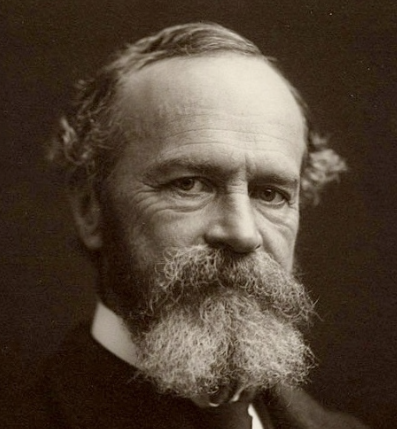
3 months 3 weeks ago
Act as if what you do makes a difference. It does.
▼
Source
source
Correspondence with Helen Keller, 1908, in The Correspondence of William James: April 1908-August 1910, Vol. 12
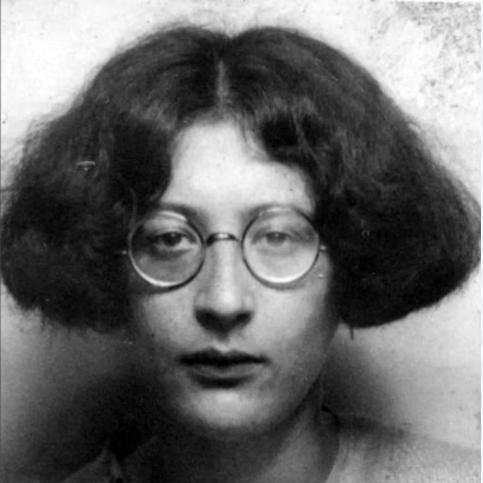
2 months 1 week ago
The notion of rights is linked with the notion of sharing out, of exchange, of measured quantity. It has a commercial flavor, essentially evocative of legal claims and arguments. Rights are always asserted in a tone of contention; and when this tone is adopted, it must rely upon force in the background, or else it will be laughed at.
▼
Source
source
p. 61

3 months 1 week ago
None can be free who is a slave to, and ruled by, his passions.
▼
Source
source
As quoted in Florilegium, XVIII, 23, as translated in Dictionary of Quotations (1906) by Thomas Benfield Harbottle, p. 368

3 months 3 weeks ago
Wisdom: The first error is that of the southern people, and it consists in holding that these eastern and western places are real places. ... give no quarter to that thought, whether it threatens you with fear, or tempts you with hopes. For this is Superstition and all who believe it will come in the end to the swamps to the south and the jungles to the far south.
▼
Source
source
Part of the same error is to think that the Landlord is a real man: Pilgrim's Regress 117

4 months 4 days ago
What of a truth that is bounded by these mountains and is falsehood to the world that lives beyond?
▼
Source
source
Ch. 12
2 months 3 weeks ago
What the Greeks sought, and what they obtained, was Equal Rights for all Citizens. In a certain sense, we might even say Equal Privileges, for there was no race favoured by the constitution more than another;-but there existed a great inequality of power, which indeed arose only by accident and not by the constitution of the State, but which nevertheless the State could not remedy;-and in so far there did not exist Equal Privileges.
▼
Source
source
p. 186

3 months 3 weeks ago
Philosophy stands in the same relation to the study of the actual world as masturbation to sexual love.
▼
Source
source
The German Ideology, International Publishers, ed. Chris Arthur, p. 103.
3 months 3 weeks ago
Of course God knew what would happen if they used their freedom the wrong way: apparently He thought it worth the risk.
▼
Source
source
Book II, Chapter 3, "The Shocking Alternative"

4 months 2 weeks ago
The order of authority derives from God, as the Apostle says [in Romans 13:1-7]. For this reason, the duty of obedience is, for the Christian, a consequence of this derivation of authority from God, and ceases when that ceases. But, as we have already said, authority may fail to derive from God for two reasons: either because of the way in which authority has been obtained, or in consequence of the use which is made of it. There are two ways in which the first may occur. Either because of a defect in the person, if he is unworthy; or because of some defect in the way itself by which power was acquired, if, for example, through violence, or simony or some other illegal method.
▼
Source
source
in Aquinas: Selected Political Writings (Basil Blackwell: 1974), p. 183
2 weeks 2 days ago
Both Stoicism and Epicureanism - the apathetic acceptance of defeat, and the effort to forget defeat in the arms of pleasure - were theories as to how one might yet be happy though subjugated or enslaved; precisely as the stoicism of Schopenhauer and the despondent epicureanism of Renan were in the nineteenth century the symbols of a shattered revolution and a broken France.
2 months 2 weeks ago
This language controls by reducing the linguistic forms and symbols of reflection, abstraction, development, contradiction; by substituting images for concepts. It denies or absorbs the transcendent vocabulary; it does not search for but establishes and imposes truth and falsehood.
▼
Source
source
p. 103
2 months 1 week ago
Such words as spontaneity, sincerity, gratuitousness, richness, enrichment - words which imply an almost total indifference to contrasts of value - have come more often from their [the surrealists'] pens than words which contain a reference to good and evil. Moreover, this latter class of words has become degraded, especially those which refer to the good, as Valéry remarked some years ago. Words like virtue, nobility, honor, honesty, generosity, have become almost impossible to use or else they have acquired bastard meanings; language is no longer equipped for legitimately praising a man's character.
▼
Source
source
"The responsibility of writers," p. 168
3 months 3 weeks ago
Wilt thou seal up the avenues of ill? Pay every debt as if God wrote the bill.
▼
Source
source
Fragment

4 months 2 weeks ago
The man of virtue makes the difficulty to be overcome his first business, and success only a subsequent consideration.

3 months 3 weeks ago
My first advice (on how not to grow old) would be to choose you ancestors carefully. Although both my parents died young, I have done well in this respect as regards my other ancestors. My maternal grandfather, it is true, was cut off in the flower of his youth, at the age of sixty-seven, but my other three grandparents all lived to be over eighty. Of remoter ancestors I can only discover one who did not live to a great age, and he died of a disease which is now rare, namely, having his head cut off.
▼
Source
source
p. 50
3 months 3 weeks ago
He yawned. He had finished the day and he had also finished with his youth. Various well-bred moralities had already discreetly offered him their services: disillusioned epicureanism, smiling tolerance, resignation, common sense stoicism - all the aids whereby a man may savour, minute by minute, like a connoisseur, the failure of a life.
▼
Source
source
L'âge de raison (The Age of Reason)

2 months 1 week ago
Just as modern mass production requires the standardization of commodities, so the social process requires standardization of man, and this standardization is called equality.
▼
Source
source
Ch. 2

3 months 2 weeks ago
And yet it will be obvious that it is difficult to really know of what sort each thing is.
3 months 2 weeks ago
Cicero said loud-bawling orators were driven by their weakness to noise, as lame men to take horse.
▼
Source
source
Cicero
1 month 4 weeks ago
There is probably no more abused a term in the history of philosophy than "representation," and my use of this term differs both from its use in traditional philosophy and from its use in contemporary cognitive psychology and artificial intelligence.... The sense of "representation" in question is meant to be entirely exhausted by the analogy with speech acts: the sense of "represent" in which a belief represents its conditions of satisfaction is the same sense in which a statement represents its conditions of satisfaction. To say that a belief is a representation is simply to say that it has a propositional content and a psychological mode.
▼
Source
source
P. 12.
2 months 3 weeks ago
All life, Omnipotent Father, is thy life! and the eye of religion alone penetrates to the realms of truth and beauty. I am related to thee, and what I behold around me is related to me; all is full of animation, and looks towards me with bright spiritual eyes, and speaks with spirit voices to my heart.
▼
Source
source
Jane Sinnett, trans 1846 p.125
1 month 3 weeks ago
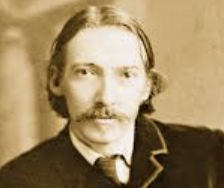
Is there anything in life so disenchanting as attainment?
▼
Source
source
The Suicide Club, The Adventure of the Hansom Cabs.
3 months 2 weeks ago
Lamachus chid a captain for a fault; and when he had said he would do so no more, "Sir," said he, "in war there is no room for a second miscarriage." Said one to Iphicrates, "What are ye afraid of?" "Of all speeches," said he, "none is so dishonourable for a general as 'I should not have thought of it.'"
▼
Source
source
52 Iphicrates

CivilSimian.com created by AxiomaticPanic, CivilSimian, Kalokagathia