

3 months 2 weeks ago
Neither our distance from a preventable evil nor the number of other people who, in respect to that evil, are in the same situation as we are, lessens our obligation to mitigate or prevent that evil.
2 months 1 week ago
The greater part of Eastern teachers of the Church, from Clement of Alexandria to Maximus the Confessor, were supporters of Apokatastasis, of universal salvation and resurrection. And this is characteristic of (contemporary) Russian religious thought. Orthodox thought has never been suppressed by the idea of Divine justice and it never forgot the idea of Divine love. Chiefly - it did not define man from the point of view of Divine justice but from the idea of transfiguration and Deification of man and cosmos.
▼
Source
source
"The Truth of Orthodoxy" as translated in Vestnik of the Russian West European Patriarchal Exarchate

1 week 4 days ago
I am endeavouring to live every day as if it were a complete life.
2 months 2 weeks ago
The pathfinders of modern thought did not derive what is good from the law. ... Their role in history was not that of adapting their words and actions to the text of old documents or generally accepted doctrines: they themselves created the documents and brought about the acceptance of their doctrines.
▼
Source
source
p. 33.
2 weeks 2 days ago
[after quoting from Lucretius] In the face of warfare and inevitable death, there is no wisdom but in ataraxia, "to look on all things with a mind at peace"." Here, clearly, the old pagan joy of life is gone, and an almost exotic spirit touches a broken lyre. History, which is nothing if not humorous, was never so facetious as when she gave to this abstemious and epic pessimist the name of Epicurean.

3 months 3 weeks ago
The past alone is truly real: the present is but a painful, struggling birth into the immutable being of what is no longer. Only the dead exist fully. The lives of the living are fragmentary, doubtful, and subject to change; but the lives of the dead are complete, free from the sway of Time, the all but omnipotent lord of the world. Their failures and successes, their hopes and fears, their joys and pains, have become eternal-our efforts cannot now abate one jot of them. Sorrows long buried in the grave, tragedies of which only a fading memory remains, loves immortalized by Death's hallowing touch these have a power, a magic, an untroubled calm, to which no present can attain. ...On the banks of the river of Time, the sad procession of human generations is marching slowly to the grave; in the quiet country of the Past, the march is ended, the tired wanderers rest, and the weeping is hushed.
▼
Source
source
On History, 1904
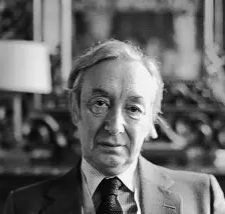
2 months 3 weeks ago
I suddenly stopped and looked out at the sea and thought, my God, how beautiful this is ... for 26 years I had never really looked at it before.
▼
Source
source
On his greater appreciation of the scenery of the world, after his near-death experience, as quoted in "Did atheist philosopher see God when he 'died'?" by William Cash, in National Post (3 March 2001).
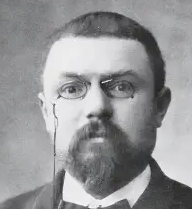
3 weeks ago
It is often said that experiments should be made without preconceived ideas. That is impossible. Not only would it make every experiment fruitless, but even if we wished to do so, it could not be done. Every man has his own conception of the world, and this he cannot so easily lay aside. We must, for example, use language, and our language is necessarily steeped in preconceived ideas.
▼
Source
source
Ch. IX: Hypotheses in Physics, Tr. George Bruce Halsted
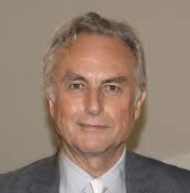
1 month 3 weeks ago
They are in you and me; they created us, body and mind; and their preservation is the ultimate rationale for our existence. They have come a long way, those replicators. Now they go by the name of genes, and we are their survival machines.
▼
Source
source
Ch. 2. The replicators
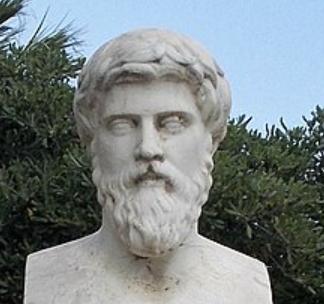
3 months 2 weeks ago
Lysander said, "Where the lion's skin will not reach, it must be pieced with the fox's."
▼
Source
source
60 Lysander
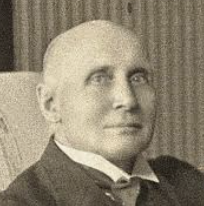
2 months 1 week ago
The salvation of reality is its obstinate, irreducible, matter-of-fact entities, which are limited to be no other than themselves. Neither science, nor art, nor creative action can tear itself away from obstinate, irreducible, limited facts.
▼
Source
source
Ch. 5: "The Romantic Reaction", p. 132
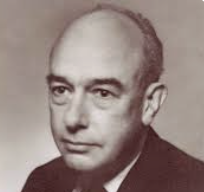
2 months 1 week ago
Tactically, conceptualism is no doubt the strongest position of the three; for the tired nominalist can lapse into conceptualism and still allay his puritanic conscience with the reflection that he has not quite taken to eating lotus with the Platonists.
▼
Source
source
"Logic and the Reification of Universals"

2 months 3 weeks ago
Only optimists commit suicide, the optimists who can no longer be . . . optimists. The others, having no reason to live, why should they have any to die?

1 month 3 weeks ago
By phonemic transformation into visual terms, the alphabet became a universal, abstract, static container of meaningless sounds.
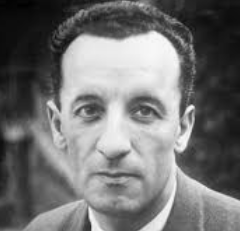
2 months 2 weeks ago
The world is nothing but 'world-as-meaning.'
▼
Source
source
p. xi
3 months 1 week ago
Things essentially incorporeal, because they are more excellent than all body and place, are every where, not with interval, but impartibly. Things essentially incorporeal are not locally present with bodies but are present with them when they please; by verging towards them so far as they are naturally adapted so to verge. They are not, however, present with them locally, but through habitude, proximity, and alliance. Things essentially incorporeal, are not present with bodies, by hypostasis and essence; for they are not mingled with bodies. But they impart a certain power which is proximate to bodies, through verging towards them. For tendency constitutes a certain secondary power proximate to bodies.

3 months 3 weeks ago
I think no virtue goes with size; The reason of all cowardice Is, that men are overgrown, And, to be valiant, must come down To the titmouse dimension.
▼
Source
source
The Titmouse, st. 5
3 months 3 weeks ago
Better red than dead.
▼
Source
source
Bertrand Russell, attributes this phrase to 'West German friends of peace' but adopted this slogan for the Campaign for Nuclear Disarmament he helped found William Safire, Safire's Political Dictionary, (2008) p. 49-50


2 months 1 week ago
What would become of the rich, if not for the poor? What would become of these idle, parasitic ladies, who squander more in a week than their victims earn in a year, if not for the eighty million wage-workers? Equality, who ever heard of such a thing?
2 months 3 weeks ago
So it is that after each night, facing a new day, the impossible necessity of dealing with it fills us with dread; exiled in light as if the world had just started, inventing the sun, we flee from tears-just one of which would be enough to wash us out of time.

3 months 3 weeks ago
However hard they try, men cannot create a social organism, they can only create an organization. In the process of trying to create an organism they will merely create a totalitarian despotism.
▼
Source
source
Chapter 3 (p. 24)

2 months 3 weeks ago
I assert, that the ancient Whigs held doctrines, totally different from those I have last mentioned. I assert, that the foundations laid down by the Commons, on the trial of Doctor Sacheverel, for justifying the revolution of 1688, are the very same laid down in Mr. Burke's Reflections; that is to say,-a breach of the original contract, implied and expressed in the constitution of this country, as a scheme of government fundamentally and inviolably fixed in King, Lords, and Commons.-That the fundamental subversion of this antient constitution, by one of its parts, having been attempted, and in effect accomplished, justified the Revolution. That it was justified only upon the necessity of the case; as the only means left for the recovery of that antient constitution, formed by the original contract of the British state; as well as for the future preservation of the same government. These are, the points to be proved.
▼
Source
source
p. 411

3 months 3 weeks ago
Take the happiest man, the one most envied by the world, and in nine cases out of ten his inmost consciousness is one of failure. Either his ideals in the line of his achievements are pitched far higher than the achievements themselves, or else he has secret ideals of which the world knows nothing, and in regard to which he inwardly knows himself to be found wanting.
▼
Source
source
Lectures VI and VII, "The Sick Soul"

3 weeks 1 day ago
The task of a theory of class is to identify the existing conditions for potential collective struggle and express them as a political proposition.
▼
Source
source
104

2 months 3 weeks ago
You can never plan the future by the past.
▼
Source
source
Letter to a Member of the National Assembly (1791), Volume IV, p. 55.
2 months 3 weeks ago
If every pure character in the Old Testament announces the Messiah, if every unworthy person is his torturer and every woman his Mother, does not the Book of Books lose all life with this obsessive theme? On the doctrine of prefiguration.
▼
Source
source
Persons or Figures

2 months 3 weeks ago
The more cunning a man is, the less he suspects that he will be caught in a simple thing. The more cunning a man is, the simpler the trap he must be caught in.
3 months 1 day ago
In order to shake a hypothesis, it is sometimes not necessary to do anything more than push it as far as it will go.
▼
Source
source
No. 50
4 months 2 weeks ago
After death the sensation is either pleasant or there is none at all. But this should be thought on from our youth up, so that we may be indifferent to death, and without this thought no one can be in a tranquil state of mind. For it is certain that we must die, and, for aught we know, this very day. Therefore, since death threatens every hour, how can he who fears it have any steadfastness of soul?
▼
Source
source
section 74
3 months 3 weeks ago
This Europe, which in its ruinous blindness is forever on the point of cutting its own throat, lies today in a great pincers, squeezed between Russia on one side and America on the other. From a metaphysical point of view, Russia and America are the same: the same dreary technological frenzy, the same unrestricted organization of the average man...
3 months 3 weeks ago
In science men have discovered an activity of the very highest value in which they are no longer, as in art, dependent for progress upon the appearance of continually greater genius, for in science the successors stand upon the shoulders of their predecessors; where one man of supreme genius has invented a method, a thousand lesser men can apply it.
▼
Source
source
Ch. 2: The Place of Science in a Liberal Education

3 months 3 weeks ago
What is called politics is comparatively something so superficial and inhuman, that, practically, I have never fairly recognized that it concerns me at all. The newspapers, I perceive, devote some of their columns specially to politics or government without charge; and this, one would say, is all that saves it; but, as I love literature, and, to some extent, the truth also, I never read those columns at any rate. I do not wish to blunt my sense of right so much.
▼
Source
source
p. 494
2 months 2 weeks ago
Man is a thinking being. His reason enables him to recognize his own potentialities and those of his world. He is thus not at the mercy of the facts that surround him, but is capable of subjecting them to a higher standard, that of reason.
▼
Source
source
P. 6
3 months 3 weeks ago
There are various, nay, incredible faiths; why should we be alarmed at any of them? What man believes, God believes.

3 months 3 weeks ago
The circulation of commodities is the original precondition of the circulation of money.
▼
Source
source
Notebook I, The Chapter on Money, p. 107.

4 months 2 weeks ago
I [prefer] a short life with width to a narrow one with length.
3 months 2 weeks ago
Thus to the Lord doth Asha, the Truth, reply:"No guide is known who can shelter the world from woe, None who knows what moves and works Thy lofty plans."
▼
Source
source
Ahunuvaiti Gatha; Yasna 29, 3.
6 days ago
So long as you are a slave to the opinions of the many you have not yet approached freedom or tasted its nectar...But I do not mean by this that we ought to be shameless before all men and to do what we ought not; but all that we refrain from and all that we do, let us not do or refrain from merely because it seems to the multitude somehow honorable or base, but because it is forbidden by reason and the god within us.
▼
Source
source
Oration to the Uneducated Cynics
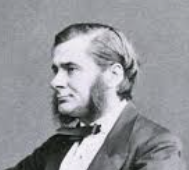
1 month 1 week ago
The whole analogy of natural operations furnishes so complete and crushing an argument against the intervention of any but what are termed secondary causes, in the production of all the phenomena of the universe; that, in view of the intimate relations between Man and the rest of the living world; and between the forces exerted by the latter and all other forces, I can see no excuse for doubting that all are co-ordinated terms of Nature's great progression, from the formless to the formed-from the inorganic to the organic-from blind force to conscious intellect and will.
▼
Source
source
Ch.1 (1884 edition) p. 28

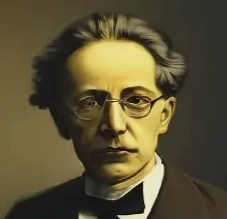
1 week 5 days ago
If it is the drive of our time, after freedom of thought is won, to pursue it to that perfection through which it changes to freedom of the will in order to realize the latter as the principle of a new era, then the final goal of education can no longer be knowledge, but the will born out of knowledge, and the spoken expression of that for which it has to strive is: the personal or free man. Truth consists in nothing other than man's revelation of himself, and thereto belongs the discovery of himself, the liberation from all that is alien, the uttermost abstraction or release from all authority, the re-won naturalness. Such thoroughly true men are not supplied by school; if they are there, they are there in spite of school.
▼
Source
source
p. 21
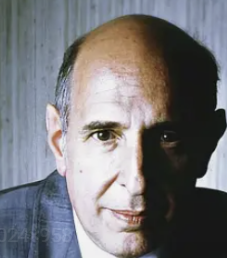
1 week ago
A good education would be devoted to encouraging and refining the love of the beautiful, but a pathologically misguided moralism instead turns such longing into a sin against the high goal of making everyone feel good, of overcoming nature in the name of equality. ... Love of the beautiful may be the last and finest sacrifice to radical egalitarianism.
▼
Source
source
p. 15.
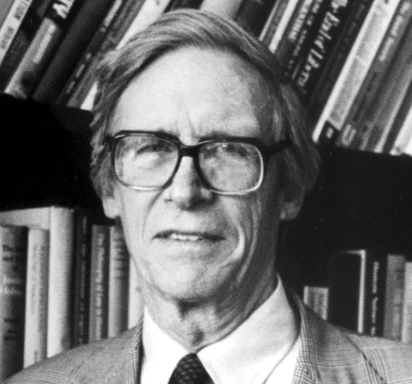
3 months 3 weeks ago
Justice does not require that men must stand idly by while others destroy the basis of their existence.
▼
Source
source
Chapter IV, Section 35, p. 218

4 months 6 days ago
The human understanding is moved by those things most which strike and enter the mind simultaneously and suddenly, and so fill the imagination; and then it feigns and supposes all other things to be somehow, though it cannot see how, similar to those few things by which it is surrounded.
▼
Source
source
Aphorism 47
3 months 3 weeks ago
Whoso walketh in solitude, And inhabiteth the wood, Choosing light, wave, rock, and bird, Before the money-loving herd, Into that forester shall pass From these companions power and grace.
▼
Source
source
Wood-notes, no. II, st. 4

3 months 4 weeks ago
The question here is not, "How conscience ought to be guided? For Conscience is its own General and Leader; it is therefore enough that each man have one. What we want to know is, how conscience can be her own Ariadne, and disentangle herself from the mazes even of the most raveled and complicated casuistical theology. Here is an ethical proposition that stands in need of no proof: No Action May At Any Time Be Hazarded On The Uncertainty That Perchance It May Not Be Wrong (Quod dubitas, ne feceris! Pliny - which you doubt, then neither do) Hence the Consciousness, that Any Action I am about to perform is Right, is in itself a most immediate and imperative duty. What actions are right, - what wrong - is a matter for the understanding, not for conscience.
▼
Source
source
p. 251 Book IV, Part 2, Section 4
2 months 3 weeks ago
No nation keeps its word. A nation is a big, blind worm, following what? Fate perhaps. A nation has no honour, it has no word to keep. ... Hitler is himself the nation. That incidentally is why Hitler always has to talk so loud, even in private conversation - because he is speaking with 78 million voices.
▼
Source
source
During an interview with H. R. Knickerbocker (1939), quoted in A Life of Jung (2002) by Ronald Hayman, p. 360
CivilSimian.com created by AxiomaticPanic, CivilSimian, Kalokagathia