

2 months 6 days ago
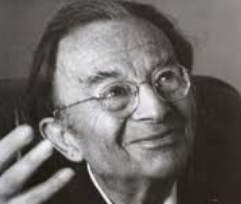
The most important misunderstanding seems to me to lie in a confusion between the human necessities which I consider part of human nature, and the human necessities as they appear as drives, needs, passions, etc., in any given historical period. This division is not very different from Marx's concept of "human nature in general", to be distinguished from "human nature as modified in each historical period". The same distinction exists in Marx when he distinguishes between "constant" or "fixed" drives and "relative" drives. The constant drives "exist under all circumstances and ... can be changed by social conditions only as far as form and direction are concerned". The relative drives "owe their origin only to a certain type of social organization".

4 months 1 week ago
Will is to grace as the horse is to the rider.

3 months 3 weeks ago
The christian religion is a parody on the worship of the Sun, in which they put a man whom they call Christ, in the place of the Sun, and pay him the same adoration which was originally paid to the Sun.
▼
Source
source
An Essay on the Origin of Free-Masonry (1803-1805); found in manuscript form after Paine's death and thought to have been written for an intended part III of The Age of Reason. It was partially published in 1810 and published in its entirety in 1818.
4 months 1 week ago
It is not by change of place that we can come nearer to Him who is in every place, but by the cultivation of pure desires and virtuous habits.
▼
Source
source
p. 433

4 months 2 days ago
But the Jews are so hardened that they listen to nothing; though overcome by testimonies they yield not an inch. It is a pernicious race, oppressing all men by their usury and rapine. If they give a prince or magistrate a thousand florins, they extort twenty thousand from the subjects in payment. We must ever keep on guard against them.
▼
Source
source
863

3 months 2 weeks ago
Men have made an idol of luck as an excuse for their own thoughtlessness. Luck seldom measures swords with wisdom. Most things in life quick wit and sharp vision can set right.

4 months 3 weeks ago
When you are reading God's Word, it is not the obscure passages that bind you but what you understand, and with that you comply at once. If you understood only one single passage in all of Holy Scripture, well, then you must do that first of all, but you do not first have to sit down and ponder the obscure passages.

3 months 6 days ago
It is only necessary to make war with five things; with the maladies of the body, the ignorances of the mind, with the passions of the body, with the seditions of the city and the discords of families.
▼
Source
source
As quoted in The Biblical Museum: A Collection of Notes Explanatory, Homiletic, and Illustrative on the Holy Scriptures, Especially Designed for the Use of Ministers, Bible-students, and Sunday-school Teachers (1873) by James Comper Gray, Vol. V
3 months 6 days ago
As long as Man continues to be the ruthless destroyer of lower living beings, he will never know health or peace. For as long as men massacre animals, they will kill each other. Indeed, he who sows the seed of murder and pain cannot reap joy and love.
▼
Source
source
Attribution to Pythagoras by Ovid, as quoted in The Extended Circle: A Dictionary of Humane Thought (1985) by Jon Wynne-Tyson, p. 260; also in Vegetarian Times, No. 168 (August 1991), p. 4
3 months 2 weeks ago
Fools learn wisdom through misfortune.
3 months 3 weeks ago
In early youth, as we contemplate our coming life, we are like children in a theatre before the curtain is raised, sitting there in high spirits and eagerly waiting for the play to begin. It is a blessing that we do not know what is really going to happen. Could we foresee it, there are times when children might seem like innocent prisoners, condemned, not to death, but to life, and as yet all unconscious of what their sentence means.
▼
Source
source
"On the Sufferings of the World"

3 months 3 weeks ago
I don't care for the applause one gets by saying what others are thinking; I want actually to change people's thoughts. Power over people's minds is the main personal desire of my life; and this sort of power is not acquired by saying popular things.
▼
Source
source
Letter to Lucy Martin Donnelly, February 10, 1916
3 months 2 weeks ago
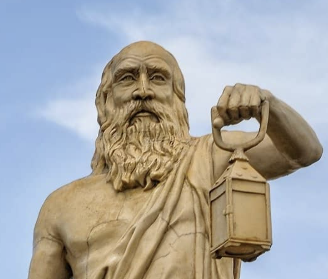
He was seized and dragged off to King Philip, and being asked who he was, replied, "A spy upon your insatiable greed."
▼
Source
source
Diogenes Laërtius, vi. 43. Cf. Plutarch, Moralia, 70CD.
1 month 1 week ago
I can assure you that there is the greatest practical benefit in making a few failures early in life. You learn that which is of inestimable importance - that there are a great many people in the world who are just as clever as you are. You learn to put your trust, by and by, in an economy and frugality of the exercise of your powers, both moral and intellectual; and you very soon find out, if you have not found it out before, that patience and tenacity of purpose are worth more than twice their weight of cleverness.
▼
Source
source
On Medical Education
1 month 2 weeks ago
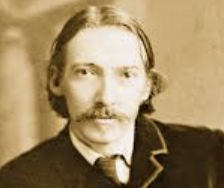
I suppose it is written that any one who sets up for a bit of a philosopher, must contradict himself to his very face. For here have I fairly talked myself into thinking that we have the whole thing before us at last; that there is no answer to the mystery, except that there are as many as you please; that there is no centre to the maze because, like the famous sphere, its centre is everywhere; and that agreeing to differ with every ceremony of politeness, is the only "one undisturbed song of pure concent" to which we are ever likely to lend our musical voices.
▼
Source
source
Crabbed Age and Youth.
1 month 3 weeks ago
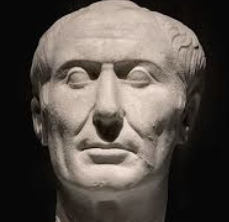
Confession of our faults is the next thing to innocence.
▼
Source
source
Maxim 1060

3 months 3 weeks ago
Our chief want in life is somebody who shall make us do what we can.
▼
Source
source
Considerations by the Way
1 month 1 week ago
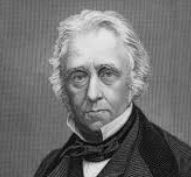
We know no spectacle so ridiculous as the British public in one of its periodical fits of morality.
▼
Source
source
p. 315

2 weeks 1 day ago
Instruction, that mysterious communing of Wisdom with Ignorance, is no longer an indefinable tentative process, requiring a study of individual aptitudes, and a perpetual variation of means and methods, to attain the same end; but a secure, universal, straightforward business, to be conducted in the gross, by proper mechanism.

4 months 2 weeks ago
Sincerity is that whereby self-completion is effected, and its way is that by which man must direct himself.
5 days ago
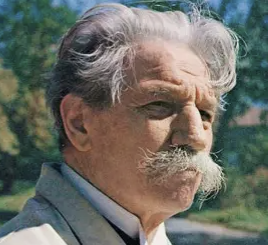
Very little of the great cruelty shown by men can really be attributed to cruel instinct. Most of it comes from thoughtlessness or inherited habit. The roots of cruelty, therefore, are not so much strong as widespread. But the time must come when inhumanity protected by custom and thoughtlessness will succumb before humanity championed by thought. Let us work that this time may come.

2 months 3 weeks ago
So long as man remains free he strives for nothing so incessantly and so painfully as to find someone to worship. But man seeks to worship what is established beyond dispute, so that all men would agree at once to worship it. For these pitiful creatures are concerned not only to find what one or the other can worship, but to find community of worship is the chief misery of every man individually and of all humanity from the beginning of time. For the sake of common worship they've slain each other with the sword. They have set up gods and challenged one another, 'Put away your gods and come and worship ours, or we will kill you and your gods!' And so it will be to the end of the world, even when gods disappear from the earth; they will fall down before idols just the same.

2 months 1 week ago
Pettiness separates; breadth unites. Let us be broad and big. Let us not overlook vital things because of the bulk of trifles confronting us. A true conception of the relation of the sexes will not admit of conqueror and conquered; it knows of but one great thing: to give of one's self boundlessly, in order to find one's self richer, deeper, better. That alone can fill the emptiness, and transform the tragedy of woman's emancipation into joy, limitless joy.

2 months 2 weeks ago
Old age, after all, is merely the punishment for having lived.

3 months 3 weeks ago
Sphere Music - Some sounds seem to reverberate along the plain, and then settle to earth again like dust; such are Noise, Discord, Jargon. But such only as spring heavenward, and I may catch from steeples and hilltops in their upward course, which are the more refined parts of the former, are the true sphere music - pure, unmixed music - in which no wail mingles.
▼
Source
source
August 5, 1838

4 months 2 weeks ago
It is better to conceal ignorance than to expose it.

2 months 3 weeks ago
Death is the most blessed dream.
▼
Source
source
Act II.
4 months 3 weeks ago
What if the equality between us human being, in which we completely resemble one another, were that none of us really thinks about his being loved?
3 months 3 weeks ago
The measure of action is the sentiment from which it proceeds. The greatest action may easily be one of the most private circumstance.
▼
Source
source
Goethe; or, The Writer

1 month 3 weeks ago
Men think it right to eat animals, because they are led to believe that God sanctions it. This is untrue. No matter in what books it may be written that it is not sinful to slay animals and to eat them, it is more clearly written in the heart of man than in any books that animals are to be pitied and should not be slain any more than human beings. We all know this if we do not choke the voice of our conscience.
▼
Source
source
The Pathway of Life: Teaching Love and Wisdom (posthumous), Part I, International Book Publishing Company, New York, 1919, p. 68

2 months 1 week ago
When I'm bored, my sense of values goes to sleep. But it's not dead, only asleep. A crisis can wake it up and make the world seem infinitely important and interesting. But what I need to learn is the trick of shaking them awake myself . . . And incidentally, another name for the sense of values is intelligence. A stupid person is a person whose values are narrow.
▼
Source
source
p. 57

3 months 3 weeks ago
It is forbidden to kill; therefore all murderers are punished unless they kill in large numbers and to the sound of trumpets.
▼
Source
source
"Rights", 1771

2 months 4 weeks ago
Gaiety - a quality of ordinary men. Genius always presupposes some disorder in the machine.
▼
Source
source
"Diseases"
3 months 3 weeks ago
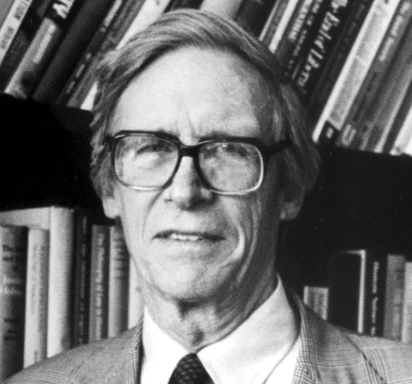
Social and economic inequalities are to satisfy two conditions: first, they are to be attached to positions and offices open to all under conditions of fair equality of opportunity; and second, they are to be to the greatest benefit to the least-advantaged members of society.
▼
Source
source
p. 6

3 months 3 weeks ago
Is dogmatic or scholastic theology less doubted in point of fact for claiming, as it does, to be in point of right undoubtable? And if not, what command over truth would this kind of theology really lose if, instead of absolute certainty, she only claimed reasonable probability for her conclusions? If we claim only reasonable probability, it will be as much as men who love the truth can ever at any given moment hope to have within their grasp. Pretty surely it will be more than we could have had, if we were unconscious of our liability to err.
▼
Source
source
Lectures XIV and XV, "The Value of Saintliness"

4 months 3 weeks ago
The important thing isn't the soundness or otherwise of the argument, but for it to make you think.
2 months 3 weeks ago
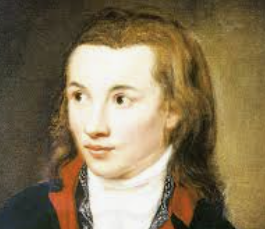
If our Bodily Life is a burning, our Spiritual Life is a being burnt, a Combustion (or, is precisely the inverse the case?); Death, therefore, perhaps a Change of Capacity.
3 months 6 days ago
Disbelieve nothing wonderful concerning the gods, nor concerning divine dogmas.
▼
Source
source
Symbol 4
3 months 3 weeks ago
There are, in every country, some magnificent charities established by individuals. It is, however, but little that any individual can do, when the whole extent of the misery to be relieved is considered. He may satisfy his conscience, but not his heart. He may give all that he has, and that all will relieve but little. It is only by organizing civilization upon such principles as to act like a system of pulleys, that the whole weight of misery can be removed.
▼
Source
source
Means by Which the Fund Is to Be Created

3 months 2 weeks ago
Like everything metaphysical the harmony between thought and reality is to be found in the grammar of the language.
▼
Source
source
§ 112

3 months 3 weeks ago
He who can buy bravery is brace, though a coward. As money is not exchanged for anyone specific quality, for any one specific thing, or for any particular human essential power, but for the entire objective world of man and nature, from the standpoint of its possessor it therefore serves to exchange every property for every other, even contradictory, property and object: it is the fraternization of impossibilities. It makes contradictions embrace.
▼
Source
source
p. 105, The Marx-Engels Reader
2 months 2 weeks ago
When we know what words are worth, the amazing thing is that we try to say anything at all, and that we manage to do so. This requires, it is true, a supernatural nerve.
4 months 2 weeks ago
When your father is alive, observe his will. When your father is dead observe his former actions. If, for three years after the death of your father you do not change from the ways of your father, you can be called a 'real son'.
1 week 2 days ago
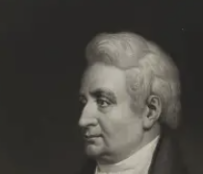
Manners are the shadows of virtues; the momentary display of those qualities which our fellow creatures love, and respect.
▼
Source
source
Sermon XII, Sermons

3 months 3 weeks ago
On recent and contemporary literature student's need is least and our help least. They ought to understand it better than we, and if they do not then there is something radically wrong either with them or with the literature. But I need not labour the point. There is an intrinsic absurdity in making current literature a subject of academic study, and the student who wants a tutor's assistance in reading the works of his own contemporaries might as well ask for a nurse's assistance in blowing his own nose.
▼
Source
source
"Our English syllabus", Rehabilitations and Other Essays (1939). Reprinted in Image and Imagination: Essays and Reviews by C. S. Lewis (2013), Cambridge University Press

2 months 3 weeks ago
Falsehood has a perennial spring.
2 months 3 weeks ago
I think I can hardly overrate the malignity of the principles of Protestant ascendancy, as they affect Ireland; or of Indianism, as they affect these countries, and as they affect Asia; or of Jacobinism, as they affect all Europe, and the state of human society itself. The last is the greatest evil.
▼
Source
source
Letter to Sir Hercules Langrishe (26 May 1795), quoted in R. B. McDowell (ed.)
1 month 1 week ago
His imagination resembled the wings of an ostrich. It enabled him to run, though not to soar.
▼
Source
source
p. 223

4 months 3 weeks ago
It is not enough to prove something, one has also to seduce or elevate people to it. That is why the man of knowledge should learn how to speak his wisdom: and often in such a way that it sounds like folly!
4 months 3 weeks ago
We produce these representations in and from ourselves with the same necessity with which the spider spins. If we are forced to comprehend all things only under these forms, then it ceases to be amazing that in all things we actually comprehend nothing but these forms. For they must all bear within themselves the laws of number, and it is precisely number which is most astonishing in things. All that conformity to law, which impresses us so much in the movement of the stars and in chemical processes, coincides at bottom with those properties which we bring to things. Thus it is we who impress ourselves in this way
CivilSimian.com created by AxiomaticPanic, CivilSimian, Kalokagathia