


2 months 4 days ago
If space in infinite, how about the space inside man? Blake said that eternity opens from the center of an atom. My former terror vanished. Now I saw that I was mistaken in thinking of myself as an object in a dead landscape. I had been assuming that man is limited because his brain is limited, that only so much can be packed into the portmanteau. But the spaces of the mind are a new dimension. The body is a mere wall between two infinities. Space extends to infinity outwards; the mind stretches to infinity inwards.
▼
Source
source
p. 38

3 months 1 week ago
All things were together, infinite both in number and in smallness; for the small too was infinite.
▼
Source
source
Frag. B 1, quoted in John Burnet's Early Greek Philosophy, (1920), Chapter 6.

1 week 5 days ago
He has now a second far greater success to gain: to seek out his real superiors, whom not the Tailor but the Almighty God has made superior to him, and see a little what he will do with these! Rebel against these also? Pass by with minatory eagle-glance, with calm-sniffing mockery, or even without any mockery or sniff, when these present themselves? The lion-hearted will never dream of such a thing. Forever far be it from him! His minatory eagle-glance will veil itself in softness of the dove: his lion- heart will become a lamb's; all is just indignation changed into just reverence, dissolved in blessed floods of noble humble love, how much heavenlier than any pride, nay, if you will, how much prouder!

3 months 3 weeks ago
It is the duty of every patriot to protect his country from its government.
▼
Source
source
Edward Abbey, "A patriot must always be ready to defend his country against his government." as written in "A Voice Crying in the Wilderness" (Vox Clamantis en Deserto): Notes from a Secret Journal (1990), ISBN 0312064888
2 months 3 weeks ago
Are we not madder than those first inhabitants of the plain of Sennar? We know that the distance separating the earth from the sky is infinite, and yet we do not stop building our tower.
▼
Source
source
No. 4
2 months 1 week ago
In most cases the esthetic objection to doses of morals and of economic or political propaganda in works of art will be found upon analysis to reside in the over-weighing of certain values at the expense of others until, except for those in a similar stare of one-sides enthusiasm, weariness rather than refreshment sets in.
▼
Source
source
p. 188

6 days ago
Don't ask for what you'll wish you hadn't got.
▼
Source
source
Line 1 Seneca himself states that he is quoting a 'common saying' here.
2 days ago
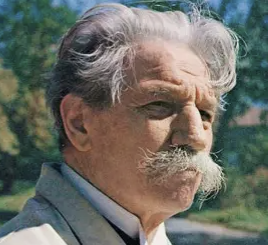
One thing that specially saddened me was that the unfortunate animals had to suffer so much pain and misery. The sight of an old limping horse, tugged forward by one man while another kept beating it with a stick to get it to the knacker's yard at Colmar, haunted me for weeks. It was quite incomprehensible to me - this was before I began going to school - why in my evening prayers I should pray for human beings only. So when my mother had prayed with me and had kissed me good-night, I used to add silently a prayer that I had composed myself for all living creatures. It ran thus: "O, heavenly Father, protect and bless all things that have breath; guard them from all evil, and let them sleep in peace."
2 days ago
Faith which refuses to face indisputable facts is but little faith. Truth is always gain, however hard it is to accommodate ourselves to it. To linger in any kind of untruth proves to be a departure from the straight way of faith.
▼
Source
source
p. 290

3 months 4 weeks ago
If women get tired and die of bearing, there is no harm in that; let them die as long as they bear; they are made for that.
▼
Source
source
-- Essays, quoted in Luther On "Woman"

3 months 4 weeks ago
It is a thorny undertaking, and more so than it seems, to follow a movement so wandering as that of our mind, to penetrate the opaque depths of its innermost folds, to pick out and immobilize the innumerable flutterings that agitate it.
▼
Source
source
Ch. 6. Of Preparation, tr. E. J. Trechmann, 1927

2 months 3 weeks ago
Well is it known that ambition can creep as well as soar.
▼
Source
source
No. 3
3 months 1 week ago
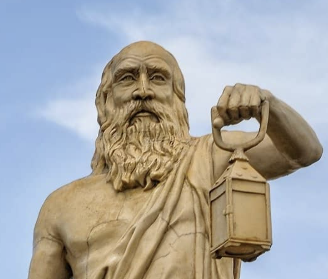
Self-taught poverty is a help toward philosophy, for the things which philosophy attempts to teach by reasoning, poverty forces us to practice.
▼
Source
source
Stobaeus, iv. 32a. 11
1 month 1 week ago
The fact is he made a prodigious blunder in commencing the attack, and now his only chance is to be silent and let people forget the exposure. I do not believe that in the whole history of science there is a case of any man of reputation getting himself into such a contemptible position.
▼
Source
source
About Richard Owen's view on human and ape brains, in a letter to J.D. Hooker
1 month 2 weeks ago
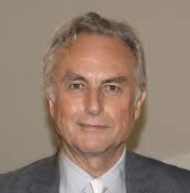
With so many mind-bytes to be downloaded, so many mental codons to be replicated, it is no wonder that child brains are gullible, open to almost any suggestion, vulnerable to subversion, easy prey to Moonies, Scientologists and nuns. Like immune-deficient patients, children are wide open to mental infections that adults might brush off without effort.
Just now
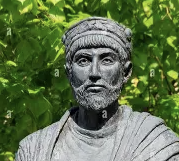
Nature loves to hide her secrets, and she does not suffer the hidden truth about the essential nature of the gods to be flung in naked words to the ears of the profane...
▼
Source
source
Oration to the Cynic Heracleios
3 months 4 weeks ago
When Scipio became consul and was keen on getting the province of Africa, promising that Carthage should be completely destroyed, and the senate would not agree to this because Fabius Maximus was against it, he threatened to appeal to the people, for he knew full well how pleasing such projects are to the populace.
▼
Source
source
Book 1, Ch. 53 (as translated by LJ Walker and B Crick)

2 months 2 weeks ago
To make more plans than an explorer or a crook, yet to be infected at the will's very root.
3 months 2 weeks ago
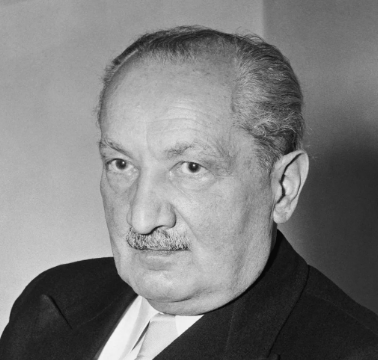
But in fact there is no circle at all in the formulation of our question. Beings can be determined in their being without the explicit concept of the meaning of being having to be already available. If this were not so there could not have been as yet any ontological knowledge. And probably no one would deny the factual existence of such knowledge. It is true that "being" is "presupposed" in all previous ontology, but not as an available concept-not as the sort of thing we are seeking.
▼
Source
source
Introduction: The Exposition of the Question of the Meaning of Being (Stambaugh translation)
1 month 4 days ago
Societies, not states, are 'the social atoms' with which students of history have to deal.
▼
Source
source
Vol. 1
2 months 2 weeks ago
Doutbless, revenge is not always sweet, once it is consummated we feel inferior to our victim, or else we are tangled in the subtleties of remorse; so vengeance too has its venom, though it comes closer to what we are, to what we feel, to the very law of the self; it is also healthier than magnanimity. The Furies were held to antedate the gods, Zeus included. Vengeance before Divinity! This is the Major intuition of ancient mythology. p. 70.
3 months 3 weeks ago
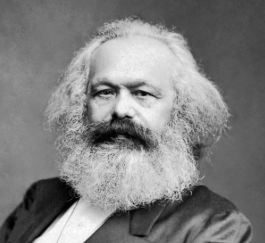
Communism differs from all previous movements in that it overturns the basis of all earlier relations of production and intercourse, and for the first time consciously treats all natural premises as the creatures of hitherto existing men, strips them of their natural character and subjugates them to the power of the united individuals. Its organisation is, therefore, essentially economic, the material production of the conditions of this unity; it turns existing conditions into conditions of unity. The reality, which communism is creating, is precisely the true basis for rendering it impossible that anything should exist independently of individuals, insofar as reality is only a product of the preceding intercourse of individuals themselves.
▼
Source
source
Vol. I, Part 4.

4 months 3 weeks ago
For those who need consolation no means of consolation is so effective as the assertion that in their case no consolation is possible: it implies so great a degree of distinction that they at once hold up their heads again.

3 months 3 weeks ago
If the material world rests upon a similar ideal world, this ideal world must rest upon some other; and so on, without end. It were better, therefore, never to look beyond the present material world. By supposing it to contain the principle of its order within itself, we really assert it to be God; and the sooner we arrive at that Divine Being, so much the better. When you go one step beyond the mundane system, you only excite an inquisitive humour which it is impossible ever to satisfy.
▼
Source
source
Philo to Cleanthes, Part IV

4 months 3 weeks ago
God creates out of nothing. Wonderful you say. Yes, to be sure, but He does what is still more wonderful: He makes saints out of sinners.
3 months 4 weeks ago
Unless I am convinced by the testimony of the Scriptures or by clear reason (for I do not trust either in the pope or in councils alone, since it is well known that they have often erred and contradicted themselves), I am bound by the Scriptures I have quoted and my conscience is captive to the Word of God. I cannot and will not recant anything, since it is neither safe nor right to go against conscience. May God help me. Amen.
▼
Source
source
Statement in defense of his writings at the Diet of Worms (19 April 1521), as translated in The Nature of Protestantism (1963) by Karl Heim, p. 78

3 months 3 weeks ago
Sunshine cannot bleach the snow, Nor time unmake what poets know.
▼
Source
source
"The Test", as quoted in Emerson As A Poet (1883) by Joel Benton, p. 40
2 months 2 weeks ago
When we have no further desire to show ourselves, we take refuge in music, the Providence of the abulic.
1 month 2 weeks ago
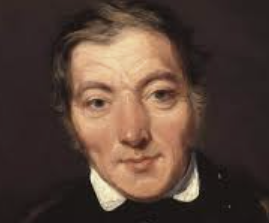
To preserve permanent good health, the state of mind must be taken into consideration.
▼
Source
source
3rd Part
3 months 4 weeks ago
Is Christ only to be adored? Or is the holy Mother of God rather not to be honoured? This is the woman who crushed the Serpent's head. Hear us. For your Son denies you nothing.
▼
Source
source
Weimar edition of Martin Luther's Works, English translation edited by J. Pelikan [Concordia: St. Louis], Vol. 51, 128-129

3 months 2 weeks ago
Christianity has functioned for the normative self-understanding of modernity as more than a mere precursor or a catalyst. Egalitarian universalism, from which sprang the ideas of freedom and social solidarity, of an antonomous conduct of life and emancipation, of the individual morality of conscience, human rights, and democracy, is the direct heir to the judaic ethic of justice and the Christian ethic of love. This legacy, substantially unchanged, has been the object of continual critical appropriation and reinterpretation. To this day, there is no alternative to it. And in the light of the current challenges of a postnational constellation, we continue to draw on the substance of this heritage. Everything else is just idle postmodern talk.
▼
Source
source
Habermas (2006) "Conversation about God and the World." Time of transitions. Cambridge: Polity Press, p. 150-151.
3 months 3 weeks ago
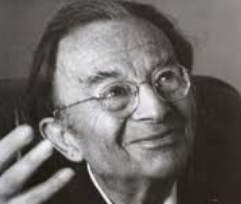
To oppose the torrent of scholastic religion by such feeble maxims as these, that it is impossible for the same thing to be and not to be, that the whole is greater than a part, that two and three make five; is pretending to stop the ocean with a bullrush. Will you set up profane reason against sacred mystery? No punishment is great enough for your impiety. And the same fires, which were kindled for heretics, will serve also for the destruction of philosophers.
▼
Source
source
Part XI - With regard to reason or absurdity

2 months 3 days ago
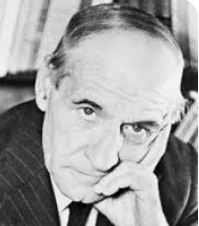
Fairness means not to use fraud and trickery in the exchange of commodities and services and the exchange of feelings.
2 months 1 week ago
The history of the Roman Empire is also the history of the uprising of the Empire of the Masses, who absorb and annul the directing minorities and put themselves in their place. Then, also, is produced the phenomenon of agglomeration, of "the full." For that reason, as Spengler has very well observed, it was necessary, just as in our day, to construct enormous buildings. The epoch of the masses is the epoch of the colossal.
▼
Source
source
Chap.II: The Rise Of The Historic Level
3 months 3 weeks ago
Respect the child. Be not too much his parent. Trespass not on his solitude.
▼
Source
source
Education
2 months 3 days ago
I believe that the unity of man as opposed to other living things derives from the fact that man is the conscious life of himself. Man is conscious of himself, of his future, which is death, of his smallness, of his impotence; he is aware of others as others; man is in nature, subject to its laws even if he transcends it with his thought.
2 months 1 week ago
This grave dissociation of past and present is the generic fact of our time and the cause of the suspicion, more or less vague, which gives rise to the confusion characteristic of our present-day existence. We feel that we actual men have suddenly been left alone on the earth; that the dead did not die in appearance only but effectively; that they can no longer help us. Any remains of the traditional spirit have evaporated. Models, norms, standards are no use to us. We have to solve our problems without any active collaboration of the past, in full actuality, be they problems of art, science, or politics. The European stands alone, without any living ghosts by his side; like Peter Schlehmil he has lost his shadow. This is what always happens when midday comes.
▼
Source
source
"The Dehumanisation of Art"; Ortega y Gasset later used this passage in The Revolt of the Masses (1929), quoting it in Ch. III: The Height Of The Times

3 months 1 week ago
For joys fall not to the rich alone, nor has he lived ill, who from birth to death has passed unknown.
▼
Source
source
Book I, epistle xvii, line 9
2 months 2 weeks ago
It has been a long time since philosophers have read men's souls. It is not their task, we are told. Perhaps. But we must not be surprised if they no longer matter much to us.
2 months ago
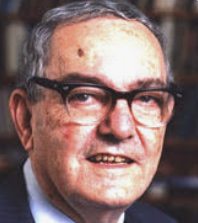
Decision making processes are aimed at finding courses of action that are feasible or satisfactory in the light of multiple goals and constraints.
▼
Source
source
p. 274.
2 months 4 days ago
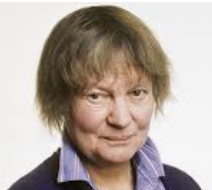
As man loses touch with his 'inner being', his instinctive depths, he finds himself trapped in the world of consciousness, that is to say, in the world of other people. Any poet knows this truth; when other people sicken him, he turns to hidden resources of power inside himself, and he knows then that other people don't matter a damn. He knows the 'secret life' inside him is the reality; other people are mere shadows in comparison. but the 'shadows' themselves cling to one another. 'Man is a political animal', said Aristotle, telling one of the greatest lies in human history. Man has more in common with the hills, or with the stars, than with other men.
▼
Source
source
p. 170
2 months 1 week ago
Perhaps when distant people on other planets pick up some wave-length of ours all they hear is a continuous scream.
▼
Source
source
The Message to the Planet (1989) p. 509.
6 days ago
It was a great deed to conquer Carthage, but a greater deed to conquer death.
6 days ago
A good judge condemns wrongful acts, but does not hate them.
▼
Source
source
De Ira (On Anger): Book 1, cap. 16, line 6.

4 months ago
Alonso of Aragon was wont to say in commendation of age, that age appears to be best in four things - old wood best to burn, old wine to drink, old friends to trust, and old authors to read.
▼
Source
source
No. 97
2 months ago
If we want a theory explaining how people play billiards, we do not want a theory of perfect billiard balls; we want a theory of what heuristics a human billiard player uses in order to plan and make a (often not quite accurate) shot. These heuristics and actions do not involve solving the differential equations of the billiard board; they involve rules of thumb and it is these practice guides to action we are trying to discover in order to explain the behavior.
▼
Source
source
An Empirically Based Microeconomics (1997), p. 173
2 months 2 weeks ago
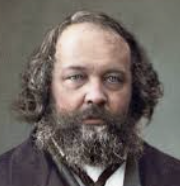
In order to touch the heart and gain the confidence, the assent, the adhesion, and the co-operation of the illiterate legions of the proletariat - and the vast majority of proletarians unfortunately still belong in this category - it is necessary to begin to speak to those workers not of the general sufferings of the international proletariat as a whole but of their particular, daily, altogether private misfortunes. It is necessary to speak to them of their own trade and the conditions of their work in the specific locality where they live; of the harsh conditions and long hours of their daily work, of the small pay, the meanness of their employer, the high cost of living, and how impossible it is for them properly to support and bring up a family.
▼
Source
source
Founding of the Workers' International

2 months 4 weeks ago
Time is the father of truth, its mother is our mind.
▼
Source
source
Quote as translated in The Encyclopedia of Religion Vol. 11 (1987), by Mircea Eliade, p. 459
CivilSimian.com created by AxiomaticPanic, CivilSimian, Kalokagathia