

2 weeks 2 days ago
The strengthening of behavior which results from reinforcement is appropriately called "conditioning". In operant conditioning we "strengthen" an operant in the sense of making a response more probable or, in actual fact, more frequent.
▼
Source
source
Science and Human Behavior

3 months 2 weeks ago
Men became scientific because they expected law in Nature; and they expected law in Nature because they believed in a Legislator.
▼
Source
source
Ch. 3: "The Cardinal Difficulty of Naturalism"

3 months 3 weeks ago
The secret of happiness is this: let your interests be as wide as possible, and let your reactions to the things and persons that interest you be as far as possible friendly rather than hostile.

1 month 2 weeks ago
Bless advertising art for its pictorial vitality and verbal creativity.
▼
Source
source
(p. 18)
3 months 2 weeks ago
It is high time that Communists should openly, in the face of the whole world, publish their views, their aims, their tendencies, and meet this nursery tale of the spectre of Communism with a Manifesto of the party itself.
▼
Source
source
Preamble, paragraph 3.
4 weeks 1 day ago
To recognize a difficulty is not to solve it.
▼
Source
source
Chapter 1, The Faces of Silence, p. 9
1 month 2 weeks ago
It's misleading to suppose there's any basic difference between education & entertainment. This distinction merely relieves people of the responsibility of looking into the matter.
▼
Source
source
(1957) from "Classroom Without Walls", Explorations Vol. 7, 1957; reprinted in Explorations in Communication ed. E. Carpenter & M. McLuhan, (Boston: Beacon, 1960); and again in McLuhan: Hot and Cool ed. G. E. Stearn (NY: Dial, 1967).

2 months 3 weeks ago
The march of the human mind is slow.

3 months 2 weeks ago
Philosophy is like trying to open a safe with a combination lock: each little adjustment of the dials seems to achieve nothing, only when everything is in place does the door open.
▼
Source
source
Philosophical Occasions 1912-1951 (1993) edited by James Carl Klagge and Alfred Nordmann

3 months 2 weeks ago
Four snakes gliding up and down a hollow for no purpose that I could see - not to eat, not for love, but only gliding.
▼
Source
source
April 11, 1834

2 months 1 week ago
Outside the academic establishment, the "far-reaching change in all our habits of thought" is more serious. It serves to coordinate ideas and goals with those exacted by the prevailing system, to enclose them in the system, and to repel those which are irreconcilable with the system. The reign of such a one-dimensional reality does not mean that materialism rules, and that the spiritual, metaphysical, and bohemian occupations are petering out. On the contrary, there is a great deal of "Worship together this week," "Why not try God," Zen, existentialism, and beat ways of life, etc. But such modes of protest and transcendence are no longer contradictory to the status quo and no longer negative. They are rather the ceremonial part of practical behaviorism, its harmless negation, and are quickly digested by the status quo as part of its healthy diet.
▼
Source
source
pp. 13-14
3 months 3 weeks ago
The little honesty that exists among authors is discernible in the unconscionable way they misquote from the writings of others.
3 months 2 weeks ago
It comes, it comes!' they sang. 'Sleepers awake! It comes, it comes, it comes.' One dreadful glance over my shoulder I essayed - not long enough to see (or did I see?) the rim of the sunrise that shoots Time dead with golden arrows and puts to flight all phantasmal shapes. Screaming, I buried my face in the fold of the Teacher's robe. 'The morning! The morning!' I cried. 'I am caught by the morning and I am a ghost.'
▼
Source
source
Ch. 14

3 months 1 day ago
If melodiously piping flutes sprang from the olive, would you doubt that a knowledge of flute-playing resided in the olive? And what if plane trees bore harps which gave forth rhythmical sounds? Clearly you would think in the same way that the art of music was possessed by plane trees. Why, then, seeing that the universe gives birth to beings that are animate and wise, should it not be considered animate and wise itself?
▼
Source
source
As quoted in De Natura Deorum by Cicero, ii. 8.

3 months 1 week ago
My enemy is not the man who wrongs me, but the man who means to wrong me.

2 months 3 weeks ago
I thanke God for my happy Dreams|dreames, as I doe for my good rest, for there is a satisfaction in them unto reasonable desires, and such as can be content with a fit of happinesse; and surely it is not a melancholy conceite to thinke we are all asleepe in this world, and that the conceits of this life are as meare dreames to those of the next, as the Phantasmes of the night, to the conceit of the day. There is an equall delusion in both, and the one doth but seeme to bee the embleme or picture of the other;
▼
Source
source
Section 12
3 months 2 weeks ago
A sensible human once said, "If people knew how much ill-feeling unselfishness occasions, it would not be so often recommended from the pulpit"; and again, "She's the sort of woman who lives for others-you can always tell the others by their hunted expression."
▼
Source
source
Letter XXVI

3 months 3 weeks ago
Nature offers nothing that can be called this man's rather than another's ; but, under nature, everything belongs to all - that is, they have authority to claim it for themselves. But, under dominion, where it is by common law determined what belongs to this man, and what to that, he is called just who has a constant will to render to every man his own, but he, unjust who strives, on the contrary, to make his own that which belongs to another.
▼
Source
source
Ch. 2, Of Natural Right

2 months 3 weeks ago
What most astonishes me in the United States, is not so much the marvelous grandeur of some undertakings, as the innumerable multitude of small ones.
▼
Source
source
Book Two, Chapter XIX.
3 months 4 weeks ago
For Christ is Joy and Sweetness to a broken heart. Christ is a Lover of poor sinners, and such a Lover that He gave Himself for us. Now if this is true, and it is true, then are we never justified by our own righteousness.
▼
Source
source
Chapter 3, verse 20

3 months 2 weeks ago
Those who believe that they are exclusively in the right are generally those who achieve something.
▼
Source
source
"Note on Dogma"
2 months 2 weeks ago
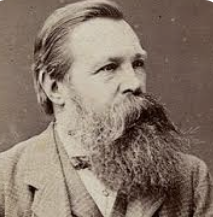
Labour is the source of all wealth, the political economists assert. And it really is the source -- next to nature, which supplies it with the material that it converts into wealth. But it is even infinitely more than this. It is the prime basic condition for all human existence, and this to such an extent that, in a sense, we have to say that labour created man himself.
▼
Source
source
The Part Played by Labour in the Transition from Ape to Man
1 month 1 week ago
In an age of enormities, the emotions are naturally weakened. We are continually called upon to have feelings - about genocide, for instance, or about famine or the blowing up of passenger planes - and we are all aware that we are incapable of reacting appropriately. A guilty consciousness of emotional inadequacy or impotence makes people doubt their own human weight.
▼
Source
source
"The Distracted Public" (1990), p. 156

3 weeks 6 days ago
For a consistent naturalist science can only be a refinement of animal exploration, a practice humans have devised for finding their way in the bit of the universe in which they have so far survived. Instead of thinking of science as a law-seeking activity, we can think of it as a tool humans use to cope with a world they will never understand.
▼
Source
source
Sweet Morality (p. 224)

2 months 2 weeks ago
Each new ontological theory, propounded in lieu of previous ones shown to be untenable, has been followed by a new criticism leading to a new scepticism. All possible conceptions have been one by one tried and found wanting; and so the entire field of speculation has been gradually exhausted without positive result: the only result reached being the negative one above stated, that the reality existing behind all appearances is, and must ever be, unknown.
▼
Source
source
Pt. I, The Unknowable; Ch. IV, The Relativity of All Knowledge
3 months 2 weeks ago
Every man is a divinity in disguise, a god playing the fool. It seems as if heaven had sent its insane angels into our world as to an asylum. And here they will break out into their native music, and utter at intervals the words they have heard in heaven; then the mad fit returns, and they mope and wallow like dogs!
▼
Source
source
p. 165
1 month 2 weeks ago
It takes a long time to bring excellence to maturity.
▼
Source
source
Maxim 780

1 month 2 weeks ago
Truth is ... one approach to the attainment of the good, but in and of itself, it is neither the good nor the beautiful ... Socrates, Pascal, and others regarded knowledge of the truth with regard to purposeless objects as incongruous with the good ... [by] exposing deception, truth destroys illusion, which is the principle attribute of beauty.
3 months 2 weeks ago
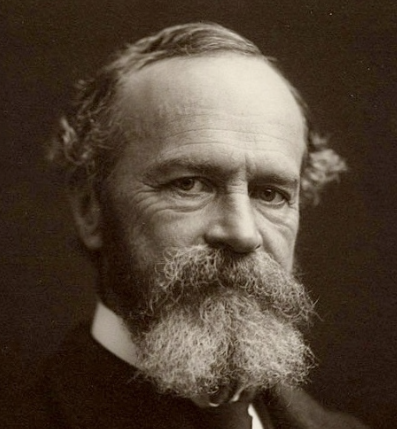
There must be something solemn, serious, and tender about any attitude which we denominate religious. If glad, it must not grin or snicker; if sad, it must not scream or curse. It is precisely as being solemn experiences that I wish to interest you in religious experiences. ... The divine shall mean for us only such a primal reality as the individual feels impelled to respond to solemnly and gravely, and neither by a curse nor a jest.
▼
Source
source
Lecture II, "Circumscription of the Topic"
2 months 2 weeks ago
By far the most valuable things, which we know or can imagine, are certain states of consciousness, which may roughly be described as the pleasures of human intercourse and the enjoyment of beautiful objects. No one, probably, who has asked himself the question, has ever doubted that personal affection and the appreciation of what is beautiful in Art or Nature, are good in themselves; nor, if we consider strictly what things are worth having purely for their own sakes, does it appear probable that any one will think that anything else has nearly so much value as the things which are included under these two heads.
▼
Source
source
Principia Ethica (1903; revised edition, Cambridge University Press, 1993).
4 months 3 weeks ago
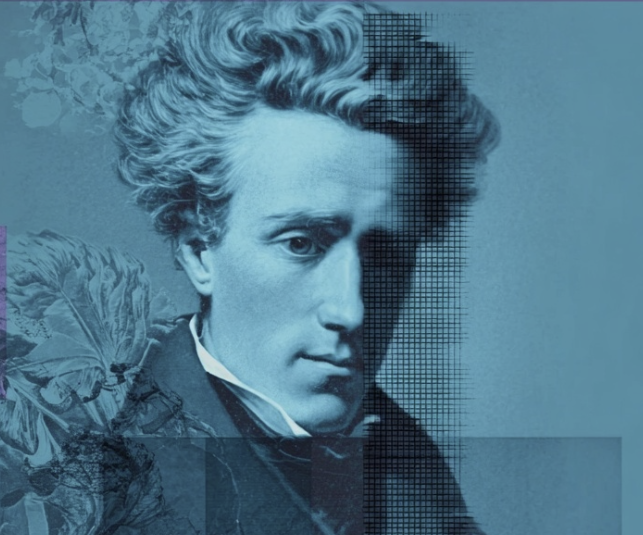
It belongs to the imperfection of everything human that man can only attain his desire by passing through its opposite.
3 months 2 weeks ago
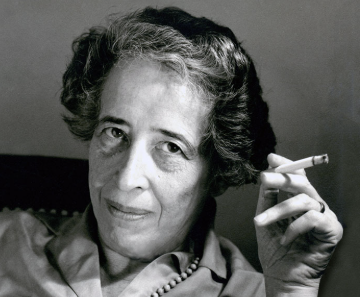
The most radical revolutionary will become a conservative the day after the revolution.
▼
Source
source
The New Yorker

3 months 4 weeks ago
Amongst so many borrowed things, I am glad if I can steal one, disguising and altering it for some new service.
▼
Source
source
Book III, Ch. 12. Of Physiognomy
2 weeks ago
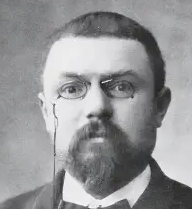
I think I have already said somewhere that mathematics is the art of giving the same name to different things.
▼
Source
source
Part I. Ch. 2 : The Future of Mathematics, p. 31

2 months 1 week ago
Apart from the fact there is no normal standard of health, nobody has proved that man is necessarily cheerful by nature. And further, man, by the very fact of being man, of possessing consciousness, is, in comparison with the ass or the crab, a diseased animal. Consciousness is a disease.
3 months 2 weeks ago
The way for a person to develop a [writing] style is (a) to know exactly what he wants to say, and (b) to be sure he is saying exactly that. The reader, we must remember, does not start by knowing what we mean. If our words are ambiguous, our meaning will escape him. I sometimes think that writing is like driving sheep down a road. If there is any gate open to the left or the right the readers will most certainly go into it.
▼
Source
source
As quoted in part 2 of Sherwood Eliot Wirt in "The Final Interview of C. S. Lewis", 1963
5 days ago
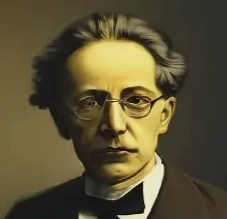
Because the Egoist is to himself the warder of the human, and has nothing to say to the state except: "Get out of my sunshine!"
▼
Source
source
Tucker 1907, p. 307
1 day ago
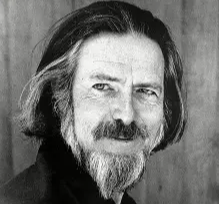
The world is in an extremely dangerous situation, and serious diseases often require the risk of a dangerous cure - like the Pasteur serum for rabies.
▼
Source
source
Inside Information p. 4
3 months 3 weeks ago
What is serious about excitement is that so many of its forms are destructive. It is destructive in those who cannot resist excess in alcohol or gambling. It is destructive when it takes the form of mob violence. And above all it is destructive when it leads to war. It is so deep a need that it will find harmful outlets of this kind unless innocent outlets are at hand. There are such innocent outlets at present in sport, and in politics so long as it is kept within constitutional bounds. But these are not sufficient, especially as the kind of politics that is most exciting is also the kind that does most harm. Civilized life has grown altogether too tame, and, if it is to be stable, it must provide harmless outlets for the impulses which our remote ancestors satisfied in hunting.
2 months 2 weeks ago
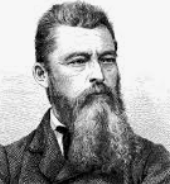
Religion is the dream of the human mind. But even in dreams we do not find ourselves in emptiness or in heaven, but on earth, in the realm of reality; we only see real things in the entrancing splendor of imagination and caprice, instead of in the simple daylight of reality and necessity.
▼
Source
source
Preface to Second Edition
4 weeks 1 day ago
It is better to live under a tree in a jungle inhabited by tigers and elephants, to maintain oneself in such a place with ripe fruits and spring water, to lie down on grass and to wear the ragged barks of trees than to live amongst one's relations when reduced to poverty.

4 months 3 weeks ago
So far no one had had enough courage and intelligence to reveal me to my dear Germans. My problems are new, my psychological horizon frighteningly comprehensive, my language bold and clear; there may well be no books written in German which are richer in ideas and more independent than mine.
2 months 3 weeks ago
The Revolution and Hanover succession had been objects of the highest veneration to the old Whigs. They thought them not only proofs of the sober and steady spirit of liberty which guided their ancestors; but of their wisdom and provident care of posterity.-The modern Whigs have quite other notions of these events and actions. They do not deny that Mr. Burke has given truly the words of the acts of parliament which secured the succession, and the just sense of them. They attack not him but the law.
▼
Source
source
p. 436


4 months 1 week ago
What Heaven has conferred is called The Nature; an accordance with this nature is called The Path of duty; the regulation of this path is called Instruction. The path may not be left for an instant. If it could be left, it would not be the path. On this account, the superior man does not wait till he sees things, to be cautious, nor till he hears things, to be apprehensive.

1 week 4 days ago
The Public is an old woman. Let her maunder and mumble.
▼
Source
source
Journal (1835).
3 months 2 weeks ago
You shall have joy, or you shall have power, said God; you shall not have both.
▼
Source
source
October 1842
2 months 2 weeks ago
Man is the higher Sense of our Planet; the star which connects it with the upper world; the eye which it turns towards Heaven.
3 weeks 6 days ago
In a traditional reading eating the apple was the original sin; but, as Gnostics understood the story, the two primordial humans were right to eat the apple. The God that commanded them not to do so was not the true God but only a demiurge, a tyrannical underling exulting in its power, while the serpent came to free them from slavery. True, when they ate the apple Adam and Eve fell from grace. This was indeed the Fall of Man - a fall into the dim world of everyday consciousness. But the Fall need not be final. Having eaten its fill from the Tree of Knowledge, humankind can then rise into a state of conscious innocence. When this happens, Herr C. declares, it will be 'the final chapter in the history of the world'.
▼
Source
source
The Faith of Puppets: The Freedom of the Marionette (p. 8)
1 month 6 days ago
In a well worn metaphor, a parallel is drawn between the life of man and the metamorphosis of the caterpillar into the butterfly; but the comparison may be more just as well as more novel, if for its former term we take the mental progress of the race. History shows that the human mind, fed by constant accessions of knowledge, periodically grows too large for its theoretical coverings, and bursts them asunder to appear in new habiliments, as the feeding and growing grub, at intervals, casts its too narrow skin and assumes another, itself but temporary. Truly the imago state of Man seems to be terribly distant, but every moult is a step gained, and of such there have been many.
▼
Source
source
Ch.2, p. 72
CivilSimian.com created by AxiomaticPanic, CivilSimian, Kalokagathia