


4 months 3 weeks ago
There is more to a science fiction story than the science it contains.
1 month 1 week ago
Our western science is a child of moral virtues; and it must now become the father of further moral virtues if its extraordinary material triumphs in our time are not to bring human history to an abrupt, unpleasant and discreditable end.
▼
Source
source
"A Turning Point in Man's Destiny", The New York Times Magazine (26 December 1954) p. 5

3 months 3 weeks ago
Suppose atomic bombs had reduced the population of the world to one brother and one sister, should they let the human race die out? I do not know the answer, but I do not think it can be in the affirmative merely on the ground that incest is wicked.
▼
Source
source
p. 47
2 months 2 weeks ago
But to manipulate men, to propel them towards goals which you - the social reformer - see, but they may not, is to deny their human essence, to treat them as objects without wills of their own, and therefore to degrade them.

2 months 4 weeks ago
He was as great as a man can be without morality.
▼
Source
source
Said of Napoleon (1842)

2 weeks 1 day ago
There is no heroic poem in the world but is at bottom a biography, the life of a man; also, it may be said, there is no life of a man, faithfully recorded, but is a heroic poem of its sort, rhymed or unrhymed.
1 month 3 days ago
If I'm a cruel satirist at least I'm not a hyprocrite: I never judge what other people do. Neither a politician nor a priest, I never censor what others do. Neither a philospher nor a psychiatrist, I never bother trying to analyze or resolve my fears and neuroses.
▼
Source
source
"Hypocrisy"

3 months 3 weeks ago
I find that the whiter my hair becomes the more ready people are to believe what I say.
▼
Source
source
Bertrand Russell Speaks His Mind (1960), p. 80

4 months 1 week ago
The first-beginnings of things cannot be seen by the eyes.
▼
Source
source
Book I, line 268 (tr. Munro)

4 months 3 weeks ago
We believe that we know something about the things themselves when we speak of trees, colors, snow, and flowers; and yet we possess nothing but metaphors for things, metaphors which correspond in no way to the original entities.

3 months 4 weeks ago
Were a stranger to drop on a sudden into this world, I would show him, as a specimen of its ills, a hospital full of diseases, a prison crowded with malefactors and debtors, a field of battle strewed with carcasses, a fleet foundering in the ocean, a nation languishing under tyranny, famine, or pestilence. To turn the gay side of life to him, and give him a notion of its pleasures; whither should I conduct him? to a ball, to an opera, to court? He might justly think, that I was only showing him a diversity of distress and sorrow.
▼
Source
source
Demea to Philo, Part X
2 days ago
It is important that man dreams, but it is perhaps equally important that he can laugh at his own dreams.
▼
Source
source
Ch. I : The Awakening, pp. 4-5

2 months 2 weeks ago
Consciousness is nature's nightmare.
1 month 2 weeks ago
Believe me, my friends, you are yet very deficient with regard to the best modes of training your children, or of arranging your domestic concerns.
3 months 1 day ago
I entirely agree with you, as to the ill tendency of the affected doubts of some philosophers, and fantastical conceit of others. I am even so far gone of late in this way of think, that I have quitted several of the sublime notions I had got in their schools for vulgar opinions. And I give it you on my word, since this revolt from metaphysical notions to the plain dictates of nature and common sense, I find my understanding strangely enlightened, so that I can now easily comprehend a great many thing which before were all mystery and riddle.
▼
Source
source
Said by Philonous (Berkeley) to Hylas in the opening of dialog 1 with reference to the recent surge philosophic endeavors (Locke, Newton, et al) that seemed to lead to skepticism about the existence of the world.
2 months 4 weeks ago
There is in fact a manly and legitimate passion for equality that spurs all men to wish to be strong and esteemed. This passion tends to elevate the lesser to the rank of the greater. But one also finds in the human heart a depraved taste for equality, which impels the weak to want to bring the strong down to their level, and which reduces men to preferring equality in servitude to inequality in freedom.
▼
Source
source
Chapter III, Part I
2 weeks 1 day ago
The Great Man here too, as always, is a Force of Nature. Whatsoever is truly great in him springs up from the inarticulate deeps.
3 months 3 weeks ago
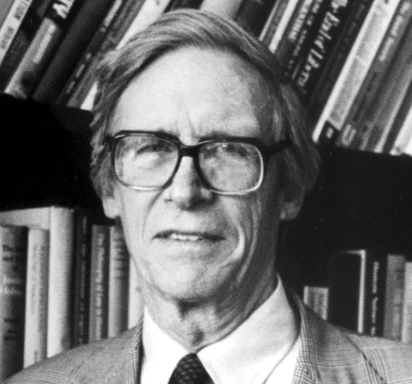
That persons have opposing interests and seek to advance their own conception of the good is not at all the same thing as their being moved by envy and jealousy.
▼
Source
source
Chapter IX, Section 81, p. 540
2 months 1 week ago
It must be recognized that man in his limited and relative earthly life is capable of bringing about the beautiful and the valuable only when he believes in another life, unlimited, absolute, eternal. That is a law of his being. A contact with this mortal life exclusive of any other ends in the wearing-away of effective energy and a self-satisfaction that makes one useless and superficial. Only the spiritual man, striking his roots deep in infinite and eternal life, can be a true creator. But Humanism denied the spiritual man, handed over the eternal to the temporal, and took its stand by the natural man within the limited confines of the earth.
▼
Source
source
p. 34
2 months 2 weeks ago
The society which projects and undertakes the technological transformation of nature alters the base of domination by gradually replacing personal dependence (of the slave on the master, the serf on the lord of the manor, the lord on the donor of the fief, etc.) with dependence on the "objective order of things" (on economic laws, the market etc.).
▼
Source
source
p. 144
1 month 3 days ago
The public has lost the habit of movie-going because the cinema no longer possesses the charm, the hypnotic charisma, the authority it once commanded. The image it once held for us all - that of a dream we dreamt with our eyes open - has disappeared. Is it still possible that one thousand people might group together in the dark and experience the dream that a single individual has directed?
▼
Source
source
"Decline of Cinema"
4 months 2 weeks ago
I do not open up the truth to one who is not eager to get knowledge, nor help out any one who is not anxious to explain himself. When I have presented one corner of a subject to any one, and he cannot from it learn the other three, I do not repeat my lesson.

2 months 1 week ago
And yet Catholicism does not abandon ethics. No! No modern religion can leave ethics on one side. But our religion - although its doctors may protest against this - is fundamentally and for the most part a compromise between eschatology and ethics; it is eschatology pressed into the service of ethics. What else but this is that atrocity of the eternal pains of hell, which agrees so ill with the Pauline apocatastasis? Let us bear in mind these words which the Theologica Germanica, the manual of mysticism that Luther read, puts into the mouth of God: "If I must recompense your evil, I must recompense it with good, for I am and have no other." And Christ said: "Father, forgive them, for they know not what they do," and there is no man who perhaps knows what he does.

4 months 2 days ago
...so it is with human reason, which strives not against faith, when enlightened, but rather furthers and advances it.
▼
Source
source
On Justification CCXCIV
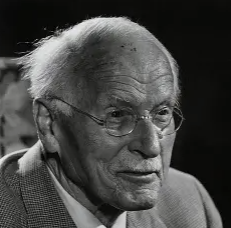
2 months 3 weeks ago
That higher and "complete" man is begotten by the "unknown" father and born from Wisdom, and it is he who, in the figure of the puer aeternus-"vultu mutabilis albus et ater"-represents our totality, which transcends consciousness. It was this boy into whom Faust had to change, abandoning his inflated onesidedness which saw the devil only outside. Christ's "Except ye become as little children" is a prefiguration of this, for in them the opposites lie close together; but what is meant is the boy who is born from the maturity of the adult man, and not the unconscious child we would like to remain.
▼
Source
source
Answer to Job, R. Hull, trans. (1984), pp. 157-158

3 months 3 weeks ago
It is a political axiom that power follows property.
▼
Source
source
Chapter 12 (p. 113)

2 months 3 weeks ago
The pretended rights of these theorists are all extremes: and in proportion as they are metaphysically true, they are morally and politically false. The rights of men are in a sort of middle, incapable of definition, but not impossible to be discerned. The rights of men in government are their advantages; and these are often in balances between differences of good; in compromises between good and evil, and sometimes between evil and evil. Political reason is a computing principle: adding, subtracting, multiplying, and dividing, morally and not metaphysically or mathematically, true moral denominations.
4 months 1 week ago
A thing therefore never returns to nothing.
▼
Source
source
Book I, line 248 (tr. Munro)
2 weeks 1 day ago
There is a science of Dynamics in man's fortunes and nature, as well as of Mechanics. There is a science which treats of, and practically addresses, the primary, unmodified forces and energies of man, the mysterious springs of Love, and Fear, and Wonder, of Enthusiasm, Poetry, Religion, all which have a truly vital and infinite character; as well as a science which practically addresses the finite, modified developments of these, when they take the shape of immediate "motives," as hope of reward, or as fear of punishment.
2 weeks 1 day ago
Human virtue, if we went down to the roots of it, is not so rare. The materials of human virtue are everywhere abundant as the light of the sun: raw materials,-O woe, and loss, and scandal thrice and threefold, that they so seldom are elaborated, and built into a result! that they lie yet unelaborated, and stagnant in the souls of wide-spread dreary millions, fermenting, festering; and issue at last as energetic vice instead of strong practical virtue!
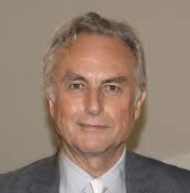
1 month 2 weeks ago
We should be offended when children are denied a proper education. We should be offended when children are told they will spend eternity in hell. We should be offended when medical science, for example stem-cell research, is compromised by the bigoted opinions of powerful and above all well-financed ignoramuses. We should be offended when voodoo, of all kinds, is given equal weight to science. We should be offended by hymen reconstruction surgery. We should be offended by 'female circumcision', euphemism for genital mutilation. We should be offended by stoning.
▼
Source
source
I Am Offended!, August 3, 2008
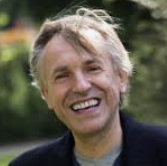
1 month 3 days ago
True hedonic engineering, as distinct from mindless hedonism or reckless personal experimentation, can be profoundly good for our character. Character-building technologies can benefit utilitarians and non-utilitarians alike. Potentially, we can use a convergence of biotech, nanorobotics and information technology to gain control over our emotions and become better (post-)human beings, to cultivate the virtues, strength of character, decency, to become kinder, friendlier, more compassionate: to become the type of (post)human beings that we might aspire to be, but aren't, and biologically couldn't be, with the neural machinery of unenriched minds. Given our Darwinian biology, too many forms of admirable behaviour simply aren't rewarding enough for us to practise them consistently: our second-order desires to live better lives as better people are often feeble echoes of our baser passions.
▼
Source
source
Utopian Neuroscience, BLTC Research, 2019
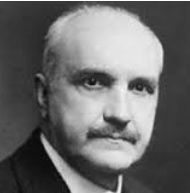
2 months 2 weeks ago
They [the wise spirits of antiquity in the first circle of Dante's Inferno] are condemned, Dante tells us, to no other penalty than to live in desire without hope, a fate appropriate to noble souls with a clear vision of life.
▼
Source
source
Obiter Scripta

3 months 3 weeks ago
Always put the best interpretation on a tenet. Why not on Christianity, wholesome, sweet, and poetic? It is the record of a pure and holy soul, humble, absolutely disinterested, a trutn-speaker, and bent on serving, teaching, and uplifting men. Christianity taught the capacity, the element, to Jove the All-perfect without a stingy bargain for personal happiness. It taught that to love him was happiness,-to love him in other's virtues.
2 months 1 week ago
Only the feeble resign themselves to final death and substitute some other desire for the longing for personal immortality. In the strong the zeal for perpetuity overrides the doubt of realizing it, and their superabundance of life overflows upon the other side of death.

2 months 3 weeks ago
If there is no immortality, there is no virtue. ... Without God and immortal life? All things are lawful then, they can do what they like?
▼
Source
source
Quoted in M. M. Bakhtin, Problems of Dostoevsky's Poetics, trans. R. W. Rotsel (Ann Arbor, MI: Ardis, 1973) p. 70

3 months 3 weeks ago
Objective evidence and certitude are doubtless very fine ideals to play with, but where on this moonlit and dream-visited planet are they found?
▼
Source
source
"The Will to Believe" p. 14
4 months 1 week ago
Who is not tempted by attractive and wide-awake children to join their sports, and crawl on all fours with them, and talk baby talk with them?
▼
Source
source
Book II, ch. 24, 18
1 month 1 week ago
If we consider merely the subtlety of disquisition, the force of imagination, the perfect energy and elegance of expression, which characterise the great works of Athenian genius, we must pronounce them intrinsically most valuable; but what shall we say when we reflect that from hence have sprung, directly or indirectly, all the noblest creations of the human intellect; that from hence were the vast accomplishments, and the brilliant fancy of Cicero; the withering fire of Juvenal; the plastic imagination of Dante; the humour of Cervantes; the comprehension of Bacon; the wit of Butler; the supreme and universal excellence of Shakspeare? All the triumphs of truth and genius over prejudice and power, in every country and in every age, have been the triumphs of Athens. Wherever a few great minds have made a stand against violence and fraud, in the cause of liberty and reason, there has been her spirit in the midst of them; inspiring, encouraging, consoling.
▼
Source
source
p. 178
2 months 2 weeks ago
With the disintegration of all that Nietzsche had revered, existence, to him, had become a desert in which only one thing remained, namely that which had relentlessly forced him into this path: truthfulness that knows no limits and is not subject to any condition.
▼
Source
source
p. 45
2 months 1 week ago
Once the needs of hunger are satisfied - and they are soon satisfied - the vanity, the necessity - for it is a necessity - arises of imposing ourselves upon and surviving in others. Man habitually sacrifices his life to his purse, but he sacrifices his purse to his vanity. He boasts even of his weakness and his misfortunes, for want of anything better to boast of, and is like a child who, in order to attract attention, struts about with a bandaged finger.
4 months 3 weeks ago
The greatest saving one can make in the order of thought is to accept the unintelligibility of the world and to pay attention to man.
2 months 3 weeks ago
Taught from their infancy that beauty is woman's sceptre, the mind shapes itself to the body, and roaming round its gilt cage, only seeks to adorn its prison.
▼
Source
source
Ch. 3

1 week 2 days ago
I commend you and rejoice in the fact that you are persistent in your studies, and that, putting all else aside, you make it each day your endeavour to become a better man.
2 weeks 3 days ago
The history of utopias is no less fascinating than the history of metallurgy or of chemical engineering.
▼
Source
source
New Preface, p. vi
CivilSimian.com created by AxiomaticPanic, CivilSimian, Kalokagathia