


2 months 3 weeks ago
There is geometry in the humming of the strings. There is music in the spacings of the spheres.
▼
Source
source
As quoted in the preface of the book entitled Music of the Spheres by Guy Murchie


3 weeks ago
Language steps in where the angels of experience fear to tread.
▼
Source
source
Chapter 1, The Faces of Silence, p. 5

3 months 1 week ago
It's only by thinking even more crazily than philosophers do that you can solve their problems.
▼
Source
source
p. 75e

3 months 2 weeks ago
Like rowers, who advance backward.
▼
Source
source
Book III, Ch. 1. Of Profit and Honesty


1 month 1 week ago
There is no connection between the elements in an electric world, which is equivalent to being surrounded by the human unconscious.
▼
Source
source
(p. 260)
2 months 4 days ago
In the late eighteenth and the greater part of the nineteenth centuries appeared the first marked cultural shift in the attitude taken toward change. Under the names of indefinite perfectibility, progress, and evolution, the movement of things in the universe itself and of the universe as a whole began to take on a beneficent instead of hateful aspect.
1 month 2 weeks ago
One may dream of a culture where everyone bursts into laughter when someone says: this is true, this is real.

3 months 1 week ago
Reality is harsh to the feet of shadows.
▼
Source
source
Ch. 5

4 months 1 week ago
What is the essence of life? To serve others and to do good. Often given as a saying of Aristotle with no reference.

3 months 1 week ago
If a man walk in the woods for love of them half of each day, he is in danger of being regarded as a loafer; but if he spends his whole day as a speculator, shearing off those woods and making earth bald before her time, he is esteemed an industrious and enterprising citizen. As if a town had no interest in its forests but to cut them down!
▼
Source
source
p. 485

3 months 1 week ago
By virtue of its innermost intention, and like all questions about language, structuralism escapes the classical history of ideas which already supposes structuralism's possibility, for the latter naively belongs to the province of language and propounds itself within it.Nevertheless, by virtue of an irreducible region of irreflection and spontaneity within it, by virtue of the essential shadow of the undeclared, the structuralist phenomenon will deserve examination by the historian of ideas. For better or for worse. Everything within this phenomenon that does not in itself transparently belong to the question of the sign will merit this scrutiny; as will everything within it that is methodologically effective, thereby possessing the kind of infallibil-ity now ascribed to sleepwalkers and formerly attributed to instinct, which was said to be as certain as it was blind.
▼
Source
source
Force and Signification

3 months 3 weeks ago
People almost invariably arrive at their beliefs not on the basis of proof but on the basis of what they find attractive.
▼
Source
source
De l'Art de persuader ["On the Art of Persuasion"], written 1658; published posthumously.

3 months 2 weeks ago
Where is the prince sufficiently educated to know that for seventeen hundred years the Christian sect has done nothing but harm?
▼
Source
source
Letters of Voltaire and Frederick the Great (New York: Brentano's, 1927), transl. Richard Aldington, letter 160 from Voltaire to Frederick II of Prussia, 6 April 1767

3 days ago
It is the very joy of man's heart to admire, where he can; nothing so lifts him from all his mean imprisonments, were it but for moments, as true admiration.

4 months 1 week ago
One does not discover the absurd without being tempted to write a manual of happiness. "What! — by such narrow ways — ?" There is but one world, however. Happiness and the absurd are two sons of the same earth. They are inseparable. It would be a mistake to say that happiness necessarily springs from the absurd discovery. It happens as well that the feeling of the absurd springs from happiness.

3 months 4 weeks ago
In matters that are so obscure and far beyond our vision, we find in Holy Scripture passages which can be interpreted in very different ways without prejudice to the faith we have received. In such cases, we should not rush in headlong and so firmly take our stand on one side that, if further progress in the search for truth justly undermines this position, we too fall with it.
▼
Source
source
I, xviii, 37. Modern translation by J.H. Taylor

2 months 2 weeks ago
The universe comprises all being in a totality; for nothing that exists is outside or beyond infinite being, as the latter has no outside or beyond.

3 months 2 days ago
Fools learn wisdom through misfortune.

2 months 2 weeks ago
They all attributed the peaceful dominion of religion in their country mainly to the separation of church and state. I do not hesitate to affirm that during my stay in America I did not meet a single individual, of the clergy or the laity, who was not of the same opinion on this point.
▼
Source
source
Chapter XVII.

3 months 1 week ago
In the history of madness, two events signal this change with singular clarity: in 1657, the founding of the Hôpital Général, and the Great Confinement of the poor; and in 1794, the liberation of the mad in chains at Bicêtre. Between these two singular and symmetrical events, something happened, whose ambiguity has perplexed historians of medicine: blind repression in an absolutist regime, according to some, and, according to others, the progressive discovery, by science and philanthropy, of madness in its positive truth. In fact, beneath these reversible meanings, a structure was taking shape, which did not undo that ambiguity but was decisive for it. This structure explains the passage from the medieval and humanist experience of madness to the experience that is our own, which confines madness in mental illness.
▼
Source
source
Preface to 1961 edition

2 months 5 days ago
Beware of false prophets, which come to you in sheep's clothing, but inwardly they are ravening wolves.
▼
Source
source
Matthew 7:15 (KJV)
3 months 2 days ago
Fortunate is he who has acquired a wealth of divine understanding, but wretched the one whose interest lies in shadowy conjectures about divinities.
▼
Source
source
fr. 132
2 months 5 days ago
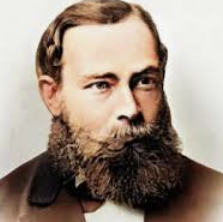
If I compare arithmetic with a tree that unfolds upward into a multitude of techniques and theorems while its root drives into the depths, then it seems to me that the impetus of the root.
▼
Source
source
Gottlob Frege, Montgomery Furth (1964). The Basic Laws of Arithmetic: Exposition of the System. p. 10

2 months 1 week ago
"Do I look like someone who has something to do here on Earth?" - That's what I'd like to answer the busybodies who inquire into my activities.
1 month 2 weeks ago
Particularly in the case of all professional of press-images which testify of the real events. In making reality, even the most violent, emerge to the visible, it makes the real substance disappear. It is like the Myth of Eurydice : when Orpheus turns around to look at her, she vanishes and returns to hell. That is why, the more exponential the marketing of images is growing the more fantastically grows the indifference towards the real world. Finally, the real world becomes a useless function, a collection of phantom shapes and ghost events. We are not far from the silhouettes on the walls of the cave of Plato.

4 months 1 week ago
Beholding beauty with the eye of the mind, he will be enabled to bring forth, not images of beauty, but realities (for he has hold not of an image but of a reality), and bringing forth and nourishing true virtue to become the friend of God and be immortal, if mortal man may.
3 months 1 week ago
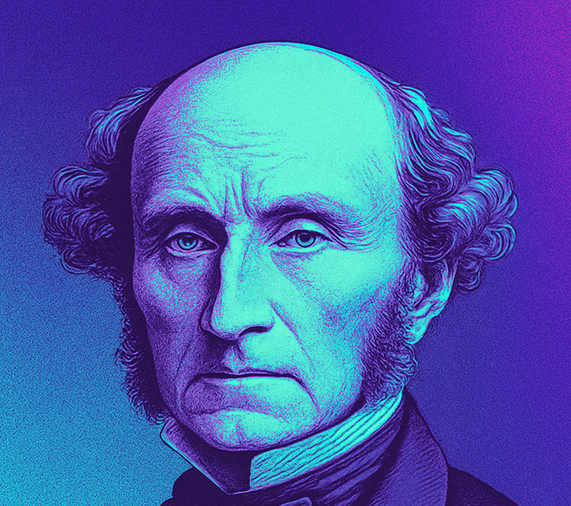
I believe that the early success and reputation of Carlyle's French Revolution, were considerably accelerated by what I wrote about it in the Review. Immediately on its publication, and before the commonplace critics, all whose rules and modes of judgment it set at defiance, had time to preoccupy the public with their disapproval of it, I wrote and published a review of the book, hailing it as one of those productions of genius which are above all rules, and are a law to themselves.
▼
Source
source
(p. 217)
3 months 1 week ago
I have at last come to the end of the Faerie Queene: and though I say "at last", I almost wish he had lived to write six books more as he had hoped to do - so much have I enjoyed it.
▼
Source
source
On Edmund Spenser's long poem in a letter to Arthur Greeves (7 March 1916), published in The Collected Letters of C.S. Lewis

1 month 3 weeks ago
It is very well to say "be prudent, be careful, try to know each other." But how are you to know each other? Unless a woman had lost all pride, how is it possible for her, under the eyes of all her family, to indulge in long exclusive conversations with a man? "Such a thing" must not take place till after her "engagement." And how is she to make an engagement, if "such a thing" has not taken place?

2 months 1 week ago
They defend their errors as if they were defending their inheritance.
3 months 1 week ago
You could attach prices to ideas. Some cost a lot some little. ... And how do you pay for ideas? I believe: with courage.
▼
Source
source
p. 60e
3 months 1 week ago
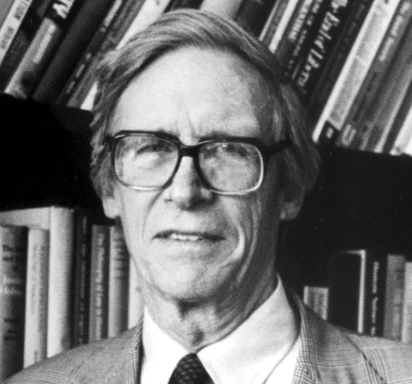
Social and economic inequalities, for example inequalities of wealth and authority, are just only if they result in compensating benefits for everyone, and in particular for the least advantaged members of society.
▼
Source
source
p. 14.
3 days ago
We are to remember what an umpire Nature is; what a greatness, composure of depth and tolerance there is in her. You take wheat to cast into the Earth's bosom; your wheat may be mixed with chaff, chopped straw, barn-sweepings, dust and all imaginable rubbish; no matter: you cast it into the kind just Earth; she grows the wheat, - the whole rubbish she silently absorbs, shrouds it in, says nothing of the rubbish. The yellow wheat is growing there; the good Earth is silent about all the rest, - has silently turned all the rest to some benefit too, and makes no complaint about it! So everywhere in Nature! She is true and not a lie; and yet so great, and just, and motherly in her truth. She requires of a thing only that it be genuine of heart; she will protect it if so; will not, if not so. There is a soul of truth in all the things she ever gave harbor to. Alas, is not this the history of all highest Truth that comes or ever came into the world?
2 months 1 week ago
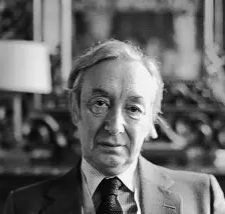
The problem of induction is, roughly speaking, the problem of finding a way to prove that certain empirical generalizations which are derived from past experience will hold good also in the future. There are only two ways of approaching this problem on the assumption that it is a genuine problem, and it is easy to see that neither of them can lead to its solution.
▼
Source
source
p. 49.

1 week ago
From all these indignities, such as the very beasts of the field would not endure, you can deliver yourselves if you try, not by taking action, but merely by willing to be free.

2 months 5 days ago
The range of socially permissible and desirable satisfaction is greatly enlarged, but through this satisfaction, the Pleasure Principle is reduced-deprived of the claims which are irreconcilable with the established society. Pleasure, thus adjusted, generates submission.
▼
Source
source
p. 75

1 month 4 weeks ago
Warmth, warmth, more warmth! for we are dying of cold and not of darkness. It is not the night that kills, but the frost.
3 months 1 week ago
I can't imagine a man really enjoying a book and reading it only once.
▼
Source
source
Letter to Arthur Greeves (February 1932) - in They Stand Together: The Letters of C. S. Lewis to Arthur Greeves (1914-1963) (1979), p. 439
5 days ago
In this sense Marxism performs the function of a religion, and its efficacy is of a religious character. But it is a caricature and a bogus form of religion, since it presents its temporal eschatology as a scientific system, which religious mythologies do not purport to be.
▼
Source
source
Epilogue, p. 1208
1 month 3 weeks ago
Whereas economic man maximizes - selects the best alternative from among all those available to him, his cousin, administrative man, satisfices - looks for a course of action that is satisfactory or "good enough."
▼
Source
source
p. xxix.

3 months 1 week ago
There is no logical impossibility in the hypothesis that the world sprang into being five minutes ago, exactly as it then was, with a population that "remembered" a wholly unreal past. There is no logically necessary connection between events at different times; therefore nothing that is happening now or will happen in the future can disprove the hypothesis that the world began five minutes ago.
▼
Source
source
The Analysis of Mind (1921), Lecture IX: Memory, p. 159

3 weeks 5 days ago
The system of technological production that we have today has been justified in terms of creating more goods to feed more people and to meet more needs. But it actually destroys more of the resources that we need in order to meet those multiple needs. If we shift to an ecological perception, a diversity perception, we realize that some of the instruments of which we are very proud are actually extremely primitive for dealing with nature. To me that is the great lesson of ecological awareness at the turn of the millennium.
▼
Source
source
1998
3 months 1 week ago
We ourselves are the entities to be analyzed.
▼
Source
source
Macquarrie & Robinson translation
3 months 1 week ago
Marriage is for women the commonest mode of livelihood, and the total amount of undesired sex endured by women is probably greater in marriage than in prostitution.
2 months 1 week ago
Impossible to accede to truth by opinions, for each opinion is only a mad perspective of reality.
3 months 1 week ago
How you produce volume after volume the way you do is more than I can conceive. ...But you haven't to forge every sentence in the teeth of irreducible and stubborn facts as I do. It is like walking through the densest brush wood.
▼
Source
source
Letter to Henry James (ca. 1890) as quoted by Robert D. Richardson, William James: In the Maelstrom of American Modernism (2007) p. 297.

4 months 1 day ago
It is quite clear to you that all the people see that lower kinds of creation could have been made in a different way from that in which they really are, and as they see this lower degree in many things they think that they must have been made by chance.

1 month 3 weeks ago
I believe government, organized authority, or the State is necessary only to maintain or protect property and monopoly. It has proven efficient in that function only. As a promoter of individual liberty, human well-being and social harmony, which alone constitute real order, government stands condemned by all the great men of the world...I believe - indeed, I know - that whatever is fine and beautiful in the human expresses and asserts itself in spite of government, and not because of it.
CivilSimian.com created by AxiomaticPanic, CivilSimian, Kalokagathia