


3 months 3 weeks ago
The trouble with Eichmann was precisely that so many were like him, and that the many were neither perverted nor sadistic, that they were, and still are, terribly and terrifyingly normal. From the viewpoint of our legal institutions and of our moral standards of judgment, this normality was much more terrifying than all the atrocities put together, for it implied - as had been said at Nuremberg over and over again by the defendants and their counsels - that this new type of criminal, who is in actual fact hostis generis humani, commits his crimes under circumstances that make it well-nigh impossible for him to know or to feel that he is doing wrong.
▼
Source
source
Epilogue

3 months 3 weeks ago
The directors of such [joint-stock] companies, however, being the managers rather of other people's money than of their own, it cannot well be expected, that they should watch over it with the same anxious vigilance with which the partners in a private copartnery frequently watch over their own.... Negligence and profusion, therefore, must always prevail, more or less, in the management of the affairs of such a company.
▼
Source
source
Chapter I, Part III, Article I, orig.p. 233.

3 months 2 weeks ago
Does man think because he has found that thinking pays? Does he bring his children up because he has found it pays?
▼
Source
source
§ 467

2 months 4 weeks ago
Art is the perfection of nature.
▼
Source
source
Section 16

4 months 2 weeks ago
There has never been any custom, however useless it may become with changing conditions, that isn't clung to desperately simply because it is something old and familiar.

3 months 3 weeks ago
This world belongs to the energetic.
▼
Source
source
Resources

3 months 3 weeks ago
The process is so complicated that it offers ever so many occasions for running abnormally.
▼
Source
source
Vol. II, Ch. XXI, p. 500.

3 months 3 weeks ago
Men and boys are learning all kinds of trades but how to make men of themselves. They learn to make houses; but they are not so well housed, they are not so contented in their houses, as the woodchucks in their holes. What is the use of a house if you haven't got a tolerable planet to put it on? - If you cannot tolerate the planet that it is on? Grade the ground first. If a man believes and expects great things of himself, it makes no odds where you put him, or what you show him ... he will be surrounded by grandeur. He is in the condition of a healthy and hungry man, who says to himself, - How sweet this crust is!
▼
Source
source
Letter to Harrison Blake (20 May 1860); published in Familiar Letters, 1865

1 month 3 weeks ago
You worldly-minded people are most unfortunate! You are surrounded with sorrows and troubles overhead and underfoot and to the right and to the left, and you are enigmas even to yourselves.
▼
Source
source
p. 37

4 months 1 week ago
Life is one long struggle in the dark.
▼
Source
source
Book II, line 54 (tr. Rouse)

3 months 3 weeks ago
I am a rationalist. ...I mean ...[I] wish... to understand the world, and to learn by arguing with others. (...I do not say a rationalist holds the mistaken theory that men are... rational.)

1 month 5 days ago
Of the twenty or so civilizations known to modern Western historians, all except our own appear to be dead or moribund, and, when we diagnose each case, in extremis or post mortem, we invariably find that the cause of death has been either War or Class or some combination of the two. To date, these two plagues have been deadly enough, in partnership, to kill off nineteen out of twenty representatives of this recently evolved species of human society; but, up to now, the deadliness of these scourges has had a saving limit.
▼
Source
source
Ch. 2: The Present Point in History

1 week 6 days ago
They indicate the saddest spiritual paralysis, and mere death-life of the souls of men: more godless theory, I think, was never promulgated in this Earth. A false man found a religion? Why, a false man cannot build a brick house!

3 months 3 weeks ago
This inner revolution is realistic because it maintains itself deliberately within the framework of existing institutions; the oppressed reckon with the real situation.
▼
Source
source
p. 66

2 months 2 weeks ago
Sadness makes you God's prisoner.
2 months 2 weeks ago
When we are young, we take a certain pleasure in our infirmities. They seem so new, so rich! With age, they no longer surprise us, we know them too well. Now, without anything unexpected in them, they do not deserve to be endured.

3 months 3 weeks ago
There ought to be some regulation with respect to the spirit of denunciation that now prevails. If every individual is to indulge his private malignancy or his private ambition, to denounce at random and without any kind of proof, all confidence will be undermined and all authority be destroyed. Calumny is a species of treachery that ought to be punished as well as any other kind of treachery. It is a private vice productive of public evils; because it is possible to irritate men into disaffection by continual calumny who never intended to be disaffected. It is therefore equally as necessary to guard against the evils of unfounded or malignant suspicion as against the evils of blind confidence. It is equally as necessary to protect the characters of public officers from calumny as it is to punish them for treachery or misconduct.
▼
Source
source
Letter to George Jacques Danton

1 month 2 weeks ago
At electric speed, all forms are pushed to the limits of their potential.
▼
Source
source
p. 109

2 months 3 weeks ago
So many of my thoughts and feelings are shared by the English that England has turned into a second native land of the mind for me.
▼
Source
source
Journeys to England and Ireland, 1835.

2 weeks 3 days ago
The United States has been in a long term decline, with its political institutions decaying. ...The single source of that decline is ...the pervasive polarization ...within American society that has made the United States unable to meet some of the basic governance challenges that it has faced. The most recent example... has been the COVID pandemic... Wearing a mask, instead of becoming a health measure that people take to protect themselves and their loved ones, becomes as political statement... You don't wear a mask if you're a Trump supporter, and you do... if you're a Democrat. This is... not the way that... coherent nations... meet systemic challenges like a global pandemic.
▼
Source
source
21:57

2 months 6 days ago
Feminism in the United States has never emerged from the women who are most victimized by sexist oppression; women who are daily beaten down, mentally, physically, and spiritually-women who are powerless to change their condition in life. They are a silent majority. A mark of their victimization is that they accept their lot in life without visible question, without organized protest, without collective anger or rage.
▼
Source
source
p. 1.

2 months 2 weeks ago
It depends only on the weakness of our organs and of our self-excitement (Selbstberuhrung), that we do not see ourselves in a Fairy-world. All Fabulous Tales (Mahrchen) are merely dreams of that home world, which is everywhere and nowhere. The higher powers in us, which one day as Genies, shall fulfil our will, are, for the present, Muses, which refresh us on our toilsome course with sweet remembrances.
1 month 2 weeks ago
The ordinary person senses the greatness of the odds against him even without thought or analysis, and he adapts his attitudes unconsciously. A huge passivity has settled on industrial society. For people carried about in mechanical vehicles, earning their living by waiting on machines, listening much of the waking day to canned music, watching packaged movie entertainment and capsulated news, for such people it would require an exceptional degree of awareness and an especial heroism of effort to be anything but supine consumers of processed goods.
▼
Source
source
p. 21
3 days ago
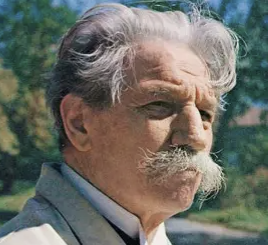
When in the spring the withered gray of the pastures gives place to green, this is due to the millions of young shoots which sprout up freshly from the old roots. In like manner the revival of thought which is essential for our time can only come through a transformation of the opinions and ideals of the many brought about by individual and universal reflection about the meaning of life and of the world.
▼
Source
source
p. 10
1 month 2 weeks ago
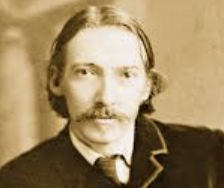
I suppose it is written that any one who sets up for a bit of a philosopher, must contradict himself to his very face. For here have I fairly talked myself into thinking that we have the whole thing before us at last; that there is no answer to the mystery, except that there are as many as you please; that there is no centre to the maze because, like the famous sphere, its centre is everywhere; and that agreeing to differ with every ceremony of politeness, is the only "one undisturbed song of pure concent" to which we are ever likely to lend our musical voices.
▼
Source
source
Crabbed Age and Youth.
4 months 1 day ago
Aristotle, a mere bond-servant to his logic, thereby rendering it contentious and well nigh useless.
▼
Source
source
Rerum Novarum
1 month 3 weeks ago
People continued - regardless of all that leads man forward - to try to unite the incompatibles : the virtue of love, and what is opposed to love, namely, the restraining of evil by violence. And such a teaching, despite its inner contradiction, was so firmly established that the very people who recognize love as a virtue accept as lawful at the same time an order of life based on violence and allowing men not merely to torture but even to kill one another.
▼
Source
source
III
3 months 3 weeks ago
As the chosen people bore in their features the sign manual of Jehovah, so the division of labour brands the manufacturing workman as the property of capital.
▼
Source
source
Vol. I, Ch. 14, Section 5, pg. 396.
2 weeks 4 days ago
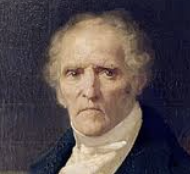
There was very little that prevented the vandalism of 1793 from suddenly producing a second revolution as marvelous as the first was horrible. The whole human race was approaching its release; the civilized, barbarian, and savage order would have disappeared forever if the Convention, which trampled down all prejudices, had not bowed down before the only one that had to be destroyed, the institution of marriage.
▼
Source
source
Charles Fourier: The Visionary and His World, J. Beecher (1986), p. 304-5
2 months 2 days ago
There exists a species of transcendental ventriloquism by means of which men can be made to believe that something said on earth comes from Heaven.
▼
Source
source
F 84

2 months 1 week ago
Only the feeble resign themselves to final death and substitute some other desire for the longing for personal immortality. In the strong the zeal for perpetuity overrides the doubt of realizing it, and their superabundance of life overflows upon the other side of death.

4 months 3 weeks ago
The worst readers are those who behave like plundering troops: they take away a few things they can use, dirty and confound the remainder, and revile the whole.
4 months ago
Through faith we are restored to paradise and created anew.
▼
Source
source
p. 74

2 months 2 weeks ago
People from a planet without flowers would think we must be mad with joy the whole time to have such things about us.
▼
Source
source
A Fairly Honourable Defeat (1970); 2001, p. 170.

4 months 3 weeks ago
Consciousness presupposes itself, and asking about its origin is an idle and just as sophistical a question as that old one, "What came first, the fruit-tree or the stone? Wasn't there a stone out of which came the first fruit-tree? Wasn't there a fruit-tree from which came the first stone?
2 months 2 weeks ago
We dread the future only when we are not sure we can kill ourselves when we want to.

2 months 1 week ago
It is not only in literature that fiction generates immorality. It does it also in life itself. For the substance of our life is almost exclusively composed of fiction. We fictionalize our future, and, unless we are heroically devoted to truth, we fictionalize our past, refashioning it to our taste. We do not study other people; we invent what they are thinking, saying, and doing. Reality provides us with some raw material, just as novelists often take a theme from a news item, but we envelop it in a fog in which, as in all fiction, values are reversed, so that evil is attractive and good is tedious.
▼
Source
source
"Morality and literature," pp. 161-162

3 months 3 weeks ago
For my part, while I am as convinced a Socialist as the most ardent Marxian, I do not regard Socialism as a gospel of proletarian revenge, nor even, primarily, as a means of securing economic justice. I regard it primarily as an adjustment to machine production demanded by considerations of common sense, and calculated to increase the happiness, not only of proletarians, but of all except a tiny minority of the human race.
▼
Source
source
Ch. 7: The Case for Socialism
4 months 1 day ago
There are also Idols formed by the intercourse and association of men with each other, which I call Idols of the Market Place, on account of the commerce and consort of men there. For it is by discourse that men associate, and words are imposed according to the apprehension of the vulgar. And therefore the ill and unfit choice of words wonderfully obstructs the understanding. Nor do the definitions or explanations wherewith in some things learned men are wont to guard and defend themselves, by any means set the matter right. But words plainly force and overrule the understanding, and throw all into confusion, and lead men away into numberless empty controversies and idle fancies.
▼
Source
source
Aphorism 43

2 months 5 days ago
The principle of brotherhood expounded by the agitator of Nazareth preserved the germ of life, of truth and justice, so long as it was the beacon light of the few. The moment the majority seized upon it, that great principle became a shibboleth and harbinger of blood and fire, spreading suffering and disaster. The attack on the omnipotence of Rome was like a sunrise amid the darkness of the night, only so long as it was made by the colossal figures of a Huss, a Calvin, or a Luther. Yet when the mass joined in the procession against the Catholic monster, it was no less cruel, no less bloodthirsty than its enemy. Woe to the heretics, to the minority, who would not bow to its dicta. After infinite zeal, endurance, and sacrifice, the human mind is at last free from the religious phantom; the minority has gone on in pursuit of new conquests, and the majority is lagging behind, handicapped by truth grown false with age.



1 week ago
But he has no fear; unconquered he looks down from a lofty height upon his sufferings.

1 month 2 days ago
Our bodies are perishable, wealth is not at all permanent and death is always nearby. Therefore we must immediately engage in acts of merit.

1 month 3 weeks ago
It is precisely because we can destroy that we are under an obligation to know why we ought not to do it, and to summon those countervailing powers that curb our destructive capacity. Nonviolence becomes an ethical obligation by which we are bound precisely because we are bound to one another; it may well be an obligation against which we rail, in which ambivalent swings of the psyche make themselves known, but the obligation to preserve the social bond can be resolved upon without precisely resolving that ambivalence. The obligation not to destroy each other emerges from, and reflects, the vexed social form of our lives, and it leads us to reconsider whether self-preservation is not linked to preserving the lives of others.
▼
Source
source
p. 148
3 months 3 weeks ago
If a man own land, the land owns him.
▼
Source
source
Wealth
1 month 2 weeks ago
You don't have to be a scientist - you don't have to play the Bunsen burner - in order to understand enough science to overtake your imagined need and fill that fancied gap. Science needs to be released from the lab into the culture.
3 days ago
Example is not the main thing. It is the only thing. That is, if the one giving the example is not saying to himself, 'Behold I am giving an example.' That spoils it. Anyone thinking of the example he will give to others has lost his simplicity. Only as a man has simplicity can his example influence others. Sometimes presented in paraphrased form, such as "Example is not the main thing in influencing others, it is the only thing".
2 months 2 weeks ago
We are so lonely in life that we must ask ourselves if the loneliness of dying is not a symbol of our human existence.

4 months 1 week ago
What the great learning teaches, is to illustrate illustrious virtue; to renovate the people; and to rest in the highest excellence. The point where to rest being known, the object of pursuit is then determined; and, that being determined, a calm unperturbedness may be attained to. To that calmness there will succeed a tranquil repose. In that repose there may be careful deliberation, and that deliberation will be followed by the attainment of the desired end.
CivilSimian.com created by AxiomaticPanic, CivilSimian, Kalokagathia