



4 months 2 weeks ago
All mankind, right down to those you most despise, are your neighbors.
2 months 1 week ago
Oh, how empty is praise when it reflects back to its origin!
▼
Source
source
No. 50. (Rica writing to * * *)

1 month 2 weeks ago
It takes a long time to bring excellence to maturity.
▼
Source
source
Maxim 780

3 months 3 weeks ago
The effectiveness of political and religious propaganda depends upon the methods employed, not upon the doctrines taught. These doctrines may be true or false, wholesome or pernicious-it makes little or no difference.
▼
Source
source
Chapter 7 (p. 63)

4 months 1 day ago
As we divided natural philosophy in general into the inquiry of causes, and productions of effects: so that part which concerneth the inquiry of causes we do subdivide according to the received and sound division of causes. The one part, which is physic, inquireth and handleth the material and efficient causes; and the other, which is metaphysic, handleth the formal and final causes.
▼
Source
source
Book VII, 3

2 months 1 week ago
A man, in so far as he is an individual, may be very sharply detached from others, a sort of spiritual crustacean, and yet be very poor in differentiating content. And further, it is true on the other hand that the more personality a man has and the greater his interior riches and the more he is a society within himself, the less brusquely he is divided from his fellows.

3 months 3 weeks ago
There is no author to whom my father thought himself more indebted for his own mental culture, than Plato, or whom he more frequently recommended to young student. I can bear similar testimony in regard to myself. The Socratic method, of which the Platonic dialogues are the chief example, is unsurpassed as a discipline for correcting the errors, and clearing up the confusions incident to the intellectus sibi permissus...
▼
Source
source
(pp. 21-22)
3 months 1 week ago
About Pontus there are some creatures of such an extempore being that the whole term of their life is confined within the space of a day; for they are brought forth in the morning, are in the prime of their existence at noon, grow old at night, and then die.
2 months 2 weeks ago
I hope I may claim in the present work to have made it probable that the laws of arithmetic are analytic judgments and consequently a priori. Arithmetic thus becomes simply a development of logic, and every proposition of arithmetic a law of logic, albeit a derivative one. To apply arithmetic in the physical sciences is to bring logic to bear on observed facts; calculation becomes deduction.
▼
Source
source
Gottlob Frege (1950 ). The Foundations of Arithmetic. p. 99.

2 months 3 weeks ago
The present state of France was ten times worse than a tyranny. The new constitution was said to be an experiment but the assertion was not true. It had already been tried, and had been found to be only productive of evils. They would go on from tyranny to tyranny, from oppression to oppression, till at last the whole system would terminate in the destruction of that miserable and deluded people... He sincerely hoped that no member of that House would ever barter the constitution of this country, the eternal jewel of their souls, for a wild and visionary system, which could only lead to confusion and disorder.
▼
Source
source
Speech in the House of Commons (6 May 1791), quoted in The Parliamentary History of England, From the Earliest Period to the Year 1803, Vol. XXIX (1817), column 397

3 months 3 weeks ago
To discover the various use of things is the work of history.
▼
Source
source
Vol. I, Ch. 1, Section 1, pg. 42.

4 months ago
An armed insurrection ... would hinder and bring into disrepute this spiritual insurrection.
▼
Source
source
p. 68

3 months 3 weeks ago
You shall have joy, or you shall have power, said God; you shall not have both.
▼
Source
source
October 1842
2 months 1 week ago
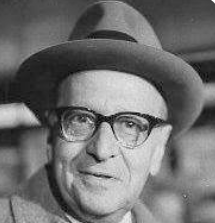
Reason has never really directed social reality, but now reason has been so thoroughly purged of any specific trend or preference that it has finally renounced even the task of passing judgment on man's actions and way of life. Reason has turned them over for ultimate sanction to the conflicting interests to which our world actually seems abandoned.
▼
Source
source
p. 9.
2 months 5 days ago
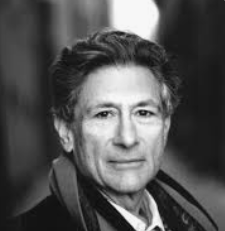
The intellectual's spirit as an amateur can enter and transform the merely professional routine most of us go through into something much more lively and radical; instead of doing what one is supposed to do one can ask why one does it, who benefits from it, how can it reconnect with a personal project and original thoughts.
▼
Source
source
p. 83

4 months 3 weeks ago
What if the equality between us human being, in which we completely resemble one another, were that none of us really thinks about his being loved?
1 month 3 weeks ago
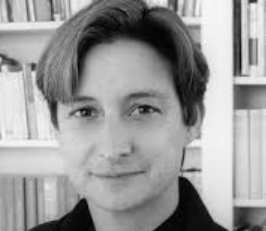
To subdue destruction is one of the most important affirmations of which we are capable in this world. It is the affirmation of this life, bound up with yours, and with the realm of the living: an affirmation caught up with a potential for destruction and its countervailing force.
▼
Source
source
p. 65
2 months 1 week ago
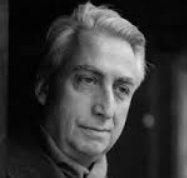
Barthes's discovery and articulation of the "new" liberatory category of perception and deciphering, semiotic-mythology, belongs to the praxis of his heroic mythologist, alone. This unfortunate theoretical strategy makes the articulation of a coalitional consciousness in social struggle impossible to imagine or enact. ... His terminologies appropriate the technologies of the oppressed for use by academic classes.
▼
Source
source
Chela Sandoval, Methodology of the Oppressed, p. 201

2 months 1 week ago
Fertilisation of the soul is the reason for the necessity of art.
▼
Source
source
Ch. 13: "Requisites for Social Progress", p. 283
3 months 3 weeks ago
As the strata of the earth preserve in succession the living creatures of past epochs, so the shelves of libraries preserve in succession the errors of the past and their expositions, which like the former were very lively and made a great commotion in their own age but now stand petrified and stiff in a place where only the literary palaeontologist regards them.
▼
Source
source
Vol. 2 "On Books and Writing" as translated in Essays and Aphorisms (1970), as translated by R. J. Hollingdale
3 weeks 5 days ago
One persistent strand in utopian thinking, as we have often mentioned, is the feeling that there is some set of principles obvious enough to be accepted by all men of good will, precise enough to give unambiguous guidance in particular situations, clear enough so that all will realize its dictates, and complete enough to cover all problems which actually arise. Since I do not assume that there are such principles, I do not presume that the political realm will whither away. The messiness of the details of a political apparatus and the details of how it is to be controlled and limited do not fit easily into one's hopes for a sleek, simple utopian scheme.
▼
Source
source
Ch. 10 : A Framework for Utopia; Utopian Means and Ends, p. 330

4 months 2 weeks ago
Those who purge the soul believe that the soul can receive no benefit from any teachings offered to it until someone by cross-questioning reduces him who is cross-questioned to an attitude of modesty, by removing the opinions that obstruct the teachings, and thus purges him and makes him think that he knows only what he knows, and no more.

2 months 2 weeks ago
Ambition is a drug that makes its addicts potential madmen.

3 months 3 weeks ago
He begins to think for himself and meets Nineteenth-century Rationalism Which can explain away religion by any number of methods.
▼
Source
source
Pilgrim's Regress 19-20
1 month 2 weeks ago
Genes do indirectly control the manufacture of bodies, and the influence is strictly one way: acquired characteristics are not inherited. No matter how much knowledge and wisdom you acquire during your life, not one jot will be passed on to your children by genetic means. Each new generation starts from scratch.
▼
Source
source
Ch. 3. Immortal Coils
4 months 1 week ago
Were I a nightingale, I would act the part of a nightingale; were I a swan, the part of a swan.
▼
Source
source
Book I, ch. 16, 20.

3 months 3 weeks ago
Mercy to the guilty is cruelty to the innocent.
▼
Source
source
Section II, Chap. III.

2 months 2 weeks ago
Three conceptions are perpetually turning up at every point in every theory of logic, and in the most rounded systems they occur in connection with one another. They are conceptions so very broad and consequently indefinite that they are hard to seize and may be easily overlooked. I call them the conceptions of First, Second, Third. First is the conception of being or existing independent of anything else. Second is the conception of being relative to, the conception of reaction with, something else. Third is the conception of mediation, whereby a first and second are brought into relation.

3 months 4 days ago
Reason is immortal, all else mortal.
▼
Source
source
As quoted in Lives and Opinions of Eminent Philosophers, Sect. 30, as translated by Robert Drew Hicks (1925)
2 weeks 2 days ago
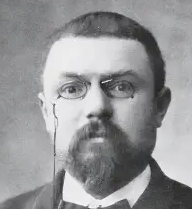
We should like to represent... the... universe, and... feel... we understood it. We... never can attain this representation: our weakness is too great. But... we desire... to conceive an infinite intelligence... which should see all, and... classify all in its time, as we classify, in our time, the little we see. ...This supreme intelligence would be only a demigod; infinite in one sense... limited in another, since it would have... imperfect recollection of the past... otherwise all recollections would be equally present... and for it there would be no time.
2 months 2 days ago
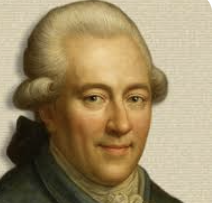
I am convinced we do not only love ourselves in others but hate ourselves in others too.
▼
Source
source
F 54
3 months 4 days ago
The wind is blowing, adore the wind.
▼
Source
source
Symbol 8
4 months 3 weeks ago
The life-giving Spirit is the very one who slays you; the first thing the life-giving Spirit says is that you must enter into death, that you must die to, it is this way in order that you many not take Christianity in vain. A life-giving Spirit, that is the invitation; who would not willingly take hold of it! But die first, that is the halt!
3 months 4 days ago
Educate the children and it won't be necessary to punish the men.
▼
Source
source
As quoted in Geary's Guide to the World's Great Aphorists (2007) by James Geary

2 months 2 weeks ago
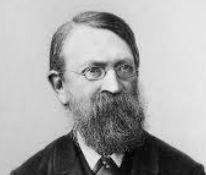
Some Machians were sufficiently impressed by Einstein's interpretations of Brownian movement to accept atomism. Mach himself brushed such objections aside, and also emphatically rejected Einstein's relativity theory.
▼
Source
source
W. W. Bartley III, "Philosophy of biology versus philosphy of physics" (2004) p. 412, Karl Popper: Critical Assessments of Leading Philosophers, Vol. III: Philosophy of Science 2.
3 months 3 weeks ago
However hard they try, men cannot create a social organism, they can only create an organization. In the process of trying to create an organism they will merely create a totalitarian despotism.
▼
Source
source
Chapter 3 (p. 24)

1 month 2 weeks ago
The images of mankind have become the most basic thing about them. And they're all software, and disembodied.
▼
Source
source
(p. 346)
3 days ago
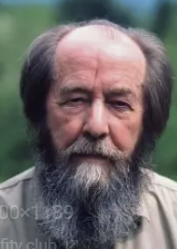
Human nature is full of riddles, and one of these riddles is this: How is it that people who have been crushed by the sheer weight of slavery and cast to the bottom of the pit can nevertheless find strength to rise up and free themselves, first in spirit then in body, while those who soar unhampered over the peaks of freedom suddenly appear to lose the taste for freedom, lose the will to defend it, and hopelessly confused and lost almost begin to crave slavery?
▼
Source
source
"Argentina's President Javier Milei Loves Being the Skunk at the Garden Party" (at 47m35s), Honestly with Bari Weiss, 6 June 2024.
2 months 2 weeks ago
When I happen to be busy, I never give a moment's thought to the "meaning" of anything, particularly of whatever it is I am doing. A proof that the secret of everything is in action and not abstention, that fatal cause of consciousness.
3 weeks 5 days ago
When I was 15 years old, or 16, I carried around on the streets of Brooklyn a paperback copy of Plato's Republic, front cover facing outward. I had read only some of it and understood less, but I was excited by it and knew it was something wonderful.
▼
Source
source
The Examined Life
1 month 1 week ago
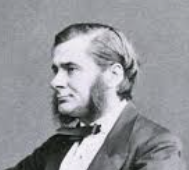
The chalk is no unimportant element in the masonry of the earth's crust, and it impresses a peculiar stamp, varying with the conditions to which it is exposed, on the scenery of the districts in which it occurs.
1 month 2 weeks ago
A cock has great influence on his own dunghill.
▼
Source
source
Maxim 357

3 months 3 weeks ago
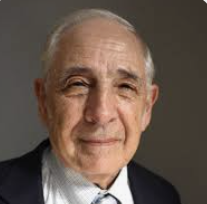
The fundamental cause of the trouble is that in the modern world the stupid are cocksure while the intelligent are full of doubt.
1 month 3 weeks ago
It seems to me obvious that infants and many animals that do not in any ordinary sense have a language or perform speech acts nonetheless have Intentional states. Only someone in the grip of a philosophical theory would deny that small babies can literally be said to want milk and that dogs want to be let out or believe that their master is at the door.
▼
Source
source
P. 5.
3 weeks 5 days ago
Whatever the practical origins of aesthetic discernment may have been, it has been used to create great works of art. When the very loftiest human creations are seen to derive from humble origins and functions, what needs revision is not our esteem for these creations but our notion of nobility.
▼
Source
source
The Nature of Rationality (1993), Ch. V : Instrumental Rationality and Its Limits; Rationality's Imagination, p. 181
4 months ago
Faith looks to the word and the promise; that is, to the truth. But hope looks to that which the word has promised, to the gift.
▼
Source
source
p. 221
3 months 3 weeks ago
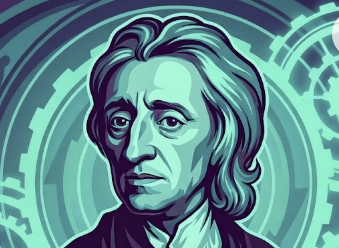
Inuring children gently to suffer some degrees of pain without shrinking, is a way to gain firmness to their minds, and lay a foundation for courage and resolution in the future part of their lives.
▼
Source
source
Sec. 115

3 months 3 weeks ago
If I had as clear an idea of ghosts, as I have of a triangle or a circle, I should not in the least hesitate to affirm that they had been created by God; but as the idea I possess of them is just like the ideas, which my imagination forms of harpies, gryphons, hydras, &c., I cannot consider them as anything but dreams, which differ from God as totally as that which is not differs from that which is.
▼
Source
source
Letter to Hugo Boxel (October 1674) The Chief Works of Benedict de Spinoza (1891) Tr. R. H. M. Elwes, Vol. 2, Letter 58 (54).
CivilSimian.com created by AxiomaticPanic, CivilSimian, Kalokagathia