


2 months 2 weeks ago
Music is everything. God himself is nothing more than an acoustic hallucination.
1 month 3 weeks ago
The great rule: If the little bit you have is nothing special in itself, at least find a way of saying it that is a little bit special.
▼
Source
source
E 55



3 months 2 weeks ago
Religion has two principal enemies, fanaticism and infidelity, or that which is called atheism. The first requires to be combated by reason and morality, the other by natural philosophy.
▼
Source
source
A Discourse, &c. &c.

1 month 2 weeks ago
There is but a step between a proud man's glory and his disgrace.
▼
Source
source
Maxim 138

3 months 1 week ago
Be cheerful while you are alive.
▼
Source
source
Maxim no. 34.

3 months 3 weeks ago
For truth itself has not the privilege to be spoken at all times and in all sorts.
▼
Source
source
Book III, Ch. 13. Of Experience
2 months 1 week ago
All names of God remain hallowed because they have been used not only to speak of God but also to speak to him.

1 week 2 days ago
Get, by six hundred and fifty-eight votes, or by no vote at all, by the silent intimation of your own eyesight and understanding given you direct out of Heaven, and more sacred to you than anything earthly, and than all things earthly,-a correct image of the fact in question, as God and Nature have made it: that is the one thing needful; with that it shall be well with you in whatsoever you have to do with said fact. Get, by the sublimest constitutional methods, belauded by all the world, an incorrect image of the fact: so shall it be other than well with you; so shall you have laud from able editors and vociferous masses of mistaken human creatures; and from the Nature's Fact, continuing quite silently the same as it was, contradiction, and that only. What else?
1 month 3 days ago
Try to learn something about everything and everything about something.
▼
Source
source
A favourite comment, inscribed on his memorial at Ealing, quoted in Nature Vol. XLVI (30 October 1902), p. 658
2 months 2 weeks ago
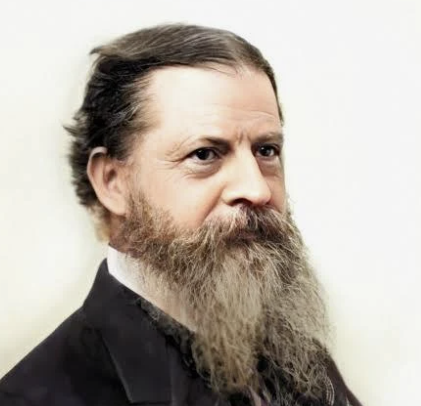
One of the most marked features about the law of mind is that it makes time to have a definite direction of flow from past to future. ...This makes one of the great contrasts between the law of mind and the law of physical force, where there is no more distinction between the two opposite directions in time than between moving northward and moving southward.
2 months 2 weeks ago
When you have understood that nothing is, that things do not even deserve the status of appearances, you no longer need to be saved, you are saved, and miserable forever.
2 months 1 week ago
Culture is on the horns of this dilemma: if profound and noble, it must remain rare, if common, it must become mean.
▼
Source
source
Ch. IV: The Aristocratic Ideal

1 month 2 weeks ago
Scientific beliefs are supported by evidence, and they get results. Myths and faiths are not and do not.

3 months 2 weeks ago
He yawned. He had finished the day and he had also finished with his youth. Various well-bred moralities had already discreetly offered him their services: disillusioned epicureanism, smiling tolerance, resignation, common sense stoicism - all the aids whereby a man may savour, minute by minute, like a connoisseur, the failure of a life.
▼
Source
source
L'âge de raison (The Age of Reason)

3 months 2 weeks ago
Is there any knowledge in the world which is so certain that no reasonable man could doubt it?

3 months 3 weeks ago
Anyone who actually admires money as the most precious thing in life, and rests his security on it to the extent of believing that as long as he possesses it he will be happy, has fashioned too many false gods for himself. Too many people put money in the place of Christ, as if it alone has the key to their happiness or unhappiness.
▼
Source
source
p. 100

3 months 2 weeks ago
The imagination is always restless and suggests a variety of thoughts, and the will, reason being laid aside, is ready for every extravagant project; and in this State, he that goes farthest out of the way, is thought fittest to lead, and is sure of most followers: And when Fashion hath once Established, what Folly or craft began, Custom makes it Sacred, and 'twill be thought impudence or madness, to contradict or question it. He that will impartially survey the Nations of the World, will find so much of the Governments, Religion, and Manners brought in and continued amongst them by these means, that they will have but little Reverence for the Practices which are in use and credit amongst Men.
▼
Source
source
First Treatise of Government
1 month 6 days ago
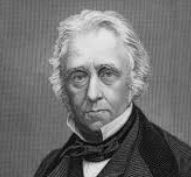
Such night in England ne'er had been, nor ne'er again shall be.
▼
Source
source
The Armada, l. 34
3 months 2 weeks ago
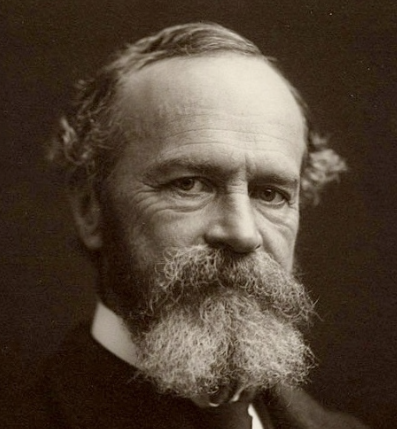
Nothing is so fatiguing as the eternal hanging on of an uncompleted task.
▼
Source
source
To Carl Stumpf, 1 January 1886
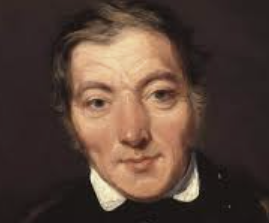
1 month 1 week ago
To preserve permanent good health, the state of mind must be taken into consideration.
▼
Source
source
3rd Part
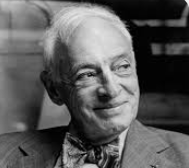
1 month 1 week ago
You never have to change anything you got up in the middle of the night to write.
▼
Source
source
As quoted in The #1 New York Times Bestseller (1992) by John Bear, p. 93

3 months 3 weeks ago
The ancient Egyptians had a superstitious antipathy to the sea; a superstition nearly of the same kind prevails among the Indians; and the Chinese have never excelled in foreign commerce.
▼
Source
source
Chapter V, p. 402.

1 week 6 days ago
Jesus, in some respects, was an anarchist, for he had no idea of civil government. That government seems to him purely and simply an abuse.
▼
Source
source
Ch. 7.

2 months 4 weeks ago
Rejoice not in another man's misfortune!
3 months 2 weeks ago
The best work is not what is most difficult for you; it is what you do best.
▼
Source
source
Act 6, sc. 2
3 months 3 weeks ago
Human reason is by nature architectonic.
▼
Source
source
B 502
1 month 3 weeks ago
A handful of soldiers is always better than a mouthful of arguments.
▼
Source
source
E 19

2 months 2 weeks ago
...a monarchy is a thing perfectly susceptible of reform; perfectly susceptible of a balance of power; and that, when reformed and balanced, for a great country, it is the best of all governments. The example of our country might have led France, as it has led him, to perceive that monarchy is not only reconcilable to liberty, but that it may be rendered a great and stable security to its perpetual enjoyment.
▼
Source
source
p. 400
3 months 3 weeks ago
The very elements themselves, though repugnant in their nature, yet, by a happy equilibrium, preserve eternal peace; and amid the discordancy of their constituent principles, cherish, by a friendly intercourse and coalition, an uninterrupted concord.
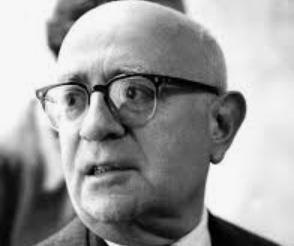
2 months 4 days ago
The dressing up and puffing up of the individual erases the lineaments of protest.
▼
Source
source
p. 283

3 months 2 weeks ago
It is difficult to free fools from the chains they revere.
▼
Source
source
Le dîner du comte de Boulainvilliers (1767): Troisième Entretien
2 months 2 weeks ago
Our place is somewhere between being and nonbeing - between two fictions.

2 months 2 days ago
If one assumes, as I do, that battery is caused by the belief permeating this culture that hierarchical rule and coercive authority are natural, then all our relationships tend to be based on power and domination, and thus all forms of battery are linked.
3 months 3 weeks ago
In living bodies, how all the various limbs harmonize, and mutually combine, for common defence against injury! What can be more heterogeneous, and unlike, than the body and the soul? and yet with what strong bonds nature has united them, is evident from the pang of separation. As life itself is nothing else but the concordant union of body and soul, so is health the harmonious cooperation of all the parts and functions of the body.

3 months 2 weeks ago
For the trouble with lying and deceiving is that their efficiency depends entirely upon a clear notion of the truth that the liar and deceiver wishes to hide. In this sense, truth, even if it does not prevail in public, possesses an ineradicable primacy over all falsehoods.
▼
Source
source
"Lying in Politics"

3 days ago
A great step towards independence is a good-humored stomach, one that is willing to endure rough treatment.
▼
Source
source
Line 3.
3 months 3 weeks ago
A prudent man should always follow in the path trodden by great men and imitate those who are most excellent.
▼
Source
source
The Prince (1513), Ch. 6; translated by Luigi Ricci
1 month 1 week ago
Conservatism is itself a modernism, and in this lies the secret of its success.
▼
Source
source
"Eliot and Conservatism" (p. 194)

3 weeks 6 days ago
We should always speak what would please the man of whom we expect a favour, like the hunter who sings sweetly when he desires to shoot a deer.
3 months 2 weeks ago
I deny that anyone knows, or can know, the nature of the two sexes, as long as they have only been seen in their present relation to one another. If men had ever been found in society without women, or women without men, or if there had been a society of men and women in which the women were not under the control of the men, something might have been positively known about the mental and moral differences which may be inherent in the nature of each. What is now called the nature of women is an eminently artificial thing - the result of forced repression in some directions, unnatural stimulation in others.
▼
Source
source
Ch. 1
2 months 2 weeks ago
Society is not a disease, it is a disaster. What a stupid miracle that one can live in it.
3 months 1 week ago
The desire to philosophize from the standpoint of standpointlessness, as a purportedly genuine and superior objectivity, is either childish, or, as is usually the case, disingenuous.
▼
Source
source
The Essence of Truth, 1931-32
3 months 3 weeks ago
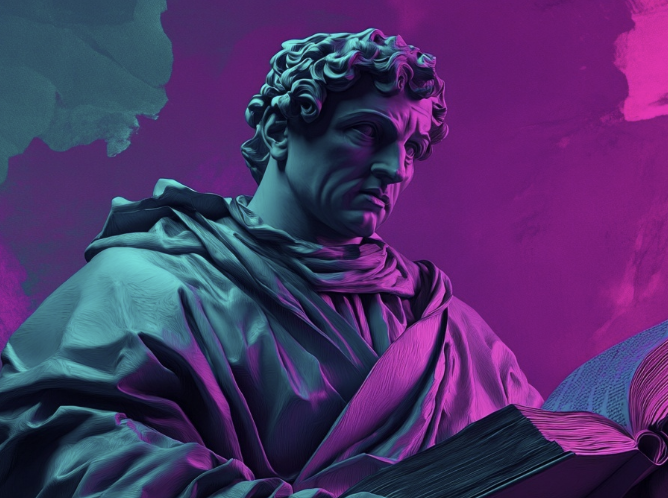
And I must speak plainly. If I were a judge, I would have such a poisonous, syphilitic whore tortured by being broken on the wheel and having her veins lacerated, for it is not to be denied what damage such a filthy whore does to young blood, so that it is unspeakably damaged before it is even fully grown and destroyed in the blood.
▼
Source
source
pp. 552-554 (1566); cited in Susan C. Karant-Nunn & Merry E. Wiesner-Hanks [editors and translators], Luther on Women: a Sourcebook, Cambridge University Press, 2003, pp. 157-158)
3 months 2 weeks ago
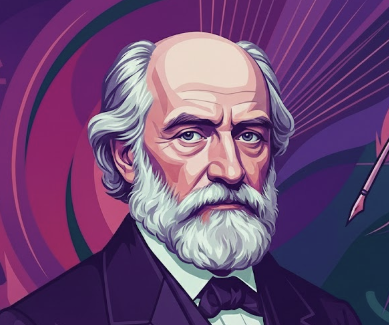
My basis is supported by the authority of the greatest moralist of modern times; for such, undoubtedly, J. J. Rousseau is,-that profound reader of the human heart, who drew his wisdom not from books, but from life, and intended his doctrine not for the professorial chair, but for humanity; he, the foe of all prejudice, the foster-child of nature, whom alone she endowed with the gift of being able to moralise without tediousness, because he hit the truth and stirred the heart.
▼
Source
source
Part III, Ch. VIII, 9, p. 230

3 weeks 4 days ago
Ichthyophils imagine that human beings want a life in which they can make their own choices. But what if they can be fulfilled only by a life in which they follow each other? The majority who obey the fashion of the day may be acting on a secret awareness that they lack the potential for a truly individual existence. Liberalism - the ichthyophil variety, at any rate - teaches that everyone yearns to be free. Herzen's experience of the abortive European revolutions of 1848 led him to doubt that this was so. It was because of his disillusionment that he criticized Mill so sharply. But if it is true that Mill was deluded in thinking that everyone loves freedom, it may also be true that without this illusion there would be still less freedom in the world. The charm of a liberal way of life is that it enables most people to renounce their freedom unknowingly.
▼
Source
source
An Old Chaos: Ichthyophils and Liberals (p. 62)

4 months 2 weeks ago
Ten years on the moon could tell us more about the universe than a thousand years on the earth might be able to.
2 months 2 weeks ago
To Live signifies to believe and hope - to lie and to lie to oneself.

2 months 3 weeks ago
The lowest degree of education is to distinguish oneself from the ignorant ordinary man. The educated man does not loathe honey even if he finds it in the surgeon's cupping-glass; he realizes that the cupping glass does not essentially alter the honey. The natural aversion from it in such a case rests on popular ignorance, arising from the fact that the cupping-glass is made only for impure blood. Men imagine that the blood is impure because it is in the cupping-glass, and are not aware that the impurity is due to a property.
▼
Source
source
III. The Classes of Seekers, p. 31.
CivilSimian.com created by AxiomaticPanic, CivilSimian, Kalokagathia