

3 months 3 weeks ago
Abbot Terrasson tells us that if the size of a book were measured not by the number of its pages but by the time required to understand it, then we could say about many books that they would be much shorter were they not so short.
▼
Source
source
A xix
1 month 2 weeks ago
An atheist is just somebody who feels about Yahweh the way any decent Christian feels about Thor or Baal or the golden calf. As has been said before, we are all atheists about most of the gods that humanity has ever believed in. Some of us just go one god further.
▼
Source
source
Richard Dawkins on militant atheism,

3 months 3 weeks ago
One who believes, as I do, that the free intellect is the chief engine of human progress, cannot but be fundamentally opposed to Bolshevism, as much as to the Church of Rome.
▼
Source
source
Part I, Ch. 9: International Policy
1 week 1 day ago
We must admit, however, that neither wild beasts nor any other creature except man is subject to anger: for, whilst anger is the foe of reason, it nevertheless does not arise in any place where reason cannot dwell. Wild beasts have impulses, fury, cruelty, combativeness: they have not anger any more than they have luxury: yet they indulge in some pleasures with less self-control than human beings.
3 months 3 weeks ago
There are 80,000 prostitutes in London alone and what are they, if not bloody sacrifices on the altar of monogamy?
▼
Source
source
"Of Women"
2 months 2 weeks ago
It is in applied psychology, if anywhere, that today we should be modest and grant validity to a number of apparently contradictory opinions; for we are still far from having anything like a thorough knowledge of the human psyche, that most challenging field of scientific enquiry. For the present we have merely more or less plausible opinions that defy reconciliation.
▼
Source
source
p. 57
2 months 2 weeks ago
Freedom of thought and of expression are not mere rights to be claimed. They have their roots deep in the existence of individuals as developing careers in time. Their denial and abrogation is an abdication of individuality and a virtual rejection of time as opportunity.
4 months 1 week ago
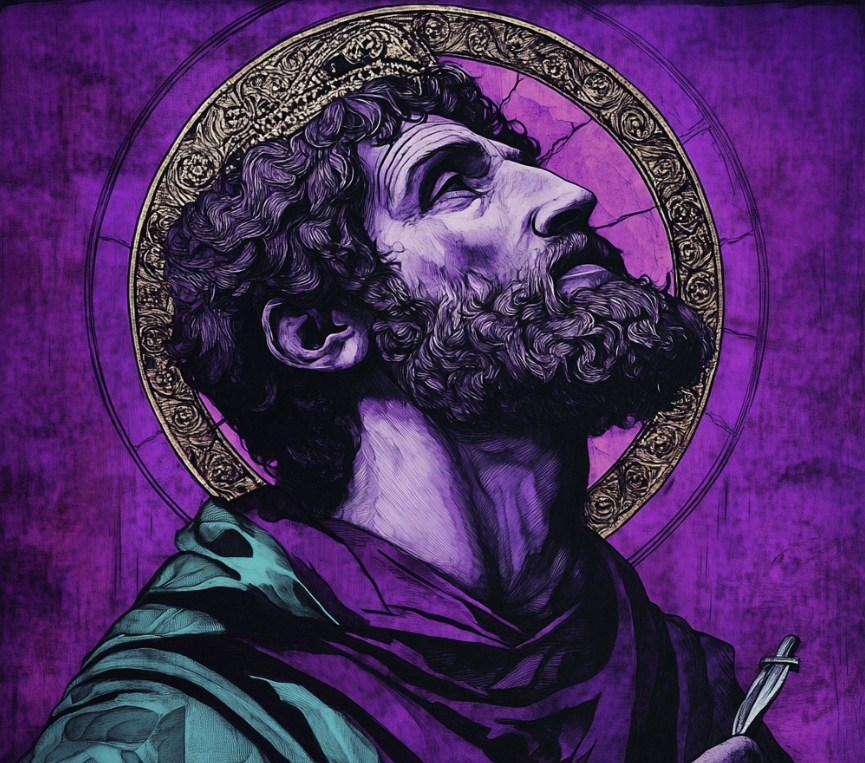
Certainly He says this for me, for thee, for this other man, since He bears His body, the Church. Unless you imagine, brethren, that when He said: My Father, if it be possible, let this cup pass away from (Matt. 26:39), it was the Lord that feared to die. . . . But Paul longed to die, that he might be with Christ. What? The Apostle desires to die, and Christ Himself should fear death? What can this mean, except that He bore our infirmity in Himself, and uttered these words for those who are in His body and still fear death? It is from these that the voice came; it was the voice of His members, not of the Head. When He said, My soul is sorrowful unto death (Matt. 26:38), He manifested Himself in thee, and thee in Himself. And when He said, My God, my God, why has Thou forsaken Me? (Matt. 27:46), the words He uttered on the cross were not His own, but ours.
2 months 6 days ago
The Orient that appears in Orientalism, then, is a system of representations framed by a whole set of forces that brought the Orient into Western learning, Western consciousness, and later, Western empire. ... The Orient is the stage on which the whole East is confined. On this stage will appear the figures whose role it is to represent the larger whole from which they emanate. The Orient then seems to be, not an unlimited extension beyond the familiar European world, but rather a closed field, a theatrical stage affixed to Europe.
2 months 3 weeks ago
Whenever a separation is made between liberty and justice, neither, in my opinion, is safe.
▼
Source
source
Letter to M. de Menonville
3 months 3 weeks ago
Men will not understand ... that when they fulfil their duties to men, they fulfil thereby God's commandments; that they are consequently always in the service of God, as long as their actions are moral, and that it is absolutely impossible to serve God otherwise.
▼
Source
source
As quoted in German Thought, From The Seven Years' War To Goethe's Death : Six Lectures (1880) by Karl Hillebrand, p. 207
1 month 2 days ago
The educated man is the man who does not live in immediate intuition, but in his recollection so that little is new to him any longer.
▼
Source
source
Chapter 4, Philosophy As Writing: The Case Of Hegel, p. 74
1 month 1 week ago
Mr. Darwin's hypothesis is not, so far as I am aware, inconsistent with any known biological fact; on the contrary, if admitted, the facts of Development, of Comparative Anatomy, of Geographical Distribution, and of Palaeontology, become connected together, and exhibit a meaning such as they never possessed before; and I, for one, am fully convinced that if not precisely true, that hypothesis is as near an approximation to the truth as, for example, the Copernican hypothesis was to the true theory of the planetary motions.
▼
Source
source
Ch.2, p. 127

3 months 2 weeks ago
There are two godheads: the world and my independent I. I am either happy or unhappy, that is all. It can be said: good or evil do not exist. A man who is happy must have no fear. Not even in the face of death. Only a man who lives not in time but in the present is happy.
▼
Source
source
Journal entry (8 July 1916), p. 74e

2 months 2 weeks ago
Historians of ideas, however scrupulous and minute they may feel it necessary to be, cannot avoid perceiving their material in terms of some kind of pattern.

2 months 2 weeks ago
By virtue of depression, we recall those misdeeds we buried in the depths of our memory. Depression exhumes our shames.
3 months 3 weeks ago
To pray to God is to flatter oneself that with words one can alter nature.
▼
Source
source
Notebooks, c.1735-c.1750
3 months 2 weeks ago
A serious and good philosophical work could be written consisting entirely of jokes.
▼
Source
source
As quoted in "A View from the Asylum" in Philosophical Investigations from the Sanctity of the Press (2004), by Henry Dribble, p. 87
2 months 3 weeks ago
All religions are cruel, all founded on blood; for all rest principally on the idea of sacrifice - that is, on the perpetual immolation of humanity to the insatiable vengeance of divinity.

2 weeks 4 days ago
On the left you had a different aspect of individual autonomy that was pushed to an extreme, which really had to do with the autonomy that individuals have to create their own lifestyles. ...The basic concept of liberal autonomy has to do with your ability to make moral choices, but as time went on the emphasis came to be not on making the right moral choices within an existing moral framework, but rather to be able to make up that framework on your own, that that was the ultimate expression of individual human freedom, and it has obvious problems for a society because all societies have to be based on shared norms that allow people to coordinate their actions, to communicate, and the like... If you believe that the rules can be... set by anybody and that transgressing existing rules is automatically a good thing, you're not going to have... a stable society.
▼
Source
source
15:05

3 months 3 weeks ago
The criticism of religion ends with the doctrine that man is the supreme being for man, hence the categorical imperative to overthrow all those conditions in which man is degraded, enslaved, neglected, contemptible being-conditions which can hardly be better described than in the exclamation of a Frenchman on the occasion of a proposed tax upon dogs: 'Wretched dogs! They want to treat you like men!'
1 month 2 days ago
When Bernard Marx tells the Savage he will try to secure permission for him and his mother to visit the Other Place, John is initially pleased and excited. Echoing Miranda in The Tempest, he exclaims: "O brave new world that has such people in it." Heavy irony. Like innocent Miranda, he is eager to embrace a way of life he neither knows nor understands. And of course he comes unstuck. Yet if we swallow such fancy literary conceits, then ultimately the joke is on us. It is only funny in the sense there are "jokes" about Auschwitz. For it is Huxley who neither knows nor understands the glory of what lies ahead. A utopian society in which we are sublimely happy will be far better than we can presently imagine, not worse. And it is we, trapped in the emotional squalor of late-Darwinian antiquity, who neither know nor understand the lives of the god-like super-beings we are destined to become. "Brave New World? A Defence of Paradise-Engineering", BLTC Research, 1998

4 months 2 days ago
The things that we can see with our physical eyes are mere shadows of reality. If they appear ugly and ill formed, then what must be the ugliness of the soul in sin, deprived of all light? The soul, like the body, can undergo transformation in appearance. In sin it appears as completely ugly to the beholder. In virtue it shines resplendently before God.
2 months 2 weeks ago
However intimate we may be with the operations of the mind, we cannot think more than two or three minutes a day; - unless, by taste or by profession, we practice, for hours on end, brutalizing words in order to extract ideas from them. The intellectual represents the major disgrace, the culminating failure of Homo sapiens.
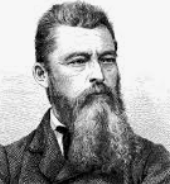
2 months 3 weeks ago
Every presentation of philosophy, whether oral or written, is to be taken and can only be taken in the sense of a means. Every system is only an expression or image of reason, and hence only an object of reason, an object which reason-a living power that procreates itself in new thinking beings-distinguishes from itself and posits as an object of criticism. Every system that is not recognized and appropriated as just a means, limits and warps the mind for it sets up the indirect and formal thought in the place of the direct, original and material thought.
▼
Source
source
Z. Hanfi, trans., in The Fiery Brook (1972), p. 67
2 months 3 weeks ago
God, I have said, is the fulfiller, or the reality, of the human desires for happiness, perfection, and immortality. From this it may be inferred that to deprive man of God is to tear the heart out of his breast. But I contest the premises from which religion and theology deduce the necessity and existence of God, or of immortality, which is the same thing. I maintain that desires which are fulfilled only in the imagination, or from which the existence of an imaginary being is deduced, are imaginary desires, and not the real desires of the human heart; I maintain that the limitations which the religious imagination annuls in the idea of God or immortality, are necessary determinations of the human essence, which cannot be dissociated from it, and therefore no limitations at all, except precisely in man's imagination.
▼
Source
source
Lecture XXX, Atheism alone a Positive View
4 months 1 week ago
The philosophers who wished us to have the gods for our friends rank the friendship of the holy angels in the fourth circle of society, advancing now from the three circles of society on earth to the universe, and embracing heaven itself. And in this friendship we have indeed no fear that the angels will grieve us by their death or deterioration. But as we cannot mingle with them as familiarly as with men (which itself is one of the grievances of this life), and as Satan, as we read, sometimes transforms himself into an angel of light, to tempt those whom it is necessary to discipline, or just to deceive, there is great need of God's mercy to preserve us from making friends of demons in disguise, while we fancy we have good angels for our friends; for the astuteness and deceitfulness of these wicked spirits is equalled by their hurtfulness.
▼
Source
source
XIX, 9
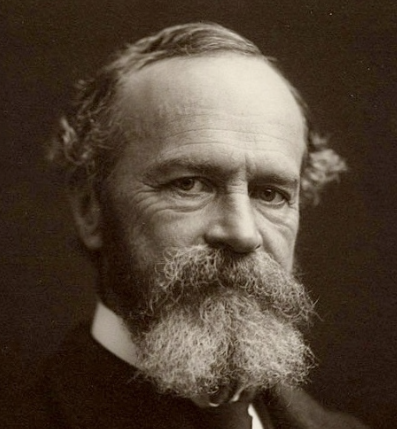
3 months 3 weeks ago
But such a straight identification of religion with any and every form of happiness leaves the essential peculiarity of religious happiness out. The more commonplace happinesses which we get are 'reliefs,' occasioned by our momentary escapes from evils either experienced or threatened. But in its most characteristic embodiments, religious happiness is no mere feeling of escape. It cares no longer to escape. It consents to the evil outwardly as a form of sacrifice - inwardly it knows it to be permanently overcome. ... In the Louvre there is a picture, by Guido Reni, of St. Michael with his foot on Satan's neck. The richness of the picture is in large part due to the fiend's figure being there. The richness of its allegorical meaning also is due to his being there - that is, the world is all the richer for having a devil in it, so long as we keep our foot upon his neck.
▼
Source
source
Lecture II, "Circumscription of the Topic"
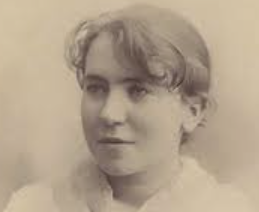
2 months 6 days ago
The Kropotkins, the Perovskayas, the Breshkovskayas, and hosts of others repudiated wealth and station and refused to serve King Mammon. They went among the people, not to lift them up but themselves to be lifted up, to be instructed, and in return to give themselves wholly to the people. That accounts for the heroism, the art, the literature of Russia, the unity between the people, the mujik and the intellectual. That to some extent explains the literature of all European countries, the fact that the Strindbergs, the Hauptmanns, the Wedekinds, the Brieux, the Mirbeaus, the Steinlins and Rodins have never dissociated themselves from the people.
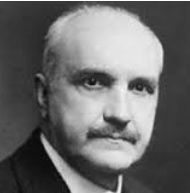
2 months 2 weeks ago
O world, thou choosest not the better part! It is not wisdom to be only wise, And on the inward vision close the eyes, But it is wisdom to believe the heart. Columbus found a world, and had no chart, Save one that faith deciphered in the skies; To trust the soul's invincible surmise Was all his science and his only art.
▼
Source
source
O World, Thou Choosest Not

3 months 3 weeks ago
The religion and philosophy of the Hebrews are those of a wilder and ruder tribe, wanting the civility and intellectual refinements and subtlety of Vedic culture.
▼
Source
source
A Tribute to Hinduism, 2008
2 months 2 weeks ago
Yea; have ye never read, Out of the mouth of babes and sucklings thou hast perfected praise?
▼
Source
source
21:16 (KJV)
2 months 3 weeks ago
Applaud us when we run, console us when we fall, cheer us when we recover.
▼
Source
source
Speech at Bristol Previous to the Election (6 September 1780), quoted in The Works of the Right Honourable Edmund Burke, Vol. II (1855), p. 129
2 months 2 weeks ago
Crime in full glory consolidates authority by the sacred fear it inspires.
2 weeks 4 days ago
The fundamental political question is why do people obey a government. The answer is that they tend to enslave themselves, to let themselves be governed by tyrants. Freedom from servitude comes not from violent action, but from the refusal to serve. Tyrants fall when the people withdraw their support.
▼
Source
source
This quote is a paraphrase of the contents of the first chapter of Discourse on Voluntary Servitude. The quote appears in an edition titled Politics of Obedience: The Discourse of Voluntary Servitude edited by Murray Rothbard and Harry Kurz (1975), p. 39
4 months 3 weeks ago
After all, in the poets love has its priests, and sometimes one hears a voice which knows how to defend it; but of faith one hears never a word. Who speaks in honor of this passion? Philosophy goes further. Theology sits rouged at the window and courts its favor, offering to sell her charms to philosophy. it is supposed to be difficult to understand Hegel, but to understand Abraham is a trifle. To go beyond Hegel's is a miracle, but to get beyond Abraham is the easiest thing of all.
2 months 2 weeks ago
His disciples said to Him, "When will the Kingdom come?" Jesus said, "It will not come by waiting for it. It will not be a matter of saying 'Here it is' or 'There it is.' Rather, the Kingdom of the Father is spread out upon the earth, and men do not see it."

3 months 3 weeks ago
The man who barely abstains from violating either the person, or the estate, or the reputation of his neighbours, has surely very little positive merit. He fulfils, however, all the rules of what is peculiarly called justice, and does every thing which his equals can with propriety force him to do, or which they can punish him for not doing. We may often fulfil all the rules of justice by sitting still and doing nothing.
▼
Source
source
Section II, Chap. I.
1 week 2 days ago
Where the world comes in my way - and it comes in my way everywhere - I consume it to quiet the hunger of my egoism. For me you are nothing but - my food, even as I too am fed upon and turned to use by you. We have only one relation to each other, that of usableness, of utility, of use.
▼
Source
source
Dover 2005, p. 296, 297

3 months 1 week ago
He who intends to enjoy life should not be busy about many things, and in what he does should not undertake what exceeds his natural capacity. On the contrary, he should have himself so in hand that even when fortune comes his way, and is apparently ready to lead him on to higher things, he should put her aside and not o'erreach his powers. For a being of moderate size is safer than one that bulks too big.
1 month 3 weeks ago
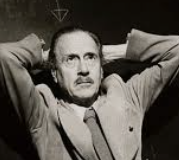
The percept takes priority of the concept.
▼
Source
source
Letter to Edward T. Hall, 1971, Letters of Marshall McLuhan, p. 397
3 months 1 week ago
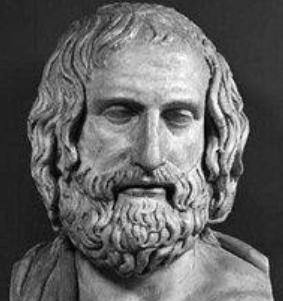
The sun provides the moon with its brightness.
▼
Source
source
Fragment in Plutarch De facie in orbe lunae, 929b, as quoted in The Riverside Dictionary of Biography (2005), p. 23
1 month 3 weeks ago
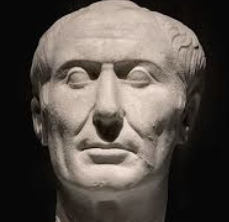
Too much straightforwardness is foolish against a shameless person.
▼
Source
source
Maxim 123
3 months 3 weeks ago
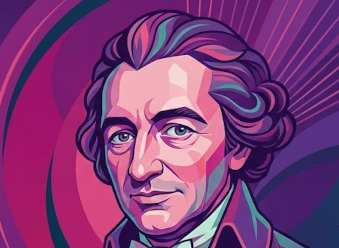
Our Traders in Men (an unnatural commodity!) must know the wickedness of that Slave-Trade, if they attend to reasoning, or the dictates of their own hearts; and such as shun and stiffle all these, wilfully sacrifice Conscience, and the character of integrity to that golden Idol.
1 month 3 weeks ago
Applied knowledge in the Renaissance had to take the form of translation of the auditory into visual terms, of the plastic into retinal form.
▼
Source
source
(p. 180)
2 months 2 weeks ago
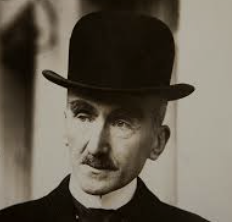
The prestige of the Nobel Prize is due to many causes, but in particular to its twofold idealistic and international character: idealistic in that it has been designed for works of lofty inspiration; international in that it is awarded after the production of different countries has been minutely studied and the intellectual balance sheet of the whole world has been drawn up. Free from all other considerations and ignoring any but intellectual values, the judges have deliberately taken their place in what the philosophers have called a community of the mind.
▼
Source
source
In a letter accepting the 1927 Nobel Prize in literature, read by the French minister, Armand Bernard.
1 month 3 weeks ago
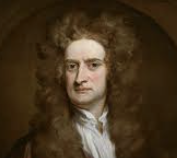
When a man is taken in a mystical sense, his qualities are often signified by his actions, and by the circumstances of things about him. So a Ruler is signified by his riding on a beast; a Warrior and Conqueror, by his having a sword and bow; a potent man, by his gigantic stature; a Judge, by weights and measures... the affliction or persecution which a people suffers in laboring to bring forth a new kingdom, by the pain of a woman in labor to bring forth a man-child; the dissolution of a body politic or ecclesiastic, by the death of a man or beast; and the revival of a dissolved dominion, by the resurrection of the dead.
▼
Source
source
Vol. I, Ch. 2: Of the Prophetic Language
3 months 3 weeks ago
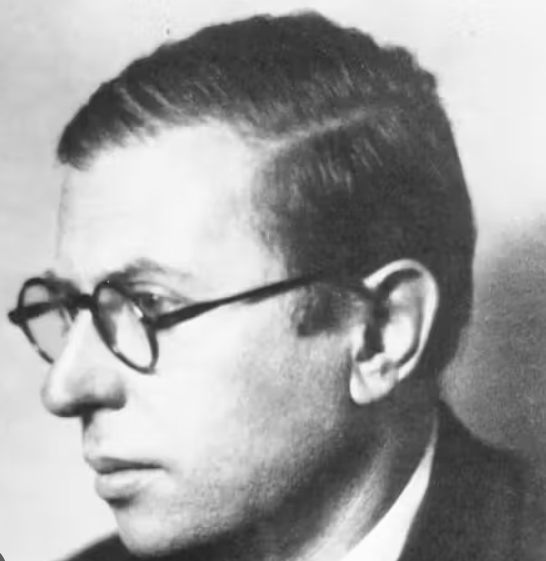
So that is what hell is. I would never have believed it. You remember: the fire and brimstone, the torture. Ah! the farce. There is no need for torture: Hell is other people.
▼
Source
source
Garcin, Act 1, sc. 5
2 months 2 weeks ago
If we could sleep twenty-four hours a day, we would soon return to the primordial slime, the beatitude of that perfect torpor before Genesis-the dream of every consciousness sick of itself.
CivilSimian.com created by AxiomaticPanic, CivilSimian, Kalokagathia