


3 months 2 weeks ago
Thus it may be said that not only the soul, the mirror of an indestructible universe, is indestructible, but also the animal itself, though its mechanism may often perish in part and take off or put on an organic slough.
▼
Source
source
La monadologie (77). Sometimes paraphrased as: The soul is the mirror of an indestructible universe.

3 months 1 week ago
The more rational statement is that we feel sorry because we cry, angry because we strike, afraid because we tremble, and not that we cry, strike, or tremble, because we are sorry, angry, or fearful, as the case may be. Without the bodily states following on the perception, the latter would be purely cognitive in form, pale, colorless, destitute of emotional warmth.
▼
Source
source
Ch. 25

2 months 1 week ago
How can you know if you are in the truth? The criterion is simple enough: if others make a vacuum around you, there is not a doubt in the world that you are closer to the essential than they are.
1 day ago
Both Stoicism and Epicureanism - the apathetic acceptance of defeat, and the effort to forget defeat in the arms of pleasure - were theories as to how one might yet be happy though subjugated or enslaved; precisely as the stoicism of Schopenhauer and the despondent epicureanism of Renan were in the nineteenth century the symbols of a shattered revolution and a broken France.

3 months 1 week ago
Three o'clock is always too late or too early for anything you want to do.

1 month 3 weeks ago
Perhaps, if prematurely we dismiss ourselves from this world, all may even have to be suffered through again - the premature birth may not contribute to the production of another being, which must be begun again from the beginning.

2 months 2 weeks ago
Given that annihilation of nature in its entirety is impossible, and that death and dissolution are not appropriate to the whole mass of this entire globe or star, from time to time, according to an established order, it is renewed, altered, changed, and transformed in all its parts.
▼
Source
source
Fifth Dialogue



4 months 1 week ago
Milton Ashe is not the type to marry a head of hair and a pair of eyes.

1 month 4 weeks ago
Not only are we unable to conceive of the full and living God as masculine simply, but we are unable to conceive of Him as individual simply, as the projection of a solitary I, an unsocial I, an I that is in reality an abstract I. My living I is an I that is really a We; my living personal I lives only in other, of other, and by other I's; I am sprung from a multitude of ancestors. I carry them within me in extract, and at the same time I carry within me, potentially, a multitude of descendants, and God, the projection of my I to the infinite - or rather I, the projection of God to the finite - must also be a multitude. Hence, in order to save the personality of God - that is to say, in order to save the living God - faith's need - the need of the feeling and the imagination - of conceiving Him and feeling Him as possessed of a certain internal multiplicity.

1 month 1 week ago
Without an understanding of causality there can be no theory of communication. What passes as information theory today is not communication at all, but merely transportation.
▼
Source
source
(p. 362)

1 month 3 weeks ago
...the Outsider's problem is the problem of denial of self-expression.
▼
Source
source
Chapter Four The Attempt to Gain Control

3 months 1 week ago
Religion has two principal enemies, fanaticism and infidelity, or that which is called atheism. The first requires to be combated by reason and morality, the other by natural philosophy.
▼
Source
source
A Discourse, &c. &c.
1 month 1 week ago
Nonviolence is not an absolute principle, but an open-ended struggle with violence and its countervailing forces.
▼
Source
source
p. 56

2 weeks 4 days ago
The mass political movements of the 20th century were vehicles for myths inherited from religion, and it is no accident that religion is reviving now that these movements have collapsed.
1 month 2 weeks ago
Rationality requires a complete knowledge and anticipation of the consequences that will follow on each choice. In fact, knowledge of consequences is always fragmentary.
2 months 4 days ago
As the great words of freedom and fulfillment are pronounced by campaigning leaders and politicians, on the screens and radios and stages, they turn into meaningless sounds which obtain meaning only in the context of propaganda, business, discipline, and relaxation. This assimilation of the ideal with reality testifies to the extent to which the ideal has been surpassed. It is brought down from the sublimated realm of the soul or the spirit or the inner man, and translated into operational terms and problems. Here are the progressive elements of mass culture. The perversion is indicative of the fact that advanced industrial society is confronted with the possibility of a materialization of ideals. The capabilities of this society are progressively reducing the sublimated realm in which the condition of man was represented, idealized, and indicted. Higher culture becomes part of the material culture. In this transformation, it loses the greater part of its truth.
▼
Source
source
pp. 57-58
1 month 3 weeks ago
To be content with life - or to live merrily, rather - all that is required is that we bestow on all things only a fleeting, superficial glance; the more thoughtful we become the more earnest we grow.
▼
Source
source
K 29
3 months 2 weeks ago
The inscrutable wisdom through which we exist is not less worthy of veneration in respect to what it denies us than in respect to what it has granted.
1 month 3 weeks ago
One cannot be deeply responsive to the world without being saddened very often.
▼
Source
source
ABC TV
1 month 3 weeks ago
Suffering is admittedly one of the central problems of human existence; but this is because we have a suspicion that it is all for nothing. If we had a certainty about meaning, the suffering would be bearable. With no certainty of meaning, even comfort begins to feel futile.
▼
Source
source
p. 89

3 months 1 week ago
Legal and economic equality are absolutely necessary remedies for the Fall, and protection against cruelty.
3 months 1 week ago
I can be twenty women, one hundred, if that's what you want, all women. Ride with me behind you, I weigh nothing, your horse will not feel me. I want to be your whorehouse!
▼
Source
source
Act 3, sc. 4
4 months 1 day ago
This is the ideal world, a perfect world of equality, fraternity, harmony, welfare, and justice.

1 month 3 weeks ago
The needs of the soul can for the most part be listed in pairs of opposites which balance and complete one another. The human soul has need of equality and of hierarchy. Equality is the public recognition, effectively expressed in institutions and manners, of the principle that an equal degree of attention is due to the needs of all human beings. Hierarchy is the scale of responsibilities. Since attention is inclined to direct itself upwards and remain fixed, special provisions are necessary to ensure the effective compatibility of equality and hierarchy.

3 months 1 day ago
In the weightiest matters we must go to school to the animals, and learn spinning and weaving from the spider, building from the swallow, singing from the birds,-from the swan and the nightingale, imitating their art.
2 months 4 weeks ago
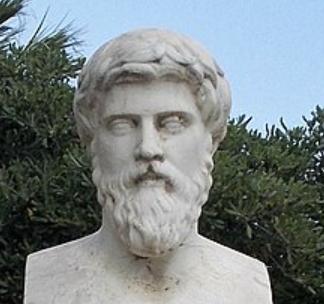
Authority and place demonstrate and try the tempers of men, by moving every passion and discovering every frailty.
▼
Source
source
Comparison of Demosthenes and Cicero 3 (Tr. Dryden and Clough)

1 month 1 week ago
It is hard to believe that this simple truth is not understood by those leaders who forbid their followers to use effective contraceptive methods. They express a preference for 'natural' methods of population limitation, and a natural method is exactly what they are going to get. It is called starvation.
▼
Source
source
Ch. 7. Family planning

7 months 2 weeks ago
In the Critique of Cynical Reasoning, a great bestseller in Germany (Sloterdijk, 1983), Peter Sloterdijk puts forward the thesis that ideology's dominant mode of functioning is cynical which renders impossible - or, more precisely, vain - the classical critical-ideological procedure. The cynical subject is quite aware of the distance between the ideological mask and the social reality, but he none the less still insists upon the mask.
2 months 1 week ago
Only thoughts that are randomly born die. The other thoughts we carry with us without knowing them. They have abandoned themselves to forgetfulness so that they can be with us all the time.
2 months 4 days ago
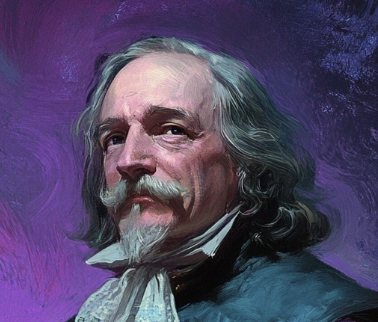
The source of every Crime, is some defect of the Understanding; or some error in Reasoning, or some sudden force of the Passions. Defect in the Understanding, is Ignorance; in Reasoning, Erroneous Opinion.
▼
Source
source
The Second Part, Chapter 27, p. 152

2 days ago
A word spoken in season, at the right moment, is the mother of ages.
▼
Source
source
Reported in Josiah Hotchkiss Gilbert, Dictionary of Burning Words of Brilliant Writers (1895), p. 561.

3 months 1 week ago
We do not directly go about the execution of the purpose that thrills us, but shut our doors behind us, and ramble with prepared minds, as if the half were already done. Our resolution is taking root or hold on the earth then, as seeds first send a shoot downward, which is fed by their own albumen, ere they send one upwards to the light.
▼
Source
source
Pearls of Thought (1881) p. 61


3 months 6 days ago
But a punishment like forced labour or even imprisonment - mere loss of liberty - has never functioned without a certain additional element of punishment that certainly concerns the body itself: rationing of food, sexual deprivation, corporal punishment, solitary confinement ... There remains, therefore, a trace of 'torture' in the modern mechanisms of criminal justice - a trace that has not been entirely overcome, but which is enveloped, increasingly, by the non-corporal nature of the penal system
1 month 1 week ago
Mutation may be random, but selection definitely is not.
▼
Source
source
Chapter 3, "The Message from the Mountain" (p. 82)
2 days ago
Instruction, that mysterious communing of Wisdom with Ignorance, is no longer an indefinable tentative process, requiring a study of individual aptitudes, and a perpetual variation of means and methods, to attain the same end; but a secure, universal, straightforward business, to be conducted in the gross, by proper mechanism.
5 days ago
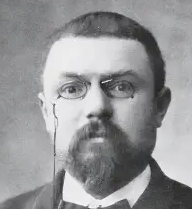
There is no science apart from the general. It may even be said that the very object of the exact sciences is to spare us these direct verifications.
▼
Source
source
Ch. I. (1905) Tr. George Bruce Halstead
1 month 3 weeks ago
The greatest events occur without intention playing any part in them; chance makes good mistakes and undoes the most carefully planned undertaking. The world's greatest events are not produced, they happen.
▼
Source
source
K 68
3 months 2 weeks ago
Every substance is as a world apart, independent of everything else except God.
▼
Source
source
Discours de métaphysique, 1686
1 month 3 weeks ago
What most clearly characterizes true freedom and its true employment is its misemployment.
▼
Source
source
L 49

3 months 1 week ago
The Beatific Vision, Sat Chit Ananda, Being-Awareness-Bliss-for the first time I understood, not on the verbal level, not by inchoate hints or at a distance, but precisely and completely what those prodigious syllables referred to. And then I remembered a passage I had read in one of Suzuki's essays. "What is the Dharma-Body of the Buddha?" ('"the Dharma-Body of the Buddha" is another way of saying Mind, Suchness, the Void, the Godhead.) The question is asked in a Zen monastery by an earnest and bewildered novice. And with the prompt irrelevance of one of the Marx Brothers, the Master answers, "The hedge at the bottom of the garden." "And the man who realizes this truth," the novice dubiously inquires, "what, may I ask, is he?" Groucho gives him a whack over the shoulders with his staff and answers, "A golden-haired lion."
2 days ago
The most remarkable piece of reading that you may be recommended to take and try if you can study is a book by Goethe-one of his last books, which he wrote when he was an old man, about seventy years of age-I think one of the most beautiful he ever wrote, full of mild wisdom, and which is found to be very touching by those who have eyes to discern and hearts to feel it. It is one of the pieces in "Wilhelm Meister's Travels." I read it through many years ago; and, of course, I had to read into it very hard when I was translating it (applause), and it has always dwelt in my mind as about the most remarkable bit of writing that I have known to be executed in these late centuries. I have often said, there are ten pages of that which, if ambition had been my only rule, I would rather have written than have written all the books that have appeared since I came into the world.
1 month 4 weeks ago
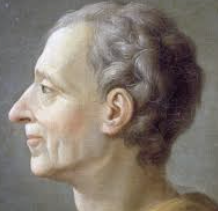
You have to study a great deal to know a little.
▼
Source
source
I
2 days ago
May not this religious reticence, in these devout good souls, be perhaps a merit, and sign of health in them? Jocelin, Eadmer, and such religious men, have as yet nothing of 'Methodism;' no Doubt or even root of Doubt. Religion is not a diseased self-introspection, an agonising inquiry: their duties are clear to them, the way of supreme good plain, indisputable, and they are traveling on it. Religion lies over them like an all-embracing heavenly canopy, like an atmosphere and life-element, which is not spoken of, which in all things is presupposed without speech. Is not serene or complete Religion the highest aspect of human nature.
1 month 2 weeks ago
One may dream of a culture where everyone bursts into laughter when someone says: this is true, this is real.
2 months 1 week ago
One cannot live without motives. I have no motives left, and I am living.

3 months 2 weeks ago
The two ways of contemplation are not unlike the two ways of action commonly spoken of by the ancients: the one plain and smooth in the beginning, and in the end impassable; the other rough and troublesome in the entrance, but after a while fair and even. So it is in contemplation: If a man will begin with certainties, he shall end in doubts; but if he will be content to begin with doubts he shall end in certainties.
▼
Source
source
Book I, v, 8
2 months 1 week ago
Whenever I happen to be in a city of any size, I marvel that riots do not break out everyday: Massacres, unspeakable carnage, a doomsday chaos. How can so many human beings coexist in a space so confined without hating each other to death?
CivilSimian.com created by AxiomaticPanic, CivilSimian, Kalokagathia