


3 months 3 weeks ago
Philosophy seems to me on the whole a rather hopeless business.
▼
Source
source
Letter to Gilbert Murray, December 28, 1902

4 months 1 week ago
A man might say, "The things that are in the world are what God has made. ... Why should I not love what God has made?" ...Suppose, my brethren, a man should make for his betrothed a ring, and she should prefer the ring given her to the betrothed who made it for her, would not her heart be convicted of infidelity? ... God has given you all these things: therefore, love him who made them.
▼
Source
source
Second Homily, as translated by John Burnaby (1955), pp. 275-276

2 months 2 weeks ago
The more we try to wrest ourselves from our ego, the deeper we sink into it.

2 months 3 weeks ago
When the leaders choose to make themselves bidders at an auction of popularity, their talents, in the construction of the state, will be of no service. They will become flatterers instead of legislators; the instruments, not the guides, of the people.
3 months 3 weeks ago
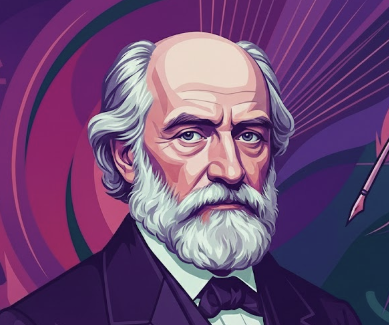
National character is only another name for the particular form which the littleness, perversity and baseness of mankind take in every country. Every nation mocks at other nations, and all are right. Variant translation: Every nation criticizes every other one - and they are all correct.
▼
Source
source
As quoted by Wolfgang Pauli in a letter to Abraham Pais (17 August 1950) published in The Genius of Science (2000) by Abraham Pais, p. 242
2 months 1 day ago
Body and soul: a horse harnessed beside an ox.
▼
Source
source
D 103
3 months 4 weeks ago
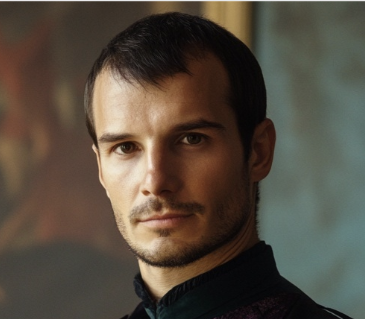
That which is good for the enemy harms you, and that which is good for you harms the enemy.
▼
Source
source
Rule 1 from Machiavelli's Lord Fabrizio Colonna: libro settimo (Book 7) (Modern Italian uses nemico instead of nimico.)
2 months 2 weeks ago
Matters of religion should never be matters of controversy. We neither argue with a lover about his taste, nor condemn him, if we are just, for knowing so human a passion.
▼
Source
source
Ch. VI

3 months 3 weeks ago
In this consists the difference between the character of a miser and that of a person of exact economy and assiduity. The one is anxious about small matters for their own sake; the other attends to them only in consequence of the scheme of life which he has laid down to himself.
▼
Source
source
Chap. VI.

3 months 2 weeks ago
"'Are the gods not just?' 'Oh no, child. What would become of us if they were?'"
▼
Source
source
Orual & The Fox

3 months 3 weeks ago
That what we seek we shall find; what we flee from flees from us.
▼
Source
source
Fate

2 weeks 2 days ago
Experience suggests that if men cannot struggle on behalf of a just cause because that just cause was victorious in an earlier generation, then they will struggle against the just cause. They will struggle for the sake of struggle. They will struggle, in other words, out of a certain boredom: for they cannot imagine living in a world without struggle. And if the greater part of the world in which they live is characterized by peaceful and prosperous liberal democracy, then they will struggle against that peace and prosperity, and against democracy. p. 330
3 months 3 weeks ago
Slavery is disheartening; but Nature is not so helpless but it can rid itself of every last wrong. But the spasms of nature are centuries and ages and will tax the faith of short-lived men. Slowly, slowly the Avenger comes, but comes surely. The proverbs of the nations affirm these delays, but affirm the arrival. They say, "God may consent, but not forever." The delay of the Divine Justice - this was the meaning and soul of the Greek Tragedy, - this was the soul of their religion.
▼
Source
source
The Fugitive Slave Law, a lecture in NYC, March 7, 1854
4 months 4 days ago
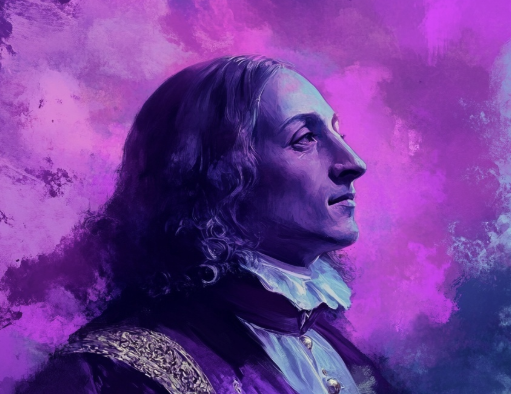
Rules necessary for axioms. Not to demand in axioms any but things perfectly evident.

4 months 2 weeks ago
The job of science will never be done, it will just sink deeper and deeper into never-ending complexity.
2 months 2 weeks ago
How good would it be if one could die by throwing oneself into an infinite void.

2 months 2 weeks ago
Resignation' is a keynote in Comte's writings, deriving directly from assent to invariable social laws. 'True resignation, that is, a disposition to endure necessary evils steadfastly and without any hope of compensation therefore, can result only from a profound feeling for the invariable laws that govern the variety of natural phenomena.
▼
Source
source
P. 345
2 months 3 weeks ago
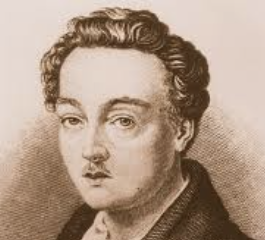
We are always on stage, even when we are stabbed in earnest at the end.
▼
Source
source
Act II.

1 month ago
In future, nerve cell responsiveness to naturally occurring endogenous opioids can be increased via receptor enrichment in the brain too. In principle, we can modulate their lifelong "overexpression", intermittently heightened (or gently diminished) by whatever kinds of personal and environmental contingencies we judge fit. Both functionally and anatomically, our reward pathways can be made "bigger and better". But intelligent emotional self-mastery will involve re-engineering the mind-brain so we derive the most intense rewards from activities we deem most lastingly worthwhile: i.e. prioritising our higher-order desires over legacy first-order appetites. Natural selection has "encephalised" our emotions to benefit our genes. Rational agents can "re-encephalise" our emotions to benefit us.
▼
Source
source
Utopian Neuroscience, BLTC Research, 2019

2 months 4 weeks ago
This whole which is visible in different ways in bodies, as far as formation, constitution, appearance, colors and other properties and common qualities, is none other than the diverse face of the same substance - a changeable, mobile face, subject to decay, of an immobile, permanent and eternal being.
▼
Source
source
As translated by Paul Harrison
2 months 1 week ago
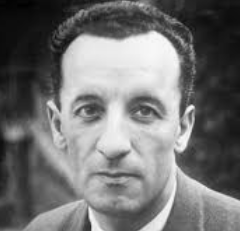
It is a great good fortune, as Stendhal said, for one "to have his passion as a profession."
▼
Source
source
p. 4
3 months 3 weeks ago
Few people can be happy unless they hate some other person, nation, or creed.
▼
Source
source
Attributed to Russell in Prochnow's Speakers Handbook of Epigrams and Witticisms (1955), p. 132
2 months 2 weeks ago
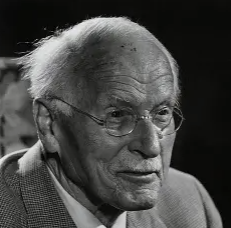
Every archetype is capable of endless development and differentiation. It is therefore possible for it to be more developed or less. In an outward form of religion where all the emphasis is on the outward figure (hence where we are dealing with a more or less complete projection) the archetype is identical with externalized ideas but remains unconscious as a psychic factor. When an unconscious content is replaced by a projected image to that extent, it is cut off from all participation in an influence on the conscious mind. Hence it largely forfeits its own life, because prevented from exerting the formative influence on consciousness natural to it; what is more, it remains in its original form - unchanged, for nothing changes in the unconscious.
2 months 2 weeks ago
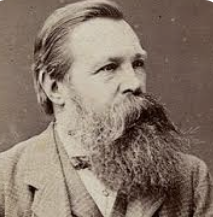
The bourgeoisie is charitable out of self-interest; it gives nothing outright, but regards its gifts as a business matter, makes a bargain with the poor, saying: "If I spend this much upon benevolent institutions, I thereby purchase the right not to be troubled any further, and you are bound thereby to stay in your dusky holes and not to irritate my tender nerves by exposing your misery. You shall despair as before, but you shall despair unseen."

2 months 4 days ago
Without narration, life is purely additive.

3 months 2 weeks ago
Imagination is not an empirical or superadded power of consciousness, it is the whole of consciousness as it realizes its freedom.
▼
Source
source
L'imagination (Imagination: A Psychological Critique)
3 months 2 weeks ago
As for the square at Meknes, where I used to go every day, it's even simpler: I do not see it at all anymore. All that remains is the vague feeling that it was charming, and these five words that are indivisibly bound together: a charming square at Meknes. ... I don't see anything any more: I can search the past in vain, I can only find these scraps of images and I am not sure what they represent, whether they are memories or just fiction.
▼
Source
source
Diary entry of Friday 3:00pm (9 February?)

6 days ago
If any one is angry with you, meet his anger by returning benefits for it: a quarrel which is only taken up on one side falls to the ground: it takes two men to fight.
▼
Source
source
De Ira (On Anger): Book 2, cap. 34, line 5.

2 months 1 week ago
The vain man is in like cause with the avaricious - he takes the mean for the end; forgetting the end he pursues the means for its own sake and goes no further. The seeming to be something, conducive to being it, ends by forming our objective. We need that others should believe in our superiority to them in order that we may believe in it ourselves, and upon their belief base our faith in our own persistence, or at least in the persistence of our fame. We are more grateful to him that congratulates us on the skill with which we defend a cause than we are to him who recognizes the truth or goodness of the cause itself. A rabid mania for originality is rife in the modern intellectual world and characterizes all individual effort. We would rather err with genius than hit the mark with the crowd.
3 months 3 weeks ago
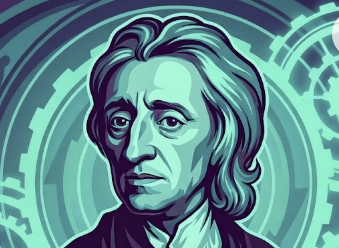
Men being, as has been said, by nature, all free, equal and independent, no one can be put out of this estate, and subjected to the political power of another, without his own consent.
▼
Source
source
Second Treatise of Government, Ch. VIII, sec. 95
3 months 2 weeks ago
This is the terrible fix we are in. If the universe is not governed by an absolute goodness, then all our efforts are in the long run hopeless. But if it is, then we are making ourselves enemies to that goodness every day, and are not in the least likely to do any better tomorrow, and so our case is hopeless again....God is the only comfort, He is also the supreme terror: the thing we most need and the thing we most want to hide from.
▼
Source
source
Book I, Chapter 5, "We Have Cause to Be Uneasy"

1 month 2 weeks ago
Violence is the effort to maintain and restore a weakened psyche.
▼
Source
source
(p. 377)
3 months 3 weeks ago
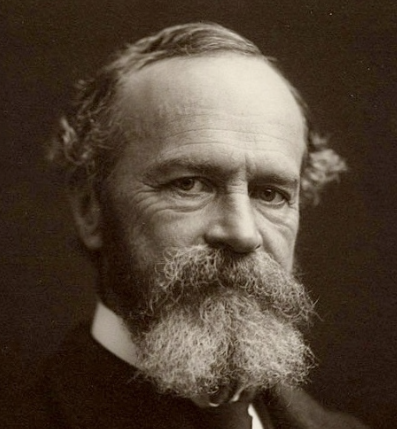
Everything which is demanded is by that fact a good.
▼
Source
source
"The Will to Believe" p. 205

3 months 4 weeks ago
Man is forming thousands of ridiculous relations between himself and God.
▼
Source
source
Ch. 12

2 months 4 days ago
The free expression of the hopes and aspirations of a people is the greatest and only safety in a sane society.

2 months 3 days ago
What are novels? What is the secret of the charm of every romance that ever was written? The first thing in a good novel is to place the persons together in circumstances which naturally call out the high feelings and thoughts of the character, which afford food for sympathy between them on these points - romantic events they are called. The second is that the heroine has generally no family ties (almost invariably no mother), or, if she has, these do not interfere with her entire independence. These two things constitute the main charm of reading novels.
2 months 2 weeks ago
The slave is outside competition; the proletarian is in it and experiences all its vagaries.
3 months 2 weeks ago
The very man who has argued you down will sometimes be found, years later, to have been influenced by what you said.
▼
Source
source
Reflections on the Psalms (1958), ch. VII: Connivance, p. 73

2 months 3 weeks ago
The essential trait in the moral consciousness, is the control of some feeling or feelings by some other feeling or feelings.
▼
Source
source
Ch. 7, The Psychological View
3 months 3 weeks ago
Romeo wants Juliet as the filings want the magnet; and if no obstacles intervene he moves towards her by as straight a line as they. But Romeo and Juliet, if a wall be built between them, do not remain idiotically pressing their faces against its opposite sides like the magnet and the filings with the card. Romeo soon finds a circuitous way, by scaling the wall or otherwise, of touching Juliet's lips directly. With the filings the path is fixed; whether it reaches the end depends on accidents. With the lover it is the end which is fixed, the path may be modified indefinitely.
▼
Source
source
Ch. 1 : The Scope of Psychology

1 month 2 weeks ago
The genes are the master programmers, and they are programming for their lives.
▼
Source
source
Ch. 4. The Gene machine
2 months 3 weeks ago
Just as when a man commits suicide ne negates the body, this rational limit of subjectivity, so when he lapses into fantastic and trascendental practice he associates himself with embodied divine and ghostly appearances, namely, he negates in practise the difference between imagination and perception.
▼
Source
source
Part III, Section 29

1 month 3 weeks ago
Once ... I was offered a lift by some carters ... It was the Thursday before Easter. I was seated in the first cart, with a strong, red, coarse carman, who evidently drank. On entering a village we saw a well-fed, naked, pink pig being dragged out of the first yard to be slaughtered. It squealed in a dreadful voice, resembling the shriek of a man. Just as we were passing they began to kill it. A man gashed its throat with a knife. The pig squealed still more loudly and piercingly, broke away from the men, and ran off covered with blood. Being near-sighted I did not see all the details. I saw only the human-looking pink body of the pig and heard its desperate squeal; but the carter saw all the details and watched closely. They caught the pig, knocked it down, and finished cutting: its throat. When its squeals ceased the carter sighed heavily. 'Do men really not have to answer for such things?' he said.
▼
Source
source
Ch. IX
2 months 3 weeks ago
Superstition is more injurious to God than atheism.
2 days ago
Blow the dust off the clock. Your watches are behind the times. Throw open the heavy curtains which are so dear to you - you do not even suspect that the day has already dawned outside.
▼
Source
source
Letter to the Secretariat of the Soviet Writers' Union (12 November 1969) as translated in Solzhenitsyn: A Documentary Record (1970) edited by Leopold Labedz, "Expulsion"
2 days ago
Now, you see, if you understand what I'm saying, with your intelligence, and then take the next step and say "But I understood it now, but I didn't feel it." Then, next I raise the question: Why do you want to feel it? You say: "I want something more", because that's again that spiritual greed. And you could only say that because you didn't understand it.
▼
Source
source
Intellectual Yoga
1 month 2 weeks ago
The end of government is to make the governed and the governors happy. That government then is thebest, which in practice produces the greatest happiness to the greatest number; including those who govern, and those who obey.
▼
Source
source
Essay Fourth, The Principles of the Former Essays Applied to Government
3 months 3 weeks ago
If pains be to be taken to give him a manly air and assurance betimes, it is chiefly as a fence to his virtue when he goes into the world under his own conduct.
▼
Source
source
Sec. 70
3 months 4 weeks ago
There are some defeats more triumphant than victories.
▼
Source
source
Ch. 30. Of Cannibals, tr. Cotton, rev. W. Hazlitt, 1842
3 months 3 weeks ago
Children should from the beginning be bred up in an abhorrence of killing or tormenting any living creature; and be taught not to spoil or destroy any thing, unless it be for the preservation or advantage of some other that is nobler.
▼
Source
source
Sec. 116
CivilSimian.com created by AxiomaticPanic, CivilSimian, Kalokagathia