

1 month 3 weeks ago
Human history began with an act of disobedience, and it is not unlikely that it will be terminated by an act of obedience.
▼
Source
source
Disobedience as a Psychological and Moral Problem in On Disobedience and Other Essays
2 months 3 days ago
In the human reality, all existence that spends itself in procuring the prerequisites of existence is thus an "untrue" and unfree existence. Obviously this reflects the not at all ontological condition of a society based on the proposition that freedom is incompatible with the activity of procuring the necessities of life, that this activity is the "natural" function of a specific class, and that cognition of the truth and true existence imply freedom from the entire dimension of such activity. ... Society still is organized in such a way that procuring the necessities of life constitutes the full-time and life-long occupation of specific social classes, which are therefore unfree and prevented from a human existence. In this sense, the classical proposition according to which truth is incompatible with enslavement by socially necessary labor is still valid.
▼
Source
source
pp. 127-128

2 months 6 days ago
From the cradle to the grave, each individual pays for the sin of not being God. That's why life is an uninterrupted religious crisis, superficial for believers, shattering for doubters.
1 month 2 weeks ago
What makes our poetry so contemptible nowadays is its paucity of ideas. If you want to be read, invent. Who the Devil wouldn't like to read something new?
▼
Source
source
D 62

3 months 1 week ago
If the colleges were better, if they ... had the power of imparting valuable thought, creative principles, truths which become powers, thoughts which become talents, - if they could cause that a mind not profound should become profound, - we should all rush to their gates: instead of contriving inducements to draw students, you would need to set policy at the gates to keep order in the in-rushing multitude.
▼
Source
source
The Celebration of Intellect, 1861

4 months 1 week ago
One does not discover the absurd without being tempted to write a manual of happiness. "What! — by such narrow ways — ?" There is but one world, however. Happiness and the absurd are two sons of the same earth. They are inseparable. It would be a mistake to say that happiness necessarily springs from the absurd discovery. It happens as well that the feeling of the absurd springs from happiness.
3 months 3 weeks ago
Five [of the above] rules are of absolute necessity, and cannot be dispensed with without essential defect and often without error.
2 months 1 week ago
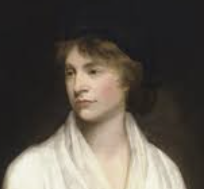
It is impossible for any man, when the most favourable circumstances concur, to acquire sufficient knowledge and strength of mind to discharge the duties of a king, entrusted with uncontrolled power; how then must they be violated when his very elevation is an insuperable bar to the attainment of either wisdom or virtue; when all the feelings of a man are stifled by flattery, and reflection shut out by pleasure! Surely it is madness to make the fate of thousands depend on the caprice of a weak fellow creature, whose very station sinks him NECESSARILY below the meanest of his subjects! But one power should not be thrown down to exalt another--for all power intoxicates weak man; and its abuse proves, that the more equality there is established among men, the more virtue and happiness will reign in society.
▼
Source
source
Ch. 1
7 months 2 weeks ago
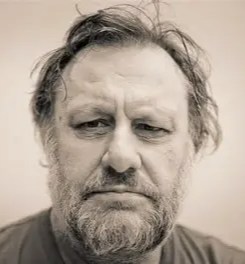
The general reference of the philosophical discussion is usually the triangle world: world-language-subject, the relation of the subject to the world of objects, mediated through language.
3 months 6 days ago
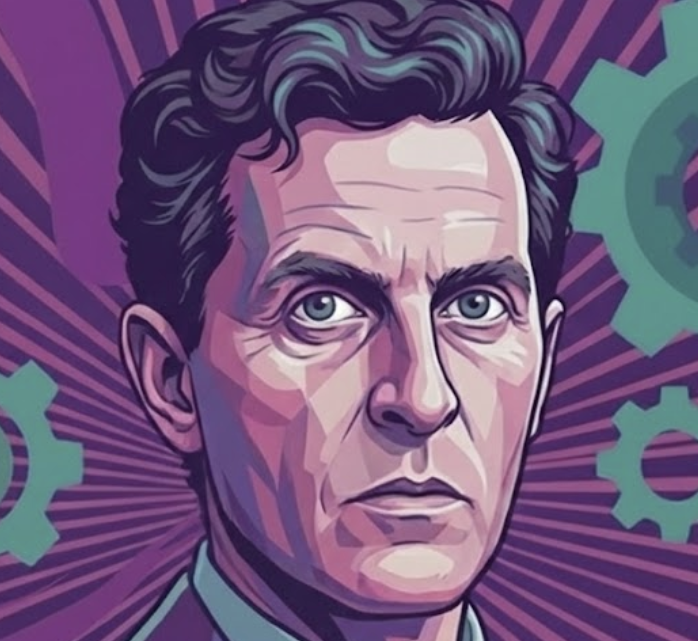
The human body is the best picture of the human soul.
▼
Source
source
Pt II, p. 178

3 months 4 weeks ago
It must be said that charity can, in no way, exist along with mortal sin.
▼
Source
source
Disputed Questions: On Charity, c. 1270

2 months 3 days ago
If those who lead you say, 'See, the Kingdom is in the sky,' then the birds of the sky will precede you. If they say to you, 'It is in the sea,' then the fish will precede you. Rather, the Kingdom is inside of you, and it is outside of you. When you come to know yourselves, then you will become known, and you will realize that it is you who are the sons of the living Father. But if you will not know yourselves, you dwell in poverty and it is you who are that poverty. (3) And when he was demanded of the Pharisees, when the kingdom of God should come, he answered them and said, The kingdom of God cometh not with observation: Neither shall they say, Lo here! or, lo there! for, behold, the kingdom of God is within you.
▼
Source
source
(Luke 17:21)
3 months 1 week ago
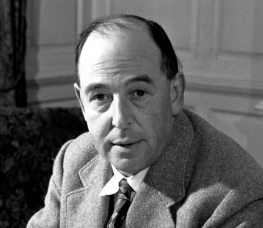
Frantic administration of panaceas to the world is certainly discouraged by the reflection that "this present" might be "the world's last night"; sober work for the future, within the limits of ordinary morality and prudence, is not.
2 months 1 week ago
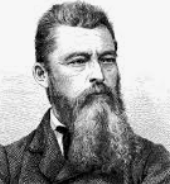
Hegel determines and presents only the most striking differences of various religions, philosophies, time and peoples, and in a progressive series of stages, but he ignores all that is common and identical in all of them. ... His system knows only subordination and succession; coordination and coexistence are unknown to it.
▼
Source
source
Z. Hanfi, trans., in The Fiery Brook (1972), p. 54
1 month 1 week ago
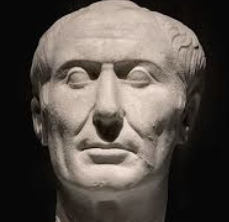
A good reputation is more valuable than money.
▼
Source
source
Maxim 108

1 day ago
It is the property of every Hero, in every time, in every place and situation, that he come back to reality; that he stand upon things, and not shows of things. According as he loves, and venerates, articulately or with deep speechless thought, the awful realities of things, so will the hollow shows of things, however regular, decorous, accredited by Koreishes or Conclaves, be intolerable and detestable to him.
2 months 1 week ago
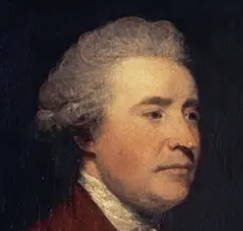
...what was done in France was a wild attempt to methodize anarchy; to perpetuate and fix disorder. That it was a foul, impious, monstrous thing, wholly out of the course of moral nature. He undertook to prove, that it was generated in treachery, fraud, falsehood, hypocrisy, and unprovoked murder. ... That by the terror of assassination they had driven away a very great number of the members, so as to produce a false appearance of a majority.-That this fictitious majority had fabricated a constitution, which as now it stands, is a tyranny far beyond any example that can be found in the civilized European world of our age.
▼
Source
source
p. 376
2 months 1 week ago
The history of philosophical system is the picture gallery of reason.
▼
Source
source
Z. Hanfi, trans., in The Fiery Brook (1972), p. 68


3 months 1 week ago
A masterpiece of art has in the mind a fixed place in the chain of being, as much as a plant or a crystal.
▼
Source
source
Art
3 months 1 week ago
Nor knowest thou what argument Thy life to thy neighbor's creed has lent: All are needed by each one, Nothing is fair or good alone.
▼
Source
source
Each and All, st. 1

3 months 2 weeks ago
Although the whole of this life were said to be nothing but a dream and the physical world nothing but a phantasm, I should call this dream or phantasm real enough, if, using reason well, we were never deceived by it.
▼
Source
source
As quoted in The World of Mathematics (1956) by J. R. Newman, p. 1832

2 months 3 weeks ago
Power is the near neighbour of necessity.
▼
Source
source
As quoted in Aurea Carmina (8) by Hierocles of Alexandria, as translated in Dictionary of Quotations (1906) by Thomas Benfield Harbottle, p. 356
1 month 2 weeks ago
Every man has his moral backside which he refrains from showing unless he has to and keeps covered as long as possible with the trousers of decorum.
▼
Source
source
B 12 Variant translation: Everyone has a moral backside, which he does not show except in case of need and which he covers as long as possible with the breeches of respectability.
6 days ago
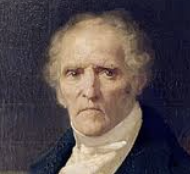
This miracle of social concord would result not from direct conciliation, which would be impossible, but from the development of new interests, and especially from the amazement with which the minds of men would be filled on being convinced of the radical falseness of the civilized social order by comparison with the associative or combined, and of the errors in which the social world has been so long plunged - misled by speculative philosophy, which upholds and extols this order with all its defects to the entire neglect of the study of association.
▼
Source
source
The Theory of Social Organization. Harmonian Man: Selected Writings of Charles Fourier, p. 5.
3 months 1 week ago
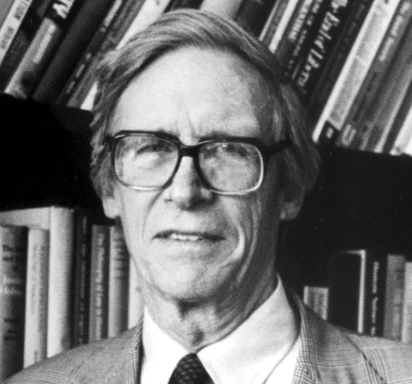
Ideally a just constitution would be a just procedure arranged to insure a just outcome.
▼
Source
source
Chapter IV, Section 31, pg. 197
2 months 1 week ago
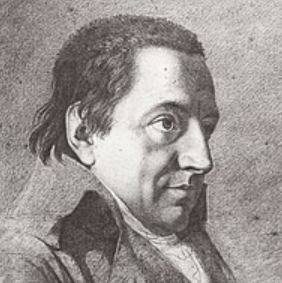
I am excluded from the possession of a determined object, not through the will of the other, but only through my own free-will. If I had not excluded myself, I should not be excluded. But I must exclude myself from something in virtue of the Conception of Rights.
▼
Source
source
** P. 182
1 month 1 week ago
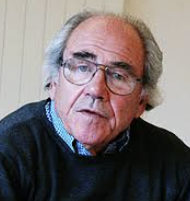
To challenge and to cope with this paradoxical state of things, we need a paradoxical way of thinking; since the world drifts into delirium, we must adopt a delirious point of view. We must no longer assume any principle of truth, of causality, or any discursive norm. Instead, we must grant both the poetic singularity of events and the radical uncertainty of events. It is not easy. We usually think that holding to the protocols of experimentation and verification is the most difficult thing. But in fact the most difficult thing is to renounce the truth and the possibility of verification, to remain as long as possible on the enigmatic, ambivalent, and reversible side of thought.
▼
Source
source
The Vital Illusion (2000) "The Murder of the Real". Wellek Library Lectures given May 1999 at the University of California, Irvine
2 months 6 days ago
Paradise was unendurable, otherwise the first man would have adapted to it; this world is no less so, since here we regret paradise or anticipate another one. What to do? Where to go? Do nothing and go nowhere, easy enough.

5 days ago
So today... red and blue voters rely on a completely different set of facts. ...Polls ...suggest that a substantial... majority of Republican voters believe that the Democrats... stole the election, and that Joe Biden is not the legitimate president... When you don't have a common factual basis, you... reinforce the kinds of filter bubbles that people have started to move into.

3 months 1 week ago
At this point we find ourselves confronted by a very disquieting question: Do we really wish to act upon our knowledge?
▼
Source
source
Chapter 12 (p. 116)

3 months 1 week ago
Appealing to his [Einstein's] way of expressing himself in theological terms, I said: If God had wanted to put everything into the universe from the beginning, He would have created a universe without change, without organisms and evolution, and without man and man's experience of change. But he seems to have thought that a live universe with events unexpected even by Himself would be more interesting than a dead one.
▼
Source
source
As quoted in Omnipotence and Other Theological Mistakes by Charles Hartshorne

3 months 1 week ago
It is not altogether true that persuasion is one thing and force is another. Many forms of persuasion - even many of which everybody approves - are really a kind of force. Consider what we do to our children. We do not say to them: "Some people think the earth is round, and others think it is flat; when you grow up, you can, if you like, examine the evidence and form your own conclusion." Instead of this we say: "The earth is round." By the time our children are old enough to examine the evidence, our propaganda has closed their minds.
▼
Source
source
Ch. 17: The Ethics of Power
2 months 6 days ago
We define only out of despair, we must have a formula... to give a facade to the void.
3 months ago
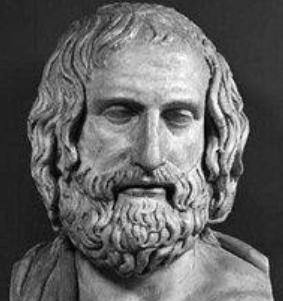
The sun provides the moon with its brightness.
▼
Source
source
Fragment in Plutarch De facie in orbe lunae, 929b, as quoted in The Riverside Dictionary of Biography (2005), p. 23
4 months 1 week ago
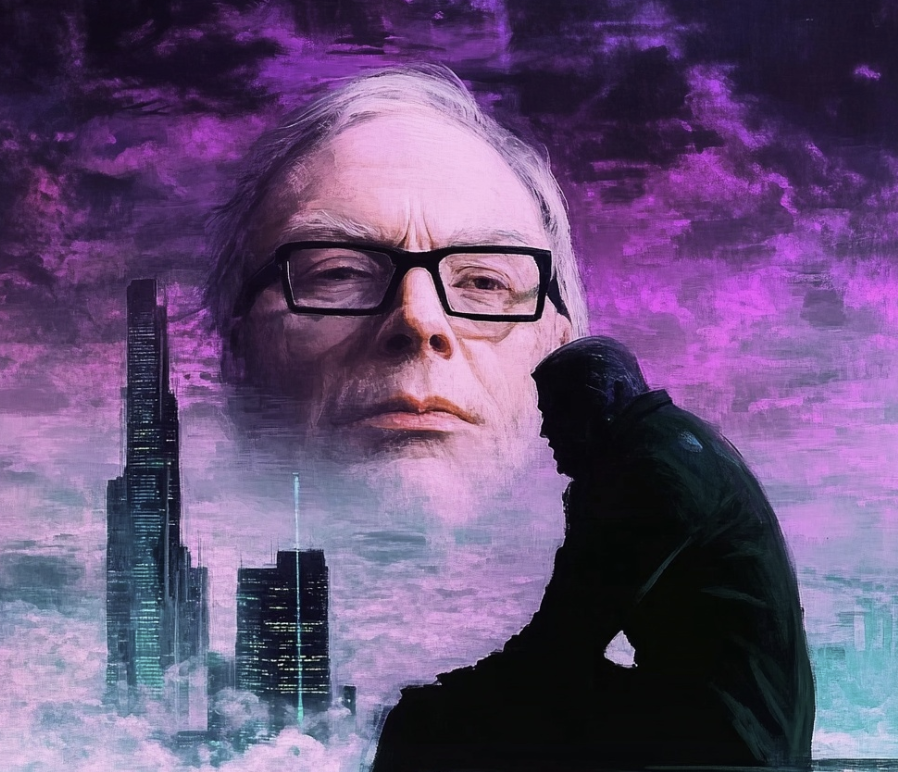
Never let your sense of morals prevent you from doing what is right.
2 weeks 5 days ago
Money is everywhere but so is poetry. What we lack are the poets.
▼
Source
source
Poets
3 months 4 weeks ago
Down in adoration falling,Lo! the sacred Host we hail;Lo! o'er ancient forms departing,Newer rites of grace prevail;Faith for all defects supplying,Where the feeble senses fail.
▼
Source
source
Pange, Lingua, stanza 5 (Tantum Ergo)
3 months 1 week ago
Alcohol, hashish, prussic acid, strychnine are weak dilutions. The surest poison is time.
▼
Source
source
Poetry and Imagination
1 month 2 weeks ago
It is indeed a matter of great difficulty to discover, and effectually to distinguish, the true motions of particular bodies from the apparent; because the parts of that immovable space, in which those motions are performed, do by no means come under the observation of our senses. Yet the thing is not altogether desperate; for we have some arguments to guide us, partly from the apparent motions, which are the differences of the true motions; partly from the forces, which are the causes and effects of the true motions.
▼
Source
source
Definitions - Scholium
3 months 1 week ago
Our island is this earth; and the most striking object we behold is the sun. As soon as we pass beyond our immediate surroundings, one or both of these must meet our eye. Thus the philosophy of most savage races is mainly directed to imaginary divisions of the earth or to the divinity of the sun.
1 month 3 weeks ago
Anarchism is the only philosophy which brings to man the consciousness of himself; which maintains that God, the State, and society are non-existent, that their promises are null and void, since they can be fulfilled only through man's subordination.
3 months 1 week ago
It appears... that a work similar in its object and general conception to that of Adam Smith, but adapted to the more extended knowledge and improved ideas of the present age, is the kind of contribution which Political Economy at present requires. The Wealth of Nations is in many parts obsolete, and in all, imperfect. Political Economy... has grown up almost from infancy since the time of Adam Smith; and the philosophy of society... has advanced many steps beyond the point at which he left it.
▼
Source
source
Preface, 1848
3 months 2 weeks ago
No one has yet been found so firm of mind and purpose as resolutely to compel himself to sweep away all theories and common notions, and to apply the understanding, thus made fair and even, to a fresh examination of particulars. Thus it happens that human knowledge, as we have it, is a mere medley and ill-digested mass, made up of much credulity and much accident, and also of the childish notions which we at first imbibed.
▼
Source
source
Aphorism 97

2 months 2 weeks ago
There are at the present time two great nations in the world-allude to the Russians and the Americans- All other nations seem to have nearly reached their national limits, and have only to maintain their power; these alone are proceeding-along a path to which no limit can be perceived.
▼
Source
source
Chapter XVIII.
3 months 6 days ago
A philosopher who is not taking part in discussions is like a boxer who never goes into the ring.
▼
Source
source
Conversation of 1930

1 month 3 weeks ago
It is a sign of sovereignty to risk one's life, that is, to turn life into a game.
CivilSimian.com created by AxiomaticPanic, CivilSimian, Kalokagathia