


2 weeks 5 days ago
There stood Mucius, despising the enemy and despising the fire, and watched his hand as it dripped blood over the fire on his enemy's altar, until Porsenna, envying the fame of the hero whose punishment he was advocating, ordered the fire to be removed against the will of the victim.

4 months 3 days ago
Of course God knew what would happen if they used their freedom the wrong way: apparently He thought it worth the risk.
▼
Source
source
Book II, Chapter 3, "The Shocking Alternative"

3 weeks 4 days ago
Where this will end? In the Abyss, one may prophecy; whither all Delusions are, at all moments, travelling; where this Delusion has now arrived. For if there be a Faith, from of old, it is this, as we often repeat, that no Lie can live for ever. The very Truth has to change its vesture, from time to time; and be born again. But all Lies have sentence of death written down against them, and Heaven's Chancery itself; and, slowly or fast, advance incessantly towards their hour.
▼
Source
source
Pt. I, Bk. VI, ch. 3.
4 months 1 week ago
A little of all things, but nothing of everything, after the French manner.
▼
Source
source
Chapter 26. Of the Education of Children

4 months 4 days ago
The cup of life is not so shallow
That we have drained the best
That all the wine at once we swallow
And lees make all the rest.
▼
Source
source
1827

3 months 1 day ago
Your vision will become clear only when you can look into your own heart. Without, everything seems discordant; only within does it coalesce into unity. Who looks outside dreams; who looks inside awakes.
▼
Source
source
Letter to Fanny Bowditch, 22 October 1916

1 month 1 week ago
The true goal of the bourgeois life, in other words, is not self-enactment, but diversion. Most people need the organised distraction of work (if they can find it). Idleness - the life of the playboy who doesn't answer the phone - is simply too demanding. "
▼
Source
source
A difficult business," New Statesman
3 months 1 day ago
Our psychology is ... a science of mere phenomena without any metaphysical implications. [It] Treats all metaphysical claims and assertions as mental phenomena, and regards them as statements about the mind and its structure.
▼
Source
source
Psychology and Religion: West and East (1958), p. 476, as cited in Psychotherapy East and West (1961), p. 14

4 months 6 days ago
With what consistency, or decency they complain so loudly of attempts to enslave them, while they hold so many hundred thousands in slavery; and annually enslave many thousands more, without any pretence of authority, or claim upon them?
1 month 1 week ago
Science is not distinguished from myth by science being literally true and myth only a type of poetic analogy. While their aims are different, both are composed of symbols we use to deal with a slippery world.
▼
Source
source
Beyond the Last Thought: Freud's cigars and the long way round to Nirvana (p. 96)
3 months 4 weeks ago
When a philosopher addresses himself to... a tyrant, and tells him... tyranny is incompatible with justice, then the philosopher speaks... and believes he is speaking the truth, and... takes a risk...
▼
Source
source
[T]hat was Plato's situation with Dionysius in Syracuse... reference... Plato's Seventh Letter, and... The Life of Dion by Plutarch. Ref: 1) Ludwig Edelstein, Plato's seventh letter (1966) 2) Plutarch, Life of Dion

2 months 3 weeks ago
You are the salt of the earth; but if the salt loses its flavor, how shall it be seasoned? It is then good for nothing but to be thrown out and trampled underfoot by men. You are the light of the world. A city that is set on a hill cannot be hidden. Nor do they light a lamp and put it under a basket, but on a lampstand, and it gives light to all who are in the house. Let your light so shine before men, that they may see your good works and glorify your Father in heaven.
▼
Source
source
Matthew 5:13-16 (NIV) (See also: Mark 9:50; Luke 14:34, 35)

3 months ago
Self-pity is not as sterile as we suppose. Once we feel its mere onset, we assume a thinker's attitude, and come to think of it, we come to think!

2 months 2 days ago
The sculptural qualities of the image dim down the purely personal identity.
▼
Source
source
(p. 369)

3 months 5 days ago
Men who undertake considerable things, even in a regular way, ought to give us ground to presume ability.
4 months 3 days ago
Forgiveness is the key to action and freedom.
▼
Source
source
As quoted in The Concise Columbia Dictionary of Quotations (1989) edited by Robert Andrews, p. 114
4 days ago
The principle of rotation... in the body of [bank] directors... breaks in upon the esprit de corps so apt to prevail in permanent bodies; it gives a chance for the public eye penetrating into the sanctuary of those proceedings and practices, which the avarice of the directors may introduce for their personal emolument, and which the resentments of excluded directors, or the honesty of those duly admitted, might betray to the public; and it gives an opportunity at the end of the year, or at other periods, of correcting a choice, which on trial, proves to have been unfortunate.
▼
Source
source
Letter to Albert Gallatin, 1803. ME 10:437
2 days ago
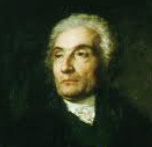
The Constitution of 1795, like its predecessors, was made for man. But there is no such thing as man in the world. In my lifetime I have seen Frenchmen, Italians, Russians, etc.; thanks to Montesquieu, I even know that one can be Persian. But as for man, I declare that I have never in my life met him; if he exists, he is unknown to me.
1 month 2 weeks ago
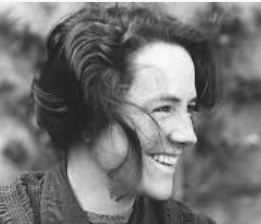
I kept looking at the flowers in a vase near me: lavender sweet peas, fragile winged and yet so still, so perfectly poised, apart, and complete. They are self-sufficient, a world in themselves, a whole - perfect. Is that then, perfection? Is what those sweet peas had what I have, occasionally in moments like that? But flowers always have it - poise, completion, fulfillment, perfection; I only occasionally, like that moment. For that moment I and the sweet peas had an understanding.

2 months 3 weeks ago
And yet Catholicism does not abandon ethics. No! No modern religion can leave ethics on one side. But our religion - although its doctors may protest against this - is fundamentally and for the most part a compromise between eschatology and ethics; it is eschatology pressed into the service of ethics. What else but this is that atrocity of the eternal pains of hell, which agrees so ill with the Pauline apocatastasis? Let us bear in mind these words which the Theologica Germanica, the manual of mysticism that Luther read, puts into the mouth of God: "If I must recompense your evil, I must recompense it with good, for I am and have no other." And Christ said: "Father, forgive them, for they know not what they do," and there is no man who perhaps knows what he does.

2 months 2 weeks ago
Self-expression is impossible in relation with other men; their self-expression interferes with it. The greatest heights of self-expression in poetry, music, painting - are achieved by men who are supremely alone.
▼
Source
source
Chapter Eight, The Outsider as a Visionary
4 months 2 weeks ago
FIRE. God of Abraham, God of Isaac, God of Jacob, not of the philosophers and scholars. Certainty. Certainty. Feeling. Joy. Peace.
▼
Source
source
Note on a parchment stitched to the lining of Pascal's coat, found by a servant shortly after his death, as quoted in Burkitt Speculum religionis (1929), p. 150
3 months 1 day ago
My soul, my soul, where are you? Do you hear me? I speak, I call you-are you there? I have returned, here I am again. I have shaken the dust of all the lands from my feet, and I have come to you again, I am with you. After long years of long wandering, I have come to you anew. Shall I tell you everything I have seen, experienced, and drunk in? Or do you not want to hear about all the noise of life and the world? But one thing you must know, the one thing I have learned is that one must live this life. This life is the way, the long sought-after way to the unfathomable, which we call "divine". There is no other way. All other ways are false paths.
▼
Source
source
Book 2, 12. Nov. 1913

2 months 2 weeks ago
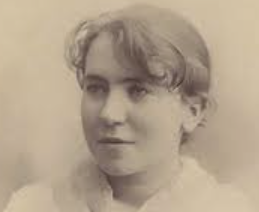
The spirit of militarism has already permeated all walks of life. Indeed, I am convinced that militarism is a greater danger here than anywhere else, because of the many bribes capitalism holds out to those whom it wishes to destroy.
2 months 2 weeks ago
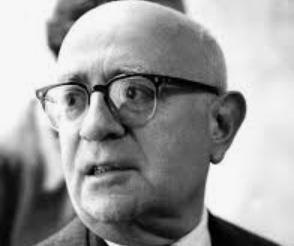
When I speak of 'negative dialectics' not the least important reason for doing so is my desire to dissociate myself from this fetishization of the positive.
▼
Source
source
p. 18

4 months 4 days ago
The soul of wit may become the very body of untruth.
▼
Source
source
Foreward (p. vii)
2 days ago
Men never respect what they have made themselves. This is why an elective king never possesses the moral power of a hereditary sovereign, because he is not noble enough, that is to say he does not possess that kind of greatness independent of men and that is the work of time.
▼
Source
source
p. 72
3 months 3 weeks ago
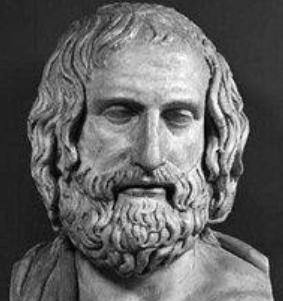
Mind is infinite and self-ruled, and is mixed with nothing, but is alone itself by itself.
▼
Source
source
Frag. B 12, quoted in John Burnet's Early Greek Philosophy, (1920), Chapter 6.
4 days ago
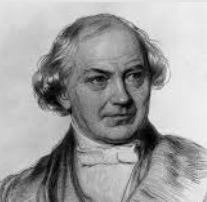
The 'Diagnosis', or Scheme of the Characters, comes, in the order of philosophy, after the Classification. The characters do not 'make' the classes, they only enable us to 'recognize' them. The Diagnosis is an Artificial Key to a Natural System.
2 months 2 weeks ago
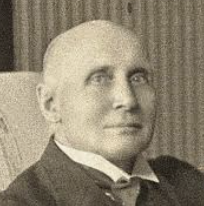
What the learned world tends to offer is one second-hand scrap of information illustrating ideas derived from another second-hand scrap of information. The second-handedness of the learned world is the secret of its mediocrity.
2 months 3 weeks ago
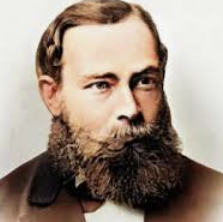
It really is worth the trouble to invent a new symbol if we can thus remove not a few logical difficulties and ensure the rigour of the proofs. But many mathematicians seem to have so little feeling for logical purity and accuracy that they will use a word to mean three or four different things, sooner than make the frightful decision to invent a new word.
▼
Source
source
Gottlob Frege in: Dagobert David Runes (1962). Readings in epistemology, theory of knowledge and dialectics. p. 334

4 months 5 days ago
But, suppose, besides, that the making of the new machinery affords employment to a greater number of mechanics, can that be called compensation to the carpet makers, thrown on the streets?
▼
Source
source
Vol. I, Ch. 15, Section 6, pg. 479.
3 days ago
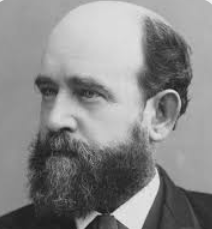
There are people into whose heads it never enters to conceive of any better state of society than that which now exists.
▼
Source
source
Book IX, Ch. 3
4 months 5 days ago
In England women are still occasionally used instead of horses for hauling canal boats, because the labour required to produce horses and machines is an accurately known quantity, while that required to maintain the women of the surplus population is below all calculation.
▼
Source
source
Vol. I, Ch. 15, Section 2, pg. 430.
Just now
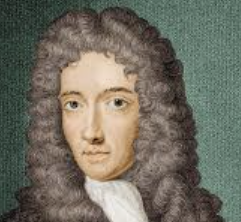
There are some mixt bodies, from which it has not been yet made appear, that any degree of fire can separate either salt, or sulphur, or mercury, much less all the three. The most obvious instance of this truth is gold, which is a body so fixed, and wherein the elementary ingredients (if it have any) are so firmly united to each other, that we find not in the operations, wherein gold is exposed to the fire, how violent soever, that it does discernably so much as lose of its fixedness or weight, so far is it from being dissipated into those principles, whereof one at least is acknowledged to be fugitive enough.
1 month 3 weeks ago
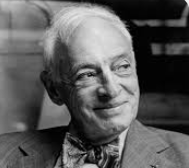
The principles of Western liberalism seem no longer to lend themselves to effective action. Deprived of the expressive power, we are awed by it, have a hunger for it, and are afraid of it. Thus we praise the gray dignity of our soft-spoken leaders, but in our hearts we are suckers for passionate outbursts, even when those passionate outbursts are hypocritical and falsely motivated.
▼
Source
source
"Literary Notes on Khrushchev" (1961), p. 36
3 months ago
If instead of expanding you, putting you in a state of energetic euphoria, your ordeals depress and embitter you, you can be sure you have no spiritual vocation.

4 months 5 days ago
That virtue we appreciate is as much ours as another's. We see so much only as we possess.
▼
Source
source
June 22, 1839
1 week 6 days ago
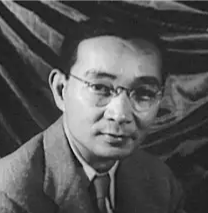
By association with nature's enormities, a man's heart may truly grow big also. There is a way of looking upon a landscape as a moving picture and being satisfied with nothing less big as a moving picture, a way of looking upon tropic clouds over the horizon as the backdrop of a stage and being satisfied with nothing less big as a backdrop, a way of looking upon the mountain forests as a private garden and being satisfied with nothing less as a private garden, a way of listening to the roaring waves as a concert and being satisfied with nothing less as a concert, and a way of looking upon the mountain breeze as an air-cooling system and being satisfied with nothing less as an air-cooling system. So do we become big, even as the earth and firmaments are big.
▼
Source
source
Like the "Big Man" described by Yuan Tsi (A.D. 210-263), one of China's first romanticists, we "live in heaven and earth as our house." p. 282
4 days ago
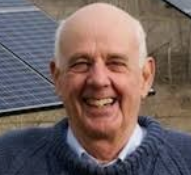
It is impossible to care for each other more or differently than we care for the earth. This last statement becomes obvious enough when it is considered that the earth is what we all have in common, that it is what we are made of and what we live from, and that we therefore cannot damage it without damaging those with whom we share it. But I believe it goes farther and deeper than that. There is an uncanny resemblance between our behavior toward each other and our behavior toward the earth. Between our relation to our own sexuality and our relation to the reproductivity of the earth, for instance, the resemblance is plain and strong. By some connection we do not recognize, the willingness to exploit one becomes the willingness to exploit the other.
▼
Source
source
The Unsettling of America (1977), Chapter Seven : The Body and the Earth
1 month 1 week ago
All art is autobiographical; the pearl is the oyster's autobiography.
▼
Source
source
On the autobiographical nature of his films, in The Atlantic
4 months 2 weeks ago
Though absent from our eyes, Christ our Head is bound to us by love. Since the whole Christ is Head and body, let us so listen to the voice of the Head that we may also hear the body speak.He no more wished to speak alone than He wished to exist alone, since He says: Behold, I am with you all days, unto the consummation of the world (Matt. 28:20). If He is with us, then He speaks in us, He speaks of us, and He speaks through us; and we too speak in Him.
▼
Source
source
pp. 420-421
2 months 3 weeks ago
Oblivious of Democritus, the unwilling materialists of our day have generally been awkwardly intellectual and quite incapable of laughter. If they have felt anything, they have felt melancholy. Their allegiance and affection were still fixed on those mythical sentimental worlds which they saw to be illusory. The mechanical world they believed in could not please them, in spite of its extent and fertility. Giving rhetorical vent to their spleen and prejudice, they exaggerated nature's meagreness and mathematical dryness. When their imagination was chilled they spoke of nature, most unwarrantably, as dead, and when their judgment was heated they took the next step and called it unreal.
▼
Source
source
Ch. 3 "Mechanism"
4 months 3 days ago
Since it is always the same person whose mind thinks, wills, and judges, the autonomous nature of these activities has created great difficulties. Reason's inability to move the will, plus the fact that thinking can only "understand" what is past what neither remove it nor "rejuvenate it" ... have led to the various doctrines asserting the mind's impotence and the force of the irrational, in brief to Hume's famous dictum that "Reason is and ought only to be the slave of the passions," that is, to a rather simple-minded reversal of the Platonic notion of reason's uncontested rulership in the household of the soul. What is so remarkable in all these theories and doctrines is their implicit monism, the claim that behind the obvious multiplicity of the world's appearances and, even more pertinently to our context, behind the obvious plurality of man's faculties and abilities, there must exist a oneness - the old hen pan, "the all is one" - either a single source or a single ruler.
4 months 5 days ago
All honour to those who can abnegate for themselves the personal enjoyment of life, when by such renunciation they contribute worthily to increase the amount of happiness in the world; but he who does it, or professes to do it, for any other purpose, is no more deserving of admiration than the ascetic mounted on his pillar. He may be an inspiriting proof of what men can do, but assuredly not an example of what they should.
▼
Source
source
Ch. 2

4 months ago
If life becomes hard to bear we think of a change in our circumstances. But the most important and effective change, a change in our own attitude, hardly even occurs to us, and the resolution to take such a step is very difficult for us.
▼
Source
source
p. 53e
2 months 3 weeks ago
Progress usually comes from the barbarian, and there is nothing more stagnant than the philosophy of the philosophers and the theology of the theologians.
2 months 3 weeks ago
Is there not therefore rational necessity, but vital anguish that impels us to believe in God. And to believe in God - I must reiterate it yet again - is, before all and above all, to feel a hunger for God, a hunger for divinity, to be sensible to his lack and absence, to wish that God may exist. And it is the wish to save the human finality of the Universe. For one might even come to resign oneself to being absorbed by God, if it be that our consciousness is based upon Consciousness, if consciousness is the end of the Universe.
CivilSimian.com created by AxiomaticPanic, CivilSimian, Kalokagathia