

3 months 3 weeks ago
Certainly He says this for me, for thee, for this other man, since He bears His body, the Church. Unless you imagine, brethren, that when He said: My Father, if it be possible, let this cup pass away from (Matt. 26:39), it was the Lord that feared to die. . . . But Paul longed to die, that he might be with Christ. What? The Apostle desires to die, and Christ Himself should fear death? What can this mean, except that He bore our infirmity in Himself, and uttered these words for those who are in His body and still fear death? It is from these that the voice came; it was the voice of His members, not of the Head. When He said, My soul is sorrowful unto death (Matt. 26:38), He manifested Himself in thee, and thee in Himself. And when He said, My God, my God, why has Thou forsaken Me? (Matt. 27:46), the words He uttered on the cross were not His own, but ours.

2 months 1 week ago
Accept suffering and achieve atonement through it - that is what you must do.
2 months 1 week ago
Perfectibility is one of the most unequivocal characteristics of the human species.
▼
Source
source
Vol. 1, bk. 1 : Of the Powers of Man Considered in his Social Capacity, ch. 2

4 months 1 week ago
When you are reading God's Word, it is not the obscure passages that bind you but what you understand, and with that you comply at once. If you understood only one single passage in all of Holy Scripture, well, then you must do that first of all, but you do not first have to sit down and ponder the obscure passages.

2 months 3 days ago
Wherefore I say unto you, All manner of sin and blasphemy shall be forgiven unto men: but the blasphemy against the Holy Ghost shall not be forgiven unto men. And whosoever speaketh a word against the Son of man, it shall be forgiven him: but whosoever speaketh against the Holy Ghost, it shall not be forgiven him, neither in this world, neither in the world to come.
▼
Source
source
(Matthew 12:31-32) (KJV)

4 months 1 week ago
Scientists have pushed back the horizon of time from the biblical 6,000 years to 4,600,000,000 years for the age of Earth a 760,000-fold increase.

1 month 1 week ago
To say that the activity of science and art helps humanity's progress, if by that activity we mean the activity which now calls itself by those names, is as though one said that the clumsy, obstructive splashing of oars in a boat moving down stream assists the boat's progress. It only hinders it... The proof of this is seen in the confession made by men of science that the achievements of the arts and sciences are inaccessible to the labouring masses on account of the unequal distribution of wealth.

3 months 1 week ago
If production be capitalistic in form, so, too, will be reproduction.
▼
Source
source
Vol. I, Ch. 23, pg. 620.

4 months 1 week ago
Who is the most moral man? First, he who obeys the law most frequently, who ... is continually inventive in creating opportunities for obeying the law. Then, he who obeys it even in the most difficult cases. The most moral man is he who sacrifices the most to custom. ... Self-overcoming is demanded, not on account of any useful consequences it may have for the individual, but so that hegemony of custom and tradition shall be made evident.

3 months 1 week ago
The imagination is not a talent of some men but is the health of every man.
▼
Source
source
Poetry and Imagination
3 months 3 weeks ago
Every habit and faculty is confirmed and strengthened by the corresponding actions, that of walking by walking, that of running by running.
▼
Source
source
Book II, ch. 18, 1

1 month 2 weeks ago
There exists a species of transcendental ventriloquism by means of which men can be made to believe that something said on earth comes from Heaven.
▼
Source
source
F 84
4 months ago
The administration of government lies in getting proper men. Such men are to be got by means of the ruler's own character. That character is to be cultivated by his treading in the ways of duty. And the treading those ways of duty is to be cultivated by the cherishing of benevolence.
2 months 1 week ago
Granted I am a babbler, a harmless vexatious babbler, like all of us. But what is to be done if the direct and sole vocation of every intelligent man is babble, that is, the intentional pouring of water through a sieve?
▼
Source
source
Part 1, Chapter 5

3 months 2 weeks ago
The worst of my actions or conditions seem not so ugly unto me as I find it both ugly and base not to dare to avouch for them.

3 months 1 week ago
It is the privilege of true genius, and certainly of the genius that opens a new road, to make without punishment great mistakes.
▼
Source
source
"Siècle de Louis XIV," ch. 32 (1751), qtd. in Arthur Schopenhauer, "The World as Will and Representation," Criticism of the Kantian philosophy, 1818

1 month 3 weeks ago
There is nothing that comes closer to true humility than the intelligence. It is impossible to feel pride in one's intelligence at the moment when one really and truly exercises it.
▼
Source
source
As quoted in the Introduction (by Siân Miles) p. 35
3 months 1 week ago
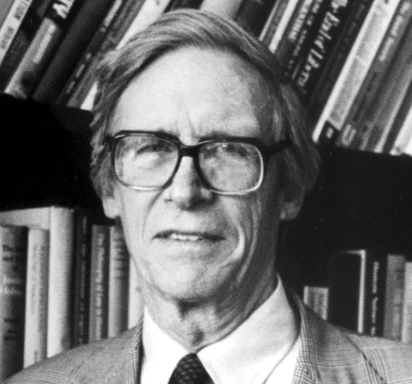
At best the principles that economists have supposed the choices of rational individuals to satisfy can be presented as guidelines for us to consider when we make our decisions.
▼
Source
source
Chapter IX, Section 84, p. 558

2 months 1 week ago
The Republican form of government is the highest form of government; but because of this it requires the highest type of human nature - a type nowhere at present existing.
▼
Source
source
Vol. 3, Ch. XV, The Americans

2 months 6 days ago
I love talking to simple people, with common folk, if you like, and I still do it and still chat now as before with anyone, regardless of intellectual level. On the contrary, I like uneducated people much better and that is obviously my Rumanian heritage.

3 months 1 week ago
Nature is full of genius, full of the divinity; so that not a snowflake escapes its fashioning hand.
▼
Source
source
January 5, 1856

3 months 2 weeks ago
Faith is born and preserved in us by preaching why Christ came, what he brought and gave to us, and the benefits we obtain when we receive him. This happens when Christian liberty - which he gives to us - is rightly taught and we are told in what way as Christians we are all kings and priests and therefore lords of all.
▼
Source
source
p. 70
4 months 1 week ago
The best way to describe anyone is to give an example of the kind of thing he would do.
3 months 1 week ago
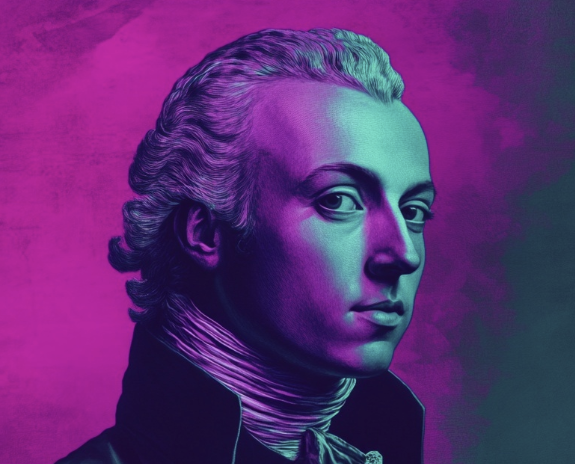
Nature has willed that man should, by himself, produce everything that goes beyond the mechanical ordering of his animal existence, and that he should partake of no other happiness or perfection than that which he himself, independently of instinct, has created by his own reason.
▼
Source
source
Third Thesis
2 months 1 day ago
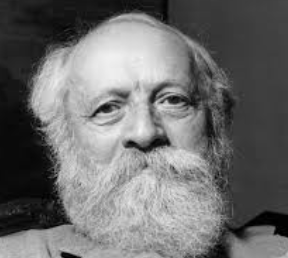
The prophet is appointed to oppose the king, and even more: history.
▼
Source
source
BBC radio broadcast (1962), as quoted in The Great Thoughts (1984) by George Seldes

2 months 2 weeks ago
How can even the lowest mind, if he reflects at all the marvels of this earth and sky, the brilliant fashioning of plants and animals, remain blind to the fact that this wonderful world with its settled order must have a maker to design, determine and direct it?
▼
Source
source
Tibawi, A.L. (ed. and tr.). (1965) Al-Risala al-Qudsiyya (The Jerusalem Epistle) "Al-Ghazali's Tract on Dogmatic Theology". In: The Islamic Quarterly, 9:3-4 (1965), 3-4.
2 months 2 days ago
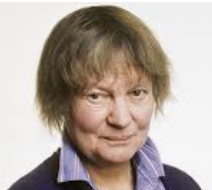
Only lies and evil come from letting people off.
▼
Source
source
A Severed Head (1961); 1976, p. 61.
3 months 1 week ago
What is commonly called friendship even is only a little more honor among rogues.
▼
Source
source
Pearls of Thought (1881) p. 95
4 months 1 week ago
Spontaneous love can reach the point of despair, shows that it is in despair, that even when it is happy it loves with the power of despair.

2 months 2 weeks ago
Perchance you who pronounce my sentence are in greater fear than I who receive it.
▼
Source
source
His famous response to his judges upon his conviction as a heretic, prior to his transfer to the civil authorities for execution. (16 February 1600); as quoted by Gaspar Schopp of Breslau in a letter to Conrad Rittershausen

2 months 2 weeks ago
I should have loved freedom, I believe, at all times, but in the time in which we live I am ready to worship it.
▼
Source
source
Book Four, Chapter VII.
3 months 1 week ago
The present hour is always wealthiest when it is poorer than the future ones, as that is the pleasantest site which affords the pleasantest prospect.
▼
Source
source
Pearls of Thought (1881) p. 210

3 months 1 week ago
Just as the witticism brings two very different real objects under one concept, the pun brings two different concepts, by the assistance of accident, under one word.
▼
Source
source
Volume I, Book I
3 months 1 week ago
Self-trust is the first secret of success.
▼
Source
source
Success
3 months 3 weeks ago
For what is a child? Ignorance. What is a child? Want of instruction. For where a child has knowledge, he is no worse than we are.
▼
Source
source
Book II, ch. 1, 16
3 months 1 week ago
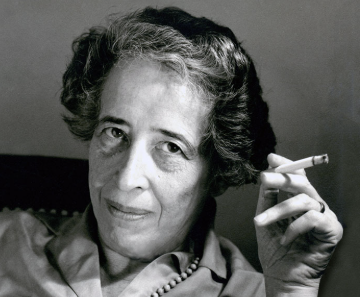
For the trouble with lying and deceiving is that their efficiency depends entirely upon a clear notion of the truth that the liar and deceiver wishes to hide. In this sense, truth, even if it does not prevail in public, possesses an ineradicable primacy over all falsehoods.
▼
Source
source
"Lying in Politics"

3 months 1 week ago
It seems that sin is geographical. From this conclusion, it is only a small step to the further conclusion that the notion of "sin" is illusory, and that the cruelty habitually practised in punishing it is unnecessary.
▼
Source
source
A Fresh Look at Empiricism: 1927-42 (1996), p. 283
3 months 1 week ago
Love is a severe critic. Hate can pardon more than love.
▼
Source
source
Pearls of Thought (1881) p. 159
2 months 6 days ago
We have convictions only if we have studied nothing thoroughly.
1 month 3 weeks ago
We used to pay too little attention to utopias, or even disregard them altogether, saying with regret they were impossible of realisation. Now indeed they seem to be able to be brought about far more easily than we supposed, and we are actually faced by an agonising problem of quite another kind: how can we prevent their final realisation? ... Utopias are more realisable than those 'realist politics' that are only the carefully calculated policies of office-holders, and towards utopias we are moving. But it is possible that a new age is already beginning, in which cultured and intelligent people will dream of ways to avoid ideal states and to get back to a society that is less 'perfect' and more free.
▼
Source
source
pp. 187-188. Aldous Huxley used this passage (in French translation) as the epigraph to Brave New World.
2 months 1 week ago
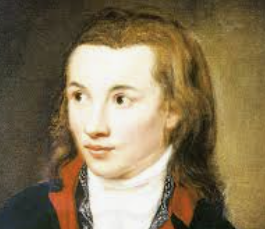
Every stage of education begins with childhood. That is why the most educated person on earth so much resembles a child.
▼
Source
source
"Miscellaneous Observations," Philosophical Writings, M. Stolijar, trans. (Albany: 1997) #48
4 months 1 week ago
The modern scientific counterpart to belief in God is the belief in the universe as an organism: this disgusts me. This is to make what is quite rare and extremely derivative, the organic, which we perceive only on the surface of the earth, into something essential, universal, and eternal! This is still an anthropomorphizing of nature!
3 months 2 weeks ago
Covetousness is both the beginning and the end of the devil's alphabet- the first vice in corrupt nature that moves, and the last which dies.
3 months 1 day ago
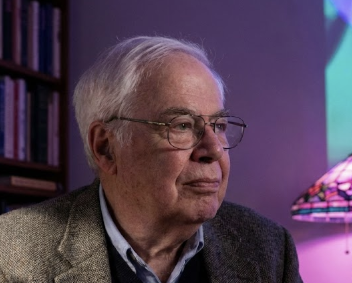
Almost as soon as I began to study philosophy, I was impressed by the way in which philosophical problems appeared, disappeared, or changed shape, as a result of new assumptions or vocabularies.
▼
Source
source
Preface
1 month 1 week ago
When the Indians complain that the English have enslaved them it is as if drunkards complained that the spirit-dealers who have settled among them have enslaved them. You tell them that they might give up drinking, but they reply that they are so accustomed to it that they cannot abstain, and that they must have alcohol to keep up their energy. Is it not the same thing with the millions of people who submit to thousands or even to hundreds, of others - of their own or other nations? If the people of India are enslaved by violence it is only because they themselves live and have lived by violence, and do not recognize the eternal law of love inherent in humanity.
▼
Source
source
V
4 months ago
What the great learning teaches, is to illustrate illustrious virtue; to renovate the people; and to rest in the highest excellence. The point where to rest being known, the object of pursuit is then determined; and, that being determined, a calm unperturbedness may be attained to. To that calmness there will succeed a tranquil repose. In that repose there may be careful deliberation, and that deliberation will be followed by the attainment of the desired end.
3 months 1 week ago
His heart was as great as the world, but there was no room in it to hold the memory of a wrong.
▼
Source
source
Greatness
1 month 2 weeks ago
Philosophers today are as fond as ever of apriori arguments with ethical conclusions. One reason such arguments are always unsatisfying is that they always prove too much; when a philosopher 'solves' an ethical problem for one, one feels as if one had asked for a subway token and been given a passenger ticket valid for the first interplanetary passenger-carrying space ship instead.
▼
Source
source
How Not to Solve Ethical Problems

2 months 1 week ago
The Africans had that claim on our humanity which could not be resisted, whatever might have been advanced by an hon. gentleman in defence of the property of the planters.
▼
Source
source
Speech in the House of Commons (12 May 1789), quoted in The Parliamentary History of England, From the Earliest Period to the Year 1803, Vol. XXVIII (1816), column 98
2 months 2 days ago
As we shall see later, the most important factor in the training of good mental habits consists in acquiring the attitude of suspended conclusion, and in mastering the various methods of searching for new materials to corroborate or to refute the first suggestions that occur. To maintain the state of doubt and to carry on systematic and protracted inquiry ― these are the essentials of thinking.
▼
Source
source
Chapter 1: "What Is Thought?"
CivilSimian.com created by AxiomaticPanic, CivilSimian, Kalokagathia