


3 months 3 weeks ago
Friendship is the greatest of worldly goods. Certainly to me it is the chief happiness of life. If I had to give a piece of advice to a young man about a place to live, I think I shd. say, 'sacrifice almost everything to live where you can be near your friends.
▼
Source
source
Letter to Arthur Greeves (29 December 1935) - in They Stand Together: The Letters of C. S. Lewis to Arthur Greeves (1914-1963) (1979), p. 477
3 months 3 weeks ago
There is but one good; that is God. Everything else is good when it looks to Him and bad when it turns from Him.
▼
Source
source
Ch. 11
2 months 1 week ago
In both positivism and Heidegger-at least in his later work-speculation is the target of attack. In both cases the thought that autonomously raises itself above the facts through interpreting them and that cannot be reclaimed by them without leaving a surplus is condemned for being empty and vain concept-mongering.
▼
Source
source
p. 9

3 months 3 weeks ago
How much education may reconcile young people to pain and sufference, the examples of Sparta do sufficiently shew; and they who have once brought themselves not to think bodily pain the greatest of evils, or that which they ought to stand most in fear of, have made no small advance toward virtue.
▼
Source
source
Sec. 115
2 months 2 weeks ago
And Beasts that have Deliberation, must necessarily also have Will.
▼
Source
source
The First Part, Chapter 6, p. 28

2 months 3 weeks ago
How old the world is! I walk between two eternities... What is my fleeting existence in comparison with that decaying rock, that valley digging its channel ever deeper, that forest that is tottering and those great masses above my head about to fall? I see the marble of tombs crumbling into dust; and yet I don't want to die!
▼
Source
source
Salon of 1767 (1798), Oeuvres esthétiques

2 months 3 days ago
It seems as if the female spirit of the world were mourning everlastingly over blessings, not lost, but which she has never had, and which, in her discouragement she feels that she never will have, they are so far off.
3 months 3 weeks ago
Is anything more certain than that in all those vast times and spaces, if I were allowed to search them, I should nowhere find her face, her voice, her touch? She died. She is dead. Is the word so difficult to learn?

1 month 3 weeks ago
Nonviolence does not make sense without a commitment to equality. The reason why nonviolence requires a commitment to equality can best be understood by considering that in this world some lives are more clearly valued than others, and that this inequality implies that certain lives will be more tenaciously defended than others. If one opposes the violence done to human lives-or, indeed, to other living beings-this presumes that it is because those lives are valuable. Our opposition affirms those lives as valuable. If they were to be lost as a result of violence, that loss would be registered as a loss only because those lives were affirmed as having a living value, and that, in turn, means we regard those lives as worthy of grief.
▼
Source
source
p. 28

3 months 3 weeks ago
God gave us the gift of life; it is up to us to give ourselves the gift of living well.
2 months 3 weeks ago
Reorganisation, irrespectively of God or king, by the worship of Humanity, systematically adopted. Man's only right is to do his duty. The Intellect should always be the servant of the Heart, and should never be its slave.
▼
Source
source
Title Page
4 months 6 days ago
Show that you know this only, how you may never either fail to get what you desire or fall into what you avoid.
▼
Source
source
Book II, ch. 1, 37

2 weeks 2 days ago
In Kant's words, human beings are uncaused causes, and therefore have infinite value, and a liberal regime protects that autonomy by giving people rights... The right to speak, to organize, to associate, and ultimately to have a share of power by being able to vote. ...This is ...the moral status, the dignity that life in a liberal regime that does respect individual rights, gives us, and it is one of the reasons that to this day, people do not want to live in authoritarian countries that do not recognize the fundamental dignity of their... citizens.
▼
Source
source
11:47

3 months 3 weeks ago
If this labourer were in possession of his own means of production, and was satisfied to live as a labourer, he need not work beyond beyond the time necessary for the reproduction of his means of subsistence, say 8 hours a day.
▼
Source
source
Vol. I, Ch. 11, pg. 336.

1 month 2 weeks ago
Hayek fails to account either for the passion among intellectuals for equality, or for the resulting success of socialists and their egalitarian successors in driving the liberal idea from the stage of politics. This passion for equality is not a new thing, and indeed pre-dates socialism by many centuries, finding its most influential expression in the writings of Rousseau. There is no consensus as to how equality might be achieved, what it would consist in if achieved, or why it is so desirable in the first place. But no argument against the cogency or viability of the idea has the faintest chance of being listened to or discussed by those who have fallen under its spell.
▼
Source
source
Hayek and conservatism, in Edward Feser (ed.), The Cambridge Companion to Hayek

3 months 3 weeks ago
It cannot be very difficult to determine who have been the contrivers of this whole mercantile system; not the consumers, we may believe, whose interest has been entirely neglected; but the producers, whose interests has been so carefully attended to; and among this later class our merchants and manufactures have been by far the principal architects. In the mercantile regulations, which have been taken notice of in this chapter, the interest of our manufacturers has been most peculiarly attended to;and the interest, not so much of the consumers, as that of some other sets of producers, has been sacrificed to it.
▼
Source
source
Chapter VIII, p. 721.
3 months 1 week ago
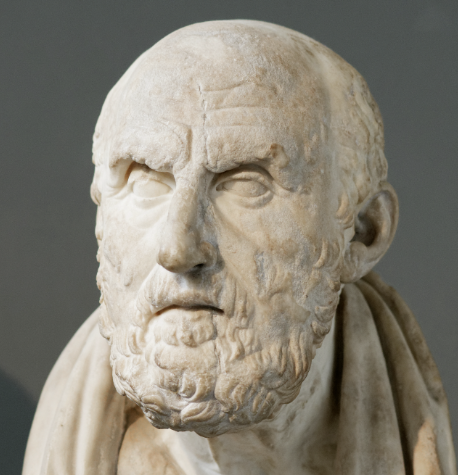
He who is running a race ought to endeavor and strive to the utmost of his ability to come off victor; but it is utterly wrong for him to trip up his competitor, or to push him aside. So in life it is not unfair for one to seek for himself what may accrue to his benefit; but it is not right to take it from another.
▼
Source
source
As quoted in De Officiis by Cicero, iii. 10.

2 months 2 weeks ago
To tell the truth, I couldn't care less about the relativity of knowledge, simply because the world does not deserve to be known.

1 month 3 weeks ago
Those attacks upon language and religion in Poland, the Baltic provinces, Alsace, Bohemia, upon the Jews in Russia, in every place that such acts of violence occur-in what name have they been, and are they, perpetrated? In none other than the name of that patriotism which you defend. Ask our savage Russifiers of Poland and the Baltic provinces, ask the persecutors of the Jews, why they act thus. They will tell you it is in defence of their native religion and language; they will tell you that if they do not act thus, their religion and language will suffer-the Russians will be Polonised, Teutonised, Judaised.
▼
Source
source
A Reply to Criticisms

4 months 2 weeks ago
Of course, I had to own that he was right; I didn't feel much regret for what I'd done. Still, to my mind, he overdid it, and I'd have liked to have a chance of explaining to him, in a quite friendly, almost affectionate way, that I have never been able to really regret anything in all my life. I've always been far too much absorbed in the present moment, or the immediate future, to think back.

3 months 3 weeks ago
The Religion that is afraid of science dishonours God and commits suicide. It acknowledges that it is not equal to the whole of truth, that it legislates, tyrannizes over a village of God's empires but is not the immutable universal law. Every influx of atheism, of skepticism is thus made useful as a mercury pill assaulting and removing a diseased religion and making way for truth.
▼
Source
source
March 4, 1831

3 months 3 weeks ago
A paradise of inward tranquility seems to be faith's usual result.
▼
Source
source
Lectures XI, XII, and XIII, "Saintliness"

4 months 1 week ago
The Master said, "Hard is it to deal with him, who will stuff himself with food the whole day, without applying his mind to anything good! Are there not gamesters and chess players? To be one of these would still be better than doing nothing at all.
3 months 3 weeks ago
What would really satisfy us would be a God who said of anything we happened to like, "What does it matter so long as they are contented?" We want, in fact, not so much a Father in Heaven as a grandfather in heaven - a senile benevolence who, as they say, "liked to see young people enjoying themselves" and whose plan for the universe was simply that it might be truly said at the end of each day, "a good time was had by all".

1 week 6 days ago
An intellectual dapperling of these times boasts chiefly of his irresistible perspicacity, his "dwelling in the daylight of truth," and so forth; which, on examination, turns out to be a dwelling in the rush-light of "closet logic," and a deep unconsciousness that there is any other light to dwell in or any other objects to survey with it.
2 months 2 weeks ago
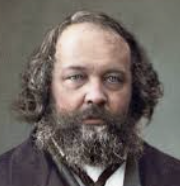
Freedom is the absolute right of every human being to seek no other sanction for his actions but his own conscience, to determine these actions solely by his own will, and consequently to owe his first responsibility to himself alone.
▼
Source
source
As quoted in Anarchism: From Theory to Practice, Daniel Guérin, New York: NY, Monthly Review Press (1970) p. 31
3 months 4 weeks ago
Women are the most charitable creatures, and the most troublesome. He who shuns women passes up the trouble, but also the benefits. He who puts up with them gains the benefits, but also the trouble. As the saying goes, there's no honey without bees.
▼
Source
source
Act III, scene iv

1 week ago
The primary indication, to my thinking, of a well-ordered mind is a man's ability to remain in one place and linger in his own company.
1 week ago
No social co-operation under the division of labour is possible when some people or unions of people are granted the right to prevent by violence and the threat of violence other people from working. When enforced by violence, a strike in vital branches of production or a general strike are tantamount to a revolutionary destruction of society.
1 day ago
Men's works also are naturally perishable and mutable and subject to every kind of alteration. But since God is eternal, it follows that of such sort are his ordinances also. And since they are such, they are either the natures of things or are accordant with the nature of things. For how could nature be at variance with the ordinance of God? How could it fall out of harmony therewith?
1 week 6 days ago
Not the external and physical alone is now managed by machinery, but the internal and spiritual also. Here too nothing follows its spontaneous course, nothing is left to be accomplished by old natural methods. Everything has its cunningly devised implements, its preestablished apparatus; it is not done by hand, but by machinery.

2 months 2 weeks ago
Verily I say unto you, That a rich man shall hardly enter into the kingdom of heaven. And again I say unto you, It is easier for a camel to go through the eye of a needle, than for a rich man to enter into the kingdom of God.
▼
Source
source
19:23-24 (KJV)

3 months 2 weeks ago
It is clear that the causal nexus is not a nexus at all.
▼
Source
source
Journal entry (12 October 1916), p. 84e
3 months 3 weeks ago
The life of God - the life which the mind apprehends and enjoys as it rises to the absolute unity of all things - may be described as a play of love with itself; but this idea sinks to an edifying truism, or even to a platitude, when it does not embrace in it the earnestness, the pain, the patience, and labor, involved in the negative aspect of things.
▼
Source
source
§ 19

3 months 5 days ago
Things essentially incorporeal, because they are more excellent than all body and place, are every where, not with interval, but impartibly. Things essentially incorporeal are not locally present with bodies but are present with them when they please; by verging towards them so far as they are naturally adapted so to verge. They are not, however, present with them locally, but through habitude, proximity, and alliance. Things essentially incorporeal, are not present with bodies, by hypostasis and essence; for they are not mingled with bodies. But they impart a certain power which is proximate to bodies, through verging towards them. For tendency constitutes a certain secondary power proximate to bodies.
1 month 2 weeks ago
Every man is his own doctor of divinity, in the last resort.
▼
Source
source
An Inland Voyage (1878).

3 months 2 weeks ago
The critical ontology of ourselves has to be considered not, certainly, as a theory, a doctrine, nor even as a permanent body of knowledge that is accumulating; it has to be conceived as an attitude, an ethos, a philosophical life in which the critique of what we are is at one and the same time the historical analysis of the limits that are imposed on us and an experiment with the possibility of going beyond them.

4 months 3 weeks ago
The next thing you can learn from the woman who was a sinner, something she herself understood, is that with regard to finding forgiveness she is able to do nothing at all.

1 month 3 weeks ago
"He who exalts himself shall be humbled; and he who humbles himself shall be exalted." (Matthew 23:12) The person who exalts himself ... will be humbled, because a person who considers himself to be good, intelligent, and kind will not even try to become better, smarter, kinder. The humble person will be exalted, because he considers himself bad and will try to become better, kinder, and more reasonable.
▼
Source
source
p. 110
3 months 2 weeks ago
To obey a rule, to make a report, to give an order, to play a game of chess, are customs.
▼
Source
source
(uses, institutions) § 199
2 months 2 weeks ago
In the state of nature, Profit is the measure of Right.
▼
Source
source
De Cive
2 months 2 weeks ago
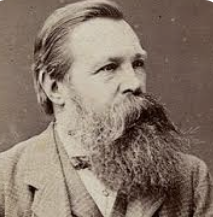
True, the law is sacred to the bourgeois, for it is his own composition, enacted with his consent, and for his benefit and protection. He knows that, even if an individual law should injure him, the whole fabric protects his interests; and more than all, the sanctity of the law, the sacredness of order as established by the active will of one part of society, and the passive acceptance of the other, is the strongest support of his social position. Because the English bourgeois finds himself reproduced in his law, as he does in his God, the policeman's truncheon which, in a certain measure, is his own club, has for him a wonderfully soothing power. But for the working-man quite otherwise! The working-man knows too well, has learned from too oft-repeated experience, that the law is a rod which the bourgeois has prepared for him; and when he is not compelled to do so, he never appeals to the law.
3 months 3 weeks ago
People say law but they mean wealth.
▼
Source
source
1841

4 months 1 week ago
Venerate the martyrs, praise, love, proclaim, honor them. But worship the God of the martyrs.
▼
Source
source
273:9; translation from: The works of Saint Augustine, John E. Rotelle, New City Press, ISBN 1565480600 ISBN 9781565480605 p. 21
2 months 2 weeks ago
I anticipated witnessing in my lifetime the disappearance of our species. But the Gods have been against me.

3 months 2 weeks ago
What can be said can and should always be said more and more simply and clearly.
1 month 2 weeks ago
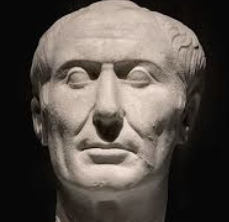
He is a despicable sage whose wisdom does not profit himself.
▼
Source
source
Maxim 629
2 months 2 weeks ago
The bourgeoisie has gained a monopoly of all means of existence in the broadest sense of the word. What the proletarian needs, he can obtain only from this bourgeoisie, which is protected in its monopoly by the power of the state. The proletarian is, therefore, in law and in fact, the slave of the bourgeoisie, which can decree his life or death.
▼
Source
source
p. 112
CivilSimian.com created by AxiomaticPanic, CivilSimian, Kalokagathia