

3 months 1 week ago
Children (nay, and men too) do most by example.
▼
Source
source
Sec. 67
3 months ago
I am not adverting here to the alleged privacy of experience to its possessor. The point of view in question is not one accessible only to a single individual. Rather it is a type. It is often possible to take up a point of view other than one's own, so the comprehension of such facts is not limited to one's own case. There is a sense in which phenomenological facts are perfectly objective: one person can know or say of another what the quality of the other's experience is. They are subjective, however, in the sense that even this objective ascription of experience is possible only for someone sufficiently similar to the object of ascription to be able to adopt his point of view - to understand the ascription in the first person as well as in the third, so to speak. The more different from oneself the other experiencer is, the less success one can expect with this enterprise.
▼
Source
source
pp. 171-172
3 months 3 weeks ago
For human beings, the measure of every action is the impression of the senses.
▼
Source
source
Book I, ch. 28, 10

1 month 3 weeks ago
I am the center of my universe, the center of the universe, and in my supreme anguish I cry with Michelet, "Mon moi, ils m'arrachent mon moi!" What is a man profited if he shall gain the world and lose his own soul? (Matt. xvi. 26).
2 months 6 days ago
For it all depends on how we look at things, and not on how they are in themselves. The least of things with a meaning is worth more in life than the greatest of things without it.
▼
Source
source
p. 67
2 months 1 week ago
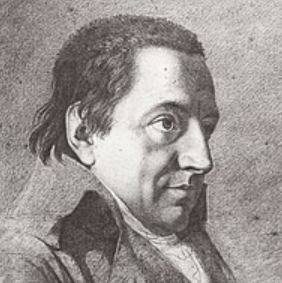
Should it seem to me that truth has been put to silence, and virtue trampled under foot, and that folly and vice will certainly triumph; should it happen, when all hearts were filled with hope for the human race, that the horizon should suddenly darken around them as it had never done before; should the work, well and happily begun, on which all eyes were fixed with joyous expectation, suddenly and unexpectedly be turned into a deed of shame, - yet will I not be dismayed; nor if the good cause should appear to grow and flourish, the lights of freedom and civilization be diffused, and peace and good-will amongst men be extended, shall yet my efforts be relaxed.
▼
Source
source
Jane Sinnett, trans 1846 p.123
3 months 5 days ago
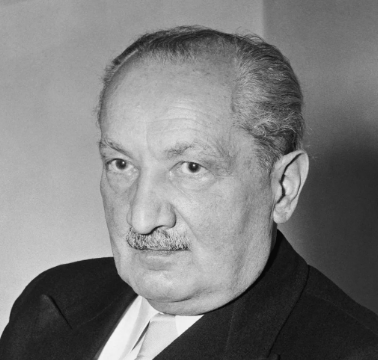
Mathematics is as little a natural science as philosophy is one of the humanities. Philosophy in its essence belongs as little in the philosophical faculty as mathematics belongs to natural science. To house philosophy and mathematics in this way today seems to be a blemish or a mistake in the catalog of the universities. Plato put over the entrance to his Academy the words: "Let no one who has not grasped the mathematical enter here!"
▼
Source
source
p. 69,75

3 months 1 week ago
Pi's face was masked, and it was understood that none could behold it and live. But piercing eyes looked out from the mask, inexorable, cold and enigmatic.
▼
Source
source
"The Mathematician's Nightmare", Nightmares of Eminent Persons and Other Stories, 1954

3 months 1 week ago
Looking for God-or Heaven-by exploring space is like reading or seeing all Shakespeare's plays in the hope that you will find Shakespeare as one of the characters or Stratford as one of the places. Shakespeare is in one sense present at every moment in every play.
▼
Source
source
"The Seeing Eye", in Christian Reflections (1967), p. 167

1 month 3 weeks ago
When, as a result of what was called Enlightenment in the eighteenth century, the priests had in fact almost entirely lost this function of guidance. Their place was taken by writers and scientists. In both cases it is equally absurd. Mathematics, physics, and biology are as remote from spiritual guidance as the art of arranging words. When that function is usurped by literature and science it proves there is no longer any spiritual life.
▼
Source
source
"Morality and literature," pp. 164-165
2 weeks 4 days ago
Given our anthropocentric bias, thinking of non-human vertebrates not just as equivalent in moral status to toddlers or infants, but as though they were toddlers or infants, is a useful exercise. Such reconceptualisation helps correct our lack of empathy for sentient beings whose physical appearance is different from "us". Ethically, the practice of intelligent "anthropomorphism" shouldn't be shunned as unscientific, but embraced insofar as it augments our stunted capacity for empathy. Such anthropomorphism can be a valuable corrective to our cognitive and moral limitations. This is not a plea to be sentimental, simply for impartial benevolence.
▼
Source
source
Reprogramming Predators, BLTC Research, 2009
3 months 1 week ago
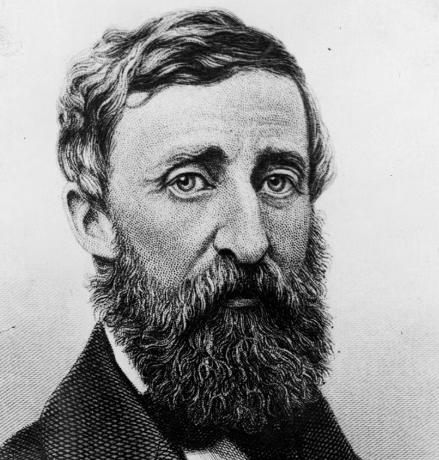
My desire for knowledge is intermittent; but my desire to bathe my head in atmospheres unknown to my feet is perennial and constant. The highest that we can attain to is not Knowledge, but Sympathy with Intelligence. I do not know that this higher knowledge amounts to anything more definite than a novel and grand surprise on a sudden revelation of the insufficiency of all that we called Knowledge before - a discovery that there are more things in heaven and earth than are dreamed of in our philosophy.

3 months 5 days ago
"It is necessary to be given the prop that all elementary props are given." This is not necessary because it is even impossible. There is no such prop! That all elementary props are given is SHOWN by there being none having an elementary sense which is not given.
▼
Source
source
Notes of 1919, as quoted in Ludwig Wittgenstein : The Duty of Genius (1990) by Ray Monk

1 month 1 week ago
In default of any other proof, the thumb would convince me of the existence of a God.
▼
Source
source
Stanislas (1856)
2 months 6 days ago
The healthy man does not torture others-generally it is the tortured who turn into torturers.
▼
Source
source
In Du, May 1941
1 month 2 weeks ago
If it were true what in the end would be gained? Nothing but another truth. Is this such a mighty advantage? We have enough old truths still to digest, and even these we would be quite unable to endure if we did not sometimes flavor them with lies.
▼
Source
source
E 10
1 month 2 weeks ago
If this is philosophy it is at any rate a philosophy that is not in its right mind.
▼
Source
source
L 23

2 months 1 week ago
'No one but you and one 'jade' I have fallen in love with, to my ruin. But being in love doesn't mean loving. You may be in love with a woman and yet hate her.

2 months 1 week ago
They think of the philosopher as holding the ideal or subjective in one hand and the real or objective in the other and then have him strike the palms of his hands together so that one abrades the other. The product of this abrasion is the Absolute.
▼
Source
source
P. 12
3 months 1 week ago
A scheme is unjust when the higher expectations, one or more of them, are excessive. If these expectations were decreased, the situation of the less favored would be improved.
▼
Source
source
Chapter II, Section 13, pg. 79

3 months 1 week ago
In all ages of the world, priests have been enemies to liberty; and it is certain, that this steady conduct of theirs must have been founded on fixed reasons of interest and ambition. Liberty of thinking, and of expressing our thoughts, is always fatal to priestly power, and to those pious frauds, on which it is commonly founded; and, by an infallible connexion, which prevails among all kinds of liberty, this privilege can never be enjoyed, at least has never yet been enjoyed, but in a free government.
▼
Source
source
Part I, Essay 9: Of The Parties of Great Britain
3 months 1 week ago
The case of the conscience of Eichmann, which is admittedly complicated but is by no means unique, is scarcely comparable to the case of the German generals, one of whom, when asked at Nuremberg, "How was it possible that all of you honorable generals could continue to serve a murderer with such unquestioning loyalty?," replied that it was "not the task of a soldier to act as judge over his supreme commander. Let history do that or God in Heaven."
▼
Source
source
Ch. VIII
7 months 2 weeks ago
I hate writing. I so intensely hate writing — I cannot tell you how much. The moment I am at the end of one project I have the idea that I didn’t really succeed in telling what I wanted to tell, that I need a new project — it’s an absolute nightmare. But my whole economy of writing is in fact based on an obsessional ritual to avoid the actual act of writing.
1 month 3 weeks ago
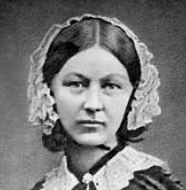
It seems as if the female spirit of the world were mourning everlastingly over blessings, not lost, but which she has never had, and which, in her discouragement she feels that she never will have, they are so far off.
2 weeks 4 days ago
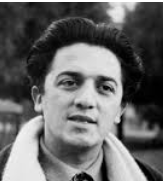
Experience is what you get while looking for something else.
▼
Source
source
"Experience"
2 months 1 week ago
It's easier for a Russian to become an atheist than for anyone else in the world.
▼
Source
source
Part 4, Chapter 7

2 months 4 weeks ago
We ought to regard the interests of the state as of far greater moment than all else, in order that they may be administered well; and we ought not to engage in eager rivalry in despite of equity, nor arrogate to ourselves any power contrary to the common welfare. For a state well administered is our greatest safeguard. In this all is summed up: When the state is in a healthy condition all things prosper; when it is corrupt, all things go to ruin.
2 months 4 weeks ago
There are two forms of knowledge, one genuine, one obscure. To the obscure belong all of the following: sight, hearing, smell, taste, feeling. The other form is the genuine, and is quite distinct from this. [And then distinguishing the genuine from the obscure, he continues:] Whenever the obscure [way of knowing] has reached the minimum sensibile of hearing, smell, taste, and touch, and when the investigation must be carried farther into that which is still finer, then arises the genuine way of knowing, which has a finer organ of thought.
2 months 3 weeks ago
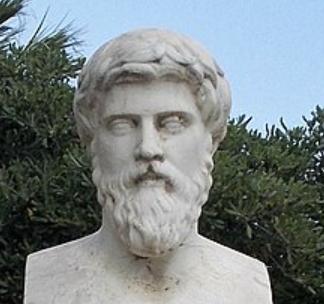
Lycurgus the Lacedæmonian brought long hair into fashion among his countrymen, saying that it rendered those that were handsome more beautiful, and those that were deformed more terrible. To one that advised him to set up a democracy in Sparta, "Pray," said Lycurgus, "do you first set up a democracy in your own house."
▼
Source
source
57 Lycurgus
3 months ago
Any reductionist program has to be based on an analysis of what is to be reduced. If the analysis leaves something out, the problem will be falsely posed.
▼
Source
source
p. 167.

2 months 2 weeks ago
Nothing is quite so wretchedly corrupt as an aristocracy which has lost its power but kept its wealth and which still has endless leisure to devote to nothing but banal enjoyments. All its great thoughts and passionate energy are things of the past, and nothing but a host of petty, gnawing vices now cling to it like worms to a corpse.
▼
Source
source
Book Three, Chapter XI.

3 months 1 week ago
Most shocking of all is alledging the Sacred Scriptures to favour this wicked practice. One would have thought none but infidel cavillers would endeavour to make them appear contrary to the plain dictates of natural light, and Conscience, in a matter of common Justice and Humanity; which they cannot be. Such worthy men, as referred to before, judged otherways; Mr. Baxter declared, the Slave-Traders should be called Devils, rather than Christians; and that it is a heinous crime to buy them.
2 months 6 days ago
One of the most difficult tasks men can perform, however much others may despise it, is the invention of good games and it cannot be done by men out of touch with their instinctive selves.
▼
Source
source
Jung and the Story of Our Time, Laurens van der Post

1 month 1 week ago
In this book we turn to the study of new patterns of energy arising from man's physical and psychic artifacts and social organizations. The only method for perceiving process and pattern is by inventory of effects obtained by the comparison and contrast of developing situations.
▼
Source
source
(p. 8)
3 months 3 weeks ago
In theory there is nothing to hinder our following what we are taught; but in life there are many things to draw us aside.
▼
Source
source
Book I, ch. 26, 3.

2 months 5 days ago
We dread the future only when we are not sure we can kill ourselves when we want to.
1 month 3 weeks ago
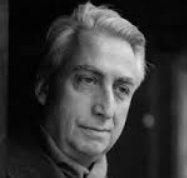
Statistically, myth is on the right. There, it is essential, well-fed, sleek, expensive, garrulous, it invents itself ceaselessly. It takes hold of everything, all aspects of the law, of morality, of aesthetics, of diplomacy, of household equipment, of Literature, of entertainment.
▼
Source
source
p. 148
2 months 5 days ago
Reality is a creation of our excesses.

1 month 3 weeks ago
I was aggressively nonpolitical. I believed that people who make a fuss about politics do so because their heads are too empty to think about more important things. So I felt nothing but impatient contempt for Osborne's Jimmy Porter and the rest of the heroes of social protest.
▼
Source
source
p. 2

1 month ago
Those who cannot find moral clarity are likely to settle for the far more dangerous simplicity, or purity, instead.

2 months 2 days ago
His master was angry, and delivered him to the torturers until he should pay all that was due to him. "So My heavenly Father also will do to you if each of you, from his heart, does not forgive his brother his trespasses."
▼
Source
source
18:34-35
1 month 1 week ago
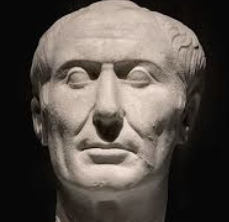
If your parent is just, revere him; if not, bear with him.
▼
Source
source
Maxim 27
2 months 4 weeks ago
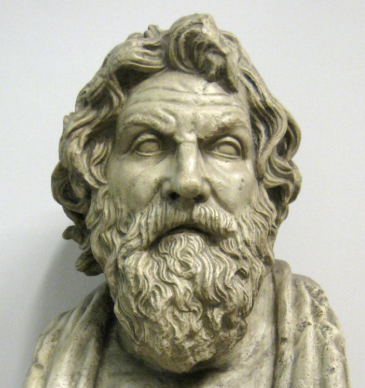
It is better to fight with a few good men against all the wicked, than with many wicked men against a few good men.
▼
Source
source
§ 5

Just now
The Philosopher of this age is not a Socrates, a Plato, a Hooker, or Taylor, who inculcates on men the necessity and infinite worth of moral goodness, the great truth that our happiness depends on the mind which is within us, and not on the circumstances which are without us; but a Smith, a De Lolme, a Bentham, who chiefly inculcates the reverse of this,-that our happiness depends entirely on external circumstances; nay, that the strength and dignity of the mind within us is itself the creature and consequence of these. Were the laws, the government, in good order, all were well with us; the rest would care for itself! Dissentients from this opinion, expressed or implied, are now rarely to be met with; widely and angrily as men differ in its application, the principle is admitted by all.
1 month 2 weeks ago
The noble simplicity in the works of nature only too often originates in the noble shortsightedness of him who observes it.
▼
Source
source
H 1
Just now
Alas, our noble men of genius, Heaven's real messengers to us, they also rendered nearly futile by the wasteful time;-preappointed they everywhere, and assiduously trained by all their pedagogues and monitors, to "rise in Parliament," to compose orations, write books, or in short speak words, for the approval of reviewers; instead of doing real kingly work to be approved of by the gods!
2 months 2 days ago
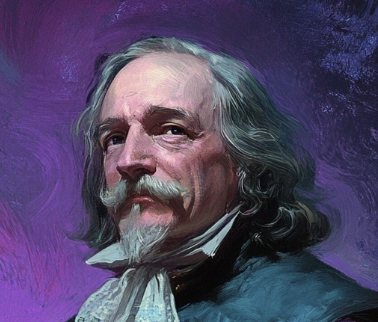
Power as is really divided, and as dangerously to all purposes, by sharing with another an Indirect Power, as a Direct one.
▼
Source
source
The Third Part, Chapter 42, p. 315

3 months 2 weeks ago
Every man bears the whole stamp of the human condition.
▼
Source
source
Ch. 2
1 month 3 weeks ago
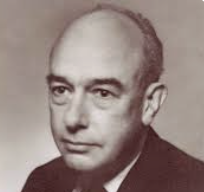
It is within science itself, and not in some prior philosophy, that reality is to be identified and described.
▼
Source
source
Theories and Things, Cambridge, MA: Harvard University Press. 1981
1 month 1 week ago
Every day should be passed as if it were to be our last.
▼
Source
source
Maxim 633
CivilSimian.com created by AxiomaticPanic, CivilSimian, Kalokagathia