

1 month 2 days ago
One can never pay in gratitude; one can only pay "in kind" somewhere else in life.
▼
Source
source
North to the Orient (1935) Ch. 19
2 months 2 weeks ago
A great revolution is on the point of being accomplished. It is a revolution not in human affairs, but in man himself.
▼
Source
source
p. 2

3 months 3 weeks ago
It is difficult for the isolated individual to work himself out of the immaturity which has become almost natural for him. He has even become fond of it and for the time being is incapable of employing his own intelligence, because he has never been allowed to make the attempt. Statutes and formulas, these mechanical tools of a serviceable use, or rather misuse, of his natural faculties, are the ankle-chains of a continuous immaturity. Whoever threw it off would make an uncertain jump over the smallest trench because he is not accustomed to such free movement. Therefore there are only a few who have pursued a firm path and have succeeded in escaping from immaturity by their own cultivation of the mind.
Just now
As to the viciousness of the philosophers, the meaning of this complaint is succinctly expressed in the charge that the philosophers do not "hold the gods the city holds." And this accusation is most true. The quest for wisdom begins in doubt of the conventional wisdom about the highest things. The most cherished beliefs of the community, the collective hopes and fears, are centered on its gods. The unpardonable thing is to be beyond these hopes and fears, beyond the awe and shame the gods impose.
▼
Source
source
Commerce and Culture, p. 287.
1 week 6 days ago
Or... they observe an astronomic phenomenon... an eclipse of the moon, and... suppose... this... is perceived simultaneously from all points of the earth. That is not altogether true, since the propagation of light is not instantaneous; if absolute exactitude were desired, there would be a correction... according to a complicated rule.

3 months 3 weeks ago
The entire lower world was created in the likeness of the higher world. All that exists in the higher world appears like an image in this lower world; yet all this is but One.
2 months 2 weeks ago
Where love rules, there is no will to power; and where power predominates, there love is lacking. The one is the shadow of the other.
▼
Source
source
P. 97

1 week 3 days ago
All greatness is unconscious, or it is little and naught.

2 months 2 days ago
What is generally regarded as success - acquisition of wealth, the capture of power or social prestige - I consider the most dismal failures. I hold when it is said of a man that he has arrived, it means that he is finished - his development has stopped at that point. I have always striven to remain in a state of flux and continued growth, and not to petrify in a niche of self-satisfaction. If I had my life to live over again, like anyone else, I should wish to alter minor details. But in any of my more important actions and attitudes I would repeat my life as I have lived it. Certainly I should work for Anarchism with the same devotion and confidence in its ultimate triumph.
3 months 3 weeks ago
Life is a task to be done. It is a fine thing to say defunctus est; it means that the man has done his task.
▼
Source
source
"On the Sufferings of the World"

2 months 2 weeks ago
To win the guilty kiss of a saint, I'd welcome the plague as a blessing
2 months 2 weeks ago
All my life, I have lived with the feeling that I have been kept from my true place. If the expression "metaphysical exile" had no meaning, my existence alone would afford it one.
2 weeks 1 day ago
If children are a joy for the well-to-do, they are a torment for seven-eights of all civlizees, who cannot afford to maintain and educate them.

2 months 2 days ago
There is no such thing as data-driven thinking.

3 months 2 weeks ago
Only in thought is man a God; in action and desire we are the slaves of circumstance.
▼
Source
source
Letter to Lucy Donnely, November 25, 1902

3 months 2 weeks ago
Shall I tell you the secret of the true scholar? It is this: Every man I meet is my master at some point, and in that, I learn of him.
▼
Source
source
Greatness
3 months 2 weeks ago
It would be worthy of the age to print together the collected Scriptures or Sacred Writings of the several nations, the Chinese, the Hindus, the Persians, the Hebrews, and others, as the Scripture of mankind. The New Testament is still, perhaps, too much on the lips and in the hearts of men to be called a Scripture in this sense. Such a juxtaposition and comparison might help to liberalize the faith of men. This is a work which Time will surely edit, reserved to crown the labors of the printing-press. This would be the Bible, or Book of Books, which let the missionaries carry to the uttermost parts of the earth.

3 months 2 weeks ago
To travel is to discover that everyone is wrong.
▼
Source
source
Part II: Malaya,
1 week 2 days ago
I know how unfashionable it is now to acknowledge in life or history any genius loftier than ourselves. Our democratic dogma has leveled not only all voters but all leaders; we delight to show that living geniuses are only mediocrities, and that dead ones are myths. ... Since it is contrary to good manners to exalt ourselves, we achieve the same result by slyly indicating how inferior are the great men of the earth. In some of us, perhaps, it is a noble and merciless asceticism, which would root out of our hearts the last vestige of worship and adoration, lest the old gods should return and terrify us again. For my part, I cling to this final religion, and discover in it a content and stimulus more lasting than came from the devotional ecstasies of youth.
▼
Source
source
The Greatest Minds and Ideas of All Time (2002) edited by John Little, Ch. 1 : The Shameless Worship of Heroes

3 months 1 day ago
Disbelieve nothing wonderful concerning the gods, nor concerning divine dogmas.
▼
Source
source
Symbol 4
3 months 2 weeks ago
The wise through excess of wisdom is made a fool.
▼
Source
source
Experience

4 months 2 weeks ago
There's nothing like deduction. We've determined everything about our problem but the solution.
2 months 6 days ago
The work of charity, of the love of God, is to endeavor to to liberate God from brute matter, to endeavor to give consciousness to everything, to spiritualize or universalize everything; it is to dream that the very rocks may find a voice and work in accordance with the spirit of this dream; it is to dream that everything that exists may become conscious, that the Word may become life.
4 months 2 weeks ago
Self-preservation has frequently knuckled under to that tremendous yearning to get even.
1 month 2 days ago
Life itself is always pulling you away from the understanding of life.
3 months 1 week ago
From Richard McKeon and Robert Brumsbaugh I learned to view the history of philosophy as a series, not of alternative solutions to the same problems, but of quite different sets of problems. From Rudolph Carnap and Carl Hempel I learned how pseudo-problems could be revealed as such by restarting them in the formal mode of speech. From Charles Hartshorne and Paul Weiss I learned how they could be so revealed by being translated into Whiteheadian or Hegelian terms.
▼
Source
source
Preface
1 month 2 weeks ago
The positivist philosophy of Comte and the I doctrine deduced from it that humanity is an organism, and Darwin's doctrine of a law of the struggle for existence that is supposed to govern life, with the differentiation of various breeds of people which follows from it, and the anthropology, biology, and sociology of which people are now so fond-all have the same aim. These have all become favourite sciences because they serve to justify the way in which people free themselves from the human obligation to labour, while consuming the fruits of other people's labour.

3 months 3 weeks ago
I have lived an honest and useful life to mankind; my time has been spend in doing good and I die in perfect composure and resignation to the will of my Creator, God.
▼
Source
source
Last will (1809), as quoted in The Fortnightly Review, vol. 31, pp. 398-399
3 months 2 weeks ago
You can do everything with bayonets except sit on them. If you want to preserve your power indefinitely you have to get the consent of the ruled. And this they will do partly by drugs as I foresaw in "Brave new World", and partly by these new techniques of propaganda. They will do it by bypassing the sort of rational side of man and appealing to his subconscious, and his deeper emotions, and his physiology, even, and so making him actually love his slavery. I mean I think this is the danger that actually people may be, in some ways, happy under the new regime. But they will be happy in situations when they oughtn't be happy.
1 week 2 days ago
Childhood may be defined as the age of play; therefore some children are never young, and some adults are never old.
▼
Source
source
Ch. 1 : Our life begins
3 months 2 weeks ago
I will not be modest. Humble, as much as you like, but not modest. Modesty is the virtue of the lukewarm.
▼
Source
source
Act 4, sc. 5
2 months 2 weeks ago
When one rational being affects another rational being as mere matter, then the lower sense of that being is also affected, it is true, and is so affected necessarily and altogether independently of the freedom of that being, (as the lower sense is indeed always affected;) but it is not to be assumed that this affection was in the intention of the person who produced it. His intention was merely to attain his purpose, to express his conception in matter, and he never took into consideration whether that matter would feel it or not. Hence, the reciprocal influence of rational beings upon each other, as such, always occurs by means of the higher sense; for only the higher sense is one which cannot be affected without having been presupposed. Our criterion of this reciprocal influence remains, therefore, correct.
▼
Source
source
P. 108
1 month 2 weeks ago
African audiences cannot accept our passive consumer role in the presence of film.
▼
Source
source
(p. 44)
2 months 1 week ago
The way in which a society organizes the life of its members ... is one "project" of realization among others. But once the project has become operative in the basic institutions and relations, it tends to become exclusive and to determine the development of the society as a whole.
▼
Source
source
p. xlviii
1 month 2 weeks ago
The potential of any new technology is always dissipated by its users involvement in its predecessors.
▼
Source
source
(p. 210)

2 months 3 weeks ago
I believe the world grows near its end, yet is neither old nor decayed, nor will ever perish upon the ruins of its own principles.
▼
Source
source
Section 45
1 month 2 weeks ago
Anyone can hold the helm when the sea is calm.
▼
Source
source
Maxim 358
1 month 1 week ago
Is it not the interest of the human race, that every one should be so taught and placed, that he would find his highest enjoyment to arise from the continued practice of doing all in his power to promote the well-being, and happiness, of every man, woman, and child, without regard to their class, sect, party, country or colour?
▼
Source
source
Paper Dedicated to the Governments of Great Britain, Austria, Russia, France, Prussia and the United States of America (1841) 17th of "20 Questions to the Human Race"
2 months 2 weeks ago
Man is the higher Sense of our Planet; the star which connects it with the upper world; the eye which it turns towards Heaven.
2 months 2 weeks ago
The quality of feeling is the true psychical representative of the first category of the immediate as it is in its immediacy, of the present in its direct positive presentness. Qualities of feeling show myriad-fold variety, far beyond what the psychologists admit. This variety however is in them only insofar as they are compared and gathered into collections. But as they are in their presentness, each is sole and unique; and all the others are absolute nothingness to it - or rather much less than nothingness, for not even a recognition as absent things or as fictions is accorded to them. The first category, then, is Quality of Feeling, or whatever is such as it is positively and regardless of aught else.
▼
Source
source
Lecture II : The Universal Categories, § 1 : Presentness, CP 5.44
3 months 2 weeks ago
Not from a vain or shallow thought His awful Jove young Phidias brought.
▼
Source
source
The Problem, st. 2
1 week 3 days ago
If you find many people who are hard and indifferent to you in a world that you consider to be unhospitable and cruel-as often, indeed, happens to a tender-hearted, stirring young creature-you will also find there are noble hearts who will look kindly on you, and their help will be precious to you beyond price.

2 weeks 1 day ago
The political program of nation building in countries like Afghanistan and Iraq is one central example of the productive project of biopower and war. Nothing could be more postmodernist and antiessentialist than this notion of nation building.

3 months 2 weeks ago
I'm very proud that some people think that I'm a danger for the intellectual health of students. When people start thinking of health in intellectual activities, I think there is something wrong. In their opinion I am a dangerous man, since I am a crypto-Marxist, an irrationalist, a nihilist.
▼
Source
source
Truth, Power, Self : An Interview with Michel Foucault

2 months 2 weeks ago
Men reject their prophets and slay them, but they love their martyrs and honor those they have slain.

4 weeks 1 day ago
Treat your kid like a darling for the first five years. For the next five years, scold them. By the time they turn sixteen, treat them like a friend. Your grown up children are your best friends.
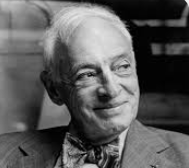
1 month 1 week ago
Americans must be the most sententious people in history. Far too busy to be religious, they have always felt that they sorely needed guidance.
▼
Source
source
The Jefferson Lectures (1977), p. 139
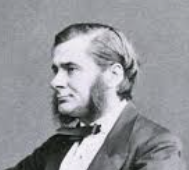
1 month 5 days ago
We have always thought that Mr. Darwin has unnecessarily hampered himself by adhering so strictly to his favourite "Natura non facit saltum." We greatly suspect that she does make considerable jumps in the way of variation now and then, and that these saltations give rise to some of the gaps which appear to exist in the series of known forms.
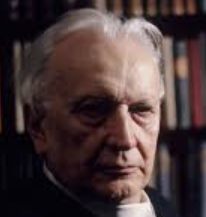
2 months 1 week ago
At the parting of ways in the life-order, where the question is between the new creation or decay, that man will be decisive for new creation who is able on his own initiative to seize the helm and steer a course of his own choosing - even if that course be opposed to the will of the masses. Should the emergence of such persons become impossible a lamentable shipwreck will be inevitable.

3 months 2 weeks ago
It is, I think, safe to say that nothing was more alien to the minds of the scientists, who brought about the most radical and most rapid revolutionary process the world has ever seen, than any will to power. Nothing was more remote than any wish to 'conquer space' and to go to the moon. It was indeed their search for 'true reality' that led them to lose confidence in appearances, in the phenomena as they reveal themselves of their own accord to human sense and reason. They were inspired by an extraordinary love of harmony and lawfulness which taught them that they would have to step outside any merely given sequence or series of occurrences if they wanted to discover the overall beauty and order of the whole, that is, the universe.
▼
Source
source
On scientific discovery, in Between Past and Future (1961) as quoted in Ideas in literature: Ten things Hannah Arendt said that are eerily relevant in today's political times
CivilSimian.com created by AxiomaticPanic, CivilSimian, Kalokagathia