

3 months 3 weeks ago
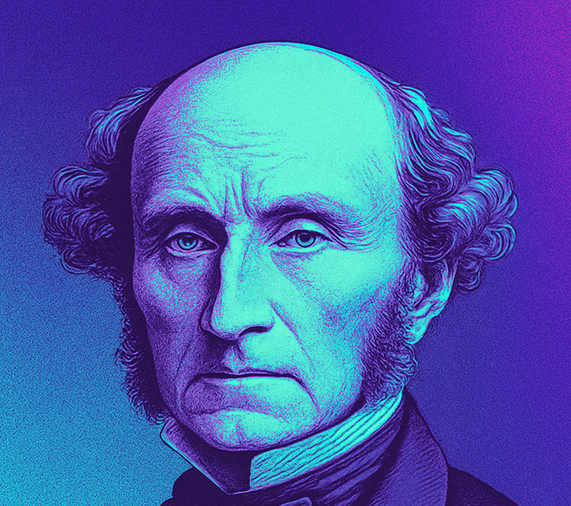
It is evident that this, among many other of the purposes of my father's scheme of education, could not have been accomplished if he had not carefully kept me from having any great amount of intercourse with other boys. He was earnestly bent upon my escaping not only the ordinary corrupting influence which boys exercise over boys, but the contagion of vulgar modes of thought and feeling; and for this he was willing that I should pay the price of inferiority in the accomplishments which schoolboys in all countries chiefly cultivate. The deficiencies in my education were principally in the things which boys learn from being turned out to shift for themselves, and from being brought together in large numbers.
▼
Source
source
(p. 35)
4 months 1 week ago
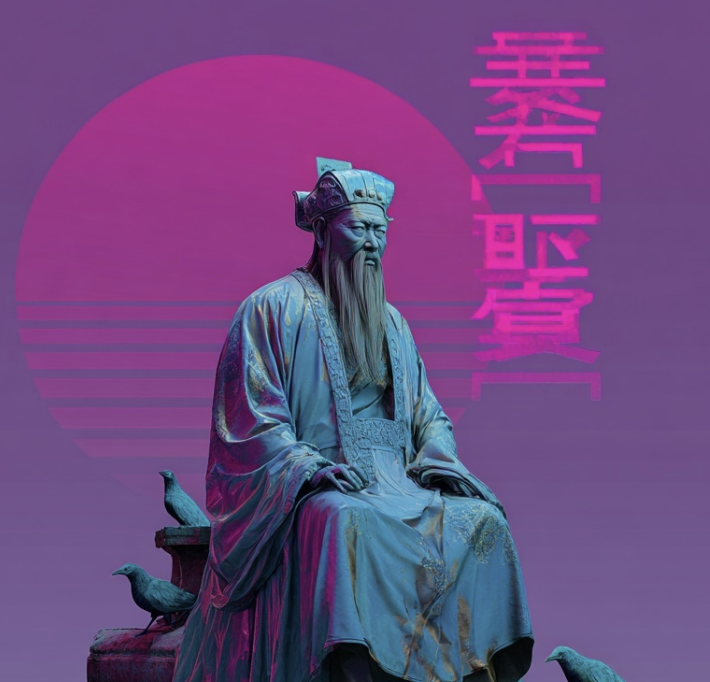
Chi Wan thought thrice, and then acted. When the Master was informed of it, he said, "Twice may do."

2 months 2 weeks ago
I'd rather offer my life as a sacrifice than be necessary to anything.

3 months 3 weeks ago
[The church] is in its major part an opponent still of progress and improvement in all the ways that diminish suffering in the world, because it has chosen to label as morality a certain narrow set of rules of conduct which have nothing to do with human happiness; and when you say that this or that ought to be done because it would make for human happiness, they think that has nothing to do with the matter at all. "What has human happiness to do with morals? The object of morals is not to make people happy."
▼
Source
source
"How The Churches Have Retarded Progress"
3 months 2 weeks ago
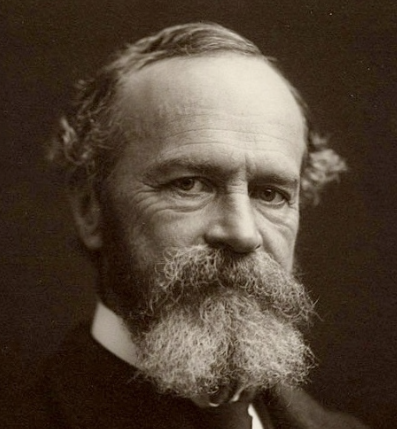
The most violent revolutions in an individual's beliefs leave most of his old order standing. Time and space, cause and effect, nature and history, and one's own biography remain untouched. New truth is always a go-between, a smoother-over of transitions. It marries old opinion to new fact so as ever to show a minimum of jolt, a maximum of continuity.
▼
Source
source
"What Pragmatism Means," Pragmatism, pp. 60-61 (1931); lectures delivered at the Lowell Institute, Boston, Massachusetts
4 months 3 weeks ago
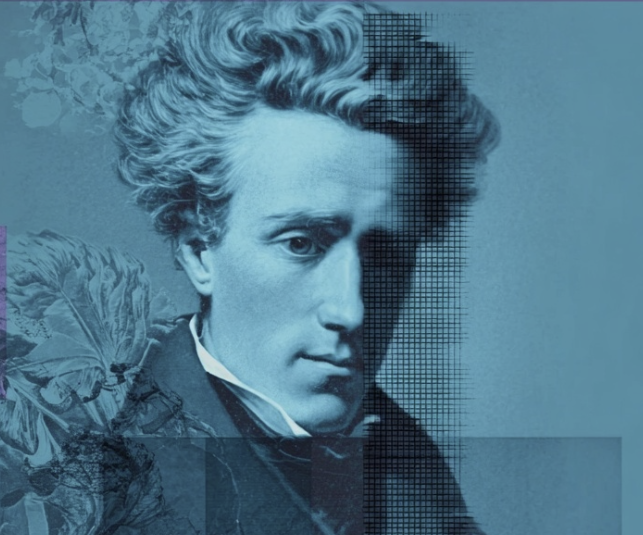
One could construe the life of man as a great discourse in which the various people represent different parts of speech (the same might apply to states). How many people are just adjectives, interjections, conjunctions, adverbs? How few are substantives, active verbs, how many are copulas? Human relations are like the irregular verbs in a number of languages where nearly all verbs are irregular.
6 days ago
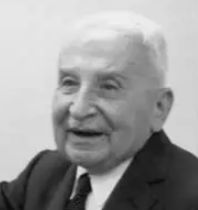
No social co-operation under the division of labour is possible when some people or unions of people are granted the right to prevent by violence and the threat of violence other people from working. When enforced by violence, a strike in vital branches of production or a general strike are tantamount to a revolutionary destruction of society.

1 month 2 weeks ago
If a poor person envies a rich person, he is no better than the rich person.
▼
Source
source
p. 89

1 month 2 weeks ago
The content or time-clothing of any medium or culture is the preceding medium or culture.
▼
Source
source
(p. 168)
1 month 2 weeks ago
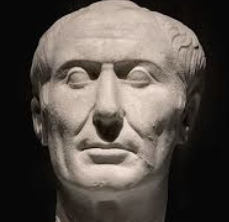
Money alone sets all the world in motion.
▼
Source
source
Maxim 656
3 months 2 weeks ago
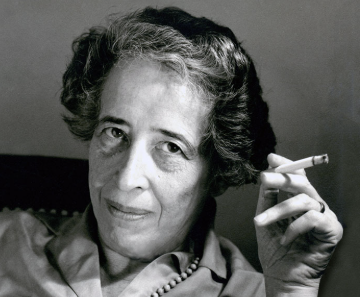
Real power begins where secrecy begins.
▼
Source
source
Part 3, Ch. 12, § 1
1 month 4 days ago
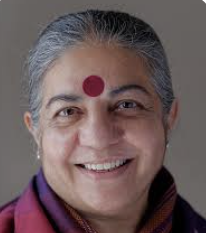
I've learned from the Bhagavad Gita and other teachings of our culture to detach myself from the results of what I do, because those are not in my hands. The context is not in your control, but your commitment is yours to make, and you can make the deepest commitment with a total detachment about where it will take you. You want it to lead to a better world, and you shape your actions and take full responsibility for them, but then you have detachment. And that combination of deep passion and deep detachment allows me always to take on the next challenge because I don't cripple myself, I don't tie myself in knots. I function like a free being. I think getting that freedom is a social duty because I think we owe it to each other not to burden each other with prescription and demands. I think what we owe each other is a celebration of life and to replace fear and hopelessness with fearlessness and joy.

1 week 4 days ago
Mahomet was only fourteen; had no language but his own: much in Syria must have been a strange unintelligible whirlpool to him. But the eyes of the lad were open; glimpses of many things would doubtless be taken in, and lie very enigmatic as yet, which were to ripen in a strange way into views, into beliefs and insights one day. These journeys to Syria were probably the beginning of much to Mahomet. One other circumstance we must not forget: that he had no school-learning; of the thing we call school-learning none at all.

3 months 4 weeks ago
The public weal requires that men should betray and lie and massacre.
▼
Source
source
Book III, Ch. 1. Of Profit and Honesty

4 months 2 weeks ago
The evil that is in the world always comes of ignorance, and good intentions may do as much harm as malevolence, if they lack understanding. On the whole men are more good than bad; that, however, isn't the real point. But they are more or less ignorant, and it is this that we call vice or virtue; the most incorrigible vice being that of an ignorance which fancies it knows everything and therefore claims for itself the right to kill. There can be no true goodness, nor true love, without the utmost clear-sightedness.
2 months 1 week ago
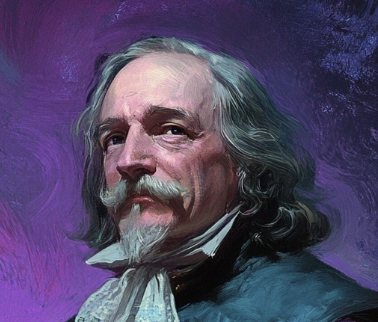
I know not how the world will receive it, nor how it may reflect on those that shall seem to favor it. For in a way beset with those that contend, on one side for too great Liberty, and on the other side for too much Authority, 'tis hard to passe between the points of both unwounded.
▼
Source
source
The Epistle Dedicatory, Paris, April 15-25, 1651
4 months 3 weeks ago
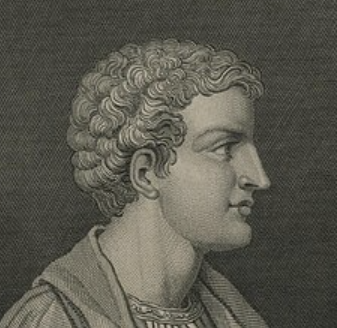
Since my earliest childhood a barb of sorrow has lodged in my heart. As long as it stays I am ironic - if it is pulled out I shall die.
1 month 2 weeks ago
Since Sputnik there is no Nature. Nature is an item contained in a man-made environment of satellites and information.
3 months 2 weeks ago
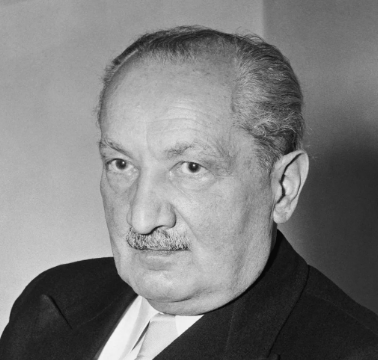
Agriculture is now a motorized food industry, the same thing in its essence as the production of corpses in the gas chambers and the extermination camps, the same thing as blockades and the reduction of countries to famine, the same thing as the manufacture of hydrogen bombs.
▼
Source
source
Four Lectures on Technology

3 months 3 weeks ago
It goes without saying that the normal durability of fixed capital is calculated on the supposition that all the conditions under which it can perform its functions normally during that time are fulfilled, just as we assume, in placing a mans life at 30 years on the average,that he will wash himself.
▼
Source
source
Volume II, Ch. VIII, p. 176-177.
3 months 3 weeks ago
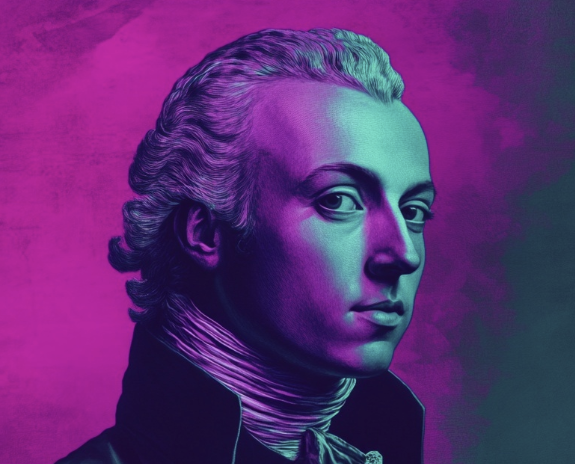
The means employed by Nature to bring about the development of all the capacities of men is their antagonism in society, so far as this is, in the end, the cause of a lawful order among men.
▼
Source
source
Fourth Thesis
4 months 2 weeks ago
The absurd is the essential concept and the first truth.
4 weeks 1 day ago
A global transition to a cruelty-free vegan diet won't just help non-human animals. The transition will also help malnourished humans who could benefit from the grain currently fed to factory-farmed animals. For factory-farming is not just cruel; it's energy-inefficient. Let's take just one example. Over the past few decades, millions of Ethiopians have died of "food shortages" while Ethiopia grew grain to sell to the West to feed cattle. Western meat-eating habits prop up the price of grain so that poor people in the developing world can't afford to buy it. In consequence, they starve by the millions.In my work, I explore futuristic, hi-tech solutions to the problem of suffering. But anybody who seriously wants to reduce human and non-human suffering alike should adopt a cruelty-free vegan lifestyle today.
▼
Source
source
"A World Without Suffering?", Instituto Humanitas Unisinos, Jan. 2011
1 month 3 days ago
Good communication is as stimulating as black coffee, and just as hard to sleep after. Variant: Good communication is just as stimulating as...

4 months 2 weeks ago
Socrates: The shoemaker, for example, uses a square tool, and a circular tool, and other tools for cutting?
3 months 3 weeks ago
The entire history of social improvement has been a series of transitions, by which one custom or institution after another, from being a supposed primary necessity of social existence, has passed into the rank of an universally stigmatized injustice and tyranny. So it has been with the distinctions of slaves and freemen, nobles and serfs, patricians and plebeians; and so it will be, and in part already is, with the aristocracies of colour, race, and sex.
▼
Source
source
Ch. 5

3 months 2 days ago
Water is the first principle of everything.
▼
Source
source
As quoted in Aristotle, Metaphysics, 983b
3 months 3 weeks ago
The native and untaught suggestions of inquisitive children do often offer things, that may set a considering man's thoughts on work. And I think there is frequently more to be learn'd from the unexpected questions of a child than the discourses of men, who talk in a road, according to the notions they have borrowed, and the prejudices of their education.
▼
Source
source
Sec. 121

3 months 3 weeks ago
It is a want of feeling to talk of priests and bells while so many infants are perishing in the hospitals, and aged and infirm poor in the streets, from the want of necessaries.
▼
Source
source
Worship and Church Bells, 1797
1 month 2 weeks ago
Wealth brings a heavy purse; poverty, a light spirit.
▼
Source
source
p. 88

2 weeks 1 day ago
Liberal values like tolerance and individual freedom are prized most intensely when they are denied: People who live in brutal dictatorships want the simple freedom to speak, associate, and worship as they choose. But over time life in a liberal society comes to be taken for granted and its sense of shared community seems thin.

1 month 6 days ago
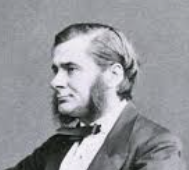
I really have no claim to rank myself among fatalistic, materialistic, or atheistic philosophers. Not among fatalists, for I take the conception of necessity to have a logical, and not a physical foundation; not among materialists, for I am utterly incapable of conceiving the existence of matter if there is no mind in which to picture that existence; not among atheists, for the problem of the ultimate cause of existence is one which seems to me to be hopelessly out of reach of my poor powers. Of all the senseless babble I have ever had occasion to read, the demonstrations of these philosophers who undertake to tell us all about the nature of God would be the worst, if they were not surpassed by the still greater absurdities of the philosophers who try to prove that there is no God.

3 months 1 week ago
Verily we know nothing. Truth is buried deep.
▼
Source
source
(Another translation: "Of truth we know nothing, for truth is in a well." Diogenes Laertius, Lives of Eminent Philosophers R.D. Hicks, Ed.)

5 days ago
Kindly remember that he whom you call your slave sprang from the same stock, is smiled upon by the same skies, and on equal terms with yourself breathes, lives and dies. It is just as possible for you to see in him a free-born man as for him to see in you a slave.
▼
Source
source
Line 10.
2 months 2 weeks ago
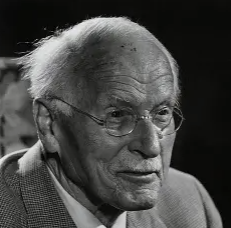
Reason alone does not suffice.
▼
Source
source
p 98
3 months 3 weeks ago
Human beings have faculties more elevated than the animal appetites, and when once made conscious of them, do not regard anything as happiness which does not include their gratification. I do not, indeed, consider the Epicureans to have been by any means faultless in drawing out their scheme of consequences from the utilitarian principle. To do this in any sufficient manner, many Stoic, as well as Christian elements require to be included. But there is no known Epicurean theory of life which does not assign to the pleasures of the intellect, of the feelings and imagination, and of the moral sentiments, a much higher value as pleasures than to those of mere sensation.
▼
Source
source
Ch. 2
2 months 1 week ago
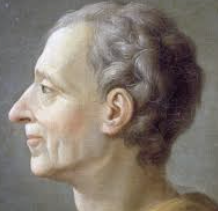
Democratic and aristocratic states are not in their own nature free. Political liberty is to be found only in moderate governments; and even in these it is not always found. It is there only when there is no abuse of power. But constant experience shows us that every man who has power is inclined to abuse it; he goes until he finds limits. Is it not strange, though true, to say that virtue itself has need of limits?.To prevent this abuse, it is necessary that, by the arrangement of things, power shall stop power. A government may be so constituted, as no man shall be compelled to do things to which the law does not oblige him, nor forced to abstain from things which the law permits.
▼
Source
source
Book XI, Chapter 4.
2 months 1 week ago
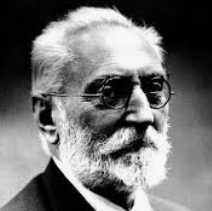
And yet Catholicism does not abandon ethics. No! No modern religion can leave ethics on one side. But our religion - although its doctors may protest against this - is fundamentally and for the most part a compromise between eschatology and ethics; it is eschatology pressed into the service of ethics. What else but this is that atrocity of the eternal pains of hell, which agrees so ill with the Pauline apocatastasis? Let us bear in mind these words which the Theologica Germanica, the manual of mysticism that Luther read, puts into the mouth of God: "If I must recompense your evil, I must recompense it with good, for I am and have no other." And Christ said: "Father, forgive them, for they know not what they do," and there is no man who perhaps knows what he does.

4 months 2 weeks ago
There is nothing so eternally adhesive as the memory of power.
3 months 2 weeks ago
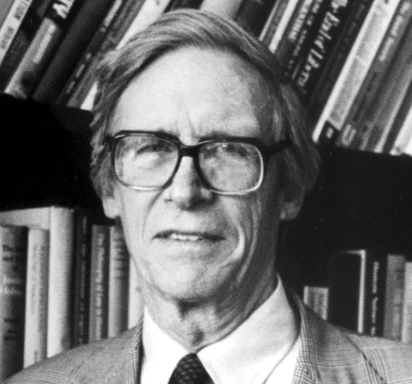
It may be expedient but it is not just that some should have less in order that others may prosper.
▼
Source
source
Chapter I, Section 3, pg. 15
2 months 6 days ago
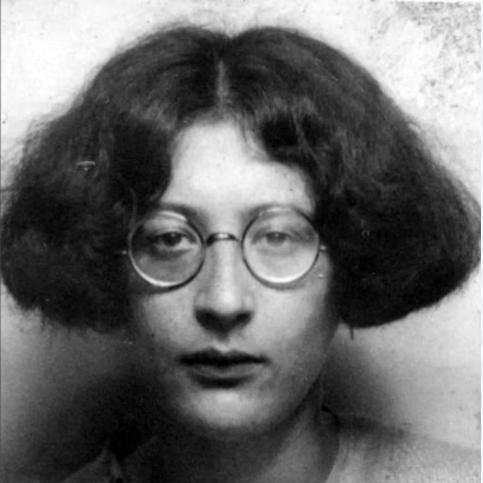
It is not in a person's nature to desire what he already has. Desire is a tendency, the start of a movement toward something, toward a point from which one is absent. If, at the very outset, this movement doubles back on itself toward its point of departure, a person turns round and round like a squirrel in a cage or a prisoner in a condemned cell. Constant turning soon produces revulsion. All workers, especially though not exclusively those who work under inhumane conditions, are easily the victims of revulsion, exhaustion and disgust and the strongest are often the worst affected.
▼
Source
source
p. 245
Just now
Unfortunately... the philosophy of Aristotle laid it down as a principle, that the celestial motions were regulated by laws proper to themselves, and bearing no affinity to those which prevail on earth. By thus drawing a broad and impassable line of separation between celestial and terrestrial mechanics, it placed the former altogether out of the pale of experimental research, while it at the same time impeded the progress of the latter by the assumption of principles respecting natural and unnatural motions, hastily adopted from the most superficial and cursory and remark, undeserving even the name of observation. Astronomy therefore continued for ages a science of mere record, in which theory had no part, except in so far as it attempted to conciliate the inequalities of the celestial motions with that assumed law of uniform circular revolution which was alone considered consistent with the perfection of the heavenly mechanism.
▼
Source
source
Ch.3 Of Cosmical Phenomena
3 months 3 weeks ago
Money is itself a product of circulation.
▼
Source
source
Notebook VI, The Chapter on Capital, p. 579.
3 months 3 weeks ago
The camera is as subjective as we are.
▼
Source
source
An Outline of Philosophy Ch.15 The Nature of our Knowledge of Physics, 1927
1 day ago
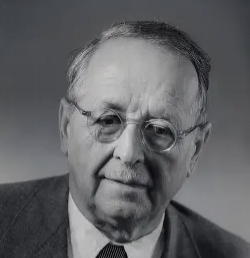
In my work, I have always tried to unite the true with the beautiful; but when I had to choose one or the other, I usually chose the beautiful. In a conversation with Freeman Dyson.
▼
Source
source
Quoted in Chandrasekhar, S. (2010-12-01) . "Beauty and the quest for beauty in science". Physics Today 63 (12): 57-62. ISSN 0031-9228. DOI:10.1063/1.3529003.
4 months 2 weeks ago
Probably, the most-often-repeated lesson in history is that foreigners who are called in to help one side in a civil war take over for themselves. It is a lesson that seems never to be learned despite endless repetition.
2 months 1 week ago
The animating purpose of James was, on the other hand, primarily moral and artistic. It is expressed in his phrase, "block universe," employed as a term of adverse criticism. Mechanism and idealism were abhorrent to him because they both hold to a closed universe in which there is no room for novelty and adventure. Both sacrifice individuality and all the values, moral and aesthetic, which hang upon individuality; for according to absolute idealism, as to mechanistic materialism, the individual is simply a part determined by the whole of which he is a part. Only a philosophy of pluralism, of genuine indetermination, and of change which is real and intrinsic gives significance to individuality. It alone justifies struggle in creative activity and gives opportunity for the emergence of the genuinely new.
5 days ago
It is better, of course, to know useless things than to know nothing.
▼
Source
source
Line 45.
CivilSimian.com created by AxiomaticPanic, CivilSimian, Kalokagathia