


3 months 4 weeks ago
Again, we should notice the force, effect, and consequences of inventions, which are nowhere more conspicuous than in those three which were unknown to the ancients; namely, printing, gunpowder, and the compass. For these three have changed the appearance and state of the whole world; first in literature, then in warfare, and lastly in navigation: and innumerable changes have been thence derived, so that no empire, sect, or star, appears to have exercised a greater power and influence on human affairs than these mechanical discoveries.
▼
Source
source
Aphorism 129

3 months 3 weeks ago
The softer you find your child is, the more you are to seek occasions, at fit times, thus to harden him. The great art in this is, to begin with what is but very little painful, and to proceed by insensible degrees, when you are playing, and in good humour with him, and speaking well of him: and when you have once got him to think himself made amends for his suffering by the praise is given him for his courage; when he can take pride in giving such marks of his manliness, and can prefer the reputation of being brave and stout, to the avoiding a little pain, or the shrinking under it; you need nor despair in time and by the assistance of his growing reason, to master his timorousness, and mend the weakness of his constitution.
▼
Source
source
Sec. 115

3 months 2 weeks ago
Organic life, we are told, has developed gradually from the protozoon to the philosopher, and this development, we are assured, is indubitably an advance. Unfortunately it is the philosopher, not the protozoon, who gives us this assurance.
▼
Source
source
Ch. 6: On the Scientific Method in Philosophy

2 months 3 weeks ago
The hatred that men bear to privilege increases in proportion as privileges become fewer and less considerable, so that democratic passions would seem to burn most fiercely just when they have least fuel. I have already given the reason for this phenomenon. [all conditions are unequal, no inequality is so great as to offend the eye, whereas the slightest dissimilarity is odious in the midst of general uniformity; the more complete this uniformity is, the more insupportable the sight of such a difference becomes.] Hence it is natural that the love of equality should constantly increase together with equality itself, and that it should grow by what it feeds on.
▼
Source
source
Chapter III.

3 months 2 weeks ago
The most violent, mean and malignant passions of the human breast, the Furies of private interest.
▼
Source
source
Author's prefaces to the First Edition.

2 months 1 week ago
Ye fools, did not he that made that which is without make that which is within also?
▼
Source
source
11:40 (KJV)

4 months 1 week ago
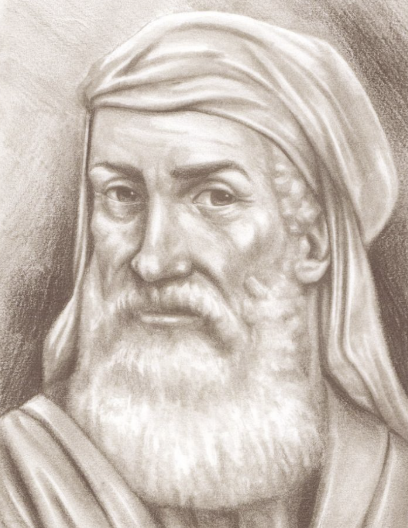
The wise find pleasure in water; the virtuous find pleasure in hills. The wise are active; the virtuous are tranquil. The wise are joyful; the virtuous are long-lived.
3 months 1 week ago
Fools -- for their thoughts are not well-considered who suppose that not-being exists or that anything dies and is wholly annihilated.
▼
Source
source
fr. 11
4 days ago
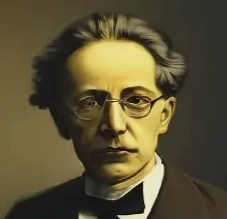
I am owner of my might, and I am so when I know myself as unique. In the unique one the owner himself returns into his creative nothing, of which he is born. Every higher essence above me, be it God, be it man, weakens the feeling of my uniqueness, and pales only before the sun of this consciousness. If I concern myself for myself, the unique one, then my concern rests on its transitory, mortal creator, who consumes himself, and I may say: All things are nothing to me.
▼
Source
source
Dover 2005, p. 366

1 week 3 days ago
"The people may eat grass": hasty words, which fly abroad irrevocable-and will send back tidings.
▼
Source
source
Pt. I, Bk. III, ch. 9.
4 months 1 week ago
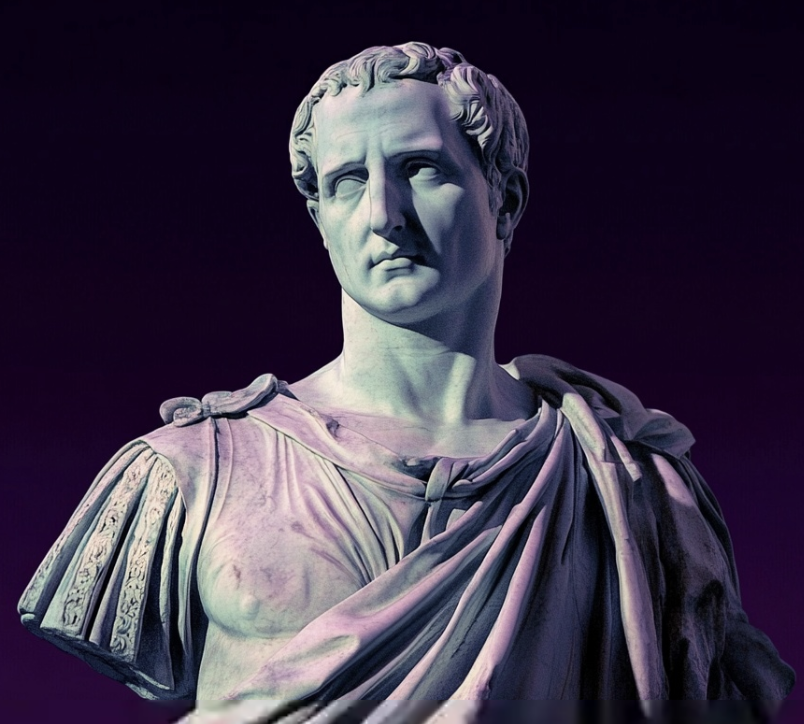
We know, that of all living beings man is the best formed, and, as the gods belong to this number, they must have a human form. ... I do not mean to say that the gods have body and blood in them; but I say that they seem as if they had bodies with blood in them. . . , Epicurus, for whom hidden things were as tangible as if he had touched them with his finger, teaches us that gods are not generally visible, but that they are intelligible; that they are not bodies having a certain solidity . . . but that we can recognize them by their passing images; that as there are atoms enough in the infinite space to produce such images, these are produced before us . . . and make us realize what are these happy, immortal beings.
▼
Source
source
Book I, Section 18

4 months 2 weeks ago
It's better to bet on this life than on the next.
3 months 2 weeks ago
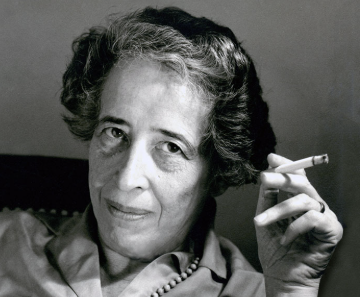
No one has the right to obey.
▼
Source
source
in a radio interview with Joachim Fest (9 November 1964)
2 months 2 days ago
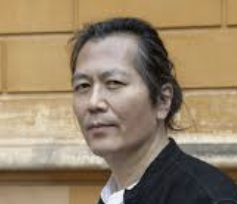
A farewell does not dilute the presence of the past; it may make an even deeper presence.
1 month 1 week ago
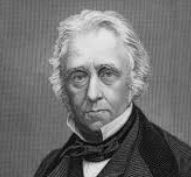
If...we look at the essential characteristics of the Whig and the Tory, we may consider each of them as the representative of a great principle, essential to the welfare of nations. One is, in an especial manner, the guardian of liberty, and the other, of order. One is the moving power, and the other the steadying power of the state. One is the sail, without which society would make no progress, the other the ballast, without which there would be small safety in a tempest.
▼
Source
source
The Earl of Chatham', The Edinburgh Review (October 1844), quoted in T. B. Macaulay, Critical and Historical Essays Contributed to The Edinburgh Review: A New Edition (1852), p. 725

3 months 2 weeks ago
It is arrogance in us to call frankness, fairness and chivalry "masculine" when we see them in a woman; it is arrogance in them, to describe a man's sensitiveness or tact or tenderness as "feminine".

2 months 2 weeks ago
If we could sleep twenty-four hours a day, we would soon return to the primordial slime, the beatitude of that perfect torpor before Genesis-the dream of every consciousness sick of itself.

4 months 2 weeks ago
The undramatic fact is that I just think and think and think until I have something [for a story], and there is nothing marvelous or artistic about the phenomenon.
1 month 1 week ago
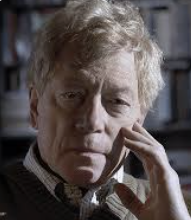
Yes, I am in favor of censorship, but it has to be conducted by people like me. And that's the difficulty (laughs). I'm in favor of encouraging every possible form of self-restraint and parental control. And I certainly don't think that pornography should be protected under the American Constitution.
▼
Source
source
Interview with Salon.com, 1998
2 months 1 week ago
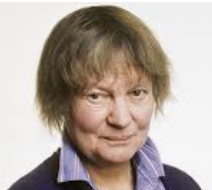
All metaphysical theories are inconclusively vulnerable to positivist attack.
▼
Source
source
Ch. 9, p. 127
1 week 3 days ago
Do nothing, only keep agitating, debating; and things will destroy themselves.
▼
Source
source
Pt. I, Bk. VI, ch. 3.

3 months 2 weeks ago
My father's moral inculcations were at all times mainly those of the "Socratici viri;" justice, temperance (to which he gave a very extended application), veracity, perseverance, readiness to encounter pain and especially labour; regard for the public good; estimation of persons according to their merits, and of things according to their intrinsic usefulness; a life of exertion in contradiction to one of self-indulgent sloth. These and other moralities he conveyed in brief sentences, uttered as occasion arose, of grave exhortation, or stern reprobation and contempt.But though direct moral teaching does much, indirect does more; and the effect my father produced on my character, did not depend solely on what he said or did with that direct object, but also, and still more, on what manner of man he was.
▼
Source
source
(p. 47)


3 months 1 week ago
We ought to regard the interests of the state as of far greater moment than all else, in order that they may be administered well; and we ought not to engage in eager rivalry in despite of equity, nor arrogate to ourselves any power contrary to the common welfare. For a state well administered is our greatest safeguard. In this all is summed up: When the state is in a healthy condition all things prosper; when it is corrupt, all things go to ruin.

4 months 2 weeks ago
Wit is cultured insolence.
2 months 6 days ago
I have read descriptions of Paradise that would make any sensible person stop wanting to go there.
▼
Source
source
No. 125. (Usbek writing to Rhedi)
4 months 1 week ago
Among the appliances to transform the people, sound and appearances are but trivial influences.

3 months 2 weeks ago
No man can have society upon his own terms. If he seeks it, he must serve it too.
▼
Source
source
1833

3 months 2 weeks ago
There are all kinds of sources of our knowledge; but none has authority ... The fundamental mistake made by the philosophical theory of the ultimate sources of our knowledge is that it does not distinguish clearly enough between questions of origin and questions of validity.
1 week 3 days ago
O reader, to what shifts is poor Society reduced, struggling to give still some account of herself, in epochs when Cash Payment has become the sole nexus of man to men!
▼
Source
source
Ch. 6, Laissez-Faire.
3 months 4 weeks ago
There are four classes of Idols which beset men's minds. To these for distinction's sake I have assigned names - calling the first class, Idols of the Tribe; the second, Idols of the Cave; the third, Idols of the Market-Place; the fourth, Idols of the Theater.
▼
Source
source
Aphorism 39
3 months 2 weeks ago
It strikes everyone in beginning to form an acquaintance with the treasures of Indian literature, that a land so rich in intellectual products and those of the profoundest order of thought..."
▼
Source
source
quoted in De Riencourt, Amaury The Soul of India Harper & Brothers Publishers New York 1960 p. 301

3 months ago
Happiness is a good flow of life.
▼
Source
source
As quoted by Stobaeus, ii. 77.

3 months 3 weeks ago
Women . . . have . . . small and narrow chests, and broad hips, to the end they should remain at home, sit still, keep house, and bear and bring up children. . . . A woman is, or at least should be, a friendly, courteous, and a merry companion in life . . . the honor and ornament of the house, and inclined to tenderness, for thereunto are they chiefly created, to bear children, and to be the pleasure, joy and solace of their husbands.
▼
Source
source
-- Table Talk, quoted in Luther On "Woman"

2 months 2 weeks ago
Time: That which man is always trying to kill, but which ends in killing him.
▼
Source
source
Definitions, as quoted in The Dictionary of Essential Quotations (1983) by Kevin Goldstein-Jackson, p. 154
1 week 3 days ago
There is no heroic poem in the world but is at bottom a biography, the life of a man; also, it may be said, there is no life of a man, faithfully recorded, but is a heroic poem of its sort, rhymed or unrhymed.

1 month 2 weeks ago
Native societies did not think of themselves as being in the world as occupants but considered that their rituals created the world and keep it operational.
▼
Source
source
College and University Journal, Volumes 6-7, American College Public Relations Association, 1967, p. 3
3 months 2 weeks ago
The immediate aim of the Communists is the same as that of all the other proletarian parties: Formation of the proletariat into a class, overthrow of the bourgeois supremacy, conquest of political power by the proletariat.
▼
Source
source
Section 2 paragraph 7.
3 months 3 weeks ago
Bad company will lead a man to the gallows!
▼
Source
source
Act IV, scene vi

4 months 1 week ago
Of all the means which wisdom acquires to ensure happiness throughout the whole of life, by far the most important is friendship.
1 month 4 weeks ago
I am convinced we do not only love ourselves in others but hate ourselves in others too.
▼
Source
source
F 54

3 months 2 weeks ago
Christian philosophers have found no difficulty in justifying imperialism, war, the capitalist system, the use of torture, the censorship of the press and ecclesiastical tyrannies of every sort, from the tyranny of Rome to the tyrannies of Geneva and New England.
▼
Source
source
Ch. 14, p. 315 [2012 reprint]
2 months 2 weeks ago
How important can it be that I suffer and think? My presence in this world will disturb a few tranquil lives and will unsettle the unconscious and pleasant naiveté of others. Although I feel that my tragedy is the greatest in history - greater than the fall of empires - I am nevertheless aware of my total insignificance. I am absolutely persuaded that I am nothing in this universe; yet I feel that mine is the only real existence.
2 months 2 days ago
Compared with the wholesale violence of capital and government, political acts of violence are but a drop in the ocean. That so few resist is the strongest proof how terrible must be the conflict between their souls and unbearable social iniquities.

2 months 6 days ago
The devil is an angel too.
▼
Source
source
[Three Exemplary Novels and a Prologue] (1920); Two Mothers
4 months 2 weeks ago
What will be left of the power of example if it is proved that capital punishment has another power, and a very real one, which degrades men to the point of shame, madness, and murder?

3 months 3 weeks ago
To Americans. That some desperate wretches should be willing to steal and enslave men by violence and murder for gain, is rather lamentable than strange. But that many civilized, nay, christianized people should approve, and be concerned in the savage practice, is surprising; and still persist, though it has been so often proved contrary to the light of nature, to every principle of Justice and Humanity, and even good policy, by a succession of eminent men, and several late publications.
2 months 1 week ago
The apparatus defeats its own purpose if its purpose is to create a humane existence on the basis of a humanized nature.
▼
Source
source
pp. 145-146
2 months 2 weeks ago
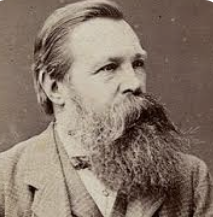
The more I think about it, the more obvious it becomes to me that the Poles are une nation foutue [a finished nation] who can only continue to serve a purpose until such time as Russia herself becomes caught up into the agrarian revolution. From that moment Poland will have absolutely no raison d'étre any more. The Poles' sole contribution to history has been to indulge in foolish pranks at once valiant and provocative. Nor can a single moment be cited when Poland, even if only by comparison with Russia, has successfully represented progress or done anything of historical significance.
▼
Source
source
Letter to Karl Marx
CivilSimian.com created by AxiomaticPanic, CivilSimian, Kalokagathia