


3 months 3 weeks ago
If the material world rests upon a similar ideal world, this ideal world must rest upon some other; and so on, without end. It were better, therefore, never to look beyond the present material world. By supposing it to contain the principle of its order within itself, we really assert it to be God; and the sooner we arrive at that Divine Being, so much the better. When you go one step beyond the mundane system, you only excite an inquisitive humour which it is impossible ever to satisfy.
▼
Source
source
Philo to Cleanthes, Part IV

4 months 2 weeks ago
If it were so, as conceited sagacity, proud of not being deceived, thinks, that we should believe nothing that we cannot see with our physical eyes, then we first and foremost ought to give up believing in love. ... We can be deceived by believing what is untrue, but we certainly are also deceived by not believing what is true. ... Which deception is more dangerous?
1 month 1 week ago
What ideas individuals may attach to the term "Millennium" I know not; but I know that society may be formed so as to exist without crime, without poverty, with health greatly improved, with little, if any misery, and with intelligence and happiness increased a hundredfold; and no obstacle whatsoever intervenes at this moment except ignorance to prevent such a state of society from becoming universal.

2 weeks ago
The idea of universal human dignity ultimately comes out of Christianity... the view that all human beings are equal in the sight of God because they have the capacity for moral choice. As Western thought developed in the 17th-18th centuries, this took on a secular form under thinkers like Jean-Jacques Rousseau or Immanuel Kant or Georg Hegel, who argued that human equality is... based on human autonomy.
▼
Source
source
11:12

2 months 2 weeks ago
My soul, my soul, where are you? Do you hear me? I speak, I call you-are you there? I have returned, here I am again. I have shaken the dust of all the lands from my feet, and I have come to you again, I am with you. After long years of long wandering, I have come to you anew. Shall I tell you everything I have seen, experienced, and drunk in? Or do you not want to hear about all the noise of life and the world? But one thing you must know, the one thing I have learned is that one must live this life. This life is the way, the long sought-after way to the unfathomable, which we call "divine". There is no other way. All other ways are false paths.
▼
Source
source
Book 2, 12. Nov. 1913

1 week 4 days ago
And some others that I have seen, were perhaps among the first. There is no third rising. Time sweeps all away with it so fast at this epoch. The Scottish Church has been short-lived, and was late in reaching thither.
1 month 5 days ago
Even purely intellectual progress brings about its revenges. Problems settled in a rough and ready way by rude men, absorbed in action, demand renewed attention and show themselves to be still unread riddles when men have time to think. The beneficent demon, doubt, whose name is Legion and who dwells amongst the tombs of old faiths, enters into mankind and thenceforth refuses to be cast out. Sacred customs, venerable dooms of ancestral wisdom, hallowed by tradition and professing to hold good for all time, are put to the question. Cultured reflection asks for their credentials; judges them by its own standards; finally, gathers those of which it approves into ethical systems, in which the reasoning is rarely much more than a decent pretext for the adoption of foregone conclusions.


2 months 4 days ago
Every intellectual revolution which has ever stirred humanity into greatness has been a passionate protest against inert ideas. Then, alas, with pathetic ignorance of human psychology, it has proceeded by some educational scheme to bind humanity afresh with inert ideas of its own fashioning.

3 months 2 weeks ago
Make sure that your religion is a matter between you and God only.
▼
Source
source
Comment to Maurice O'Connor Drury, as quoted in Wittgenstein Reads Freud : The Myth of the Unconscious (1996) by Jacques Bouveresse, as translated by Carol Cosman, p. 14

2 months 3 weeks ago
When the end comes, you will be esteemed by the world and rewarded by God, not because you have won the love and respect of the princes of the earth, however powerful, but rather for having loved, defended and cherished one such as I ... what you receive from others is a testimony to their virtue; but all that you do for others is the sign and clear indication of your own.
▼
Source
source
Dedication

3 months 2 weeks ago
To be ignorant of the past is to remain a child.
▼
Source
source
Cicero
1 week 4 days ago
The true Church of England, at this moment, lies in the Editors of its Newspapers. These preach to the people daily, weekly; admonishing kings themselves; advising peace or war, with an authority which only the first Reformers, and a long-past class of Popes, were possessed of; inflicting moral censure; imparting moral encouragement, consolation, edification; in all ways diligently "administering the Discipline of the Church."
4 weeks ago
God may not play dice but he enjoys a good round of Trivial Pursuit every now and again.
▼
Source
source
"God"

2 months 3 weeks ago
As the past has ceased to throw its light upon the future, the mind of man wanders in obscurity. Variant translation: When the past no longer illuminates the future, the spirit walks in darkness.
▼
Source
source
Book Four, Chapter VIII
2 months 1 week ago
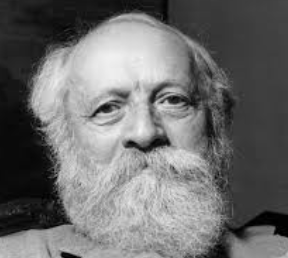
The concept of guilt is found most powerfully developed even in the most primitive communal forms which we know: ... the man is guilty who violates one of the original laws which dominate the society and which are mostly derived from a divine founder; the boy who is accepted into the tribal community and learns its laws, which bind him thenceforth, learns to promise; this promise is often given under the sign of death, which is symbolically carried out on the boy, with a symbolical rebirth.
▼
Source
source
p. 178

3 months 3 weeks ago
The reservedness and distance that fathers keep, often deprive their sons of that refuge which would be of more advantage to them than an hundred rebukes or chidings.
▼
Source
source
Sec. 96

3 months 3 weeks ago
The difference between the most dissimilar characters, between a philosopher and a common street porter, for example, seems to arise not so much from nature, as from habit, custom, and education.
▼
Source
source
Chapter II, p. 17.
1 month 3 weeks ago
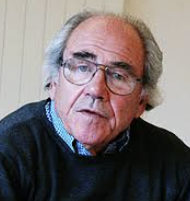
The "hard law of value," the "law set in stone"-when it abandons us, what sadness, what panic! This is why there are still good days left to fascist and authoritarian methods, because they revive something of the violence necessary to life-whether suffered or inflicted. The violence of ritual, the violence of work, the violence of knowledge, the violence of blood, the violence of power and of the political is good! It is clear, luminous, the relations of force, contradictions, exploitation, repression! This is lacking today, and the need for it makes itself felt.
▼
Source
source
"Value's Last Tango," p. 156
2 months 2 weeks ago
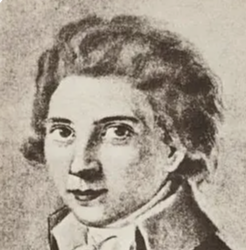
To live classically and to realize antiquity practically within oneself is the summit and goal of philology.
▼
Source
source
Philosophical Fragments, P. Firchow, trans. (1991) § 147

3 months 2 weeks ago
The charming landscape which I saw this morning, is indubitably made up of some twenty or thirty farms. Miller owns this field, Locke that, and Manning the woodland beyond. But none of them owns the landscape. There is a property in the horizon which no man has but he whose eye can integrate all the parts, that is, the poet. This is the best part of these men's farms, yet to this their warranty-deeds give no title. To speak truly, few adult persons can see nature. Most persons do not see the sun. At least they have a very superficial seeing. The sun illuminates only the eye of the man, but shines into the eye and the heart of the child. The lover of nature is he whose inward and outward senses are still truly adjusted to each other; who has retained the spirit of infancy even into the era of manhood. His intercourse with heaven and earth, becomes part of his daily food.
▼
Source
source
Nature

1 month 2 weeks ago
Such is the content of the mental life of the Hemingway hero and the good guy in general. Every day he gets beaten into a servile pulp by his own mechanical reflexes, which are constantly busy registering and reacting to the violent stimuli which his big, noisy, kinesthetic environment has provided for his unreflective reception.
▼
Source
source
Eye Appeal, p. 79-80

2 months 3 days ago
In most men, the conscious and the unconscious being hardly ever make contact; consequently the conscious aim is to make himself as comfortable as possible with as little effort as possible. But there are other men, whom we have been calling, for convenience, 'Outsiders', whose conscious and unconscious being keep in closer contact, and the conscious mind is forever aware of the urge to care about 'more abundant life', and care less about comfort and stability and the rest of the notions that are so dear to the bourgeois.
▼
Source
source
Chapter Nine, Breaking the Circuit
4 months 2 weeks ago
Above all do not forget your duty to love yourself; do not permit the fact that you have been set apart from life in a way, been prevented from participating actively in it, and that you are superflous in the obtruse eyes of a busy world, above all, do not permit this to deprive you of your idea of yourself, as if your life, if lived in inwardness, did not have just as much meaning and worth as that of any human being in the eyes of all-wise Governance, and considerably more than the busy, busiest haste of busy-ness - busy with wasting life and losing itself.
2 weeks ago
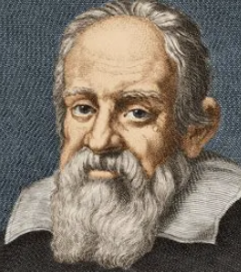
It always seems to me extreme rashness on the part of some when they want to make human abilities the measure of what nature can do. On the contrary, there is not a single effect in nature, even the least that exists, such that the most ingenious theorists can arrive at a complete understanding of it. This vain presumption of understanding everything can have no other basis than never understanding anything. For anyone who had experienced just once the perfect understanding of one single thing, and had truly tasted how knowledge is accomplished, would recognize that of the infinity of other truths he understands nothing.
▼
Source
source
Day One

3 months 2 weeks ago
You take souls for vegetables.... The gardener can decide what will become of his carrots but no one can choose the good of others for them.
▼
Source
source
Heinrich, Act 5, sc. 3

4 months 1 week ago
He that in his studies wholly applies himself to labour and exercise, and neglects meditation, loses his time, and he that only applies himself to meditation, and neglects labour and exercise, only wanders and loses himself.

3 months 2 weeks ago
Be gentle with them, Timothy. They want to be free, but they don't know how. Teach them. Reassure them.
▼
Source
source
Reported to be Huxley's last words to Timothy Leary, which Huxley whispered from his deathbed. Quoted in Leary, Timothy (1990) . "Life on a Grounded Space Colony".
2 months 5 days ago
The dressing up and puffing up of the individual erases the lineaments of protest.
▼
Source
source
p. 283

3 months 2 weeks ago
The defiance of established authority, religious and secular, social and political, as a world-wide phenomenon may well one day be accounted the outstanding event of the last decade.
▼
Source
source
"Civil Disobedience"
4 weeks 1 day ago
If we want eternal life, then we'll need to rewrite our bug-ridden genetic code and become god-like. "May all that have life be delivered from suffering", said Gautama Buddha. It's a wonderful sentiment. Sadly, only hi-tech solutions can ever eradicate suffering from the living world. Compassion alone is not enough.
▼
Source
source
Interview with Nick Bostrom and David Pearce, Dec. 2007

4 months 2 weeks ago
There is but one truly serious philosophical problem and that is suicide. Judging whether life is or is not worth living amounts to answering the fundamental question of philosophy. All the rest, whether or not the world has three dimensions, whether the mind has nine or twelve categories comes afterwards. These are games; one must first answer. And if it is true, as Nietzsche claims, that a philosopher, to deserve our respect, must preach by example, you can appreciate the importance of that reply, for it will precede the definitive act. These are facts the heart can feel; yet they call for careful study before they become clear to the intellect. If I ask myself how to judge that this question is more urgent than that, I reply that one judges by the actions it entails. I have never seen anyone die for the ontological argument.
▼
Source
source
Absurdity and Suicide

4 months 2 weeks ago
There has never been any custom, however useless it may become with changing conditions, that isn't clung to desperately simply because it is something old and familiar.
2 months 1 week ago
No one is guiltless...But no one is beyond the pale of human existence, provided he pays for his guilt.

3 months 3 weeks ago
Here I stand; I can do no otherwise. God help me. Amen!
▼
Source
source
As reported in Dictionary of Burning Words of Brilliant Writers (1895) by Josiah Hotchkiss Gilbert, p. 186; and in Bartlett's Familiar Quotations, 10th ed.


1 month 2 weeks ago
When a person inflates his own importance, he does not see his own sins; and his sins get bigger right along with him.
▼
Source
source
p. 108

3 months 3 weeks ago
Every man, wherever he goes, is encompassed by a cloud of comforting convictions, which move with him like flies on a summer day.
▼
Source
source
Ch. 2: Dreams and Facts
3 months 3 weeks ago
All movements go too far.

2 months 2 days ago
"Why do you not say how things will be operated under Anarchism?" is a question I have had to meet thousands of times. Because I believe that Anarchism can not consistently impose an iron-clad program or method on the future. The things every new generation has to fight, and which it can least overcome, are the burdens of the past, which holds us all as in a net. Anarchism, at least as I understand it, leaves posterity free to develop its own particular systems, in harmony with its needs. Our most vivid imagination can not foresee the potentialities of a race set free from external restraints. How, then, can any one assume to map out a line of conduct for those to come? We, who pay dearly for every breath of pure, fresh air, must guard against the tendency to fetter the future. If we succeed in clearing the soil from the rubbish of the past and present, we will leave to posterity the greatest and safest heritage of all ages.

3 months 3 weeks ago
Wherever your life ends, it is all there. The utility of living consists not in the length of days, but in the use of time; a man may have lived long, and yet lived but a little. Make use of time while it is present with you. It depends upon your will, and not upon the number of days, to have a sufficient length of life. Is it possible you can imagine never to arrive at the place towards which you are continually going? and yet there is no journey but hath its end. And, if company will make it more pleasant or more easy to you, does not all the world go the self-same way?
3 months 3 weeks ago
The tendency of our perceptions is to emphasise increasingly the objective elements in an impression, unless we have some special reason, as artists have, for doing the opposite.
▼
Source
source
An Outline of Philosophy Ch.15 The Nature of our Knowledge of Physics, 1927

3 months 4 weeks ago
Aristotle, a mere bond-servant to his logic, thereby rendering it contentious and well nigh useless.
▼
Source
source
Rerum Novarum

3 weeks 5 days ago
I may not be as unambiguously hostile to capitalism as many people are, but what I don't like about it is the commodification of personal experiences, it turns everyone into actors.
▼
Source
source
Quoted in Will Self, "John Gray: Forget everything you know," The Independent

3 months 3 weeks ago
Do not most of us resemble that old general of ninety who, having come upon some young officers debauching some girls, said to them angrily: "Gentlemen, is that the example I give you?" "Character"
▼
Source
source
1764
2 months 2 weeks ago
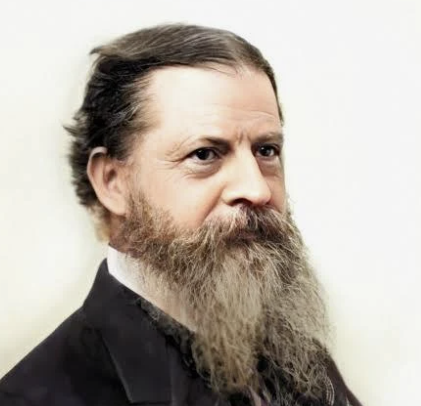
I think that I have succeeded in making it clear that this doctrine gives room for explanations of many facts which without it are absolutely and hopelessly inexplicable; and further that it carries along with it the following doctrines: first, a logical realism of the most pronounced type; second, objective idealism; third, tychism, with its consequent thoroughgoing evolutionism. We also notice that the doctrine presents no hindrences to spiritual influences, such as some philosophies are felt to do.
2 months 2 days ago
I hope I shall never live to see Anarchism become thoroughly respectable, for then I shall have to look for a new ideal.
▼
Source
source
Letter to Helen Keller (1916), published by "The American Foundation for the Blind"
2 weeks 5 days ago
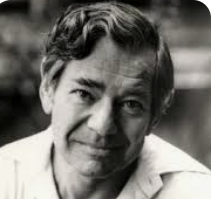
I agree with Paul that love is more important than faith and hope; but so are honesty, integrity, and moral courage. The world needs less faith and more love and nobility.
▼
Source
source
Preface
2 months 2 weeks ago
As the animus is partial to argument, he can best be seen at work in disputes where both parties know they are right. Men can argue in a very womanish way, too, when they are anima-possessed and have thus been transformed into the animus of their own anima.
▼
Source
source
Aion (1951). CW 9, Part II: P.29
CivilSimian.com created by AxiomaticPanic, CivilSimian, Kalokagathia