

3 months 1 week ago
Nowadays, to say that we are clever animals is not to say something philosophical and pessimistic but something political and hopeful - namely, if we can work together, we can make ourselves into whatever we are clever and courageous enough to imagine ourselves becoming. This is to set aside Kant's question "What is man?" and to substitute the question "What sort of world can we prepare for our great grandchildren?"
▼
Source
source
"Human Rights, Rationality, and Sentimentality." Truth and Progress: Philosophical Papers, Volume 3 (1998).

2 months 1 week ago
Life creates itself in delirium and is undone in ennui.
3 months 3 weeks ago
In the land of the blind the one-eyed man is lord.
▼
Source
source
Act III, scene ix
2 months 1 week ago
Every intellectual effort sets us apart from the commonplace, and leads us by hidden and difficult paths to secluded spots where we find ourselves amid unaccustomed thoughts.
▼
Source
source
p. 15

3 months 2 weeks ago
If we are uncritical we shall always find what we want: we shall look for, and find, confirmations, and we shall look away from, and not see, whatever might be dangerous to our pet theories. In this way it is only too easy to obtain what appears to be overwhelming evidence in favor of a theory which, if approached critically, would have been refuted.
▼
Source
source
The Poverty of Historicism (1957) Ch. 29 The Unity of Method

3 months 3 weeks ago
Things are not so painful and difficult of themselves, but our weakness or cowardice makes them so.
▼
Source
source
Ch. 14, tr. Cotton, rev. W. Carew Hazlitt, 1877

1 month 2 weeks ago
Genuine religion is not about speculating about God or the soul or about what happened in the past or will happen in the future; it cares only about one thing-finding out exactly what should or should not be done in this lifetime.
▼
Source
source
p. 3

3 months 1 week ago
I am my world.
▼
Source
source
(The microcosm.) (5.63) Original German: Ich bin meine welt (Der Mikrokosmos.)

2 months 2 weeks ago
The proper method for hastening the decay of error is not by brute force, or by regulation which is one of the classes of force, to endeavour to reduce men to intellectual uniformity; but on the contrary by teaching every man to think for himself.
▼
Source
source
Vol. 2, bk. 8, ch. 6
3 months 3 weeks ago
Not because Socrates said so, but because it is in truth my own disposition - and perchance to some excess - I look upon all men as my compatriots, and embrace a Pole as a Frenchman, making less account of the national than of the universal and common bond.
▼
Source
source
Ch. 9

1 week 1 day ago
But leaving this, let us remark one thing which is very plain: That whatever be the uses and duties, real or supposed, of a Secretary in Parliament, his faculty to accomplish these is a point entirely unconnected with his ability to get elected into Parliament, and has no relation or proportion to it, and no concern with it whatever.

1 month 2 weeks ago
The telegraph press mosaic is acoustic space as much as an electric circus.
4 months 2 weeks ago
Beholding beauty with the eye of the mind, he will be enabled to bring forth, not images of beauty, but realities (for he has hold not of an image but of a reality), and bringing forth and nourishing true virtue to become the friend of God and be immortal, if mortal man may.

3 months 2 weeks ago
Man is condemned to be free; because once thrown into the world, he is responsible for everything he does.
2 months 2 weeks ago
Tools arm the man. One can well say that man is capable of bringing forth a world; he lacks only the necessary apparatus, the corresponding armature of his sensory tools. The beginning is there. Thus the principle of a warship lies in the idea of the shipbuilder, who is able to incorporate this thought by making himself into a gigantic machine, as it were, through a mass of men and appropriate tools and materials. Thus the idea of a moment often required monstrous organs, monstrous masses of materials, and man is therefore a potential, if not an actual creator.
▼
Source
source
Fragment No. 88

3 months 2 weeks ago
There are but few points in which the English, as a people, are entitled to the moral pre-eminence with which they are accustomed to compliment themselves at the expense of other nations: but, of these points, perhaps the one of greatest importance is, that the higher classes do not lie, and the lower, though mostly habitual liars, are ashamed of lying. To run any risk of weakening this feeling, a difficult one to create, or, when once gone, to restore, would be a permanent evil too great to be incurred for so very temporary a benefit as the ballot would confer, even on the most exaggerated estimate necessity.
▼
Source
source
Thoughts on Parliamentary Reform (1859), pp. 48-49

3 months 2 weeks ago
When a sixth of the population of a nation which has undertaken to be the refuge of liberty are slaves, and a whole country is unjustly overrun and conquered by a foreign army, and subjected to military law, I think that it is not too soon for honest men to rebel and revolutionize. What makes this duty the more urgent is the fact that the country so overrun is not our own, but ours is the invading army.
2 months 1 week ago
Historians of ideas, however scrupulous and minute they may feel it necessary to be, cannot avoid perceiving their material in terms of some kind of pattern.
3 months 2 weeks ago
The sensuous may be exceedingly distinct, while intellectual concepts are extremely confused. The former we observe in the prototype of sensuous knowledge geometry; the latter, in the organon of all intellectual concepts, metaphysics. It is evident how much toil the latter is expending to dispel the fogs of confusion darkening the common intellect, though not always with the happy success of the former science.
2 months 1 week ago
When we know what words are worth, the amazing thing is that we try to say anything at all, and that we manage to do so. This requires, it is true, a supernatural nerve.
3 months 1 week ago
What we are destroying is nothing but houses of cards and we are clearing up the ground of language on which they stood.
▼
Source
source
§ 118
2 months 2 weeks ago
We must make a very precise distinction between the official and consequently dictatorial prerogatives of society organized as a state, and of the natural influence and action of the members of a non-official, non-artificial society.
2 months 2 days ago
What the learned world tends to offer is one second-hand scrap of information illustrating ideas derived from another second-hand scrap of information. The second-handedness of the learned world is the secret of its mediocrity.

2 months 3 weeks ago
The last thing abandoned by a party is its phraseology, because among political parties, as elsewhere, the vulgar make the language, and the vulgar abandon more easily the ideas that have been instilled into it than the words that it has learnt. France Before The Consulate, Chapter I: "How the Republic was ready to accept a master", in Memoir, Letters, and Remains, Vol I (1862), p. 266 Variant translation: The last thing a political party gives up is its vocabulary. This is because, in party politics as in other matters, it is the crowd who dictates the language, and the crowd relinquishes the ideas it has been given more readily than the words it has learned.
▼
Source
source
As quoted in The Viking book of Aphorisms : A Personal Selection (1962) by W. H. Auden, and Louis Kronenberger, p. 306. Variant translation: The last thing that a party abandons is its language.

1 week 5 days ago
The invasion... exhibits in stark terms, the choice that is before us today between maintaining a liberal government that respects the rights of individuals, or moving over to a form of centralized illiberal dictatorship, even if that... illiberal government is somehow democratically legitimated. ...That's the central issue in global politics today. ...That's basically what the... Ukraine invasion is about, and that's why... all liberal societies that care about those individual freedoms... have a very powerful interest in the outcome of that war, because Putin and Russia are at the center of an international network of illiberal forces that are seeking to overturn liberal values in virtually every part of the world, and therefore... that's all part of a larger global struggle over our fundamental liberal values.
▼
Source
source
26:50 Question & Answer period follows

3 months 1 week ago
It's time for me to go back to the great Union Theological Seminary. That's my institutional home, my brother. I can stretch out and try to be a truth teller and bear witness, still learn and listen, but also be in the middle of the Big Apple. Nothing like it... Union Theological Seminary means so much to me, because in that context I can be the full, free Black man, the Jesus-loving, free Black man, fundamentally committed to focusing on the oppressed around the world. Speaking in Too Radical for Harvard?
▼
Source
source
Cornl West on Failed Fight for Tenure, Biden's First 50 Days & More, Democracy Now!,
3 months 2 weeks ago
I do not believe in what is often called... 'exact terminology'... [or] in definitions... [they] do not... add to exactness... I especially dislike pretentious terminology and... pseudo-exactness concerned with it.
1 month 2 weeks ago
The inherent contradiction of human life has now reached an extreme degree of tension: on the one side there is the consciousness of the beneficence of the law of love, and on the other the existing order of life which has for centuries occasioned an empty, anxious, restless, and troubled mode of life, conflicting as it does with the law of love and built on the use of violence. This contradiction must be faced, and the solution will evidently not be favourable to the outlived law of violence, but to the truth which has dwelt in the hearts of men from remote antiquity: the truth that the law of love is in accord with the nature of man. But men can only recognize this truth to its full extent when they have completely freed themselves from all religious and scientific superstitions and from all the consequent misrepresentations and sophistical distortions by which its recognition has been hindered for centuries.
▼
Source
source
VI
1 month 2 weeks ago
Bless Madison Ave for restoring the magical art of the cavemen to suburbia.
▼
Source
source
(p. 130)
3 months 1 week ago
This aristocratic thesis is... the demos, the people, are the most numerous... also comprised of the most ordinary, and... even the worst, citizens. Therefore... what is best for the demos cannot be what is best for the polis... the city.
2 months 2 weeks ago
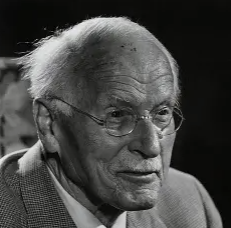
Since in the Middle Ages the psychic relation to woman was expressed in the collective worship of Mary, the image of woman lost a value to which human beings had a natural right. This value could find its natural expression only through individual choice, and it sank into the unconscious when the individual form of expression was replaced by a collective one. In the unconscious the image of woman received an energy charge that activated the archaic and infantile dominants. And since all unconscious contents, when activated by dissociated libido, are projected upon the external object, the devaluation of the real woman was compensated by daemonic features. She no longer appeared as an object of love, but as a persecutor or witch. The consequence of increasing Mariolatry was the witch hunt, that indelible blot on the later Middle Ages.
▼
Source
source
Psychological Types (1921), CW 6. P.344
2 months 1 week ago
Good health is the best weapon against religion. Healthy bodies and healthy minds have never been shaken by religious fears.
2 months 3 days ago
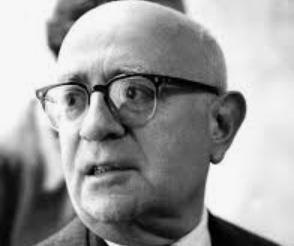
Music for entertainment ... seems to complement the reduction of people to silence, the dying out of speech as expression, the inability to communicate at all. It inhabits the pockets of silence that develop between people molded by anxiety, work and undemanding docility.
▼
Source
source
p. 271
2 months 2 days ago
There remains the final reflection, how shallow, puny, and imperfect are efforts to sound the depths in the nature of things. In philosophical discussion, the merest hint of dogmatic certainty as to finality of statement is an exhibition of folly.
▼
Source
source
Preface, p. 16 (Corrected Edition)
2 months 1 week ago
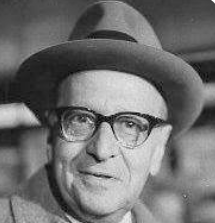
The disparagement of empirical evidence in favor of a metaphysical world of illusion has its origin in the conflict between the emancipated individual of bourgeois society and his fate within that society.
▼
Source
source
p. 138.

3 months 2 weeks ago
Indignation is a submission of our thoughts, but not of our desires.
3 months 1 week ago
The problem is not to discover in oneself the truth of one's sex, but, rather, to use one's sexuality henceforth to arrive at a multiplicity of relationships. And, no doubt, homosexuality is not a form of desire but something desirable. Therefore, we have to work at becoming homosexuals.
▼
Source
source
"Friendship as a Way of Life," interview in Gai pied, April 1981, as translated in Ethics, Subjectivity and Truth (1994), pp. 135-136
3 months 2 weeks ago
I do not pretend to start with precise questions. I do not think you can start with anything precise. You have to achieve such precision as you can, as you go along.

2 days ago
I do not know whether I shall make progress; but I should prefer to lack success rather than to lack faith.

2 months 4 weeks ago
Number is the ruler of forms and ideas, and the cause of gods and daemons.
▼
Source
source
As quoted in Life of Pythagoras (c. 300) by Iamblichus of Chalcis, as translated by Thomas Taylor (1818)
1 month 2 weeks ago
When the evolutionary process shifts from biology to software technology the body becomes the old hardware environment. The human body is now a probe, a laboratory for experiments.
▼
Source
source
(p. 180)
3 months 3 weeks ago
The Idols of the Cave are the idols of the individual man. For everyone (besides the errors common to human nature in general) has a cave or den of his own, which refracts and discolors the light of nature, owing either to his own proper and peculiar nature; or to his education and conversation with others; or to the reading of books, and the authority of those whom he esteems and admires; or to the differences of impressions, accordingly as they take place in a mind preoccupied and predisposed or in a mind indifferent and settled; or the like. So that the spirit of man (according as it is meted out to different individuals) is in fact a thing variable and full of perturbation, and governed as it were by chance. Whence it was well observed by Heraclitus that men look for sciences in their own lesser worlds, and not in the greater or common world.
▼
Source
source
Aphorism 42

3 months 2 weeks ago
The process is so complicated that it offers ever so many occasions for running abnormally.
▼
Source
source
Vol. II, Ch. XXI, p. 500.
1 week 1 day ago
Literary men are...a perpetual priesthood.
▼
Source
source
The State of German Literature.

3 months 2 weeks ago
The best government is a benevolent tyranny tempered by an occasional assassination.
▼
Source
source
Attributed to Voltaire in Likharev, K.K. (2021). On Government and Politics. In: Likharev, K.K. (eds) Essential Quotes for Scientists and Engineers.

3 months 3 weeks ago
It is not for its own sake that men desire money, but for the sake of what they can purchase with it.
▼
Source
source
Chapter I, p. 471.

4 months 1 week ago
When the Superior Man (Junzi) eats he does not try to stuff himself; at rest he does not seek perfect comfort; he is diligent in his work and careful in speech. He avails himself to people of the Tao and thereby corrects himself. This is the kind of person of whom you can say, "he loves learning."
2 months ago
An elaborated culture has a density, complexity, and historical-semantic value that is so strong as to make politics possible... Gramsci's insight is to have recognised that subordination, fracturing, diffusion, reproducing, as much as producing, creating, forcing, guiding, are necessary aspects of elaboration.
▼
Source
source
Quoted in Richard Middleton, Studying Popular Music (Philadelphia: Open University Press, 1990, ISBN 0-335-15275-9), p. 248
CivilSimian.com created by AxiomaticPanic, CivilSimian, Kalokagathia