


5 months 6 days ago
It is love that leniently and mercifully says: I forgive you everything-if you are forgiven only little, then it is because you love only little. Justice severely sets the boundary and says: No further! This is the limit. For you there is no forgiveness, and there is nothing more to be said.

2 months 2 weeks ago
The family uses people, not for what they are, nor for what they are intended to be, but for what it wants them for - its own uses. It thinks of them not as what God has made them, but as the something which it has arranged that they shall be.
2 months 3 weeks ago
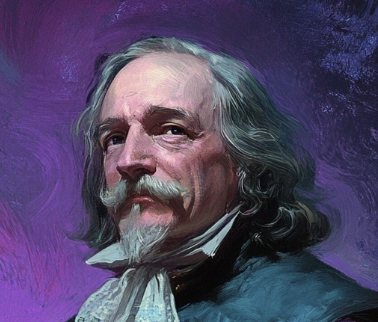
The doctrine of Right and Wrong, is perpetually disputed, both by Pen and the Sword: Whereas the doctrine of Lines, and Figures, is not so; because men care not, in that subject what be truth, as a thing that crosses no mans ambition, profit, or lust. For I doubt not, but if it had been a thing contrary to any mans right of dominion, or to the interest of men that have dominion, That the three Angles of a Triangle, should be equall to two Angles of a Square; that doctrine should have been, if not disputed, yet by the burning of all books of Geometry, suppressed, as far as he whom it concerned was able.
▼
Source
source
The First Part, Chapter 11, p. 80-81

2 months 1 day ago
Each generation is a filter, a sieve; good genes tend to fall through the sieve into the next generation; bad genes tend to end up in bodies that die young or without reproducing.
1 month 2 weeks ago
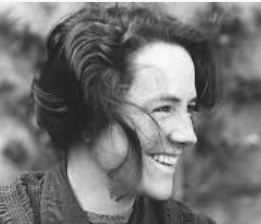
Good communication is as stimulating as black coffee, and just as hard to sleep after. Variant: Good communication is just as stimulating as...
4 days ago
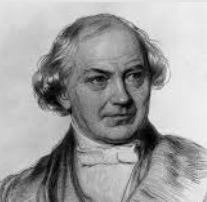
An 'Artificial System' is one in which the 'smaller' groups (the Genera) are 'natural'; and in which the 'wider' divisions (Classes, Orders) are constructed by the 'peremptory' application of selected Characters

4 months 4 days ago
Man is condemned to be free; because once thrown into the world, he is responsible for everything he does.

3 months 4 weeks ago
How can one be late to the end of history? A question for today. It is serious because it obliges one to reflect again, as we have been doing since Hegel, on what happens and deserves the name of event, after history; it obliges one to wonder if the end of history is but the end of a certain concept of history.
▼
Source
source
Injunctions of Marx

4 months 5 days ago
The music that can deepest reach, And cure all ill, is cordial speech.
▼
Source
source
Merlin's Song, II
3 months 5 days ago
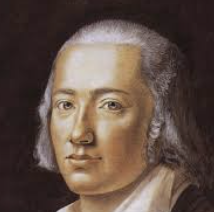
You seek life, and a godly fire Gushes and gleams for you out of the earth, As, with shuddering long, you Hurl yourself down to the flames of the Etna. So by a queen's wanton whim Pearls were dissolved in wine- heed her not! What folly, poet, to cast your riches Into that bright and bubbling cup! Yet still are you holy to me, as the might of the earth That bore you away, audaciously perishing! And I would follow the hero into the depths Did love not hold me.
▼
Source
source
"Empedokles"

2 months 3 weeks ago
From the power to transform him into a thing by killing him there proceeds another power, and much more prodigious, that which makes a thing of him while he still lives.
▼
Source
source
in The Simone Weil Reader, p. 155

4 months 6 days ago
The world is full of conflicts; and, overshadowing all minor conflicts, the titanic struggle between Communism and anti-Communism. Almost everybody who is politically conscious has strong feelings about one or more of these issues; but we want you, if you can, to set aside such feelings and consider yourselves only as members of a biological species which has had a remarkable history, and whose disappearance none of us can desire. We shall try to say no single word which should appeal to one group rather than to another. All, equally, are in peril, and, if the peril is understood, there is hope that they may collectively avert it.


2 months 2 weeks ago
It is certainly not a matter of indifference whether I learn something without effort or finally arrive at it myself through my system of thought. In the latter case everything has roots, in the former it is merely superficial.
▼
Source
source
F154
3 months 5 days ago
All law relations are determined by this principle: each one must restrict his freedom by the possibility of the freedom of the other. ... My freedom is limited by the freedom of the other only on condition that he limits his freedom by the conception of mine. Otherwise he is lawless. Hence, if a law-relation is to result from my cognition of the other, the cognition and the consequent limitation of freedom must have been mutual. All law-relation between persons is, therefore, conditioned by their mutual cognition of each other, and is, at the same time, completely determined thereby.
▼
Source
source
P. 173-175
4 months 6 days ago
All the time that he can spare from the adornment of his person, he devotes to the neglect of his duties.
▼
Source
source
Of Sir Richard Jebb, Some Cambridge Dons of the Nineties, 1956

3 months 5 days ago
When he entered into the Whig party, he did not conceive that they pretended to any discoveries. They did not affect to be better Whigs, than those were who lived in the days in which principle was put to the test. Some of the Whigs of those days were then living. They were what the Whigs had been at the Revolution; what they had been during the reign of queen Anne; what they had been at the accession of the present royal family.
▼
Source
source
p. 409
4 months 3 weeks ago
There is no city that is truly one other than this city that we are involved in bringing forth.

3 months 1 week ago
I cannot help fearing that men may reach a point where they look on every new theory as a danger, every innovation as a toilsome trouble, every social advance as a first step toward revolution, and that they may absolutely refuse to move at all.
▼
Source
source
Book Three, Chapter XXI.
2 months 3 weeks ago
I have sometimes told myself that if only there were a notice on church doors forbidding entry to anyone with an income above a certain figure, and a low one, I would be converted at once.
▼
Source
source
Letter to Georges Bernanos (1938), in Seventy Letters, as translated by Richard Rees (Wipf and Stock: 1965), p. 105

4 months 5 days ago
The religion and philosophy of the Hebrews are those of a wilder and ruder tribe, wanting the civility and intellectual refinements and subtlety of Vedic culture.
▼
Source
source
A Tribute to Hinduism, 2008
3 months 5 days ago
The fundamental maxim of those who stand at the head of this Age, and therefore the principle of the Age, is this,-to accept nothing as really existing or obligatory, but that which they can understand and clearly comprehend. With regard to this fundamental principle, as we have now declared and adopted it without farther definition or limitation, this third Age is precisely similar to that which is to follow it, the fourth, or age of Reason as Science,-and by virtue of this similarity prepares the way for it. Before the tribunal of Science, too, nothing is accepted but the Conceivable. Only in the application of the principle there is this difference between the two Ages,-that the third, which we shall shortly name that of Empty Freedom, makes its fixed and previously acquired conceptions the measure of existence; while the fourth-that of Science-on the contrary, makes existence the measure, not of its acquired, but of its desiderated beliefs.
▼
Source
source
p. 19
2 days ago
It has become extremely questionable whether, in the flux of life, it is a genuinely worthwhile intellectual problem to seek to discover fixed and immutable ideas or absolutes. It is a more worthy intellectual task perhaps to learn to think dynamically and relationally rather than statically.

3 months 4 weeks ago
I don't feel that it is necessary to know exactly what I am. The main interest in life and work is to become someone else that you were not in the beginning. If you knew when you began a book what you would say at the end, do you think that you would have the courage to write it? What is true for writing and for a love relationship is true also for life. The game is worthwhile insofar as we don't know what will be the end. My field is the history of thought. Man is a thinking being.
▼
Source
source
Truth, Power, Self : An Interview with Michel Foucault

3 weeks 5 days ago
Let the modern eye look earnestly on that old midnight hour in St. Edmundsbury Church, shining yet on us, ruddy-bright, through the depths of seven hundred years; and consider mournfully what our Hero-worship once was, and what it now is!

5 days ago
As to the species of exercise, I advise the gun. While this gives a moderate exercise to the body, it gives boldness, enterprise, and independence to the mind. Games played with the ball, and others of that nature, are too violent for the body, and stamp no character on the mind. Let your gun therefore be the constant companion of your walks. Never think of taking a book with you.
2 months 3 weeks ago
I also am other than what I imagine myself to be. To know this is forgiveness.
▼
Source
source
p. 200
4 months 6 days ago
Self-respect will keep a man from being abject when he is in the power of enemies, and will enable him to feel that he may be in the right when the world is against him.
▼
Source
source
Authority and the Individual (1949), p. 59
2 months 2 weeks ago
If the passion for truthfulness is merely controlled and stilled without being satisfied, it will kill the activities it is supposed to support. This may be one of the reasons why, at the present time, the study of the humanities runs a risk of sliding from professional seriousness, through professionalization, to a finally disenchanted careerism.
▼
Source
source
p. 3

4 months ago
Religion is, as it were, the calm bottom of the sea at its deepest point, which remains calm however high the waves on the surface may be.
▼
Source
source
p. 53e

2 months 3 weeks ago
It appears to me to be indisputable that he who I am to-day derives, by a continuous series of states of consciousness, from him who was in my body twenty years ago. Memory is the basis of individual personality, just as tradition is the basis of the collective personality of a people. We live in memory, and our spiritual life is at bottom simply the effort of our memory to persist, to transform itself into hope, the effort of our past to transform itself into our future.

1 month 1 week ago
There is no more consensus on what justice means than there is on the character of the good. If anything, there is less. Among the virtues, justice is one of the most shaped by convention. For that reason it is among the most changeable.
▼
Source
source
'Modus Vivendi' (p.34)
2 months 1 week ago
We do not have to love one another to be obligated to build a world in which all lives are sustainable. The right to persist can only be understood as a social right, as the subjective instance of a social and global obligation we bear toward one another.
▼
Source
source
p. 64
4 months 6 days ago
People are said to believe in God, or to disbelieve in Adam and Eve. But in such cases what is believed or disbelieved is that there is an entity answering a certain description. This, which can be believed or disbelieved is quite different from the actual entity (if any) which does answer the description. Thus the matter of belief is, in all cases, different in kind from the matter of sensation or presentation, and error is in no way analogous to hallucination. A hallucination is a fact, not an error; what is erroneous is a judgment based upon it.
▼
Source
source
On the Nature of Acquaintance: Neutral Monism, 1914
2 months 3 weeks ago
Christian Kings may erre in deducing a Consequence, but who shall Judge?
▼
Source
source
The Third Part, Chapter 43, p. 330

2 months 2 days ago
Powerful indeed is the empire of habit.
▼
Source
source
Maxim 305

2 months 2 weeks ago
Husserl has shown that man's prejudices go a great deal deeper than his intellect or his emotions. Consciousness itself is 'prejudiced' - that is to say, intentional.
▼
Source
source
p. 54

5 months 2 days ago
Straightforward preaching spoils the effectiveness of a story. If you can't resist the impulse to improve your fellow human beings, do it subtly.

4 months 1 week ago
Now the maximum of perfection is called ideal, by Plato, Idea - for instance, his Idea of a Republic - and is the principle of all that is contained under the general notion of any perfection, inasmuch as the lesser grades are not thought determinable but by limiting the maximum. But God, the Ideal of perfection, and hence the principle of cognition, is also, as existing really, the principle of the creation of all perfection.
2 months 3 weeks ago
We cannot grasp any idea, any organ of meditation, we cannot possess it in full force, until we have felt and sensed it, as much so as if it were an odor or a color.
4 months ago
Tell them I've had a wonderful life.
▼
Source
source
Last words, to his doctor's wife (28 April 1951)-as quoted in Ludwig Wittgenstein : A Memoir (1966) by Norman Malcolm, p. 100
5 months 2 days ago
No matter how outrageous a lie may be, it will be accepted if stated loudly enough and often enough.
4 months 3 weeks ago
A lifetime is a child playing, playing checkers; the kingdom belongs to a child.

2 months 4 days ago
What is the Jew?...What kind of unique creature is this whom all the rulers of all the nations of the world have disgraced and crushed and expelled and destroyed; persecuted, burned and drowned, and who, despite their anger and their fury, continues to live and to flourish. What is this Jew whom they have never succeeded in enticing with all the enticements in the world, whose oppressors and persecutors only suggested that he deny (and disown) his religion and cast aside the faithfulness of his ancestors?! The Jew - is the symbol of eternity. ... He is the one who for so long had guarded the prophetic message and transmitted it to all mankind. A people such as this can never disappear. The Jew is eternal. He is the embodiment of eternity.
▼
Source
source
Attributed in "The Final Resolution", in Jewish World Periodical (1908), p. 189
CivilSimian.com created by AxiomaticPanic, CivilSimian, Kalokagathia