


4 months 2 days ago
Finally, every man will become dear and pleasing to every other man; all will be beloved by all! and, what is still more desirable, beloved also by Christ; to become acceptable to whom is the highest felicity of human nature.

3 months 3 weeks ago
After silence that which comes nearest to expressing the inexpressible is music.
▼
Source
source
"The Rest is Silence"
1 month 5 days ago
These immense cities lie basking on the beaches of the continent like whales that have taken to the land again. What do these great, sleek, well-fed creatures live on so sumptuously?
▼
Source
source
12. The Elusive Continent (on the six state capitals of Australia)

4 months 2 weeks ago
Courtiers don't take wagers against the king's skill.
1 month 5 days ago
So-called racial characteristics are not really racial at all but are due to the historical experiences of the communities in question.
▼
Source
source
Abridgement of Vols. 1-6 by D. C. Somervell

3 months 3 weeks ago
Avarice and injustice are always shortsighted, and they did not foresee how much this regulation must obstruct improvement, and thereby hurt in the long-run the real interest of the landlord.
▼
Source
source
Chapter II, p. 426-427.
2 months 1 day ago
The real significance of the Russell paradox, from the standpoint of the modal-logic picture, is this: it shows that no concrete structure can be a standard model for the naive conception of the totality of all sets; for any concrete structure has a possible extension that contains more 'sets'. (If we identify sets with the points that represent them in the various possible concrete structures, we might say: it is not possible for all possible sets to exist in any one world!) Yet set theory does not become impossible. Rather, set theory becomes the study of what must hold in, e.g. any standard model for Zermelo set theory.
▼
Source
source
Mathematics without foundations

3 months 3 weeks ago
Great geniuses have the shortest biographies.
▼
Source
source
Plato; or, The Philosopher
4 months 1 day ago
Hath God obliged himself not to exceed the bounds of our knowledge?
▼
Source
source
Book II, Ch. 12
2 weeks ago
Only when they must choose between competing theories do scientists behave like philosophers.
▼
Source
source
Logic of Discovery or Psychology of Research?, Criticism and the growth of knowledge edited by Imre Lakatos and Alan Musgrave
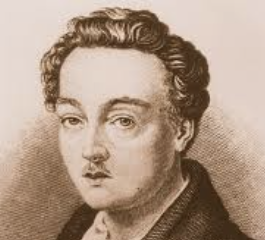
2 months 3 weeks ago
We are always on stage, even when we are stabbed in earnest at the end.
▼
Source
source
Act II.

3 months 2 weeks ago
A hero looks death in the face, real death, not just the image of death. Behaving honourably in a crisis doesn't mean being able to act the part of a hero well, as in the theatre, it means being able to look death itself in the eye. For an actor may play lots of different roles, but at the end of it all he himself, the human being, is the one who has to die.
▼
Source
source
p. 50e

1 month ago
In ancient Europe, Stoics asserted that a slave could be freer than a master who suffers from self-division. In China, Daoists imagined a type of sage who responded to the flow of events without weighing alternatives. Disciples of monotheistic faiths have believed something similar: freedom, they say, is obeying God's will. What those who follow these traditions want most is not any kind of freedom of choice. Instead, what they long for is freedom from choice.
▼
Source
source
The Faith of Puppets: The Freedom of the Marionette (p. 6-7)
4 months 1 day ago
Once conform, once do what others do because they do it, and a kind of lethargy steals over all the finer senses of the soul.

3 months 3 weeks ago
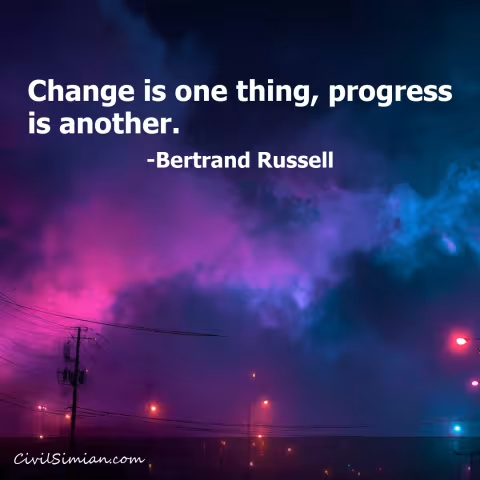
A process which led from the amœba to man appeared to the philosophers to be obviously a progress - though whether the amœba would agree with this opinion is not known.
▼
Source
source
Ch. 1: Mysticism and Logic
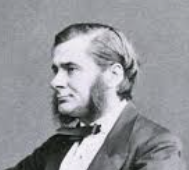
1 month 1 week ago
The absolute justice of the system of things is as clear to me as any scientific fact. The gravitation of sin to sorrow is as certain as that of the earth to the sun, and more so-for experimental proof of the fact is within reach of us all-nay, is before us all in our own lives, if we had but the eyes to see it.

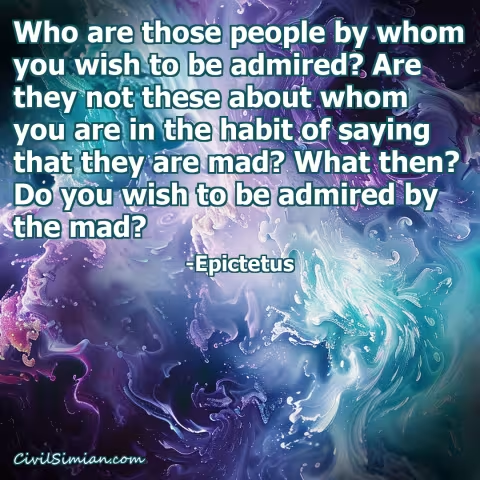

3 months 3 weeks ago
I have received, sir, your new book against the human species, and I thank you for it. You will please people by your manner of telling them the truth about themselves, but you will not alter them. The horrors of that human society-from which in our feebleness and ignorance we expect so many consolations-have never been painted in more striking colours: no one has ever been so witty as you are in trying to turn us into brutes: to read your book makes one long to go on all fours. Since, however, it is now some sixty years since I gave up the practice, I feel that it is unfortunately impossible for me to resume it: I leave this natural habit to those more fit for it than are you and I.
▼
Source
source
Letter to Jean-Jacques Rousseau, August 30, 1755 referring to Rousseau's Discourse on Inequality.
1 week 1 day ago
Feuerbach ... recognizes ... "even love, in itself the truest, most inward sentiment, becomes an obscure, illusory one through religiousness, since religious love loves man only for God's sake, therefore loves man only apparently, but in truth God only." Is this different with moral love? Does it love the man, this man for this man's sake, or for morality's sake, for Man's sake, and so-for homo homini Deus-for God's sake?
▼
Source
source
Cambridge 1995, p. 56

2 months 6 days ago
We have all experienced the moments that William James calls melting moods, when it suddenly becomes perfectly obvious that life is infinitely fascinating. And the insight seems to apply retrospectively. Periods of my life that seemed confusing and dull at the time now seem complex and rather charming. It is almost as if some other person a more powerful and mature individual has taken over my brain. This higher self views my problems and anxieties with kindly detachment, but entirely without pity. Looking at problems through his eyes, I can see I was a fool to worry about them.
▼
Source
source
pp. 2-3

2 months 1 week ago
"God does not think, He creates; He does not exist, He is eternal," wrote Kierkegaard (Afslutende uvidenskabelige Efterskrift); but perhaps it is more exact to say with Mazzini, the mystic of the Italian city, that "God is great because his thought is action" (Ai giovani d'Italila), because with Him to think is to create, and He gives existence to that which exists in His thought by the mere fact of thinking it, and the impossible is unthinkable by God. It is not written in the Scriptures that God creates with His word - that is to say, with His thought - and that by this, by His Word, He made everything that exists? And what God has once made does He ever forget? May it not be that all the thoughts that have ever passed through the Supreme Consciousness still subsist therein? In Him, who is eternal, is not all existence eternalized?

1 month 3 weeks ago
In order that men should embrace the truth - not in the vague way they did in childhood, nor in the one-sided and perverted way presented to them by their religious and scientific teachers, but embrace it as their highest law the complete liberation of this truth from all and every superstition (both pseudo-religious and pseudo-scientific) by which it is still obscured is essential: not a partial, timid attempt, reckoning with traditions sanctified by age and with the habits of the people - not such as was effected in the religious sphere by Guru Nanak, the founder of the sect of the Sikhs, and in the Christian world by Luther, and by similar reformers in other religions - but a fundamental cleansing of religious consciousness from all ancient religious and modern scientific superstitions.
▼
Source
source
VI
4 months 1 day ago
For the history of the centuries that have passed since the birth of Christ nowhere reveals conditions like those of the present. There has never been such building and planting in the world. There has never been such gluttonous and varied eating and drinking as now. Wearing apparel has reached its limit in costliness. Who has ever heard of such commerce as now encircles the earth? There have arisen all kinds of art and sculpture, embroidery and engraving, the like of which has not been seen during the whole Christian era. In addition men are so delving into the mysteries of things that today a boy of twenty knows more than twenty doctors formerly knew.
▼
Source
source
Sermon for the Second Sunday in Advent, Luke 21:25-36 (1522), as translated in The Precious and Sacred Writings of Martin Luther (1905) edited by John Nicholas Lenker

3 months 3 weeks ago
The heights of popularity and patriotism are still the beaten road to power and tyranny ; flattery to treachery ; standing armies to arbitrary government ; and the glory of God to the temporal interest of the clergy.
▼
Source
source
Part I, Essay 8: Of Public Credit (This appears as a footnote in editions H to P. Other editions include it in the body of the text, and some number it Essay 9.)

1 week 1 day ago
What else is there which you would regret to have taken from you? Friends? But who can be a friend to you? Country? What? Do you think enough of your country to be late to dinner? The light of the sun? You would extinguish it, if you could; for what have you ever done that was fit to be seen in the light?
3 months 3 weeks ago
The Bhagavad-Gita is perhaps the most systematic scriptural statement of the Perennial Philosophy. To a world at war, a world that, because it lacks the intellectual and spiritual prerequisites to peace, can only hope to patch up some kind of precarious armed truce, it stands pointing, clearly and unmistakably, to the only road of escape from the self-imposed necessity of self-destruction.
2 months 3 weeks ago
The life of the wealthy is one long Sunday.
3 months 3 weeks ago
The next good quality belonging to a gentleman, is good breeding [manners]. There are two sorts of ill-breeding: the one a sheepish bashfulness, and the other a mis-becoming negligence and disrespect in our carriage; both of which are avoided by duly observing this one rule, not to think meanly of ourselves, and not to think meanly of others.
▼
Source
source
Sec. 141

1 month 3 weeks ago
The business of art is no longer the communication of thoughts or feelings which are to be conceptually ordered, but a direct participation in an experience. The whole tendency of modern communication...is towards participation in a process, rather than apprehension of concepts.
▼
Source
source
Letter to Harold Adam Innis (14 March 1951), published in Essential McLuhan (1995), edited by Eric McLuhan and Frank Zingrone, p. 73

3 months 4 days ago
It is not proper either to have a blunt sword or to use freedom of speech ineffectually. Neither is the sun to be taken from the world, nor freedom of speech from erudition.
▼
Source
source
As quoted in the translation of Thomas Taylor
1 month 2 weeks ago
Alas! in the clothes of the greatest potentate, what is there but a man?
▼
Source
source
The Suicide Club, Story of the Young Man with the Cream Tarts.
3 months 3 weeks ago
These effects of mescalin are the sort of effects you could expect to follow the administration of a drug having the power to impair the efficiency of the cerebral reducing valve. When the brain runs out of sugar, the undernourished ego grows weak, can't be bothered to undertake the necessary chores, and loses all interest in those spatial and temporal relationships which mean so much to an organism bent on getting on in the world. As Mind at Large seeps past the no longer watertight valve, all kinds of biologically useless things start to happen. ... Other persons discover a world of visionary beauty. To others again is revealed the glory, the infinite value and meaningfulness of naked existence, of the given, unconceptualized event.
▼
Source
source
describing his experiment with mescaline, p. 26
3 months 3 weeks ago
Freedom comes only to those who no longer ask of life that it shall yield them any of those personal goods that are subject to the mutations of time.

2 months 2 weeks ago
The secret is that only that which can destroy itself is truly alive.
▼
Source
source
Psychology and Alchemy

3 months 3 weeks ago
I am well aware of how anarchic much of what I say may sound. Expressing myself thus abstractly and briefly, I may seem to despair of the very notion of truth. But I beseech you to reserve your judgment until we see it applied to the details which lie before us. I do indeed disbelieve that we or any other mortal men can attain on a given day to absolutely incorrigible and unimprovable truth about such matters of fact as those with which religions deal. But I reject this dogmatic ideal not out of a perverse delight in intellectual instability. I am no lover of disorder and doubt as such. Rather do I fear to lose truth by this pretension to possess it already wholly.
▼
Source
source
Lectures XIV and XV, "The Value of Saintliness"

2 months 3 weeks ago
Whenever a separation is made between liberty and justice, neither, in my opinion, is safe.
▼
Source
source
Letter to M. de Menonville

2 months 3 weeks ago
It cannot but happen that those individuals whose functions are most out of equilibrium with the modified aggregate of external forces, will be those to die; and that those will survive whose functions happen to be most nearly in equilibrium with the modified aggregate of external forces. But this survival of the fittest, implies multiplication of the fittest. Out of the fittest thus multiplied, there will, as before, be an overthrowing of the moving equilibrium wherever it presents the least opposing force to the new incident force.
▼
Source
source
The Principles of Biology, Vol. I (1864), Part III: The Evolution of Life, Ch. 7: Indirect Equilibration
2 months 3 weeks ago
The plea of anger or of drunkenness - as having placed the criminal for the moment beyond the control of his reason - relieves him from the charge of premeditated and malicious intent; but a rational legislation will rather provide more severe than milder punishment for such cases, particularly if such a state of mind is habitual with the accused; for a single unlawful act may well constitute an exception from an otherwise blameless life. But a person who pleads, "I habitually get so angry or so drunk as not to be any longer master of my senses!" confesses thereby that he changes himself into a beast on a fixed principle, and that he is, therefore, not fit to live among rational beings.
▼
Source
source
P. 351
1 week 1 day ago
State and government are the social apparatus of violent coercion and repression. Such an apparatus, the police power, is indispensable in order to prevent anti-social individuals and bands from destroying social co-operation. Violent prevention and suppression of anti-social activities benefit the whole of society and each of its members. But violence and oppression are none the less evils and corrupt those in charge of their application. It is necessary to restrict the power of those in office lest they become absolute despots. Society cannot exist without an apparatus of violent coercion. But neither can it exist if the office holders are irresponsible tyrants free to inflict harm upon those they dislike.

3 months 2 weeks ago
My point is not that everything is bad, but that everything is dangerous, which is not exactly the same as bad. If everything is dangerous, then we always have something to do. So my position leads not to apathy but to a hyper- and pessimistic activism. I think that the ethico-political choice we have to make every day is to determine which is the main danger. "
▼
Source
source
On the Genealogy of Ethics: An Overview of Work in Progress." Afterword, in Hubert L. Dreyfus and Paul Rabinow, Michel Foucault: Beyond Structuralism and Hermeneutics, 2nd ed. Chicago: University of Chicago Press.
4 months 2 days ago
I feel that the entire spiritual life consists in this: That we gradually turn from those things whose appearance is deceptive to those things that are real.
▼
Source
source
p. 63

3 months 3 weeks ago
Her absence is no more emphatic in those places than anywhere else. It's not local at all. I suppose if one were forbidden all salt one wouldn't notice it much more in any one food more than another. Eating in general would be different, every day, at every meal. It is like that. The act of living is different all through. Her absence is like the sky, spread over everything.
3 months 2 weeks ago
It seems to me that the current political task in a society like ours is to criticize the working of institutions that are apparently the most neutral and independent, to criticize these institutions and attack them in such a way that the political violence that exercises itself obscurely through them becomes manifest, so that one can fight against them.
▼
Source
source
Debate with Noam Chomsky, École Supérieure de Technologie à Eindhoven, November 1971

3 months 3 weeks ago
Perseus wore a magic cap that the monsters he hunted down might not see him.We draw the magic cap down over eyes and ears as a make-believe that there are no monsters.
▼
Source
source
Author's prefaces to the First Edition.
3 months 3 weeks ago
He that uses his words loosely and unsteadily will either not be minded or not understood.
▼
Source
source
Book III, Ch. 10, sec. 31
3 months 2 weeks ago
He who is subjected to a field of visibility, and who knows it, assumes responsibility for the constraints of power; he makes them play spontaneously upon himself; he inscribes in himself the power relation in which he simultaneously plays both roles; he becomes the principle of his own subjection.
▼
Source
source
Part Three, Panopticism

2 months 2 weeks ago
What is not heartrending is superfluous, at least in music.
2 months 6 days ago
Like a plague, the mad spirit is sweeping the country, infesting the clearest heads and staunchest hearts with the deathly germ of militarism.
3 months 3 weeks ago
Undeterred by this examination, the French Revolution gave rise to ideas which led beyond the ideas of the entire old world order. The revolutionary movement which began in 1789 in the Cercle Social, which in the middle of its course had as its chief representatives Leclerc and Roux, and which finally with Babeuf's conspiracy was temporarily defeated, gave rise to the communist idea which Babeuf's friend Buonarroti re-introduced in France after the Revolution of 1830. This idea, consistently developed, is the idea of the new world order.
▼
Source
source
Chapter 6, 3
CivilSimian.com created by AxiomaticPanic, CivilSimian, Kalokagathia