


3 months 3 weeks ago
Sunshine cannot bleach the snow, Nor time unmake what poets know.
▼
Source
source
"The Test", as quoted in Emerson As A Poet (1883) by Joel Benton, p. 40
2 months 4 weeks ago
There is no kind of harassment that a man may not inflict on a woman with impunity in civilized societies.
▼
Source
source
"On Women" (1772), as translated in Selected Writings (1966) edited by Lester G. Crocker

2 weeks 4 days ago
What we may be witnessing is not just the end of the Cold War, or the passing of a particular period of post-war history, but the end of history as such ... That is, the end point of mankind's ideological evolution and the universalization of Western liberal democracy as the final form of human government.

3 months 3 weeks ago
The bourgeoisie has stripped of its halo every occupation hitherto honoured and looked up to with reverent awe. It has converted the physician, the lawyer, the priest, the poet, the man of science, into its paid wage labourers.
▼
Source
source
Section 1, paragraph 14.
2 months 6 days ago
Sexual activity is driven by the same aims and motives as reading poetry or listening to music: to escape the limitations imposed by the need for particularity in the consciousness.
▼
Source
source
p. 75

3 months 3 weeks ago
For passionate emotions of all sorts, and for everything which has been said or written in exaltation of them, he professed the greatest contempt. He regarded them as a form of madness. "The intense" was with him a bye-word of scornful disapprobation. He regarded as an aberration of the moral standard of modern times, compared with that of the ancients, the great stress laid upon feeling.
▼
Source
source
(p. 49)
1 week 6 days ago
Nothing in all literature is so depressing as the "Dissertations" of the slave [Epictetus], unless it be the "Meditations" of the Emperor [Marcus Aurelius] ...[after some excerpts from the two books]..... In such passages we feel the proximity of Christianity and its dauntless martyrs; indeed were not the Christian ethic of self-denial, the Christian political ideal of an almost communistic brotherhood of man, and the Christian eschatology of the final conflagration of all the world, fragments of Stoic doctrine floating on the stream of thought? In Epictetus the Greco-Roman soul has lost its paganism, and is ready for a new faith".

3 months 3 weeks ago
There is no more miserable human being than one in whom nothing is habitual but indecision.
▼
Source
source
Ch. 4

2 months 4 weeks ago
For the world, I count it not an Inn, but a Hospital, and a place, not to live, but to die in.
▼
Source
source
Section 11

3 months ago
Perchance you who pronounce my sentence are in greater fear than I who receive it.
▼
Source
source
His famous response to his judges upon his conviction as a heretic, prior to his transfer to the civil authorities for execution. (16 February 1600); as quoted by Gaspar Schopp of Breslau in a letter to Conrad Rittershausen
4 months 1 week ago
It is unlikely that the good of a snail should reside in its shell: so is it likely that the good of a man should?
▼
Source
source
Book I, ch. 20, 17.

3 months 3 weeks ago
Nature has pointed out a mixed kind of life as most suitable to the human race, and secretly admonished them to allow none of these biases to draw too much, so as to incapacitate them for other occupations and entertainments. Indulge your passion for science, says she, but let your science be human, and such as may have a direct reference to action and society. Abstruse thought and profound researches I prohibit, and will severely punish, by the pensive melancholy which they introduce, by the endless uncertainty in which they involve you, and by the cold reception which your pretended discoveries shall meet with, when communicated. Be a philosopher; but, amidst all your philosophy, be still a man.
▼
Source
source
Section 1 : Of The Different Species of Philosophy
3 months ago
If it is not true, it is a good story.
▼
Source
source
as quoted in A Book of Quotations, Proverbs and Household Words (1907) edited by Sir William Gurney Benham
3 months 3 weeks ago
I soon perceived that she possessed in combination, the qualities which in all other persons whom I had known I had been only too happy to find singly. In her, complete emancipation from every kind of superstition (including that which attributes a pretended perfection to the order of nature and the universe), and an earnest protest against many things which are still part of the established constitution of society, resulted not from the hard intellect, but from strength of noble and elevated feeling, and co-existed with a highly reverential nature.
▼
Source
source
(p. 186)
2 weeks 2 days ago
It would be silly, of course, to be either 'for' or 'against' modernity tout court, not only because it is pointless to try to stop the development of technology, science, and economic rationality, but because both modernity and antimodernity may be expressed in barbarous and antihuman terms.
▼
Source
source
"Modernity on Endless Trial"
3 months 3 weeks ago
The man who renounces himself, comes to himself.
▼
Source
source
p. 6

2 months 2 weeks ago
Reality is a creation of our excesses.

3 months 2 weeks ago
I believe it might interest a philosopher, one who can think himself, to read my notes. For even if I have hit the mark only rarely, he would recognize what targets I had been ceaselessly aiming at.

3 months 3 weeks ago
[W]e only become what we are by the radical and deep-seated refusal of that which others have made of us.
3 months 3 weeks ago
The worker becomes all the poorer the more wealth he produces, the more his production increases in power and range. The worker becomes an ever cheaper commodity the more commodities he creates. With the increasing value of the world of things proceeds in direct proportion the devaluation of the world of men. Labour produces not only commodities; it produces itself and the worker as a commodity - and does so in the proportion in which it produces commodities generally.
▼
Source
source
p. 71, The Marx-Engels Reader
4 days ago
I am now even more persuaded of the urgent need to study why Socrates was accused. The dislike of philosophy is perennial, and the seeds of the condemnation of Socrates are present at all times, not in the bosoms of pleasure-seekers, who don't give a damn, but in those of high-minded and idealistic persons who do not want to submit their aspirations to examination.
▼
Source
source
Western Civ, p. 19.

1 month 3 days ago
It is better to live under a tree in a jungle inhabited by tigers and elephants, to maintain oneself in such a place with ripe fruits and spring water, to lie down on grass and to wear the ragged barks of trees than to live amongst one's relations when reduced to poverty.

3 months 3 weeks ago
Don't think money does everything or you are going to end up doing everything for money.
2 months 1 week ago
The dressing up and puffing up of the individual erases the lineaments of protest.
▼
Source
source
p. 283

2 months 2 weeks ago
The foxes have holes, and the birds of the air have nests; but the Son of man hath not where to lay his head.
▼
Source
source
8:20 (KJV)

1 week 1 day ago
No man expects such exact fidelity as a traitor.
▼
Source
source
De Ira (On Anger): Book 2, cap. 28, line 7.



3 months 3 weeks ago
An irrational fear should never be simply let alone, but should be gradually overcome by familiarity with its fainter forms.
▼
Source
source
On Education, Especially in Early Childhood (1926), Ch. 4: Fear
1 week 2 days ago
Whoso is full of sacred (religious, moral, humane) love loves only the spook, the "true man," and persecutes with dull mercilessness the individual, the real man.
▼
Source
source
S. Byington, trans. (1913), p. 383
3 months 3 weeks ago
Our moral virtues benefit mainly other people; intellectual virtues, on the other hand, benefit primarily ourselves; therefore the former make us universally popular, the latter unpopular.
3 months 3 weeks ago
I exist, that is all, and I find it nauseating.

1 month 3 weeks ago
We are to admit no more causes of natural things than such as are both true and sufficient to explain their appearances.
▼
Source
source
"Rules of Reasoning in Philosophy" : Rule I

3 months 1 week ago
We ought to regard the interests of the state as of far greater moment than all else, in order that they may be administered well; and we ought not to engage in eager rivalry in despite of equity, nor arrogate to ourselves any power contrary to the common welfare. For a state well administered is our greatest safeguard. In this all is summed up: When the state is in a healthy condition all things prosper; when it is corrupt, all things go to ruin.
2 months 3 days ago
One has to do something new in order to see something new.
▼
Source
source
J 1770
2 months 3 weeks ago
Humanity may endure the loss of everything: all its possessions may be torn away without infringing its true dignity; - all but the possibility of improvement.
▼
Source
source
"The Vocation of the Scholar" (1794), as translated by William Smith, in The Popular Works of Johann Gottlieb Fichte (1889), Vol. I, Lecture IV, p. 188.

2 months 2 weeks ago
The spontaneous reproduction of superimposed needs by the individual does not establish autonomy; it only testifies to the efficacy of the control.
▼
Source
source
p. 8
3 months 3 weeks ago
But capitalist production begets,with the inexorability of a law of Nature,its own negation. It is the negation of negation.
▼
Source
source
Vol. I, Ch. 32, p. 837.

3 months 3 weeks ago
The South may keep her pine-apples, and we will be content with our strawberries, which are, as it were, pine-apples with "going a-strawberrying" stirred into them, infinitely enhancing their flavor.
3 months 3 weeks ago
Objective evidence and certitude are doubtless very fine ideals to play with, but where on this moonlit and dream-visited planet are they found?
▼
Source
source
"The Will to Believe" p. 14
2 months 3 weeks ago
The recognition of the light of reality within the darkness of abstraction is a contradiction - both the affirmation and the negation of the real at one and the same time. The new philosophy, which thinks the concrete not in an abstract but a concrete way, which acknowledges the real in its reality - that is, in a way corresponding to the being of the real as true, which elevates it into the principle and object of philosophy - is consequently the truth of the Hegelian philosophy, indeed of modern philosophy as a whole.
▼
Source
source
Part III, Section 31

3 months 2 weeks ago
With a malicious man carry on no conflict, and do not molest him in any way whatever.

2 weeks ago
In the meanest mortal there lies something nobler. The poor swearing soldier, hired to be shot, has his "honor of a soldier," different from drill-regulations and the shilling a day. It is not to taste sweet things, but to do noble and true things, and vindicate himself under God's Heaven as a god-made Man, that the poorest son of Adam dimly longs. Show him the way of doing that, the dullest day-drudge kindles into a hero. They wrong man greatly who say he is to be seduced by ease.

3 months 3 weeks ago
... the fight against suffering must be considered a duty, while the right to care for the happiness of others must be considered a privilege confined to the close circle of their friends. ... Pain, suffering, injustice, and their prevention, these are the eternal problems of public morals, the 'agenda' of public policy ...
▼
Source
source
Vol. 2, Ch. 24 "Oracular Philosophy and the Revolt against Reason"

2 months 4 weeks ago
There is hardly a pioneer's hut which does not contain a few odd volumes of Shakespeare. I remember reading the feudal drama of Henry V for the first time in a log cabin.
▼
Source
source
Book One, Chapter XIII.

4 months 2 weeks ago
For anyone who is alone, without God and without a master, the weight of days is dreadful. Hence one must choose a master, God being out of style.

2 months 3 weeks ago
There is no sin, and there can be no sin on all the earth, which the Lord will not forgive to the truly repentant! Man cannot commit a sin so great as to exhaust the infinite love of God. Can there be a sin which could exceed the love of God?
▼
Source
source
Book II, ch. 3 (trans. Constance Garnett) The Elder Zossima, speaking to a devout widow afraid of death
3 months 3 weeks ago
Alcohol, hashish, prussic acid, strychnine are weak dilutions. The surest poison is time.
▼
Source
source
Poetry and Imagination

2 months 3 weeks ago
Every man may claim the fullest liberty to exercise his faculties compatible with the possession of like liberties by every other man.
▼
Source
source
Pt. II, Ch. 4 : Derivation of a First Principle, § 3
2 months 2 weeks ago
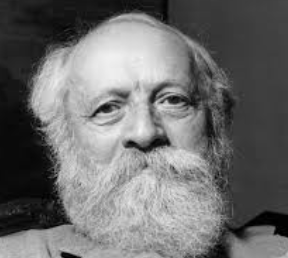
The real struggle is not between East and West, or capitalism and communism, but between education and propaganda.
▼
Source
source
As quoted in Encounter with Martin Buber (1972) by Aubrey Hodes, p. 135
3 months 3 weeks ago
Literature is the effort of man to indemnify himself for the wrongs of his condition.
▼
Source
source
"Walter Savage Landor", from The Dial, xii, 1841
CivilSimian.com created by AxiomaticPanic, CivilSimian, Kalokagathia