


3 months 6 days ago
Applaud us when we run, console us when we fall, cheer us when we recover.
▼
Source
source
Speech at Bristol Previous to the Election (6 September 1780), quoted in The Works of the Right Honourable Edmund Burke, Vol. II (1855), p. 129

3 months 1 day ago
All the concessions we make to Eros are holes in our desire for the absolute.
1 day ago
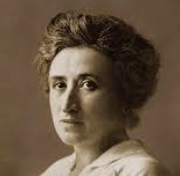
Shamed, dishonored, wading in blood and dripping with filth, thus capitalist society stands. Not as we usually see it, playing the roles of peace and righteousness, of order, of philosophy, of ethics - as a roaring beast, as an orgy of anarchy, as a pestilential breath, devastating culture and humanity - so it appears in all its hideous nakedness.
▼
Source
source
Ch. 1, Rosa Luxemburg Speaks (1970), trns: Mary-Alice Waters

4 months 1 week ago
If you press me to say why I loved him, I can say no more than it was because he was he, and I was I. Variants: If a man urge me to tell wherefore I loved him, I feel it cannot be expressed but by answering: Because it was he, because it was myself. If a man should importune me to give a reason why I loved him, I find it could no otherwise be expressed, than by making answer: because it was he, because it was I.
▼
Source
source
Ch. 28


2 months 2 days ago
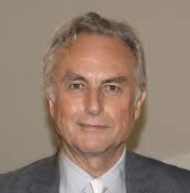
Just because science can't in practice explain things like the love that motivates a poet to write a sonnet, that doesn't mean that religion can. It's a simple and logical fallacy to say, 'If science can't do something, therefore religion can'.
2 weeks 2 days ago
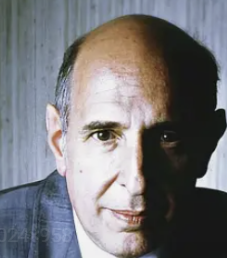
Only when the true ends of society have nothing to do with the sublime does "culture" become necessary as a veneer to cover over the void. Culture can at best appreciate the monuments of earlier faith; it cannot produce them.
▼
Source
source
"Commerce and Culture," p. 280.
4 months 1 day ago
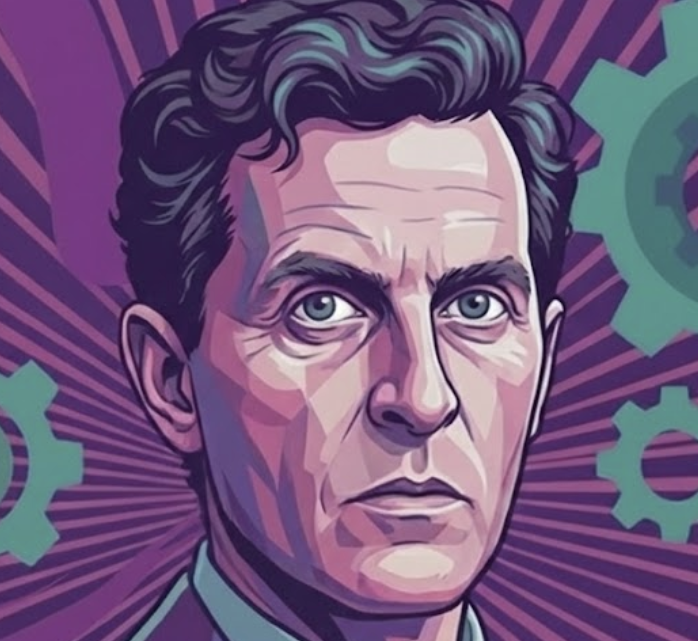
What should we gain by a definition, as it can only lead us to other undefined terms?
▼
Source
source
p. 26
4 months 2 weeks ago
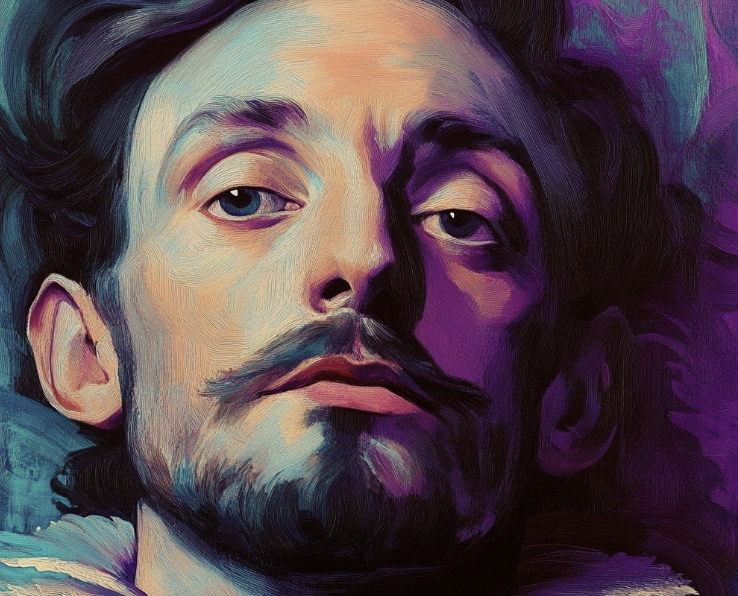
What then remains but that we still should cry Not to be born, or, being born, to die?
4 months ago
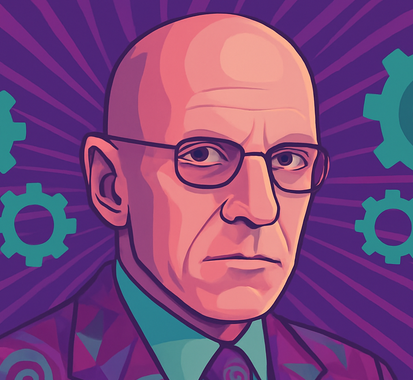
In the darkest region of the political field the condemned man represents the symmetrical, inverted figure of the king.
4 months 4 days ago
The hazards of the generalized prisoner's dilemma are removed by the match between the right and the good.
▼
Source
source
Chapter IX, Section 86, p. 577
2 weeks ago
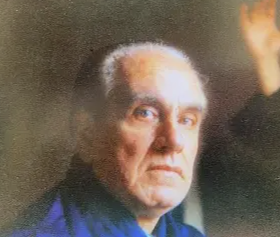
It is a cliché that the modern scientific vision has desacralized the world, and the world desacralized by scientific knowledge has become one of the existential elements that make up modern man, all the more so to the degree that he is "civilized." Ever since he has been subject to compulsory education, his mind has been stuffed with "positive" scientific notions; he cannot avoid seeing in a soulless light everything that surrounds him, and therefore acts destructively. What, for example, could the symbol of the sunset of a dynasty, like the Japanese, mean to him when he knows scientifically what the sun is: merely a star, at which one can even fire missiles.
▼
Source
source
p. 138

4 months 1 week ago
Money is always to be found when men are to be sent to the frontiers to be destroyed: when the object is to preserve them, it is no longer so.
▼
Source
source
"Charity", 1770

2 months 3 days ago
One of the things that happens at the speed of light is that people lose their goals in life. So what takes the place of goals and objectives? Well, role-playing is coming in very fast.
▼
Source
source
Interview between Californian Governor Jerry Brown and Marshall McLuhan, 1977

2 months 3 weeks ago
But our Don Quixote, the inward, the immortal Don Quixote, conscious of his own comicness, does not believe that his doctrines will triumph in this world, because they are not of it. And it is better that they should not triumph. And if the world wished to make Don Quixote king, he would retire alone to the mountain, fleeing from the king-making crowds, as Christ retired alone to the mountain when, after the miracle of the loaves and fishes, they sought to proclaim him king. He left the title of king for the inscription written over the cross.
3 months 5 days ago
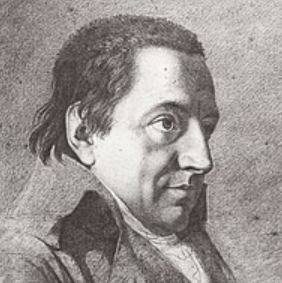
The Life according to Reason consists herein, -that the Individual forget himself in the Race, place his own life in the life of the Race, and dedicate it thereto;-the Life opposed to Reason, on the contrary, consists in this, that the Individual think of nothing but himself, love nothing but himself and in relation to himself, and set his whole existence in his own personal well-being alone: -and since we may briefly call that which is according to Reason good, and that which is opposed to Reason evil, so there is but One Virtue, to forget one's own personality;-and but One Vice,-to make self the object of our thoughts.
▼
Source
source
p. 33
3 months 3 weeks ago
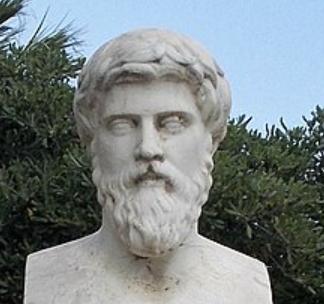
Cato the elder wondered how that city was preserved wherein a fish was sold for more than an ox.
▼
Source
source
Cato the Elder
4 weeks 1 day ago
I have never met a man so ignorant that I could not learn something from him.
▼
Source
source
As quoted in The Story of Civilization : The Age of Reason Begins, 1558-1648 (1935) by Will Durant, p. 605
5 months 3 days ago
The work of each individual contributes to a totality and so becomes an undying part of the totality. That totality of human lives - past and present and to come - forms a tapestry that has been in existence now for many thousands of years and has been growing more elaborate and, on the whole, more beautiful in all that time. Even the Spacers are an offshoot of the tapestry and they, too, add to the elaborateness and beauty of the pattern. An individual life is one thread in the tapestry and what is one thread compared to the whole?
2 months 2 weeks ago
I use the word nursing for want of a better. It has been limited to signify little more than the administration of medicines and the application of poultices. It ought to signify the proper use of fresh air, light, warmth, cleanliness, quiet, and the proper selection and administration of diet - all at the least expense of vital power to the patient.
▼
Source
source
Notes on Nursing

3 months 3 weeks ago
'Tis not in strength of body nor in gold that men find happiness, but in uprightness and in fulness of understanding.

4 months 1 week ago
The importation of gold and silver is not the principal, much less the sole benefit which a nation derives from its foreign trade.
▼
Source
source
Chapter I, p. 479.
4 days ago
That there is a common cause, an that it is either what we call material progress or something closely connected with material progress, becomes more than an inference when it is noted that the phenomena we class together and speak of as industrial depression are but intensifications of phenomena which always accompany material progress, and which show themselves more clearly and strongly as material progress goes on. Where the conditions to which material progress everywhere tends are the most fully realized-that is to say, where population is densest, wealth greatest, and the machinery of production and exchange most highly developed - we find the deepest poverty, the sharpest struggle for existence, and the most of enforced idleness.
▼
Source
source
Introductory : The Problem
4 months ago
The task of universal pragmatics is to identify and reconstruct universal conditions of possible mutual understanding.
▼
Source
source
p. 21

2 weeks 6 days ago
Unrighteous fortune seldom spares the highest worth; no one with safety can long front so frequent perils. Whom calamity oft passes by she finds at last.
▼
Source
source
lines 325-328; (Megara).
3 weeks ago
Look upon yourself as more powerful than they give you out for, and you have more power; look upon yourself as more, and you have more.
▼
Source
source
Cambridge 1995, p. 318
5 months 2 days ago
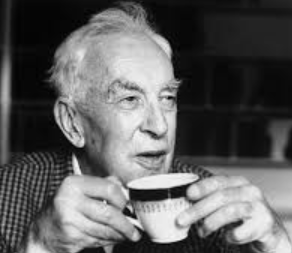
At my age one's got to be sincere. Lying's too much effort.
1 month 2 weeks ago
No being can be what he is unless he is putting his essence into action in his field.
▼
Source
source
Vol. 3
2 weeks 6 days ago
No one is able to rule unless he is also able to be ruled.
▼
Source
source
De Ira (On Anger): Book 2, cap. 15, line 4

5 months 6 days ago
Magister Adler was deeply moved by something higher, but now when he wants to express his thoughts in words, wants to communicate, he confuses the subjective with the objective, his altered subjective state with an external event, the dawning of a light upon him with the coming into existence of something new outside him, the falling of the veil from his eyes with his having had a revelation. Subjectively his emotion is carried to the extreme; he wants to select the most powerful expression to describe it and by means of a mental deception grasps the objective qualification: having had a revelation.

4 months 6 days ago
He who can buy bravery is brace, though a coward. As money is not exchanged for anyone specific quality, for any one specific thing, or for any particular human essential power, but for the entire objective world of man and nature, from the standpoint of its possessor it therefore serves to exchange every property for every other, even contradictory, property and object: it is the fraternization of impossibilities. It makes contradictions embrace.
▼
Source
source
p. 105, The Marx-Engels Reader
4 months ago
Meaning created links so numerous, so rich and involved that only esoteric knowledge could possibly have the necessary key. Objects became so weighed down with attributes, connections and associations that they lost their own original face. Meaning was no longer read in an immediate perception, and accordingly objects ceased to speak directly: between the knowledge that animated the figures of objects and the forms they were transformed into, a divide began to appear, opening the way for a symbolism more often associated with the world of dreams.
▼
Source
source
Part One: 1. Stultifera Navis
3 months 1 day ago
Losing love is so rich a philosophical ordeal that it makes a hairdresser into a rival of Socrates.

2 months 2 weeks ago
It is the fallacy of all intellectuals to believe that intellect can grasp life. It cannot, because it works in terms of symbols and language. There is another factor involved: consciousness. If the flame of consciousness is low, a symbol has no power to evoke reality, and intellect is helpless.
▼
Source
source
p. 112
2 months 4 weeks ago
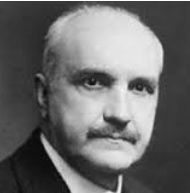
American life is a powerful solvent. As it stamps the immigrant, almost before he can speak English, with an unmistakable muscular tension, cheery self-confidence and habitual challenge in the voice and eyes, so it seems to neutralize every intellectual element, however tough and alien it may be, and to fuse it in the native good-will, complacency, thoughtlessness, and optimism.
▼
Source
source
"The Academic Environment" p. 47 (Hathi Trust)
2 weeks 6 days ago
... the only contestant who can confidently enter the lists is the man who has seen his own blood, who has felt his teeth rattle beneath his opponent's fist, who has been tripped and felt the full force of his adversary's charge, who has been downed in body but not in spirit, one who, as often as he falls, rises again with greater defiance than ever.
4 months 1 week ago
They who have compared our lives to a dream were, perhaps, more in the right than they were aware of. When we dream, the soul lives, works, and exercises all its faculties, neither more nor less than when awake; but more largely and obscurely, yet not so much, neither, that the difference should be as great as betwixt night and the meridian brightness of the sun, but as betwixt night and shade; there she sleeps, here she slumbers; but, whether more or less, 'tis still dark, and Cimmerian darkness. We wake sleeping, and sleep waking.
▼
Source
source
tr. Cotton, rev. W. Carew Hazlitt, 1877

4 months 4 days ago
Scientists try to eliminate their false theories, they try to let them die in their stead. The believer-whether animal or man-perishes with his false beliefs.
▼
Source
source
Epistemology Without A Knowing Subject

4 months 6 days ago
I feel like that intellectual but plain-looking lady who was warmly complimented on her beauty. In accepting his Nobel Prize, in December 1950; Russell denied that he had contributed anything in particular to literature.
▼
Source
source
Quoted in LIFE, Editorials: "A great mind is still annoying and adorning our age", 26 May 1952
2 weeks ago
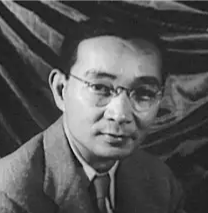
Human life can be lived like a poem.
▼
Source
source
p. 32
3 months 2 days ago
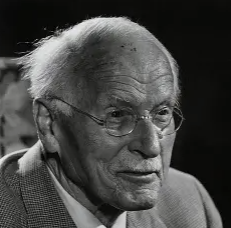
The meaning and design of a problem seem not to lie in its solution, but in our working at it incessantly.
▼
Source
source
p. 103
3 months 1 day ago
Since the only things we remember are humiliations and defeats, what is the use of all the rest?

4 months 4 days ago
Karsky: I met your father last week. Are you still interested in hearing how he is doing?
Hugo: No.
Karsky: It is very probable that you will be responsible for his death.
Hugo: It is virtually certain that he is responsible for my life. We are even.
▼
Source
source
Act 4, sc. 4

2 months 4 weeks ago
Whoever blasphemes against the Father will be forgiven, and whoever blasphemes against the Son will be forgiven, but whoever blasphemes against the Holy Spirit will not be forgiven either on earth or in heaven.
4 months 1 week ago
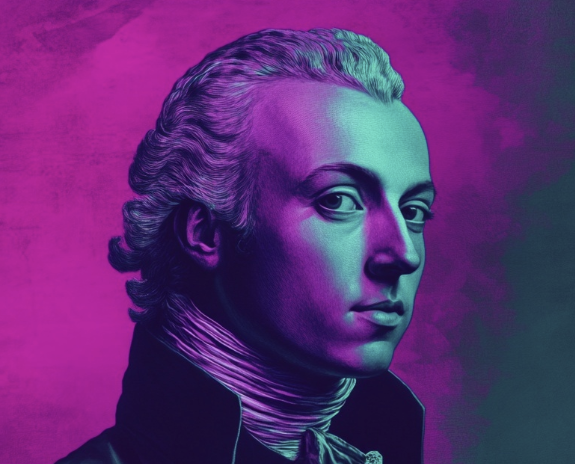
A philosophical attempt to work out a universal history according to a natural plan directed to achieving the civic union of the human race must be regarded as possible and, indeed, as contributing to this end of Nature.
▼
Source
source
Ninth Thesis
2 days ago
The thought of every group is seen as arising out of its life conditions. Thus, it becomes the task of the sociological history of thought to anlayse without regard for party biases all the factors in the actually existing social situation which may influence thought. This sociologically oriented history of ideas is destined to provide modern men with a revised view of the whole historical process.
2 months 1 day ago
It is better to lose health like a spendthrift than to waste it like a miser. It is better to live and be done with it, than to die daily in the sick-room.
▼
Source
source
315
CivilSimian.com created by AxiomaticPanic, CivilSimian, Kalokagathia