


1 month ago
...it won't just be the quality and quantity of consciousness in the world that will be transformed in the post-Darwinian Transition. As (post-)humanity emerges from the neurochemical Dark Ages, enriched dopaminergic function in particular may sharpen the sheer intensity and meaningfulness of every moment of conscious existence. For a generation whose lifetimes span both modes of awareness, it will be as if they had just woken up. They will feel they had hitherto been sleep-walking through life in a twilit stupor. Thereafter their former mundane and minimal existence may be recalled only as some kind of zombified trance-state whose nature they were physiologically incapable of recognising...
▼
Source
source
The Hedonistic Imperative: Heaven on Earth?, "Eden", BLTC Research
1 week ago
People do not cooperate under the division of labor because they love or should love one another. They cooperate because this best serves their own interests. Neither love nor charity nor any other sympathetic sentiments but rightly understood selfishness is what originally impelled man to adjust himself to the requirements of society, to respect the rights and freedoms of his fellow men and to substitute peaceful collaboration for enmity and conflict.

3 months 2 weeks ago
Mr. Neo-Angular - I am doing my duty. My ethics are based on dogma, not on feeling. Vertue - I know that a rule is to be obeyed because it is a rule and not because it appeals to my feelings at the moment.
▼
Source
source
Pilgrim's Regress 90

4 months 1 week ago
See a person's means (of getting things). Observe his motives. Examine that in which he rests. How can a person conceal his character? See a person's "being", observe his motive, notice his result. How can a person conceal his character?

3 months 3 weeks ago
Power may be defined as the production of intended effects.
▼
Source
source
Ch. 3: The Forms of Power

2 months 4 days ago
Considered as a whole, Hesse's achievement can hardly be matched in modern literature; it is the continually rising trajectory of an idea, the fundamentally religious idea of how to 'live more abundantly'. Hesse has little imagination in the sense that Shakespeare or Tolstoy can be said to have imagination, but his ideas have a vitality that more than makes up for it. Before all, he is a novelist who used the novel to explore the problem: What should we do with our lives? The man who is interested to know how he should live instead of merely taking life as it comes, is automatically an Outsider.
▼
Source
source
p. 77
3 months 2 weeks ago
It is simply no good trying to keep any thrill: that is the very worst thing you can do. Let the thrill go-let it die away-go on through that period of death into the quieter interest and happiness that follow-and you will find you are living in a world of new thrills all the time. But if you decide to make thrills your regular diet and try to prolong them artificially, they will all get weaker and weaker, and fewer and fewer, and you will be a bored, disillusioned old man for the rest of your life. It is because so few people understand this that you find many middle-aged men and women maundering about their lost youth, at the very age when new horizons ought to be appearing and new doors opening all round them. It is much better fun to learn to swim than to go on endlessly (and hopelessly) trying to get back the feeling you had when you first went paddling as a small boy.
▼
Source
source
Book III, Chapter 6, "Christian Marriage"

3 months 3 weeks ago
I am grateful for what I am & have. My thanksgiving is perpetual. It is surprising how contented one can be with nothing definite - only a sense of existence. Well, anything for variety. I am ready to try this for the next 1000 years, & exhaust it. How sweet to think of! My extremities well charred, and my intellectual part too, so that there is no danger of worm or rot for a long while. My breath is sweet to me. O how I laugh when I think of my vague indefinite riches. No run on my bank can drain it - for my wealth is not possession but enjoyment.
▼
Source
source
Letter to Harrison Gray Otis Blake (6-7 December 1856), as published in The Correspondence of Henry David Thoreau (1958)

4 months 2 weeks ago
Ten years on the moon could tell us more about the universe than a thousand years on the earth might be able to.

4 weeks ago
Through all of history and pre-history it has been accepted that there is something wrong with the human animal. Health may be the natural condition of other species, but in humans it is sickness that is normal. To be chronically unwell is part of what it means to be human. It is no accident that every culture has its own versions of therapy. Tribal shamans and modern psychotherapists answer the same needs and practise the same trade.
▼
Source
source
Beyond the Last Thought: Freud's cigars and the long way round to Nirvana (p. 84)
1 month 2 weeks ago
There is only one way to defeat the enemy, and that is to write as well as one can. The best argument is an undeniably good book.
▼
Source
source
Quoted by Granville Hicks in The Living Novel: A Symposium (Macmillan, 1957; digitized version in 2006), p. ix
2 months 1 week ago
Some would deny any legitimate use of the word God because it has been misused so much. Certainly it is the most burdened of all human words. Precisely for that reason it is the most imperishable and unavoidable. And how much weight has all erroneous talk about God's nature and works (although there never has been nor can be any such talk that is not erroneous) compared with the one truth that all men who have addressed God really meant him? For whoever pronounces the word God and really means Thou, addresses, no matter what his delusion, the true Thou of his life that cannot be restricted by any other and to whom he stands in a relationship that includes all others.
3 months 1 week ago
To have good sense, is the first principle and fountain of writing well.
▼
Source
source
Line 309

3 months 3 weeks ago
We have ...as M. Ribot says, not memory so much as memories. The visual... tactile... muscular... auditory memory may all vary independently... and different individuals may have them developed in different degrees. As a rule, a man's memory is good in the departments in which his interest is strong; but those departments are apt to be those in which his discriminative sensibility is high. ...[D]ifferences in men's imagining power... the machinery of memory must be largely determined thereby.
▼
Source
source
Ch. 16
2 months 2 weeks ago
For it is not the bare Words, but the Scope of the writer that giveth true light, by which any writing is to bee interpreted; and they that insist upon single Texts, without considering the main Designe, can derive no thing from them clearly; but rather by casting atomes of Scripture, as dust before mens eyes, make everything more obscure than it is; an ordinary artifice of those who seek not the truth, but their own advantage.
▼
Source
source
The Third Part, Chapter 43, p. 331

2 months 2 weeks ago
I dream of a language whose words, like fists, would fracture jaws.


3 months 2 weeks ago
As medium for reaching understanding, speech acts serve: a) to establish and renew interpersonal relations, whereby the speaker takes up a relation to something in the world of legitimate social orders; b) to represent states and events, whereby the speaker takes up a relation to something in the world of existing states of affairs; c) to manifest experiences that is, to represent oneself- whereby the speaker takes up a relation to something in the subjective world to which he has privileged access.
▼
Source
source
p. 308
4 months 4 days ago
These two states which it is necessary to know together in order to see the whole truth, being known separately, lead necessarily to one of these two vices, pride or indolence, in which all men are invariably led before grace, since if they do not remain in their disorders through laxity, they forsake them through vanity, so true is that which you have just repeated to me from St. Augustine, and which I find to a great extent; for in fact homage is rendered to them in many ways.
3 months 3 weeks ago
In obedience to the feeling of reality, we shall insist that, in the analysis of propositions, nothing "unreal" is to be admitted. But, after all, if there is nothing unreal, how, it may be asked, could we admit anything unreal? The reply is that, in dealing with propositions, we are dealing in the first instance with symbols, and if we attribute significance to groups of symbols which have no significance, we shall fall into the error of admitting unrealities, in the only sense in which this is possible, namely, as objects described.
▼
Source
source
Ch. 16: Descriptions

2 months 1 week ago
I hope, reader, that some time while our tragedy is still playing, in some interval between acts, we shall meet again. And we shall recognize one another. And forgive me if I have troubled you more than was needful and inevitable, more than I intended to do when I took up my pen proposing to distract you from your distractions. And may God deny you peace, but give you glory!

2 months 3 weeks ago
"The will of the nation" is one of those expressions which have been most profusely abused by the wily and the despotic of every age.
▼
Source
source
Chapter IV.
1 month 2 weeks ago
Though the coming of the day is still the most inspiriting, yet day's departure, also, and the return of night refresh, renew, and quiet us; and in the pastures of the dusk we stand, like cattle, exulting in the absence of the load.
▼
Source
source
Toils And Pleasures.

4 months 2 weeks ago
The important thing isn't the soundness or otherwise of the argument, but for it to make you think.
1 month 2 weeks ago
It is hard to believe that this simple truth is not understood by those leaders who forbid their followers to use effective contraceptive methods. They express a preference for 'natural' methods of population limitation, and a natural method is exactly what they are going to get. It is called starvation.
▼
Source
source
Ch. 7. Family planning

3 months 4 weeks ago
I speak the truth, not my fill of it, but as much as I dare speak; and I dare to do so a little more as I grow old.
▼
Source
source
Ch. 2

2 months 2 weeks ago
Wherefore I say unto you, All manner of sin and blasphemy shall be forgiven unto men: but the blasphemy against the Holy Ghost shall not be forgiven unto men. And whosoever speaketh a word against the Son of man, it shall be forgiven him: but whosoever speaketh against the Holy Ghost, it shall not be forgiven him, neither in this world, neither in the world to come.
▼
Source
source
(Matthew 12:31-32) (KJV)
4 months 3 weeks ago
There are many people who reach their conclusions about life like schoolboys; they cheat their master by copying the answer out of a book without having worked out the sum for themselves.
4 weeks ago
Throughout the years in which the US was punishing countries that departed from fiscal prudence, it was borrowing on a colossal scale to finance tax cuts and fund its over-stretched military commitments. Now, with federal finances critically dependent on continuing large inflows of foreign capital, it will be the countries that spurned the American model of capitalism that will shape America's economic future.
1 month 2 weeks ago
There are evils, as someone has pointed out, that have the ability to survive identification and go on for ever - money, for instance, or war.
▼
Source
source
The Dean's December (1982) [Penguin Classics, 1998, ISBN 0-140-18913-0], ch. 13, p. 140
2 months 4 days ago
The central fact for me is, I think, that the [role of the] intellectual ... cannot be played without a sense of being someone whose place it is publicly to raise embarrassing questions, to confront orthodoxy and dogma (rather than to produce them), to be someone who cannot easily be co-opted by governments or corporations, and whose raison d'être is to represent all those people and issues that are routinely forgotten or swept under the rug. Representation of the Intellectual
▼
Source
source
1994

1 month 2 weeks ago
It is always the psychic and social grounds, brought into play by each medium or technology, that readjust the balance of the hemispheres and of human sensibilities into equilibrium with those grounds.
▼
Source
source
p. 82
3 months 1 week ago
Without consciousness the mind-body problem would be much less interesting. With consciousness it seems hopeless.
▼
Source
source
p. 166.

3 months 4 weeks ago
Besides, you also have many Jews living in the country, who do much harm... You should know the Jews blaspheme and violate the name of our Savior day for day... for that reason you, Milords and men of authority, should not tolerate but expel them. They are our public enemies and incessantly blaspheme our Lord Jesus Christ, they call our Blessed Virgin Mary a harlot and her Holy Son a bastard and to us they give the epithet of changelings and abortions. Therefore deal with them harshly as they do nothing but excruciatingly blaspheme our Lord Jesus Christ, trying to rob us of our lives, our health, our honor and belongings.
▼
Source
source
Sermon at Eisleben, a few days before his death, February, 1546. See The Jews by Zuhdī Fātiḥ, 1972
3 months 3 weeks ago
This I think is sufficiently evident, that children generally hate to be idle. All the care then is, that their busy humour should be constantly employ'd in something of use to them; which, if you will attain, you must make what you would have them do a recreation to them, and not a business.
▼
Source
source
Sec. 129
3 months 3 weeks ago
I have lived in the pursuit of a vision, both personal and social. Personal: to care for what is noble, for what is beautiful, for what is gentle; to allow moments of insight to give wisdom at more mundane times. Social: to see in imagination the society that is to be created, where individuals grow freely, and where hate and greed and envy die because there is nothing to nourish them. These things I believe, and the world, for all its horrors, has left me unshaken.
4 months 1 week ago
The superior man loves his soul; the inferior man loves his property.

3 months 3 days ago
Reason is immortal, all else mortal.
▼
Source
source
As quoted in Lives and Opinions of Eminent Philosophers, Sect. 30, as translated by Robert Drew Hicks (1925)

1 month 1 week ago
The measure of a man is a man. Justice, morality, ethics, fairness, goodness all based on the preservation of life. You can do other things, but you'd be Good by coincidence.

3 months 3 weeks ago
Only geometry can hand us the thread [which will lead us through] the labyrinth of the continuum's composition, the maximum and the minimum, the infinitesimal and the infinite; and no one will arrive at a truly solid metaphysic except he who has passed through this [labyrinth].
▼
Source
source
Spring 1676
4 months 2 weeks ago
To work and create "for nothing," to sculpture in clay, to know one's creation has no future, to see one's work destroyed in a day while being aware that fundamentally this has no more importance than building for centuries, this is the difficult wisdom that absurd thought sanctions. Performing these two tasks simultaneously, negating on the one hand and magnifying on the other, it the way open to the absurd creator. He must give the void its colors.

2 months 3 weeks ago
When any work seems to have required immense force and labor to affect it, the idea is grand. Stonehenge, neither for disposition nor ornament, has anything admirable; but those huge rude masses of stone, set on end, and piled each on other, turn the mind on the immense force necessary for such a work. Nay, the rudeness of the work increases this cause of grandeur, as it excludes the idea of art and contrivance; for dexterity produces another sort of effect, which is different enough from this.
▼
Source
source
Part II Section XII

3 months 3 weeks ago
The utilitarian doctrine is, that happiness is desirable, and the only thing desirable, as an end; all other things being only desirable as means to that end.
▼
Source
source
Ch. 4
2 months 1 week ago
The Catholic solution of our problem, of our unique vital problem, the problem of the immortality and eternal salvation of the soul, satisfies the will, and therefore satisfies life; but the attempt to rationalize it by means of a dogmatic theology fails to satisfy the reason. And reason has its exigencies as imperious as those of life. It is no use seeking to force ourselves to consider as super-rational what clearly appears to us to be contra-rational... Infallibility, a notion of Hellenic origin, is in its essence a rationalistic category.
2 months 1 week ago
It is not a question of the mass-man being a fool. On the contrary, to-day he is more clever, has more capacity of understanding than his fellow of any previous period. But that capacity is of no use to him; in reality, the vague feeling that he possesses it seems only to shut him up more within himself and keep him from using it. Once for all, he accepts the stock of commonplaces, prejudices, fag-ends of ideas or simply empty words which chance has piled up within his mind, and with a boldness only explicable by his ingenuousness, is prepared to impose them everywhere.... Why should he listen if he has within him all that is necessary? There is no reason now for listening, but rather for judging, pronouncing, deciding. There is no question concerning public life, in which he does not intervene, blind and deaf as he is, imposing his "opinions."
▼
Source
source
Chap. VIII: The Masses Intervene In Everything, And Why Their Intervention Is Solely By Violence
2 months 1 week ago
Antiquity believed that the forces of love in the universe were limited. Therefore they were to be used sparingly,and everyone was to be loved only according to his value.
▼
Source
source
L. Coser, trans. (1961), p. 94
3 months 2 weeks ago
We may suppose that everyone has in himself the whole form of a moral conception.
▼
Source
source
Chapter I, Section 9, pg. 50
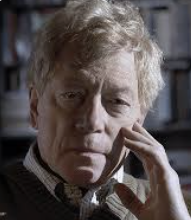
1 month 2 weeks ago
We do not merely study the past: we inherit it, and inheritance brings with it not only the rights of ownership, but the duties of trusteeship. Things fought for and died for should not be idly squandered. For they are the property of others, who are not yet born.
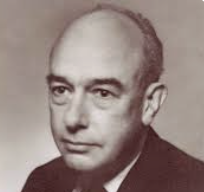
2 months 1 week ago
Modern empiricism has been conditioned in large part by two dogmas. One is a belief in some fundamental cleavage between truths which are analytic, or grounded in meanings independently of matters of fact, and truths which are synthetic, or grounded in fact. The other dogma is reductionism: the belief that each meaningful statement is equivalent to some logical construct upon terms which refer to immediate experience. Both dogmas, I shall argue, are ill-founded. One effect of abandoning them is, as we shall see, a blurring of the supposed boundary between speculative metaphysics and natural science. Another effect is a shift toward pragmatism.
▼
Source
source
"Two dogmas of Empiricism"
CivilSimian.com created by AxiomaticPanic, CivilSimian, Kalokagathia