

2 months 2 weeks ago
Logic chases truth up the tree of grammar.
▼
Source
source
Philosophy of Logic

2 months 3 weeks ago
Where are my sensations? They have melted into... me, and what is this me, this self, but the sum of these evaporated sensations?


2 months 2 weeks ago
When I first read The Wretched of the Earth I heard a new history spoken-the voice of the decolonised subject raised in resistance. That voice . . . articulated a yearning for freedom that was so intense and a quality of emotional hunger that was so fierce that it was overwhelming. Dying into the text, I abandoned and forgot myself. The lust for freedom in those pages awakened and resurrected me.
▼
Source
source
Gender and Decolonization in the Congo (2010) ISBN 978-0-230-11040-3

4 months 4 days ago
Of all the things that are beyond my power, I value nothing more highly than to be allowed the honor of entering into bonds of friendship with people who sincerely love truth. For, of things beyond our power, I believe there is nothing in the world which we can love with tranquility except such men.
▼
Source
source
Spinoza, Correspondence, 146, Letter xix

4 months 1 day ago
The good life is one inspired by love and guided by knowledge.

3 months 3 weeks ago
Courage, not cleverness; not even inspiration, is the grain of mustard that grows up to be a great tree.
▼
Source
source
p. 44e
3 months 3 weeks ago
Language is a part of our organism and no less complicated than it.
▼
Source
source
Journal entry (14 May 1915), p. 48

3 months 4 weeks ago
I can't imagine a man really enjoying a book and reading it only once.
▼
Source
source
Letter to Arthur Greeves (February 1932) - in They Stand Together: The Letters of C. S. Lewis to Arthur Greeves (1914-1963) (1979), p. 439

3 weeks ago
When the oak-tree is felled, the whole forest echoes with it; but a hundred acorns are planted silently by some unnoticed breeze.
▼
Source
source
On History.
2 months 3 days ago
Well, what does "good" mean anyway...? As Wittgenstein suggested, "good," like "game," has a family of meanings. Prominent among them is this one: "meets the criteria or standards of assessment or evaluation."
▼
Source
source
P. 152.
3 months 3 weeks ago
You get tragedy where the tree, instead of bending, breaks.
Just now
Our lives are guided by that general conception of the course of things which has been created by society for social purposes. Our words, our phrases, our forms and processes and modes of thought, are common property, fashioned and perfected from age to age; an heirloom which every succeeding generation inherits as a precious deposit and a sacred trust to be handled on to the next one, not unchanged but enlarged and purified, with some clear marks of its proper handiwork. Into this, for good or ill, is woven every belief of every man who has speech of his fellows. An awful privilege, and an awful responsibility, that we should help to create the world in which posterity will live.

4 months 2 weeks ago
Christ's whole body groans in pain. Until the end of the world, when pain will pass away, this man groans and cries to God. And each one of us has part in the cry of that whole body. Thou didst cry out in thy day, and thy days have passed away; another took thy place and cried out in his day. Thou here, he there, and another there. The body of Christ ceases not to cry out all the day, one member replacing the other whose voice is hushed. Thus there is but one man who reaches unto the end of time, and those that cry are always His members.
▼
Source
source
p.423

4 months 2 days ago
There are truths which are not for all men, nor for all times.
▼
Source
source
Letter to François-Joachim de Pierre, cardinal de Bernis, 23 April 1764

3 months 1 day ago
It is not calling the landed estates, possessed by old prescriptive rights, the 'accumulations of ignorance and superstition', that can support me in shaking that grand title, which supersedes all other title, and which all my studies of general jurisprudence have taught me to consider as one principal cause of the formation of states; I mean the ascertaining and securing prescription. But these are donations made in 'ages of ignorance and superstition'. Be it so. It proves that these donations were made long ago; and this is prescription; and this gives right and title.
▼
Source
source
Letter to Captain Thomas Mercer (26 February 1790), quoted in Alfred Cobban and Robert A. Smith (eds.), The Correspondence of Edmund Burke, Volume VI: July 1789-December 1791 (1967), p. 95
4 months 1 day ago
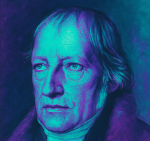
The good is the idea, or unity of the conception of the will with the particular will. Abstract right, well-being, the subjectivity of consciousness, and the contingency of external reality, are in their independent and separate existences superseded in this unity, although in their real essence they are contained in it and preserved. This unity is realized freedom, the absolute final cause of the world. Addition.-Every stage is properly the idea, but the earlier steps contain the idea only in more abstract form. The I, as person, is already the idea, although in its most abstract guise. The good is the idea more completely determined; it is the unity of the conception of will with the particular will. It is not something abstractly right, but has a real content, whose substance constitutes both right and well-being.
▼
Source
source
Georg Wilhelm Friedrich Hegel, Philosophy of Right translated by SW Dyde Queen's University Canada 1896 p. 123

4 months 3 weeks ago
It is the failing of a certain literature to believe that life is tragic because it is wretched. Life can be magnificent and overwhelming that is its whole tragedy. Without beauty, love, or danger it would be almost easy to live. And M. Sartre's hero does not perhaps give us the real meaning of his anguish when he insists on those aspects of man he finds repugnant, instead of basing his reasons for despair on certain of man's signs of greatness. The realization that life is absurd cannot be an end, but only a beginning. This is a truth nearly all great minds have taken as their starting point. It is not this discovery that is interesting, but the consequences and rules of action drawn from it.
4 months 2 days ago
I am very fond of truth, but not at all of martyrdom.
▼
Source
source
Letter to Jean le Rond d'Alembert, 8 February 1776

4 months 2 weeks ago
Since, of desires some are natural and necessary; others natural, but not necessary; and others neither natural nor necessary, but the offspring of false judgment; it must be the office of temperance to gratify the first class, as far as nature requires: to restrain the second within the bounds of moderation; and, as to the third, resolutely to oppose, and, if possible, entirely repress them.
3 months 4 weeks ago
But supposing one tries to live by Pantheistic philosophy? Does it lead to a complacent Hegelian optimism?
▼
Source
source
Pilgrim's Regress 132-133
4 months 2 weeks ago
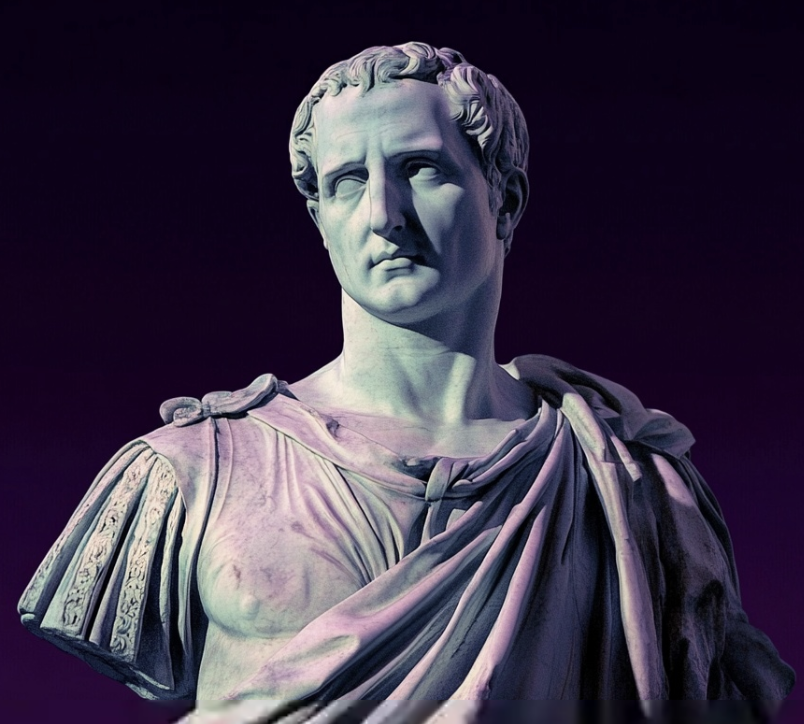
How long will men dare to call anything expedient that is not right? Can odium and infamy be of service to any empire, which ought to be supported by glory and by the good-will of its allies? I was often at variance even with my friend Cato. He seemed to me to guard the treasury and the revenues too obstinately, to refuse everything to the farmers of the revenue, and many things to our allies; while we ought to be generous to our allies, and to deal with the farmers of the revenue as leniently as we individually do with our own tenants, especially as the union of orders to which such a course would conduce is for the well-being of the state.
▼
Source
source
Book III, Sect. 22, as translated by Andrew P. Peabody
4 months 4 days ago
Man can, indeed, act contrarily to the decrees of God, as far as they have been written like laws in the minds of ourselves or the prophets, but against that eternal decree of God, which is written in universal nature, and has regard to the course of nature as a whole, he can do nothing.
▼
Source
source
Ch. 2, Of Natural Right

1 month 4 weeks ago
In tetrad form, the artefact is seen to be not netural or passive, but an active logos or utterance of the human mind or body that transforms the user and his ground.
▼
Source
source
p. 99
4 months 1 day ago
The method of "postulating" what we want has many advantages; they are the same as the advantages of theft over honest toil.
▼
Source
source
Ch. 7: Rational, Real and Complex Numbers

3 months 5 days ago
The First thing that strikes a traveler in the United States is the innumerable multitude of those who seek to emerge from their original condition; and the second is the rarity of lofty ambition to be observed in the midst of the universally ambitious stir of society. No Americans are devoid of a yearning desire to rise, but hardly any appear to entertain hopes of great magnitude or to pursue very lofty aims. All are constantly seeking to acquire property, power, and reputation.
▼
Source
source
Book Three, Chapter XIX.
1 month 4 weeks ago
World War III is a guerrilla information war with no division between military and civilian participation.
▼
Source
source
(p.66)
2 months 3 weeks ago
How can you know if you are in the truth? The criterion is simple enough: if others make a vacuum around you, there is not a doubt in the world that you are closer to the essential than they are.
3 weeks ago
He that works and does some Poem, not he that merely says one, is worthy of the name of Poet.
▼
Source
source
Introduction to Cromwell's Letters and Speeches (1845).

4 months 4 weeks ago
Books ... hold within them the gathered wisdom of humanity, the collected knowledge of the world's thinkers, the amusement and excitement built up by the imaginations of brilliant people. Books contain humor, beauty, wit, emotion, thought, and, indeed, all of life. Life without books is empty.
2 months 1 week ago
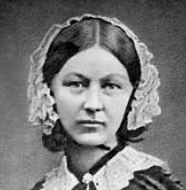
Perhaps it is not true to speak of God as a judge at all, or of his judgements. There does not seem to be really any evidence that His worlds are places of trial but rather schools, place of training, or that He is a judge but rather a Teacher, a Trainer, not in the imperfect sense in which men are teachers, but in the sense of His contriving and adapting His whole universe for one purpose of training every intelligent being to be perfect. ... I think God would not be the Almighty, the All-Wise, the All-Good, if he were the judge, in the sense that the evangelical and Roman Catholic Christians impute judgement to him. ... Our business is, I think, to understand, not to judge. What He does, as far as we know, to rule by law down to the most infinitesimally small portion of His universe, not to judge.
▼
Source
source
As quoted in Florence Nightingale's Theology: Collected Works of Florence Nightingale (2002) by Lynn McDonald, pps. 177-179
2 months 3 days ago
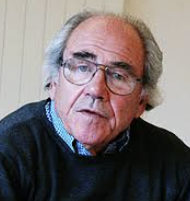
The simulacrum is never what hides the truth-it is truth that hides the fact that there is none. The simulacrum is true.
▼
Source
source
- Ecclesiastes "The Precession of Simulacra," p. 1
5 months 1 day ago
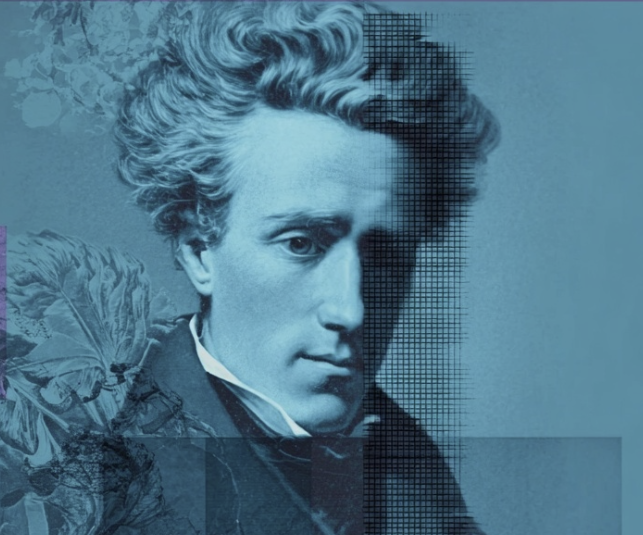
Not merely in the realm of commerce but in the world of ideas as well our age is organizing a regular clearance sale. Everything is to be had at such a bargain that it is questionable whether in the end there is anybody who will want to bid. Every speculative price-fixer who conscientiously directs attention to the significant march of modern philosophy, every Privatdocent, tutor, and student, every crofter and cottar goes further. Perhaps it would be untimely and ill-timed to ask them where they are going.

5 months 3 days ago
The man who does not wish to belong to the mass needs only to cease taking himself easily; let him follow his conscience, which calls to him: Be your self! All you are now doing, thinking, desiring, is not you yourself.

4 months 1 week ago
The only good histories are those that have been written by the persons themselves who commanded in the affairs whereof they write.
▼
Source
source
Book II, Ch. 10. Of Books

3 months 1 week ago
A fool is known by his Speech; and a wise man by Silence.
3 months 2 weeks ago
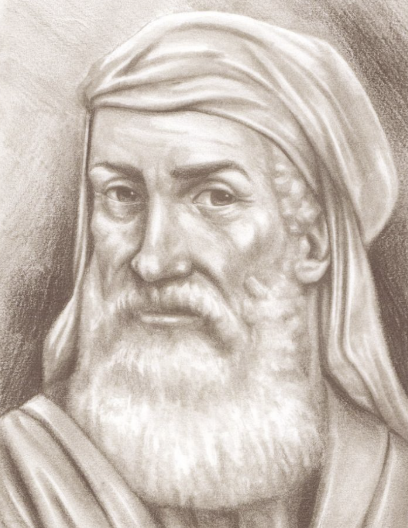
With deep roots Ether plunged into earth.
▼
Source
source
fr. 54
3 weeks ago
"Genius" (which means transcendent capacity of taking trouble, first of all).
▼
Source
source
Life of Fredrick the Great, Bk. IV, ch. 3 (1858-1865). Sometimes misreported as "Genius is an infinite capacity for taking pains";

3 weeks 5 days ago
The regular rhythms of factory production and its clear divisions of work time and nonwork time tend to decline in the realm of immaterial labor. Think how at the high end of labor market companies like Microsoft try to make the office more like home, offering free meals and exercise programs to keep employees in the office as many of their waking hours as possible. At the low end of the labor market workers have to juggle several job to make ends meet. Such practices always existed, but today, with the passage from Fordism to post-Fordism, the increased flexibility and mobility imposed on workers, and the decline of the stable, long-term employment typical of factory work, this tends to become the norm. At both the high end and low ends or labor market the new paradigm undermines the division between work time and the time of life.
▼
Source
source
145
4 months 1 day ago
The people who are regarded as moral luminaries are those who forego ordinary pleasures themselves and find compensation in interfering with the pleasures of others.
▼
Source
source
Ch. 8: Eastern and Western Ideals of Happiness
4 months 3 weeks ago
What will be left of the power of example if it is proved that capital punishment has another power, and a very real one, which degrades men to the point of shame, madness, and murder?
1 month 4 weeks ago
The young today cannot follow narrative but they are alert to drama. They cannot bear description but they love landscape and action.
▼
Source
source
Letter to Harold Adam Innis (14 March 1951), published in Essential McLuhan (1995), edited by Eric McLuhan and Frank Zingrone, p. 74
1 week 4 days ago
In recent times it has been fashionable to talk of the levelling of nations, of the disappearance of different races in the melting-pot of contemporary civilization. I do not agree with this opinion, but its discussion remains another question. Here it is merely fitting to say that the disappearance of nations would have impoverished us no less than if all men had become alike, with one personality and one face. Nations are the wealth of mankind, its collective personalities; the very least of them wears its own special colours and bears within itself a special facet of divine intention.
2 months 2 days ago
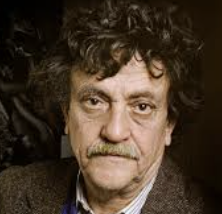
Literature is idiosyncratic arrangements in horizontal lines in only twenty-six symbols, ten arabic numbers, and about eight punctuation marks.
▼
Source
source
Public conversation with Lee Stringer, in Like Shaking Hands With God
Just now
The politicians have kept the environmental movement quiet by designating wilderness areas. And in the meantime, they've let corporations run completely out of control, and extraordinarily destructively, in the economic landscapes, without any acknowledgement at all that the natural world is out there just the same as it is in the parks.
3 months 3 weeks ago
It seems to me that, in every culture, I come across a chapter headed Wisdom. And then I know exactly what is going to follow: Vanity of vanities, all is vanity.
▼
Source
source
Conversation of 1934
4 months 2 weeks ago
The man of virtue makes the difficulty to be overcome his first business, and success only a subsequent consideration.

4 months 4 days ago
The sense of justice and injustice is not deriv'd from nature, but arises artificially... from education, and human conventions.
▼
Source
source
Part 2, 1.17
3 months ago
History is mere Empiricism; it has only facts to communicate, and all its proofs are founded upon facts alone. To attempt to rise to Primeval History on this foundation of fact, or to argue by this means how such or such a thing might have been, and then to take for granted that it has been so in reality,is to stray beyond the limits of History, and produce an a priori History; just as the Philosophy of Nature, referred to in our preceding lecture, endeavoured to find an a priori Science of Physics.
▼
Source
source
p. 140
CivilSimian.com created by AxiomaticPanic, CivilSimian, Kalokagathia