

1 week 6 days ago
Getting along with women, Knocking around with men, Having more credit than money, Thus one goes through the world.
▼
Source
source
Claudine von Villa Bella
6 days ago
The State's behavior is violence, and it calls its violence "law"; that of the individual, "crime." The state calls its own violence law, but that of the individual, crime.
▼
Source
source
As quoted in The Great Quotations (1960) by George Seldes, p. 664

4 months ago
To God, truly, the Giver and Architect of Forms, and it may be to the angels and higher intelligences, it belongs to have an affirmative knowledge of forms immediately, and from the first contemplation. But this assuredly is more than man can do, to whom it is granted only to proceed at first by negatives, and at last to end in affirmatives, after exclusion has been exhausted.
▼
Source
source
Aphorism XV
3 months 1 week ago
Ethics seems a morass which we have to cross, but get hopelessly bogged in when we make the attempt.
▼
Source
source
Chapter 6, A New Understanding Of Ethics, p. 167

3 months 3 weeks ago
The same good sense, that directs men in the ordinary occurrences of life, is not hearkened to in religious matters, which are supposed to be placed altogether above the cognizance of human reason.

1 month 2 weeks ago
The activity of art is... as important as the activity of language itself, and as universal.

2 weeks 2 days ago
A specter haunts the world and it is the specter of migration.
▼
Source
source
213
4 months 3 weeks ago
If the genius is an artist, then he accomplishes his work as art, but neither he nor his work of art has a telos outside him.

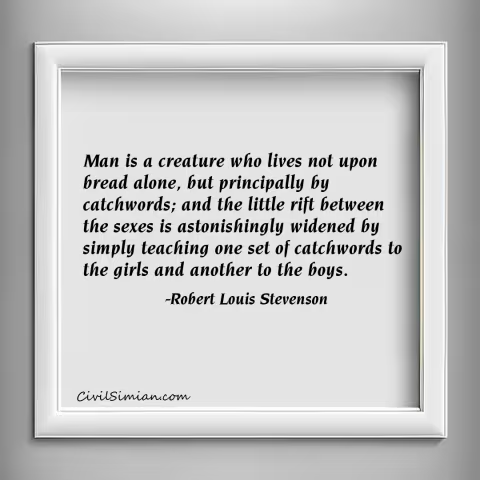

3 months 3 weeks ago
Whatever happens, I cannot be a silent witness to murder or torture. Anyone who is a partner in this is a despicable individual. I am sorry I cannot be moderate about it...
▼
Source
source
Quoted in The New York Times Biographical Service, Vol. I (1970), p. 294, said by Russell "in the spring of 1967"

4 months ago
As Christ had recommended peace during the whole of his life, mark with what anxiety he enforces it at the approach of his dissolution. Love one another, says he; as I have loved you, so love one another; and again, my peace I give unto you, my peace I leave you. Do you observe the legacy he leaves to those whom he loves? Is it a pompous retinue, a large estate, or empire? Nothing of this kind. What is it then? Peace he giveth, his peace he leaveth; peace, not only with our near connections, but with enemies and strangers!

3 months 3 weeks ago
Instead of deciding once in three or six years which member of the ruling class was to misrepresent the people in Parliament, universal suffrage was to serve the people, constituted in Communes, as individual suffrage serves every other employer in the search for the workmen and managers in his business.
▼
Source
source
The Civil War in France : "The Third Address", May 1871

3 months 3 weeks ago
Every artist was first an amateur.
▼
Source
source
Progress of Culture

1 week 5 days ago
All great peoples are conservative; slow to believe in novelties; patient of much error in actualities; deeply and forever certain of the greatness that is in law, in custom once solemnly established, and now long recognized as just and final.

3 months 3 weeks ago
I cannot imagine how the clockwork of the universe can exist without a clockmaker.
▼
Source
source
As attributed in More Random Walks in Science : An Anthology (1982) by Robert L. Weber, p. 65

6 days ago
"Although," said he [Cato], "all the world has fallen under one man's sway, although Caesar's legions guard the land, his fleets the sea, and Caesar's troops beset the city gates, yet Cato has a way of escape; with one single hand he will open a wide path to freedom. This sword, unstained and blameless even in civil war, shall at last do good and noble service: the freedom which it could not give to his country it shall give to Cato!
▼
Source
source
De Providentia (On Providence), 2.10; translation by John W. Basore

2 months 4 days ago
I have said that, in a sense, the parasites were a 'shadow' of man's cowardice and passivity. Their strength could increase in an atmosphere of defeat and panic, for it fed on human fear. In that case, the best way to combat them was to change the atmosphere to one of strength and purpose.
▼
Source
source
p. 188
6 days ago
We often want one thing and pray for another, not telling the truth even to the gods.
▼
Source
source
Line 2.

3 months 2 weeks ago
Existentialism is nothing else but an attempt to draw the full conclusions from a consistently atheistic position. Its intention is not in the least that of plunging men into despair. And if by despair one means as the Christians do - any attitude of unbelief, the despair of the existentialists is something different. Existentialism is not atheist in the sense that it would exhaust itself in demonstrations of the non-existence of God. It declares, rather, that even if God existed that would make no difference from its point of view. Not that we believe God does exist, but we think that the real problem is not that of His existence; what man needs is to find himself again and to understand that nothing can save him from himself, not even a valid proof of the existence of God. In this sense existentialism is optimistic. It is a doctrine of action, and it is only by self-deception, by confining their own despair with ours that Christians can describe us as without hope.
▼
Source
source
p. 56
2 months 4 days ago
In most men, the conscious and the unconscious being hardly ever make contact; consequently the conscious aim is to make himself as comfortable as possible with as little effort as possible. But there are other men, whom we have been calling, for convenience, 'Outsiders', whose conscious and unconscious being keep in closer contact, and the conscious mind is forever aware of the urge to care about 'more abundant life', and care less about comfort and stability and the rest of the notions that are so dear to the bourgeois.
▼
Source
source
Chapter Nine, Breaking the Circuit

2 months 1 week ago
Seek, therefore, thyself! But in finding oneself, does not one find one's own nothingness? ...Carlyle answers (Past and Present, book iii, chap. xi.). "The latest Gospel in the world is, Know thy work and do it. Know thyself: long enough has that poor self of thine tormented thee; thou wilt never get to know it, I believe! Think it thy business, this of knowing thyself; thou art an unknowable individual: know what thou canst work at; and work at it, like Hercules. That will be thine better plan." ...and what is my work? - without thinking about myself, is to love God. ...And on the other hand, in loving God in myself, am I not loving myself more than God, am I not loving myself in God?
3 months 1 week ago
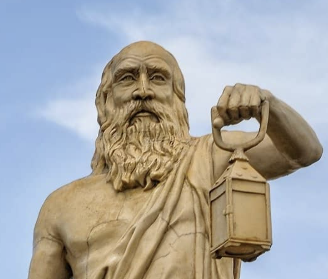
Asked where he came from, he said, "I am a citizen of the world."
▼
Source
source
Diogenes Laërtius, vi. 63

3 months 2 weeks ago
As to [General Douglas] Macarthur, I don't feel in a position to have clear opinions about anyone I know only from newspapers. You see, whenever they deal with anyone (or anything) I know myself, I find they're always a mass of lies & misunderstandings: so I conclude they're no better in the places where I don't know.
▼
Source
source
Letter to Mrs. Mary Van Deusen, April 30, 1951. Collected Letters of C. S. Lewis, vol. 3, "Narnia, Cambridge, and Joy", 1950-1963. p. 114.

2 months 3 weeks ago
In dreams you sometimes fall from a height, or are stabbed, or beaten, but you never feel pain unless, perhaps, you really bruise yourself against the bedstead, then you feel pain and almost always wake up from it. It was the same in my dream. I did not feel any pain, but it seemed as though with my shot everything within me was shaken and everything was suddenly dimmed, and it grew horribly black around me. I seemed to be blinded, and it benumbed, and I was lying on something hard, stretched on my back; I saw nothing, and could not make the slightest movement.
2 months 1 week ago
It is a great good fortune, as Stendhal said, for one "to have his passion as a profession."
▼
Source
source
p. 4
2 months 2 weeks ago
The transition of the subject-object relation to that of the I-Thou implies a passage of consciousness to a new sphere of existence, viz, the interval, betweenness or Zwischen; and this is a passage from thought to Umfassung.
▼
Source
source
The Levinas reader by Levinas, Emmanuel p. 73
1 week 5 days ago
No Dilettantism in this Mahomet; it is a business of Reprobation and Salvation with him, of Time and Eternity: he is in deadly earnest about it! Dilettantism, hypothesis, speculation, a kind of amateur-search for Truth, toying and coquetting with Truth: this is the sorest sin. The root of all other imaginable sins. It consists in the heart and soul of the man never having been open to Truth; - "living in a vain show." Such a man not only utters and produces falsehoods, but is himself a falsehood. The rational moral principle, spark of the Divinity, is sunk deep in him, in quiet paralysis of life-death.
3 months 3 weeks ago
The principal source of the harm done by the State is the fact that power is its chief end.
▼
Source
source
Principles of Social Reconstruction (1917), Ch. II: The State
2 months 2 weeks ago
Even if the whole world were to fall to pieces, the unity of the psyche would never be shattered. And the wider and more numerous the fissures on the surface, the more the unity is strengthened in the depths.
▼
Source
source
Civilization in Transition

3 months 3 weeks ago
If all mankind minus one, were of one opinion, and only one person were of the contrary opinion, mankind would be no more justified in silencing that one person, than he, if he had the power, would be justified in silencing mankind.
▼
Source
source
Ch. II: Of the Liberty of Thought and Discussion
3 months 1 week ago
On reaching Athens he fell in with Antisthenes. Being repulsed by him, because he never welcomed pupils, by sheer persistence Diogenes wore him out. Once when he stretched out his staff against him, the pupil offered his head with the words, "Strike, for you will find no wood hard enough to keep me away from you, so long as I think you've something to say."
▼
Source
source
Diogenes Laërtius, vi. 21,

4 months 2 weeks ago
It's better to bet on this life than on the next.
3 months 2 weeks ago
All that I know about my life, it seems, I have learned in books.

1 month 2 weeks ago
While people are engaged in creating a totally different world, they always form vivid images of the preceding world.
▼
Source
source
(p. 21)
2 months 1 week ago
Reason as an organ for perceiving the true nature of reality and determining the guiding principles of our lives has come to be regarded as obsolete.
▼
Source
source
p. 18.
3 months 1 week ago
With regard to the rather common general distinction between good and bad sex ..., bad sex is generally better than none at all. This should not be controversial: it seems to hold for other important matters, like food, music, literature, and society. In the end, one must choose from among the available alternatives, whether their availability depends on the environment or on one's own constitution. And the alternatives have to be fairly grim before it becomes rational to opt for nothing.
▼
Source
source
"Sexual Perversion" (1969), p. 52.
3 months 3 weeks ago
A metaphysics of morals is therefore indispensably necessary, not merely because of a motive to speculation - for investigating the source of the practical basic principles that lie a priori in our reason - but also because morals themselves remain subject to all sorts of corruption as long as we are without that clue and supreme norm by which to appraise them correctly...

2 months 3 weeks ago
Americans combine to give fêtes, found seminaries, build churches, distribute books, and send missionaries to the antipodes. Hospitals, prisons, and schools take shape in that way. Finally, if they want to proclaim a truth or propagate some feeling by the encouragement of a great example, they form an association. In every case, at the head of any new undertaking, where in France you would find the government or in England some territorial magnate, in the United States you are sure to find an association. I have come across several types of association in America of which, I confess, I had not previously the slightest conception, and I have often admired the extreme skill they show in proposing a common object for the exertions of very many and in inducing them voluntarily to pursue it.
▼
Source
source
Book Two, Chapter V.

3 months 2 weeks ago
An unexciting truth may be eclipsed by a thrilling falsehood.
▼
Source
source
Chapter 11 (p. 104)

2 months 3 weeks ago
There is no man alone, because every man is a Microcosm, and carries the whole world about him.
▼
Source
source
Section 10
2 months 1 week ago
Rohde became more and more firmly bound to the bourgeois world, its institutions and accepted opinions. ... The contrast between the two natures makes Rohde and Nietzsche exemplary representatives of two distinctive worlds. In their youth they both live in the realm of boundless possibilities and feel an affinity through the exuberance of their noble aspirations. Subsequently they go in opposite directions. Nietzsche remains young, leaving concrete reality as his task assumes existential import. Rohde grows old, bourgeois, stable, and skeptical. Hence courage is a fundamental trait in Nietzsche, plaintive self-irony in Rohde. ... Rohde retained the interests but not the attitudes of his youth; he looked to the world of the Greeks for the object of his contemplation rather than the norm of obligation.
▼
Source
source
pp. 61-62
2 months 6 days ago
Life is agid. Life is fulgid. Life is a burgeoning, a quickening of the dim primordial urge in the murky wastes of time. Life is what the least of us make most of us feel the least of us make the most of.
▼
Source
source
Quine's response in 1988 when asked his philosophy of life. (He invented the word "agid".) It makes up the entire Chapter 54 in Quine in Dialogue (2008).

2 months 2 weeks ago
By capitulating to life, this world has betrayed nothingness. . . . I resign from movement, and from my dreams. Absence! You shall be my sole glory. . . . Let "desire" be forever stricken from the dictionary, and from the soul! I retreat before the dizzying farce of tomorrows. And if I still cling to a few hopes, I have lost forever the faculty of hoping.
2 months 1 week ago
The most immediate result of this unbalanced specialisation has been that to-day, when there are more "scientists" than ever, there are much less "cultured" men than, for example, about 1750. And the worst is that with these turnspits of science not even the real progress of science itself is assured. For science needs from time to time, as a necessary regulator of its own advance, a labour of reconstitution, and, as I have said, this demands an effort towards unification, which grows more and more difficult, involving, as it does, ever-vaster regions of the world of knowledge. Newton was able to found his system of physics without knowing much philosophy, but Einstein needed to saturate himself with Kant and Mach before he could reach his own keen synthesis. Kant and Mach - the names are mere symbols of the enormous mass of philosophic and psychological thought which has influenced Einstein.
▼
Source
source
Chapter XII: The Barbarism Of "Specialisation"
1 month 2 weeks ago
Omnipresence has become an ordinary human dimension.
2 months 2 weeks ago
The idea does not belong to the soul; it is the soul that belongs to the idea.
▼
Source
source
Vol. I, par. 216
2 months 1 week ago
The general fellowship of our human situation has been rendered even more dubious than before, inasmuch as, though the old ties of caste have been loosened, a new restriction of the individual to some prescribed status in society is manifest. Less than ever, perhaps, is it possible for a man to transcend the limitations imposed by his social origins.
2 months 2 weeks ago
Lucidity is not necessarily compatible with life, actually not at all.

2 months 4 days ago
An ethos of freedom stops power from solidifying into domination and makes sure it remains an open game.
CivilSimian.com created by AxiomaticPanic, CivilSimian, Kalokagathia