


3 months 2 weeks ago
A totally unmystical world would be a world totally blind and insane.
▼
Source
source
Grey Eminence, 1940
3 months 3 weeks ago
It is an article of faith that Mary is Mother of the Lord and still a Virgin.
▼
Source
source
Weimar edition of Martin Luther's Works, English translation edited by J. Pelikan [Concordia: St. Louis], Vol. 11, 319-320
2 months 1 week ago
In solitude it is possible to love mankind; in the world, for one who knows the world, there can be nothing but secret or open war.


1 month 2 days ago
Lost time was like a run in a stocking. It always got worse.
▼
Source
source
The Steep Ascent

2 months 1 week ago
Now learn a parable of the fig tree; When her branch is yet tender, and putteth forth leaves, ye know that summer is near: So ye in like manner, when ye shall see these things come to pass, know that it is nigh, even at the doors. Verily I say unto you, that this generation shall not pass, till all these things be done. Heaven and earth shall pass away: but my words shall not pass away. But of that day and that hour knoweth no man, no, not the angels which are in heaven, neither the Son, but the Father. Take ye heed, watch and pray: for ye know not when the time is. For the Son of Man is as a man taking a far journey, who left his house, and gave authority to his servants, and to every man his work, and commanded the porter to watch. Watch ye therefore: for ye know not when the master of the house cometh, at even, or at midnight, or at the cockcrowing, or in the morning: Lest coming suddenly he find you sleeping. And what I say unto you I say unto all, Watch.
▼
Source
source
13:28-37 (KJV)

2 months 4 days ago
The safest general characterization of the European philosophical tradition is that it consists of a series of footnotes to Plato.
▼
Source
source
Pt. II, ch. 1, sec. 1.

3 months 2 weeks ago
Consciousness, then, does not appear to itself chopped up in bits ... A 'river' or a 'stream' are the metaphors by which it is most naturally described. In talking of it hereafter, let us call it the stream of thought, of consciousness, or of subjective life.
▼
Source
source
Ch. 9
4 months 2 weeks ago
And the true order of going, or being led by another, to the things of love, is to begin from the beauties of earth and mount upwards for the sake of that other beauty, using these steps only, and from one going on to two, and from two to all fair forms to fair practices, and from fair practices to fair notions, until from fair notions he arrives at the notion of absolute beauty, and at last knows what the essence of beauty is.
3 months 3 weeks ago
Fear of evil is greater than the evil itself.
▼
Source
source
Act III, scene xi
2 months 2 weeks ago
True anarchy is the generative element of religion. Out of the annihilation of all existing institutions she raises her glorious head, as the new foundress of the world.
▼
Source
source
English translation as quoted in The Dublin Review Vol. III (July-October 1837)

3 months 3 weeks ago
Once conform, once do what others do because they do it, and a kind of lethargy steals over all the finer senses of the soul.
4 months 2 weeks ago
When one merely states that one has many subscribers and keeps on saying it, then one gets many; just as when one sheep goes to water, the next one also goes, and when it is continually said of a large flock of sheep that they go hither and yon to water, then the rest must also go, so people believe that it must be the demand of the times, that for the sake of use and custom, they must also subscribe.
3 months 4 weeks ago
Only charity admitteth no excess. For so we see, aspiring to be like God in power, the angels transgressed and fell.
▼
Source
source
Book II, xxii

1 week 4 days ago
Cash Payment the sole nexus; and there are so many things which cash will not pay! Cash is a great miracle; yet it has not all power in Heaven, nor even on Earth. 'Supply and demand' we will honour also; and yet how many 'demands' are there, entirely indispensable, which have to go elsewhere than to the shops, and produce quite other than cash, before they can get their supply? On the whole, what astonishing payments does cash make in this world!
▼
Source
source
Ch. 7, Not Laissez-Faire.

2 months 6 days ago
And here, facing this supreme religious sacrifice, we reach the summit of the tragedy, the very heart of it - the sacrifice of our own individual consciousness upon the alter of the perfected Human Consciousness, of the Divine Consciousness. But is there really a tragedy? ...if we could succeed in understanding and feeling that we were going to enrich Christ, should we hesitate for a moment in surrendering ourselves to Him? Would the stream that flows into the sea, and feels in the freshness of its waters the bitterness of the salt of the ocean, wish to flow back to its source? would it wish to return to the cloud which drew it life from the sea? is it not joy to feel itself absorbed?

3 months 2 weeks ago
Reason is a harmonising, controlling force rather than a creative one.
▼
Source
source
Ch. 1: Mysticism and Logic
4 months 2 weeks ago
Capital punishment is the most premeditated of murders, to which no criminal's deed, however calculated, can be compared. For there to be an equivalency, the death penalty would have to punish a criminal who had warned his victim of the date on which he would inflict a horrible death on him and who, from that moment onward, had confined him at his mercy for months. Such a monster is not to be encountered in private life.
2 months 2 weeks ago
This method of mental training is, therefore, the immediate preparation for the moral; it completely destroys the root of immorality by never allowing sensuous enjoyment to become the motive. Formerly, that was the first motive to be stimulated and developed, because it was believed that otherwise the pupil could not be influenced or controlled at all.
▼
Source
source
General Nature of New Eduction contiunued p. 31
2 months 1 week ago
De Lubac discusses an atheism which means to suppress this searching, he says, "even including the problem as to what is responsible for the birth of God in human consciousness."
▼
Source
source
p. 45
2 months 4 days ago
No member of a crew is praised for the rugged individuality of his rowing.
▼
Source
source
"Harvard: The Future," The Atlantic Monthly, September 1936

2 months 2 weeks ago
Ethical ideas and sentiments have to be considered as parts of the phenomena of life at large. We have to deal with man as a product of evolution, with society as a product of evolution, and with moral phenomena as products of evolution.
▼
Source
source
Ch. 1, Introductory
Just now
The de-eroticization of the world, a companion to its disenchantment ... seems to result from a combination of causes-our democratic regime and its tendencies toward leveling and self-protection, a reductionist-materialist science that inevitably interprets eros as sex, and the atmosphere generated by "the death of God" and of the subordinate god, Eros.
▼
Source
source
p. 15.
1 week 5 days ago
Far from secularization inexorably leading to the death of religion, it has instead given birth to the search for new forms of religious life. The imminent victory of the Kingdom of Reason has never materialized. As a whole, mankind can never get rid of the need for religious self-identification: who am I, where did I come from, where do I fit in, why am I responsible, what does my life mean, how will I face death? Religion is a paramount aspect of human culture. Religious need cannot be excommunicated from culture by rationalist incantation. Man does not live by reason alone.
▼
Source
source
Interview with Nathan Gardels
4 weeks ago
Talking about dreams is like talking about movies, since the cinema uses the language of dreams; years can pass in a second and you can hop from one place to another. It's a language made of image. And in the real cinema, every object and every light means something, as in a dream.
▼
Source
source
As quoted in Rolling Stone no. 421
3 months 3 weeks ago
Men are most apt to believe what they least understand.
▼
Source
source
Book III, Ch. 11. Of Cripples
2 months 2 weeks ago
I am excluded from the possession of a determined object, not through the will of the other, but only through my own free-will. If I had not excluded myself, I should not be excluded. But I must exclude myself from something in virtue of the Conception of Rights.
▼
Source
source
** P. 182
4 months 2 days ago
What is it, in your opinion, to be a great nobleman? It is to be master of several objects that men covet, and thus to be able to satisfy the wants and the desires of many. It is these wants and these desires that attract them towards you, and that make them submit to you: were it not for these, they would not even look at you; but they hope, by these services... to obtain from you some part of the good which they desire, and of which they see that you have the disposal.
3 months 3 weeks ago
Nothing is so firmly believed as what we least know.
▼
Source
source
Ch. 31. Of Divine Ordinances, tr. Cotton, rev. W. Hazlitt, 1842
1 month 3 weeks ago
Photography and cinema contributed in large part to the secularization of history, to fixing it in its visible, "objective" form at the expense of the myths that once traversed it. Today cinema can place all its talent, all its technology in the service of reanimating what it itself contributed to liquidating. It only resurrects ghosts, and it itself is lost therein.
▼
Source
source
"History: A Retro Scenario," p. 48
3 months 3 weeks ago
Every other knowledge is harmful to him who does not have knowledge of goodness.
▼
Source
source
Ch. 25
4 months 4 days ago
Some of their faults people readily admit, but others not so readily.
▼
Source
source
Book II, ch. 21, 1
2 months 6 days ago
The most authentic Catholic ethic, monastic asceticism, is an ethic of eschatology, directed to the salvation of the individual soul rather than to the maintenance of society. And in the cult of virginity may there not perhaps be a certain obscure idea that to perpetuate ourselves in others hinders our own personal perpetuation?
4 months 2 weeks ago
You wanted God's ideas about what was best for you to coincide with your ideas, but you also wanted him to be the almighty Creator of heaven and earth so that he could properly fulfill your wish. And yet, if he were to share your ideas, he would cease to be the almighty Father.
2 months 2 days ago
The intellectual's spirit as an amateur can enter and transform the merely professional routine most of us go through into something much more lively and radical; instead of doing what one is supposed to do one can ask why one does it, who benefits from it, how can it reconnect with a personal project and original thoughts.
▼
Source
source
p. 83

3 months 3 weeks ago
What is prudence in the conduct of every private family, can scarce be folly in that of a great kingdom.
▼
Source
source
Chapter II, p. 490.

3 months 2 weeks ago
In its beginnings, the credit system sneaks in as a modest helper of accumulation and draws by invisible threads the money resources scattered all over the surface of society into the hands of individual or associated capitalists. But soon it becomes a new and formidable weapon in the competitive struggle, and finally it transforms itself into an immense social mechanism for the centralisation of capitals.
▼
Source
source
Vol. I, Ch. 25, Section 2, pg. 687.

3 months 4 weeks ago
The things that we can see with our physical eyes are mere shadows of reality. If they appear ugly and ill formed, then what must be the ugliness of the soul in sin, deprived of all light? The soul, like the body, can undergo transformation in appearance. In sin it appears as completely ugly to the beholder. In virtue it shines resplendently before God.

3 months 2 weeks ago
The Prodigal Son at least walked home on his own feet. But who can duly adore that Love which will open the high gates to a prodigal who is brought in kicking, struggling, resentful, and darting his eyes in every direction for a chance of escape?

3 months 2 weeks ago
I assert(1) There is no method of discovering a scientific theory.(2) There is no method of ascertaining the truth [i.e., verification] of a scientific hypothesis...(3) There is no method of ascertaining whether a hypothesis is 'probable', in the sense of the probability calculus.
3 months 3 weeks ago
We seek and offer ourselves to be gulled.
▼
Source
source
Book III, Ch. 11. Of Cripples
2 months 2 weeks ago
Poetry can be criticized only through poetry. A critique which itself is not a work of art, either in content as representation of the necessary impression in the process of creation, or through its beautiful form and in its liberal tone in the spirit of the old Roman satire, has no right of citizenship in the realm of art.
▼
Source
source
"Selected Aphorisms from the Lyceum (1797)", Dialogue on Poetry and Literary Aphorisms, Ernst Behler and Roman Struc, trans. (Pennsylvania University Press:1968) #117
1 month 2 days ago
The history of almost every civilization furnishes examples of geographical expansion coinciding with deterioration in quality.
▼
Source
source
Abridgement of Vols. 1-6 by D. C. Somervell

1 month 2 weeks ago
Speech structures the abyss of mental and acoustic space...it is a cosmic, invisible architecture of the human dark.
▼
Source
source
(p. 13)
3 months 2 weeks ago
Oh. Marx's love for Shakespeare! It is well known. Chris Hani shared the same passion. I have just learned this and I like the idea. Even though Marx more often quotes Timon of Athens, the Manifesto seems to evoke or convoke, right from the start, the first coming of the silent ghost, the apparition of the spirit that does not answer, on those ramparts of Elsinore which is then the old Europe.
▼
Source
source
Injunctions of Marx

2 months 2 weeks ago
When you have understood that nothing is, that things do not even deserve the status of appearances, you no longer need to be saved, you are saved, and miserable forever.
2 months 2 weeks ago
We dread the future only when we are not sure we can kill ourselves when we want to.
Just now
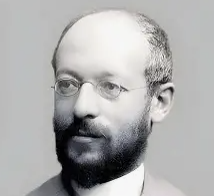
The social game has a deeper double meaning-that it is played not only in a society as its outward bearer but that with its help people actually "play" "society."
▼
Source
source
Sociability (1910) in On Individuality and Social Forms (1971), p. 134
3 months 2 weeks ago
History is a bath of blood.

3 months 2 weeks ago
The real nature of the present revealed itself: it was what exists, all that was not present did not exist.
CivilSimian.com created by AxiomaticPanic, CivilSimian, Kalokagathia