

2 months 3 days ago
Silent listening unites a people and creates community without communication.

3 months 3 weeks ago
Two conflicting types of educational systems spring from these conflicting aims. One is public and common to many, the other private and domestic. If you wish to know what is meant by public education, read Plato's Republic. Those who merely judge books by their titles take this for a treatise on politics, but it is the finest treatise on education ever written. In popular estimation the Platonic Institute stands for all that is fanciful and unreal. For my own part I should have thought the system of Lycurgus far more impracticable had he merely committed it to writing. Plato only sought to purge man's heart; Lycurgus turned it from its natural course. The public institute does not and cannot exist, for there is neither country nor patriot. The very words should be struck out of our language. The reason does not concern us at present, so that though I know it I refrain from stating it.

3 months 3 weeks ago
The bourgeoisie has stripped of its halo every occupation hitherto honoured and looked up to with reverent awe. It has converted the physician, the lawyer, the priest, the poet, the man of science, into its paid wage labourers.
▼
Source
source
Section 1, paragraph 14.
2 months 1 week ago
You do not attain to knowledge by remaining on the shore and watching the foaming waves, you must make the venture and cast yourself in, you must swim, alert and with all your force, even if a moment comes when you think you are losing consciousness; in this way, and in no other, do you reach anthropological insight.
▼
Source
source
p. 148

8 months 2 weeks ago
Survive in such a way that you avoid limiting others who are also trying to survive. We all live in limited systems. This is the core of ethics.

2 months 3 weeks ago
If it is not true, it is a good story.
▼
Source
source
as quoted in A Book of Quotations, Proverbs and Household Words (1907) edited by Sir William Gurney Benham

1 month 2 weeks ago
For tribal man, space was the uncontrollable mystery. For technological man it is time that occupies the same role.
▼
Source
source
p. 85; "Magic that Changes Mood")

3 months 2 weeks ago
Free-market fundamentalism trivializes the concern for public interest. It puts fear and insecurity in the hearts of anxiety-ridden workers. It also makes money-driven, poll-obsessed elected officials deferential to corporate goals of profit - often at the cost of the common good. ... The free-market fundamentalism that prevails in the United States today promotes the pervasive sleepwalking of the populace. People see that the false prophets are handsomely rewarded - with money, status and access to more power. ... We are experiencing the sad gangsterization of America - an unbridled grasp at power, wealth and status.
▼
Source
source
Cornel West: Democracy Matters in The Globalist

3 months 3 weeks ago
Thus the labour of a manufacture adds, generally, to the value of the materials which he works upon, that of his own maintenance, and of his masters profits. The labour of a menial servant, on the contrary, adds to the value of nothing.
▼
Source
source
Chapter III, p. 364 (see Proverbs 14-23 KJV).
1 day ago
I have no reason to suppose that Lenin gained his ideas from my books; but if that were true, I should be not a little proud of having contribute to the intellectual development of a man who seems to me to be at once the greatest theoretician of socialism since Marx and a statesman whose genius recalls that of Peter the Great.
▼
Source
source
For Lenin, Soviet Russia, Official Organ of The Russian Soviet Government Bureau, Vol. II, New York: NY, January-June 1920 (April 10, 1920), p. 356
3 months 2 weeks ago
If A were not allowed his better position, B would be even worse off than he is.
▼
Source
source
Chapter II, Section 17, pg. 103
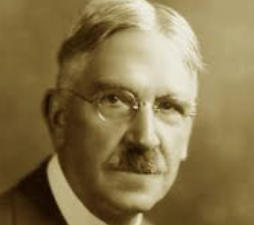
2 months 1 week ago
The ground of democratic ideas and practices is faith in the potentialities of individuals, faith in the capacity for positive developments if proper conditions are provided. The weakness of the philosophy originally advanced to justify the democratic movement was that it took individuality to be something given ready-made, that is, in abstraction from time, instead of as a power to develop.

3 months 3 weeks ago
We cannot suppose that an individual's thinking survives bodily death, since that destroys the organization of the brain and dissipates the energy which utilized the brain tracks. God and immortality, the central dogma of the Christian religion, find no support in science. But we in the West have come to think of them as the irreducible minimum of theology. No doubt people will continue to entertain these beliefs, because they are pleasant, just as it is pleasant to think ourselves virtuous and our enemies wicked. But for my part I cannot see any grounds for either. I do not pretend to be able to prove that there is no God. I equally cannot prove Satan is a fiction. The Christian God may exist, so might the Gods of Olympus, Ancient Egypt or Babylon; but no one of these hypotheses is more probable than any other. They lie outside the region of provable knowledge and there is no reason to consider any of them.
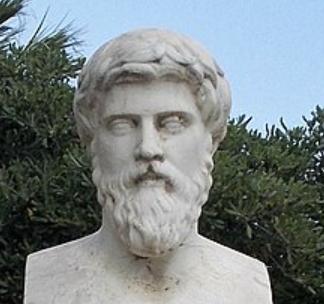
3 months 1 week ago
Pyrrhus said, "If I should overcome the Romans in another fight, I were undone."
▼
Source
source
47 Pyrrhus
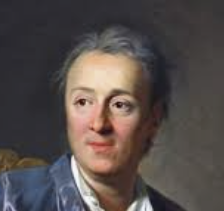
2 months 3 weeks ago
Man was born to live with his fellow human beings. Separate him, isolate him, his character will go bad, a thousand ridiculous affects will invade his heart, extravagant thoughts will germinate in his brain, like thorns in an uncultivated land.
▼
Source
source
The character Suzanne Simon, in La Religieuse [The Nun]
2 months 3 days ago
However, the disappearance of domination does not entail freedom. Instead, it makes freedom and constraint coincide. Thus, the achievement-subject gives itself over to compulsive freedom--that is, to the free constraint of maximizing achievement. Excess work and performance escalate into auto-exploitation.
▼
Source
source
Source: Page 11

4 months 1 week ago
Where without any change in circumstances the things held to be just by law are seen not to correspond with the concept of justice in actual practice, such laws are not really just; but wherever the laws have ceased to be advantageous because of a change in circumstances, in that case the laws were for that time just when they were advantageous for the mutual dealings of the citizens, and subsequently ceased to be just when they were no longer advantageous.

3 months 2 weeks ago
This is the contradiction of racism, colonialism, and all forms of tyranny: in order to treat a man like a dog, one must first recognize him as a man.
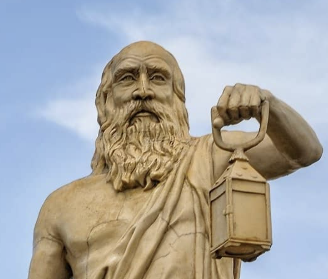
3 months 1 week ago
To the question what wine he found pleasant to drink, he replied, "That for which other people pay."
▼
Source
source
Diogenes Laërtius, vi. 54
2 months 3 weeks ago
Every attempt to refer chemical questions to mathematical doctrines must be considered, now and always, profoundly irrational, as being contrary to the nature of the phenomena. . . . but if the employment of mathematical analysis should ever become so preponderant in chemistry (an aberration which is happily almost impossible) it would occasion vast and rapid retrogradation....
3 months 2 weeks ago
Our colleges ought to have lit up in us a lasting relish for the better kind of man, a loss of appetite for mediocrities, and a disgust for cheapjacks. We ought to smell, as it were, the difference of quality in men and their proposals when we enter the world of affairs about us.
▼
Source
source
The Social Value of the College-Bred
2 months 1 week ago
It is the sphere farthest removed from the concreteness of society which may show most clearly the extent of the conquest of thought by society.
▼
Source
source
p. 104

3 weeks 6 days ago
Rather than trying to escape violence, human beings more often become habituated to it. History abounds with long conflicts - the Thirty Years' War in early seventeenth-century Europe, the Time of Troubles in Russia, twentieth-century guerrilla conflicts - in which continuous slaughter has been accepted as normal. Famously adaptable, the human animal quickly learns to live with violence and soon comes to find satisfaction in it.
▼
Source
source
In the Puppet Theatre: Roof Gardens, Feathers and Human Sacrifice (p. 80)
2 weeks 3 days ago
The principles of the good society call for a concern with an order of being--which cannot be proved existentially to the sense organs--where it matters supremely that the human person is inviolable, that reason shall regulate the will, that truth shall prevail over error.
▼
Source
source
p. 127

2 months 1 week ago
May we not say, perhaps, that the evil man is annihilated because he wished to be annihilated, or that he did not wish strongly enough to eternalize himself because he was evil? May we say that it is not believing in the other life which causes a man to be good, but rather that being good causes him believe in it? And what is being good and being evil? These states belong to the sphere of ethics, not of religion; or rather, does not the doing good though being evil pertain to ethics, and the being good [forgivable] though doing evil, to religion?

2 months 3 days ago
Behind man lies the abyss, nothingness; the Outsider knows this; it is his business to sink claws of iron into life to grasp it tighter than the indifferent bourgeois, to build, to Will, in spite of the abyss.
▼
Source
source
Chapter Seven, The Great Synthesis…

3 months 3 weeks ago
The auspices for philosophy are bad if, when proceeding ostensibly on the investigation of truth, we start saying farewell to all uprightness, honesty and sincerity, and are intent only on passing ourselves off for what we are not. We then assume, like those three sophists [Fichte, Schelling and Hegel], first a false pathos, then an affected and lofty earnestness, then an air of infinite superiority, in order to impose where we despair of ever being able to convince.
▼
Source
source
E. Payne, trans. (1974) Vol. 1, p. 22
2 months 1 week ago
Behold, a sower went forth to sow; And when he sowed, some seeds fell by the way side, and the fowls came and devoured them up: Some fell upon stony places, where they had not much earth: and forthwith they sprung up, because they had no deepness of earth: And when the sun was up, they were scorched; and because they had no root, they withered away. And some fell among thorns; and the thorns sprung up, and choked them: But other fell into good ground, and brought forth fruit, some an hundredfold, some sixtyfold, some thirtyfold. Who hath ears to hear, let him hear.
▼
Source
source
13:3-9 (KJV)

3 months 3 weeks ago
Paradise on earth is where I am.
▼
Source
source
Le Mondain, 1736

2 months 2 weeks ago
The unfortunate thing about public misfortunes is that everyone regards himself as qualified to talk about them.
2 months 6 days ago
Fate and freedom alike play a part in history; and there are times, as in wars and revolutions, when fate is the stronger of the two. Freedom - the freedom of man and of nations - could never have been the origin of two world wars. These latter were brought about by fate, which exercises its power owing to the weakness and decline of freedom and of the creative spirit of man. Almost all contemporary political ideologies, with their characteristic tendency to state-idolatry, are likewise largely a product of two world wars, begotten as they are of the inexorability's of fate.
▼
Source
source
p. 32
4 months 2 weeks ago
476 ... is usually taken as the date of the "fall of the Roman Empire." The date, however, is a false one. No one at this period of time considered that the Roman Empire had "fallen." Indeed, it still existed and was the most powerful realm in Europe. Its capital was at Constantinople and the Emperor was Zeno. It is only because we ourselves are culturally descended from the Roman west, that we tend to ignore the continued existence of the Roman Empire in the east.
3 months 3 weeks ago
The "social contract," in the only sense in which it is not completely mythical, is a contract among conquerors, which loses its raison d'être if they are deprived of the benefits of conquest.
▼
Source
source
Ch. 12: Powers and forms of governments
2 weeks ago
All truths are easy to understand once they are discovered; the point is to discover them.
▼
Source
source
As quoted in Angels in the workplace: stories and inspirations for creating a new world of work (1999) by Melissa Giovagnoli
6 days ago
Now, on the contrary, when every one is to cultivate himself into man, condemning a man to machine-like labor amounts to the same thing as slavery. If a factory-worker must tire himself to death twelve hours and more, he is cut off from becoming man. Every labor is to have the intent that the man be satisfied. His labor is nothing taken by itself, has no object in itself, is nothing complete in itself; he labors only into another's hands, and is used (exploited) by this other.
▼
Source
source
Cambridge 1995, p. 108
1 month 4 weeks ago
The criterion of efficiency dictates that choice of alternatives which produces the largest result for the given application of resources.
▼
Source
source
Simon (1945, p. 179); As cited in: Harry M. Johnson (1966) Sociology: A Systematic Introduction. p. 287.
3 months 2 weeks ago
The particularity (Jeweiligkeit) of the places and their manifoldness are grounded in space, and the particularity of the time points is grounded in time. That basic characteristic of the thing, that essential determination of the thingness of the thing to be this one (je dieses), is grounded in the essence of space and time. Our question "What is a thing?" includes, therefore, the questions "What is space?" and "What is time?" It is customary The particularity (Jeweiligkeit) os the places.
▼
Source
source
p. 16
3 months 2 weeks ago
Most of what happens actually is forgotten.
▼
Source
source
Ch. 16
2 weeks ago
We do not have and cannot have any means of discovering whether or not we are carried along in a uniform motion of translation.
▼
Source
source
L'état actuel et l'avenir de la physique mathematique
2 months ago
If countries were named after the words you first hear when you go there, England would have to be called Damn It.
▼
Source
source
F 33

2 months 2 weeks ago
It is provable both that the historical sequence was, in its main outlines, a necessary one; and that the causes which determined it apply to the child as to the race. ...as the mind of humanity placed in the midst of phenomena and striving to comprehend them has, after endless comparisons, speculations, experiments, and theories, reached its present knowledge of each subject by a specific route; it may rationally be inferred that the relationship between mind and phenomena is such as to prevent this knowledge from being reached by any other route; and that as each child's mind stands in this same relationship to phenomena, they can be accessible to it only through the same route. Hence in deciding upon the right method of education, an inquiry into the method of civilization will help to guide us.

1 week 4 days ago
The "imagination that shudders at the Hell of Dante," is not that the same faculty, weaker in degree, as Dante's own? No one but Shakspeare can embody, out of Saxo Grammaticus, the story of Hamlet as Shakspeare did: but every one models some kind of story out of it; every one embodies it better or worse. We need not spend time in defining. Where there is no specific difference, as between round and square, all definition must be more or less arbitrary. A man that has so much more of the poetic element developed in him as to have become noticeable, will be called Poet by his neighbors.
3 months 3 weeks ago
Such taxes [upon the necessaries of life], when they have grown up to a certain height, are a curse equal to the barrenness of the earth and the inclemency of the heavens; and yet it is in the richest and most industrious countries that they have been most generally imposed. No other countries could support so great a disorder.
▼
Source
source
Chapter II, paragraph 36, p. 500.
3 months 2 weeks ago
Inferiority is always with us, and merciless scorn of it is the keynote of the military temper.

2 months 6 days ago
During the last quarter of a century all the authority associated with the function of spiritual guidance ... has seeped down into the lowest publications. ... Between a poem by Valéry and an advertisement for a beauty cream promising a rich marriage to anyone who used it there was at no point a breach of continuity. So as a result of literature's spiritual usurpation a beauty cream advertisement possessed, in the eyes of little village girls, the authority that was formerly attached to the words of priests.
▼
Source
source
"Morality and literature," p. 164
2 months 3 days ago
Art is naturally concerned with man in his existential aspect, not in his scientific aspect. For the scientist, questions about man's stature and significance, suffering and power, are not really scientific questions; consequently he is inclined to regard art as an inferior recreation. Unfortunately, the artist has come to accept the scientist's view of himself. The result, I contend, is that art in the twentieth century - literary art in particular - has ceased to take itself seriously as the primary instrument of existential philosophy. It has ceased to regard itself as an instrument for probing questions of human significance. Art is the science of human destiny. Science is the attempt to discern the order that underlies the chaos of nature; art is the attempt to discern the order that underlies the chaos of man. At its best, it evokes unifying emotions; it makes the reader see the world momentarily as a unity.
▼
Source
source
p. 214
1 month 4 weeks ago
On another possible world or another planet a word might be associated with much the same stereotype and much the same criteria as our term 'water', but it might designate XYZ and not H₂O. At least this could happen in a prescientific era. And it would not follow that XYZ was water; it would only follow that XYZ could look like water, taste like water, etc. What 'water' refers to depends on the actual nature of the paradigms, not just on what is in our heads.
▼
Source
source
Language and Reality
6 days ago
Yes, so it is that knowledge itself must die in order to blossom forth again in death as will; the freedom of thought, belief, and conscience, these wonderful flowers of three centuries will sink back into the lap of mother earth so that a new freedom, the freedom will, will be nourished with its most noble juices.
▼
Source
source
p. 19
1 month 1 week ago
I am an American, Chicago born - Chicago, that somber city - and go at things as I have taught myself, free-style, and will make the record in my own way: first to knock, first admitted; sometimes an innocent knock, sometimes a not so innocent.
▼
Source
source
Ch. 1 (opening line)
CivilSimian.com created by AxiomaticPanic, CivilSimian, Kalokagathia