


3 months 1 week ago
Time is the soul of this world.
▼
Source
source
As quoted in Wisdom (2002) by Desmond MacHale

2 months 3 weeks ago
Friends, the soil is poor, we must sow seeds in plenty for us to garner even modest harvests.
▼
Source
source
Motto

3 months 4 weeks ago
Beauty is the main positive form of the aesthetic assimilation of reality, in which aesthetic ideal finds it direct expression...
▼
Source
source
About Beauty
2 months 1 week ago
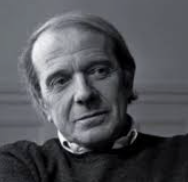
Instead of gambling on the eternal impossibility of the revolution and on the fascist return of a war-machine in general, why not think that a new type of revolution is in the course of becoming possible, and that all kinds of mutating, living machines conduct wars, are combined and trace out a plane of consistence which undermines the plane of organization of the World and the States?
▼
Source
source
from Dialogues with Claire Parnet, p. 147 [emphasis in original].
2 months 2 days ago
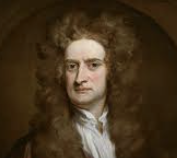
But it is not to be conceived that mere mechanical causes could give birth to so many regular motions: since the Comets range over all parts of the heavens, in very eccentric orbits. For by that kind of motion they pass easily through the orbs of the Planets, and with great rapidity; and in their aphelions, where they move the slowest, and are detain'd the longest, they recede to the greatest distances from each other, and thence suffer the least disturbance from their mutual attractions.
3 months 2 weeks ago
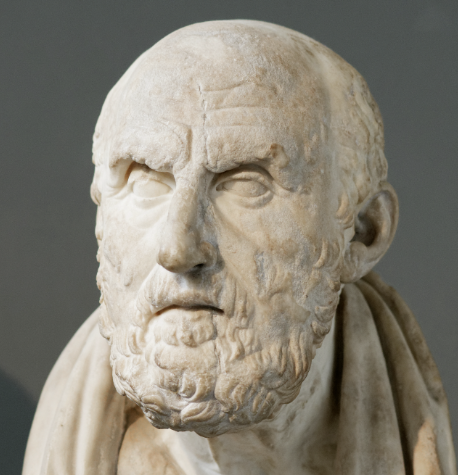
Living virtuously is equal to living in accordance with one's experience of the actual course of nature.
▼
Source
source
As quoted by Diogenes Laërtius, vii. 182.

2 months 1 week ago
The fact of the religious vision, and its history of persistent expansion, is our one ground for optimism. Apart from it, human life is a flash of occasional enjoyments lighting up a mass of pain and misery, a bagatelle of transient experience.
▼
Source
source
Ch. 12: "Religion and Science", p. 268
2 months 1 week ago
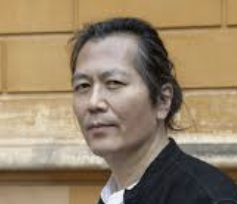
The smartphone seems to be a playground, but it is a digital panopticon.

2 months 4 weeks ago
It is the nature of all greatness not to be exact.
1 week 2 days ago
In recent times it has been fashionable to talk of the levelling of nations, of the disappearance of different races in the melting-pot of contemporary civilization. I do not agree with this opinion, but its discussion remains another question. Here it is merely fitting to say that the disappearance of nations would have impoverished us no less than if all men had become alike, with one personality and one face. Nations are the wealth of mankind, its collective personalities; the very least of them wears its own special colours and bears within itself a special facet of divine intention.

3 months 4 weeks ago
Lightly men talk of saying what they mean. Often when he was teaching me to write in Greek the Fox would say, "Child, to say the very thing you really mean, the whole of it, nothing more or less or other than what you really mean; that's the whole art and joy of words." A glib saying. When the time comes to you at which you will be forced at last to utter the speech which has lain at the center of your soul for years, which you have, all that time, idiot-like, been saying over and over, you'll not talk about joy of words. I saw well why the gods do not speak to us openly, nor let us answer. Till that word can be dug out of us, why should they hear the babble that we think we mean? How can they meet us face to face till we have faces?
▼
Source
source
Orual


1 month 4 weeks ago
The inherent contradiction of human life has now reached an extreme degree of tension: on the one side there is the consciousness of the beneficence of the law of love, and on the other the existing order of life which has for centuries occasioned an empty, anxious, restless, and troubled mode of life, conflicting as it does with the law of love and built on the use of violence. This contradiction must be faced, and the solution will evidently not be favourable to the outlived law of violence, but to the truth which has dwelt in the hearts of men from remote antiquity: the truth that the law of love is in accord with the nature of man. But men can only recognize this truth to its full extent when they have completely freed themselves from all religious and scientific superstitions and from all the consequent misrepresentations and sophistical distortions by which its recognition has been hindered for centuries.
▼
Source
source
VI

3 months 4 weeks ago
Let me never fall into the vulgar mistake of dreaming that I am persecuted whenever I am contradicted.
▼
Source
source
November 8, 1838

3 months 2 weeks ago
If you are well-to-do and can maintain your household, love your wife in your home according to good custom...Make her happy while you are alive, for she is land profitable to her lord.
▼
Source
source
Maxim no. 21.

4 months 3 weeks ago
For anyone who is alone, without God and without a master, the weight of days is dreadful. Hence one must choose a master, God being out of style.

3 months 4 weeks ago
Men remain in their present low and primitive condition; but if they should feel the influence of the spring of springs arousing them, they would of necessity rise to a higher and more ethereal life.
▼
Source
source
p. 49
3 months 2 weeks ago
The pleasure is only for a little moment, and it [passes] like a dream, and a man at the end thereof finds death through knowing it.
▼
Source
source
Maxim no. 18. Translated by Sir E. A. Wallis Budge, Teaching Of Amenem Apt Son Of Kanekht (London: Martin Hopkinson and Company Ltd, 1924) p. 58
1 month 3 weeks ago
We no longer have to resort to superstition when faced with the deep problems: Is there a meaning to life? What are we for? What is man?
▼
Source
source
Ch. 1. Why Are People?

3 months 3 weeks ago
I know. I know that I shall never again meet anything or anybody who will inspire me with passion. You know, it's quite a job starting to love somebody. You have to have energy, generosity, blindness. There is even a moment, in the very beginning, when you have to jump across a precipice: if you think about it you don't do it. I know I'll never jump again.

3 months 3 days ago
Scepticism is the first step towards truth. Variant: A thing is not proved just because no one has ever questioned it. What has never been gone into impartially has never been properly gone into. Hence skepticism is the first step toward truth. It must be applied generally, because it is the touchstone.
▼
Source
source
As quoted in The Anchor Book of French Quotations with English Translations (1963) by Norbert Gutermam
2 months 4 weeks ago
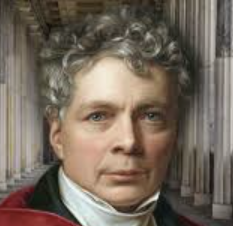
They think of the philosopher as holding the ideal or subjective in one hand and the real or objective in the other and then have him strike the palms of his hands together so that one abrades the other. The product of this abrasion is the Absolute.
▼
Source
source
P. 12

4 months ago
If, while hurrying ostensibly to the temple of truth, we hand the reins over to our personal interests which look aside at very different guiding stars, for instance at the tastes and foibles of our contemporaries, at the established religion, but in particular at the hints and suggestions of those at the head of affairs, then how shall we ever reach the high, precipitous, bare rock whereon stands the temple of truth?
▼
Source
source
E. Payne, trans. (1974) Vol. 1, pp. 22-23

3 months 4 weeks ago
The art of being wise is the art of knowing what to overlook.
▼
Source
source
Ch. 22
2 months 2 weeks ago
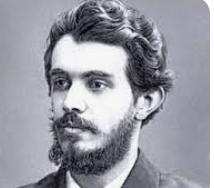
Morally, it is wrong to suppose the source of evil is outside oneself, that one is a vessel of holiness running over with virtue. Such a disposition is the best soil for a hateful and cruel fanaticism. It is as wrong to impute every wickedness to Jews, Freemasons, "intellectuals," as it is to blame all crimes on the bourgeoisie, the nobility, and the powers that were. No; the root of evil is in me as well, and I must take my share of the responsibility and the blame. That was true before the revolution and it is true still.
▼
Source
source
p. 128

1 week 6 days ago
Of course, however, the living voice and the intimacy of a common life will help you more than the written word. You must go to the scene of action, first, because men put more faith in their eyes than in their ears, and second, because the way is long if one follows precepts, but short and helpful, if one follows patterns.
▼
Source
source
Line 5. Alternate translation: Teaching by precept is a long road, but short and beneficial is the way by example.
2 months 1 week ago
Rituals are symbolic acts. They represent, and pass on, the values and orders on which a community is based. They bring forth a community without communication; today, however, communication without community prevails.
3 months 2 weeks ago
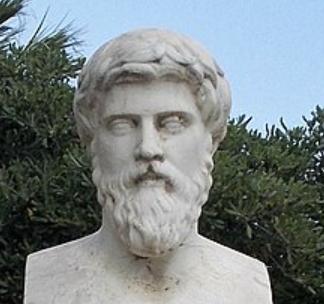
There are two sentences inscribed upon the Delphic oracle, hugely accommodated to the usages of man's life: "Know thyself," and "Nothing too much;" and upon these all other precepts depend.

2 months 3 weeks ago
Why tempt ye me, ye hypocrites? Shew me the tribute money.
▼
Source
source
22:18-19 (KJV)
2 months 2 weeks ago
We do not obtain the most precious gifts by going in search of them but by waiting for them. Man cannot discover them by his own powers, and if he sets out to seek for them he will find in their place counterfeits of which he will be unable to discern falsity.
4 months 2 weeks ago
Even then [at the time of Peter's speech in Acts 2] it was the last days; how much more so now, when there must still be as much time till the end of the world as has passed since the ascension of the Lord! We do not know the end of the world, because it is not for us to know the times or the seasons that the Father has set in his power; but we know that, like the apostles, we live in the last times, in the last days, in the last hour. Those who lived after the apostles and before us were more in what we call the last times, and we ourselves are in them even more than they; those who will come after us will be so much more, till one gets to those who will be, if one may say so, the last of the last, and finally till that day, the very last, of which the Lord means to speak when he said, "And I will raise him up on the last day". How far are we from that day? That is an impenetrable secret.

2 months 3 weeks ago
But, braggart demons, we postpone our end: how could we renounce the display of our freedom, the show of our pride?
1 week ago
Some subjects are so serious that one can only joke about them.
▼
Source
source
As quoted in The Genius of Science: A Portrait Gallery (2000) by Abraham Pais, p. 24
3 months 3 days ago
I believe in God, although I live very happily with atheists... It is very important not to mistake hemlock for parsley; but not at all so to believe or not in God.
▼
Source
source
As quoted in Against the Faith (1985) by Jim Herrick, p. 75
1 month 1 week ago
Getting rid of predation isn't a matter of moralising. A python who kills a small human child isn't morally blameworthy. Nor is a lion who hunts and kills a terrified zebra. In both cases, the victim suffers horribly. But the predator lacks the empathetic and mind-reading skills needed to understand the implications of what s/he is doing. Some humans still display a similar deficit. From the perspective of the victim, the moral status or (lack of) guilty intent of a human or nonhuman predator is irrelevant. Either way, to stand by and watch the snake asphyxiate a child would be almost as morally abhorrent as to kill the child yourself. So why turn this principle on its head with beings of comparable sentience to human infants and toddlers? With power comes complicity.
▼
Source
source
"The Radical Plan to Phase out Earth's Predatory Species", io9, 30 Jul. 2014

3 months 3 weeks ago
Ignorance is not a simple lack of knowledge but an active aversion to knowledge, the refusal to know, issuing from cowardice, pride or laziness of mind.
▼
Source
source
Principle attributed to Popper by Ryszard Kapiscinski in New York Times obituary, 1995.
1 month 4 weeks ago
Honest work is much better than a mansion.
▼
Source
source
p. 82
1 month 3 weeks ago
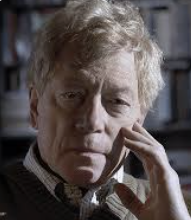
The core of common culture is religion. Tribes survive and flourish because they have gods, who fuse many wills into a single will, and demand and reward the sacrifices on which social life depends.
▼
Source
source
"Culture and Cult" (p. 5)

4 months 1 week ago
War is sweet to them that know it not.
▼
Source
source
Though Erasmus quoted this proverb in Latin at the start of his essay Bellum [War], and it is sometimes attributed to him, it originates with the Greek poet Pindar
2 months 2 weeks ago
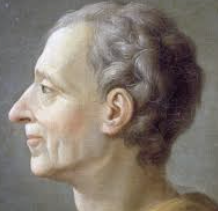
No tyranny is more cruel than the one practiced in the shadow of the laws and under color of justice - when, so to speak, one proceeds to drown the unfortunate on the very plank by which they had saved themselves.
▼
Source
source
See Chap. XIV of Considérations sur les causes de la grandeur des Romains et de leur décadence. Considerations on the Causes of the Greatness of the Romans and their Decline (1734), p. 89.
1 week 6 days ago
He knows his own strength; he knows that he was born to carry burdens.
1 month 1 week ago
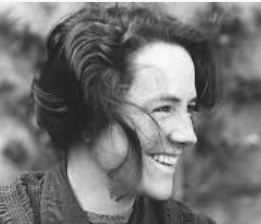
By and large, mothers and housewives are the only workers who do not have regular time off. They are the great vacationless class.

4 months 3 weeks ago
Weisinger, a couple of years ago, made up the following story: "Isaac Asimov was asked how Superman could fly faster than the speed of light, which was supposed to be an absolute limit. To this Asimov replied, 'That the speed of light is a limit is a theory; that Superman can travel faster than light is a fact.'"
3 months 4 weeks ago
I believe in Christianity as I believe that the sun has risen. Not only because I see it, but because by it I see everything else.
▼
Source
source
"Is Theology Poetry?", 1945

4 months ago
To pray to God is to flatter oneself that with words one can alter nature.
▼
Source
source
Notebooks, c.1735-c.1750
1 week 6 days ago
Besides, he who follows another not only discovers nothing but is not even investigating.
2 weeks 4 days ago
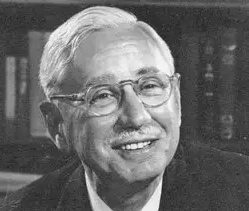
Space, subjectively, is the coexistence of perceptions - perceiving two objects at once.
▼
Source
source
Ch. 6 : Our Souls
1 week 6 days ago
And this is the vote which [Cato] casts concerning them both: "If Caesar wins, I slay myself; if Pompey, I go into exile." What was there for a man to fear who, whether in defeat or in victory, had assigned to himself a doom which might have been assigned to him by his enemies in their utmost rage? So he died by his own decision.
CivilSimian.com created by AxiomaticPanic, CivilSimian, Kalokagathia