

2 months 2 weeks ago
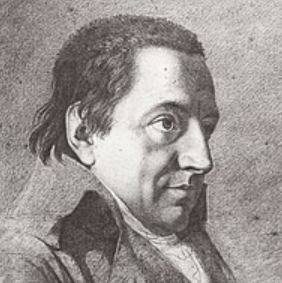
What, then, is the animal? First of all, a system of plant-souls. The unity of those plant-souls, which unity nature itself produces, is the soul of the animal. Its world is therefore partly that of the plants - its nourishment, for instance, it receives partly through synthesis from vegetable, and through analysis from animal nature - and partly that of the animals, whereof we shall speak directly. Each product of nature is an organically in-itself completed totality in space, like the plant. Hence, the unknown x which we are looking for must also be such a whole or totality, and in so far it must also have a principle of organization, a sphere and central point of this organization ; in short, the same which we have called the soul of the plant, which thus remains common to both. ... The animal is a system of plant-souls, and the plant is a separated, isolated part of an animal. Both reciprocally affect each other.
▼
Source
source
P. 502, 503, 504

4 months 3 weeks ago
Who is the most moral man? First, he who obeys the law most frequently, who ... is continually inventive in creating opportunities for obeying the law. Then, he who obeys it even in the most difficult cases. The most moral man is he who sacrifices the most to custom. ... Self-overcoming is demanded, not on account of any useful consequences it may have for the individual, but so that hegemony of custom and tradition shall be made evident.
1 month 3 weeks ago
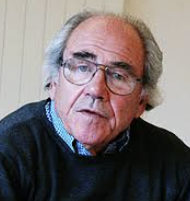
"If he is this good at acting crazy, it's because he is." Nor is military psychology mistaken in this regard: in this sense, all crazy people simulate, and this lack of distinction is the worst kind of subversion. It is against this lack of distinction that classical reason armed itself in all its categories. But it is what today again outflanks them, submerging the principle of truth.
▼
Source
source
"The Precession of Simulacra," p. 4

4 months 2 weeks ago
What, exactly, have the errors of exegesis and philosophy done in order to confuse Christianity, and how have they confused Christianity? Quite briefly and categorically, they have simply forced back the sphere of paradox-religion into the sphere of aesthetics, and in consequence have succeeded in brings Christian terminology to such a pass that terms which, so long as they remain within their sphere, are qualitative categories, can be put to almost any use as clever expressions.

3 weeks 4 days ago
An old fairy tale has it that science began with the rejection of superstition. In fact it was the rejection of rationalism that gave birth to scientific inquiry. Ancient and medieval thinkers believed the world could be understood by applying first principles. Modern science begins when observation and experiment come first, and the results are accepted even when what they show seems to be impossible.
▼
Source
source
Foreword: Two Attempts to Cheat Death (pp. 5-6)

3 months 2 weeks ago
If we must absolutely mention this state of affairs, I suggest that we call ourselves "absent", that is more proper.
▼
Source
source
Estelle, refusing to use the word "dead", Act 1, sc. 5

2 months 2 weeks ago
Boredom is a larval anxiety; depression, a dreamy hatred.

2 months 2 weeks ago
Brothers, love is a teacher; but one must know how to acquire it, for it is hard to acquire, it is dearly bought, it is won slowly by long labour. For we must love not only occasionally, for a moment, but for ever. Everyone can love occasionally, even the wicked can.
▼
Source
source
Book VI, Chapter 3: Conversations and Exhortations of Father Zossima
2 months 2 weeks ago
Saints live in flames; wise men, next to them.

2 months 2 weeks ago
Example is the school of mankind, and they will learn at no other.
▼
Source
source
No. 1, volume v, p. 331

3 months 2 weeks ago
If you make the same guess often enough it ceases to be a guess and becomes a Scientific Fact. This is the inductive method.
▼
Source
source
Pilgrim's Regress 22
1 month 4 days ago
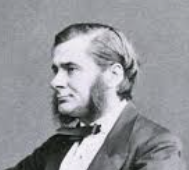
Even in the important matter of cranial capacity, Men differ more widely from one another than they do from the Apes; while the lowest Apes differ as much, in proportion, from the highest, as the latter does from Man.
▼
Source
source
Ch.2, p. 95
3 months 2 weeks ago
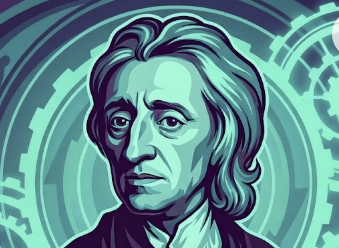
Freedom of Men under Government is, to have a standing Rule to live by, common to every one of that Society, and made by the Legislative Power erected in it; a Liberty to follow my own Will in all things, where the Rule prescribes not; and not to be subject to the inconstant, uncertain, unknown, Arbitrary Will of another Man: as Freedom of Nature is, to be under no other restraint but the Law of Nature.
▼
Source
source
Second Treatise of Civil Government, Ch. IV, sec. 21
1 month 4 weeks ago
Be wary of passing the judgment: obscure. To find something obscure poses no difficulty: elephants and poodles find many things obscure.
▼
Source
source
E 36
1 month 2 weeks ago
But perhaps the rest of us could have separate classes in science appreciation, the wonder of science, scientific ways of thinking, and the history of scientific ideas, rather than laboratory experience.
3 months 2 weeks ago
"Then those people are right who say that Heaven and Hell are only states of mind?" "Hush," he said sternly. "Do not blaspheme. Hell is a state of mind - ye never said a truer word. And every state of mind, left to itself, every shutting up of the creature within the dungeon of its own mind - is, in the end, Hell. But Heaven is not a state of mind. Heaven is reality itself. All that is fully real is Heavenly."
▼
Source
source
Ch. 9
2 months 1 week ago
The philosopher will ask himself ... if the criticism we are now suggesting is not the philosophy which presses to the limit that criticism of false gods which Christianity has introduced into our history.
▼
Source
source
p. 47

2 months 4 days ago
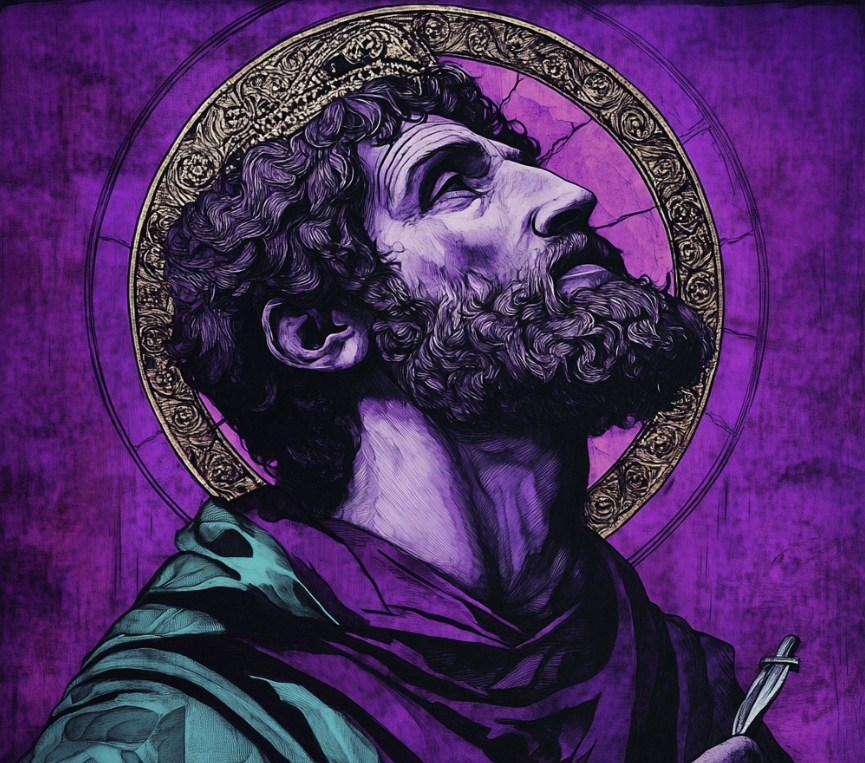
The collective is the object of all idolatry, this it is which chains us to the earth. In the case of avarice: gold is of the social order. In the case of ambition: power is of the social order. Science and art are full of the social element also. And love? Love is more or less of an exception: that is why we can go to God through love, not through avarice and ambition.
▼
Source
source
p. 121
4 months 4 days ago
When the Head and members are despised, then the whole Christ is despised, for the whole Christ, Head and body, is that just man against whom deceitful lips speak iniquity (Ps. 30:19).
▼
Source
source
p.425
4 months 4 days ago
Since love grows within you, so beauty grows. For love is the beauty of the soul.

1 week 2 days ago
He who first shortened the labor of copyists by device of movable types was disbanding hired armies, and cashiering most kings and senates, and creating a whole new democratic world: he had invented the art of printing.
▼
Source
source
Bk. I, ch. 5.

3 months ago
The soul of man is divided into three parts, intelligence, reason, and passion. Intelligence and passion are possessed by other animals, but reason by man alone.
▼
Source
source
As reported by Alexander Polyhistor, and Diogenes Laërtius in Lives and Opinions of Eminent Philosophers, "Pythagoras", Sect. 30, in the translation of C. D. Yonge
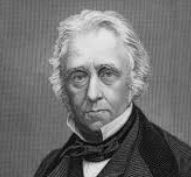
1 month 1 week ago
It is now time for us to pay a decent, a rational, a manly reverence to our ancestors, not by superstitiously adhering to what they, in other circumstances, did, but by doing what they, in our circumstances, would have done.
▼
Source
source
Speech in the House of Commons on the Reform Bill (2 March 1831), quoted in Speeches of the Right Honourable T. B. Macaulay, M.P. (1854), p. 8

3 months 2 weeks ago
Need and struggle are what excite and inspire us; our hour of triumph is what brings the void. Not the Jews of the captivity, but those of the days of Solomon's glory are those from whom the pessimistic utterances in our Bible come.
▼
Source
source
"Is Life Worth Living?"

3 months 2 weeks ago
Money often costs too much.
▼
Source
source
Wealth
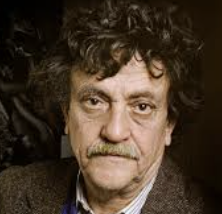
1 month 2 weeks ago
During the Vietnam War, which lasted longer than any war we've ever been in -- and which we lost -- every respectable artist in this country was against the war. It was like a laser beam. We were all aimed in the same direction. The power of this weapon turns out to be that of a custard pie dropped from a stepladder six feet high.
▼
Source
source
Vonnegut at 80 Interview with David Hoppe Alternet
3 months 2 weeks ago
I am almost inclined to set it up as a canon that a children's story which is enjoyed only by children is a bad children's story. The good ones last. A waltz which you can like only when you are waltzing is a bad waltz.
▼
Source
source
"On Three Ways of Writing for Children" (1952) - in Of Other Worlds: Essays and Stories (1967), p. 24
1 week 6 days ago
Friendship ... receives its real sustenance from an equality that, to proceed without a limp, must have its two limbs equal.
▼
Source
source
Part 3

3 months 1 week ago
In situations of sparse resources along with degraded self-images and depoliticized sensibilities, one avenue for poor people is in existential rebellion and anarchic expression. The capacity to produce social chaos is the last resort of desperate people.
▼
Source
source
The Role of Law in Progressive Politics in Keeping Faith: Philosophy and Race in America
1 month 1 day ago
Rollers on the beach, wind in the pines, the slow flapping of herons across sand dunes, drown out the hectic rhythms of city and suburb, time tables and schedules. One falls under their spell, relaxes, stretches out prone. One becomes, in fact, like the element on which one lies, flattened by the sea; bare, open, empty as the beach, erased by today's tides of all yesterday's scribblings.
2 months 3 weeks ago
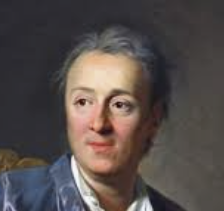
Jews are angry and brutish people, vile and vulgar men, slaves worthy of the yoke [Talmudism] which you bear... Go, take back your books and remove yourselves from me. [ The Talmud ] taught the Jews to steal the goods of Christians, to regard them as savage beasts, to push them over the precipice... to kill them with impunity and to utter every morning the most horrible imprecations against them.
▼
Source
source
See The Jews: A History, Second Edition, by John Efron, Steven Weitzman and Matthias Lehmann
3 months 3 weeks ago
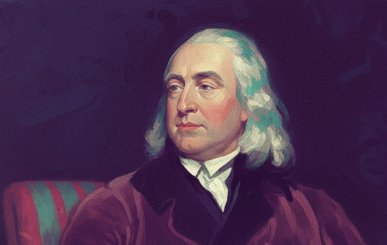
Nature has placed mankind under the governance of two sovereign masters, pain and pleasure. It is for them alone to point out what we ought to do, as well as to determine what we shall do. On the one hand the standard of right and wrong, on the other the chain of causes and effects, are fastened to their throne. They govern us in all we do, in all we say, in all we think: every effort we can make to throw off our subjection, will serve but to demonstrate and confirm it. In words a man may pretend to abjure their empire: but in reality he will remain subject to it all the while. The principle of utility recognizes this subjection, and assumes it for the foundation of that system, the object of which is to rear the fabric of felicity by the hands of reason and of law. Systems which attempt to question it, deal in sounds instead of sense, in caprice instead of reason, in darkness instead of light.
▼
Source
source
Ch. 1: Of the Principle of Utility

3 months 2 weeks ago
The idea that the poor should have leisure has always been shocking to the rich.
▼
Source
source
Ch. 1: In Praise of Idleness
3 weeks 4 days ago
Terror is not now, if it ever was, something that comes to us from outside. It is a part of the society in which we live. Both liberals and neoconservatives believe terrorism can be dealt with by removing its causes. The truth is less reassuring. Al-Qaeda has mutated into a decentralised, often locally based type of apocalyptic terrorism and, in this new guise, seems to be acquiring a formidable momentum.
▼
Source
source
"Look out for the enemy within," The Observer

3 months 2 weeks ago
Talent works for money and fame; the motive which moves genius to productivity is, on the other hand, less easy to determine. It isn't money, for genius seldom gets any. It isn't fame: fame is too uncertain and, more closely considered, of too little worth. Nor is it strictly for its own pleasure, for the great exertion involved almost outweighs the pleasure. It is rather an instinct of a unique sort by virtue of which the individual possessed of genius is impelled to express what he has seen and felt in enduring works without being conscious of any further motivation. It takes place, by and large, with the same sort of necessity as a tree brings forth fruit, and demands of the world no more than a soil on which the individual can flourish.
▼
Source
source
Vol. 2 "On Philosophy and the Intellect" as translated in Essays and Aphorisms (1970), as translated by R. J. Hollingdale
3 months 2 weeks ago
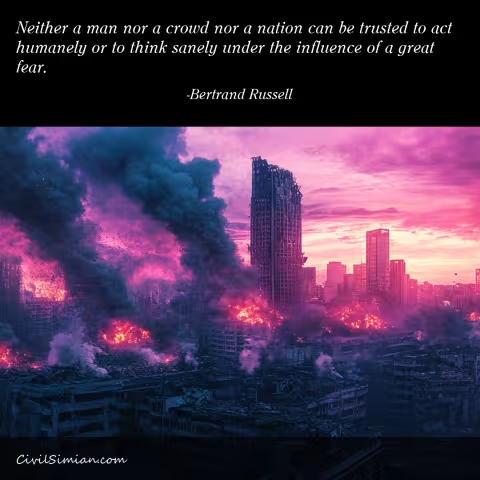
There is one very serious defect to my mind in Christ's moral character, and that is that He believed in hell. I do not myself feel that any person who is really profoundly humane can believe in everlasting punishment.
▼
Source
source
"The Moral Problem"

3 months 1 week ago
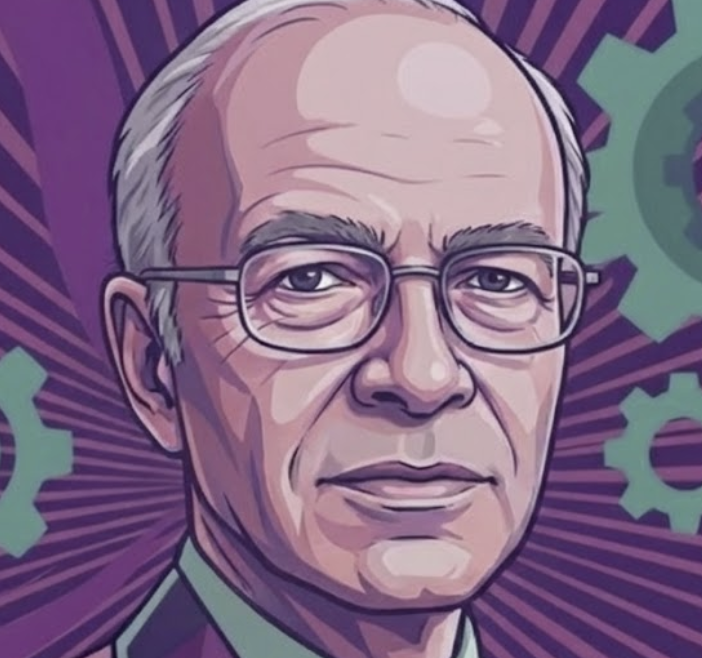
If evolution is a struggle for survival, why hasn't it ruthlessly eliminated altruists, who seem to increase another's prospects of survival at the cost of their own?
▼
Source
source
Chapter 1, The Origins Of Altruism, p. 5
3 months 1 week ago
The dissimulation of the woven texture can in any case take centuries to undo its web: a web that envelops a web, undoing the web for centuries; reconstituting it too as an organism, indefinitely regenerating its own tissue behind the cutting trace, the decision of each reading. There is always a surprise in store for the anatomy or physiology of any criticism that might think it had mastered the game, surveyed all the threads at once, deluding itself, too, in wanting to look at the text without touching it, without laying a hand on the "object," without risking- which is the only chance of entering into the game, by getting a few fingers caught- the addition of some new thread.
▼
Source
source
Plato's Pharmacy

2 months 2 days ago
Open, honest, truth-telling individuals value privacy. We all need spaces where we can be alone with thoughts and feelings - where we can experience healthy psychological autonomy and can choose to share when we want to.
▼
Source
source
All About Love: New Visions
3 months 2 weeks ago
A European who goes to New York and Chicago sees the future... when he goes to Asia he sees the past.
▼
Source
source
Ch. 8: Eastern and Western Ideals of Happiness
3 months 2 weeks ago
Belief in God and a future life makes it possible to go through life with less of stoic courage than is needed by skeptics. A great many young people lose faith in these dogmas at an age at which despair is easy, and thus have to face a much more intense unhappiness than that which falls to the lot of those who have never had a religious upbringing. Christianity offers reasons for not fearing death or the universe, and in so doing it fails to teach adequately the virtue of courage. The craving for religious faith being largely an outcome of fear, the advocates of faith tend to think that certain kinds of fear are not to be deprecated. In this, to my mind, they are gravely mistaken. To allow oneself to entertain pleasant beliefs as a means of avoiding fear is not to live in the best way. In so far as religion makes its appeal to fear, it is lowering to human dignity.
▼
Source
source
p. 107
3 months 2 weeks ago
To be independent of public opinion is the first formal condition of achieving anything great or rational whether in life or in science. Great achievement is assured, however, of subsequent recognition and grateful acceptance by public opinion, which in due course will make it one of its own prejudices.
▼
Source
source
Sect. 318, as translated by T. M. Knox,, 1952
2 months 1 week ago
There is no cure for birth and death save to enjoy the interval.
▼
Source
source
"War Shrines"

3 days ago
See the foundations of the most celebrated cities hardly now to be discerned; they were ruined by anger. See deserts extending for many miles without an inhabitant: they have been desolated by anger.
4 months 4 days ago
Once for all, then, a short precept is given thee: Love, and do what thou wilt: whether thou hold thy peace, through love hold thy peace; whether thou cry out, through love cry out; whether thou correct, through love correct; whether thou spare, through love do thou spare: let the root of love be within, of this root can nothing spring but what is good.
▼
Source
source
Tractatus VII, 8 Latin: "dilige et quod vis fac."; falsely often: "ama et fac quod vis." Translation by Professor Joseph Fletcher: Love and then what you will, do.
3 days ago
Imagine that nature is saying to us: "Those things of which you complain are the same for all. I cannot give anything easier to any man, but whoever wishes will make things easier for himself." In what way? By equanimity. You must suffer pain, and thirst, and hunger, and old age too, if a longer stay among men shall be granted you; you must be sick, and you must suffer loss and death.
2 months ago
I believe that the fundamental alternative for man is the choice between "life" and "death"; between creativity and destructive violence; between reality and illusions; between objectivity and intolerance; between brotherhood-independence and dominance-submission.
2 months 4 days ago
We live in a nightmare of falsehoods, and there are few who are sufficiently awake and aware to see things as they are. Our first duty is to clear away illusions and recover a sense of reality. If war should come, it will do so on account of our delusions, for which our hag-ridden conscience attempts to find moral excuses. To recover a sense of reality is to recover the truth about ourselves and the world in which we live, and thereby to gain the power of keeping this world from flying asunder.
▼
Source
source
p. 80
3 months 2 weeks ago
Out from the heart of Nature rolled The burdens of the Bible old.
▼
Source
source
The Problem, st. 2
CivilSimian.com created by AxiomaticPanic, CivilSimian, Kalokagathia