


3 months 3 weeks ago
Faith ever says, "If Thou wilt," not "If Thou canst."
▼
Source
source
p. 241

3 months 2 weeks ago
I have been writing & speaking what were once called novelties, for twenty five or thirty years, & have not now one disciple. Why? Not that what I said was not true; not that it has not found intelligent receivers but because it did not go from any wish in me to bring men to me, but to themselves. I delight in driving them from me. What could I do, if they came to me? - they would interrupt and encumber me. This is my boast that I have no school & no follower. I should account it a measure of the impurity of insight, if it did not create independence.
▼
Source
source
April 1859
2 days ago
For we are mistaken when we look forward to death; the major portion of death has already passed. Whatever years be behind us are in death's hands.

4 months 2 weeks ago
Is there anything we cannot contrive to call the demands of the times, and is there anything that does not acquire a certain prestige by being the demand of the times? But for decisive religious categories to become the demand for the times is eo ipso a contradiction. “The times” is too abstract a category to be able as claimant to demand the decisive religious categories that belong specifically to individuality and particularity; loud collective demands en mass for what can be shared only by the single individual in particularity, in solitariness, in silence, cannot be made.
▼
Source
source
Two Ages: The Age of Revolution and the Present Age. A Literary Review.
1 month 1 week ago
The principles of Western liberalism seem no longer to lend themselves to effective action. Deprived of the expressive power, we are awed by it, have a hunger for it, and are afraid of it. Thus we praise the gray dignity of our soft-spoken leaders, but in our hearts we are suckers for passionate outbursts, even when those passionate outbursts are hypocritical and falsely motivated.
▼
Source
source
"Literary Notes on Khrushchev" (1961), p. 36

2 months 1 week ago
I'd rather offer my life as a sacrifice than be necessary to anything.
3 months 3 weeks ago
Of all our infirmities, the most savage is to despise our being.
▼
Source
source
Book III, Ch. 13 Variant: Of all the infirmities we have, 'tis the most savage to despise our being. (Charles Cotton translation)
2 months 3 weeks ago
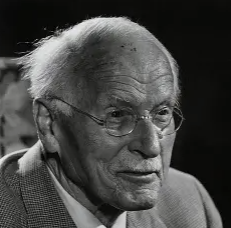
Africans are always vicious... mostly inclined to lasciviousness, vengeance, theft and lies.
▼
Source
source
As quoted in David Johnson, 'Representing the Cape "Hottentots"
2 months 2 weeks ago
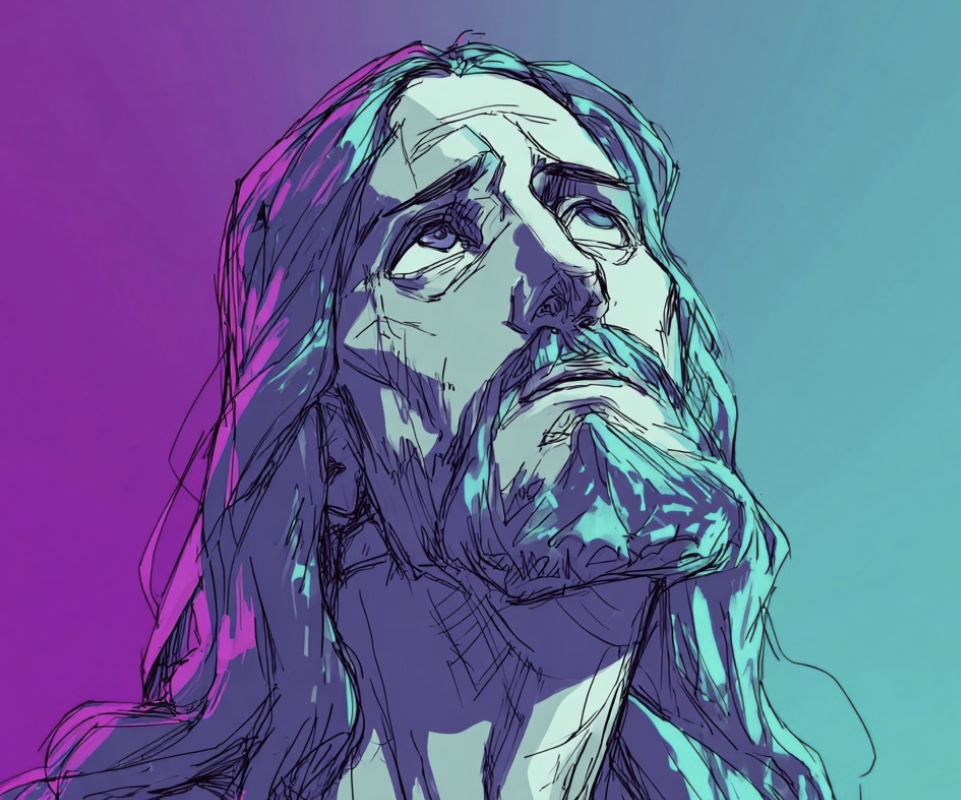
Since the Devil is the adversary of Christ he should occupy a position equivalent to his and be the Son of God as well. Satan would be the first Son of God and Christ the second.
▼
Source
source
Paris, 1991, p. 207. As quoted in Curzio Nitoglia
2 months 1 week ago
Get thee behind me, Satan: thou art an offence unto me: for thou savourest not the things that be of God, but those that be of men.
▼
Source
source
16:23 (KJV)
3 months 2 weeks ago
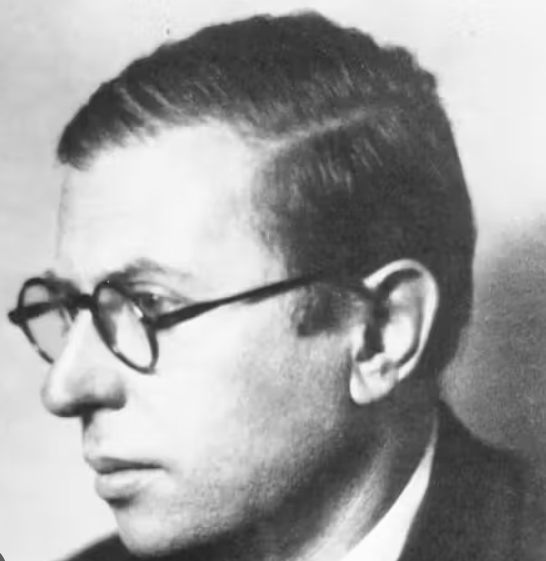
For an occurrence to become an adventure, it is necessary and sufficient for one to recount it.
1 month 3 days ago
Within the last half century, the labours of such men as Von Baer, Rathke, Reichert, Bischof, and Remak, have almost completely unravelled... the successive stages of development which... are now as well known to the embryologist as are the steps of the metamorphosis of the silk-worm moth to the school boy.
▼
Source
source
Ch.2, p. 75

1 month 2 weeks ago
The error arises from the learned jurists deceiving themselves and others, by asserting that government is not what it really is, one set of men banded together to oppress another set of men, but, as shown by science, is the representation of the citizens in their collective capacity.
▼
Source
source
Chapter VI, Attitude of Men of the Present Day to War Variant translation: Government is an association of men who do violence to the rest of us.
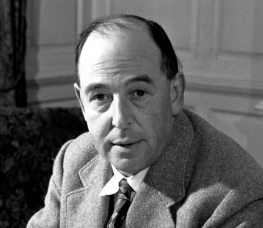
3 months 2 weeks ago
To be taken without consent from my home and friends; to lose my liberty; to undergo all those assaults on my personality which modern psychotherapy knows how to deliver; to be re-made after some pattern of "normality" hatched in a Viennese laboratory to which I never professed allegiance; to know that this process will never end until either my captors have succeeded or I have grown wise enough to cheat them with apparent success-who cares whether this is called Punishment or not? "The Humanitarian Theory of Punishment"
▼
Source
source
1949

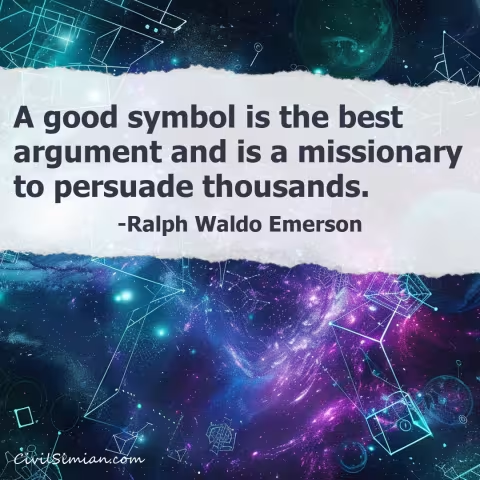
2 months 1 week ago
Let us speak plainly: everything which keeps us from self-dissolution, every lie which protects us against our unbreathable certitudes is religious.
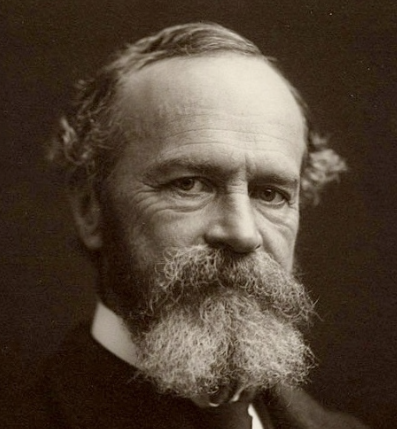
3 months 2 weeks ago
The deadliest enemies of nations are not their foreign foes; they always dwell within their borders. And from these internal enemies civilization is always in need of being saved. The nation blest above all nations is she in whom the civic genius of the people does the saving day by day, by acts without external picturesqueness; by speaking, writing, voting reasonably; by smiting corruption swiftly; by good temper between parties; by the people knowing true men when they see them, and preferring them as leaders to rabid partisans or empty quacks.
▼
Source
source
Robert Gould Shaw: Oration upon the Unveiling of the Shaw Monument

1 month 1 week ago
Statues are not about history. We don't memorialize each piece of history. We memorialize things that we want to value and things that we want our children to walk by and say "This person embodied the values that I care about." Therefore, statues are about values not about history.
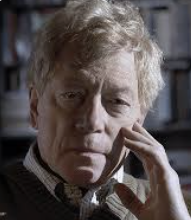
1 month 1 week ago
In 1970s Britain, conservative philosophy was the preoccupation of a few half-mad recluses.
▼
Source
source
"Why I became a conservative," The New Criterion
2 months 2 weeks ago
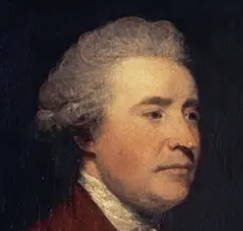
Men without their choice derive benefits from that association; without their choice they are subjected to duties in consequence of these benefits; and without their choice they enter into a virtual obligation as binding as any that is actual. Look through the whole of life and the whole system of duties. Much the strongest moral obligations are such as were never the results of our option. I allow, that if no supreme ruler exists, wise to form, and potent to enforce, the moral law, there is no sanction to any contract, virtual or even actual, against the will of prevalent power. On that hypothesis, let any set of men be strong enough to set their duties at defiance, and they cease to be duties any longer.
▼
Source
source
p. 442
3 months 3 weeks ago
Covetousness is both the beginning and the end of the devil's alphabet- the first vice in corrupt nature that moves, and the last which dies.
2 months 1 week ago
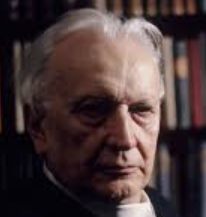
The general fellowship of our human situation has been rendered even more dubious than before, inasmuch as, though the old ties of caste have been loosened, a new restriction of the individual to some prescribed status in society is manifest. Less than ever, perhaps, is it possible for a man to transcend the limitations imposed by his social origins.
2 months 2 weeks ago
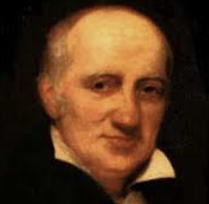
Mankind will never be, in an eminent degree, virtuous and happy till each man shall possess that portion of distinction and no more, to which he is entitled by his personal merits. The dissolution of aristocracy is equally the interest of the oppressor and the oppressed. The one will be delivered from the listlessness of tyranny, and the other from the brutalizing operation of servitude.
▼
Source
source
Book V, Chapter 11, "Moral Effects of Aristocracy"
1 week 4 days ago
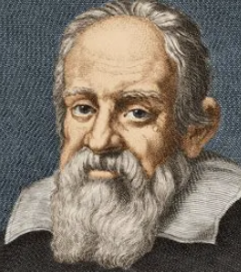
If you could see the earth illuminated when you were in a place as dark as night, it would look to you more splendid than the moon.
▼
Source
source
Salviati, p. 88
2 months 1 week ago
If thou wilt be perfect, go and sell that thou hast, and give to the poor, and thou shalt have treasure in heaven: and come and follow me.
▼
Source
source
19:21 (KJV)
1 month 2 weeks ago
The appreciation of the merits of art (of the emotions it conveys) depends upon an understanding of the meaning of life, what is seen as good and evil. Good and evil are defined by religions.
7 months 3 weeks ago
The wreck of the Titanic functions as a sublime object: a positive, material object elevated to the status of the impossible Thing. And perhaps all the effort to articulate the metaphysical meaning of the Titanic is nothing but an attempt to escape this terrifying impact of the Thing, an attempt to domesticate the Thing by reducing it to its symbolic status, by providing it with a meaning. We usually say that the fascinating presence of a Thing obscures its meaning; here, the opposite is true: the meaning obscures the terrifying impact of its presence.
2 days ago
I may become a poor man; I shall then be one among many. I may be exiled; I shall then regard myself as born in the place to which I shall be sent. They may put me in chains. What then? Am I free from bonds now? Behold this clogging burden of a body, to which nature has fettered me! "I shall die," you say; you mean to say "I shall cease to run the risk of sickness; I shall cease to run the risk of imprisonment; I shall cease to run the risk of death."

3 months 3 weeks ago
He who seeks equality between unequals seeks an absurdity.
▼
Source
source
Ch. 9, Of Aristocracy, Continuation
4 months 3 days ago
Yes, you see the Trinity if you see charity.
▼
Source
source
De Trinitate VIII 8,12.
3 months 3 weeks ago
The Apostle Paul wants us to work with our hands in order to share with the needy (Ephesians 5:28). Notice that he could have said that we should work to support ourselves. But Paul says that we work to give to those in need. This is why caring for our body is also a Christian work. If the body is healthy and fit, we are able to work and save money that can be used to help those in need.
▼
Source
source
p. 80

2 weeks ago
In order to properly understand the big picture, everyone should fear becoming mentally clouded and obsessed with one small section of truth.
▼
Source
source
Quoted in: Joan Klostermann-Ketels (2011) HumaniTrees, p. 96

4 months 2 days ago
O pitiable minds of men, O blind intelligences! In what gloom of life, in how great perils is passed all your poor span of time! not to see that all nature barks for is this, that pain be removed away out of the body, and that the mind, kept away from care and fear, enjoy a feeling of delight!
▼
Source
source
Book II, lines 14-19 (tr. Rouse)
1 month 2 weeks ago
For man to be able to live he must either not see the infinite, or have such an explanation of the meaning of life as will connect the finite with the infinite.
▼
Source
source
Ch. 9

2 months 4 days ago
And killing time is perhaps the essence of comedy, just as the essence of tragedy is killing eternity.
1 month 3 weeks ago
One has to do something new in order to see something new.
▼
Source
source
J 1770
1 week 6 days ago
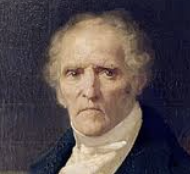
Hitherto men have speculated vaguely on the unity of universes; it is now about to be demonstrated by reasoning from the passional world to material, guided by the analogy which exists between the two.
▼
Source
source
L'attraction passioneé, Harmonian Man: Selected Writings of Charles Fourier, p. 54
1 month 3 weeks ago
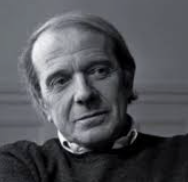
It is at work everywhere, functioning smoothly at times, at other times in firs and starts . It breathes, it heats, it eats. It shits and fucks. What a mistake to have ever said the id. Everywhere it is machines- real ones, not figurative ones: machines driving other machines, machines being driven by other machines, with all the necessary couplings and connections. An organ-machine is plugged into an energy-source-machine: the one produces a flow that the other interrupts The breast is a machine that produces milk, and the mouth a machine coupled to it.
▼
Source
source
The Desiring Machine
3 months 3 weeks ago
I know God only as he became human, so shall I have him in no other way.
▼
Source
source
Das Marburger religionsgesprach 1529: Versuch einer Rekonstruction (Leipzig, 1929), p. 27; also LW 38, 3-90
4 months 3 days ago
The superfluities of the rich are the necessaries of the poor. They who possess superfluities, possess the goods of others.
▼
Source
source
Patrologia Latina, vol. 37, p. 1922
1 month 2 weeks ago
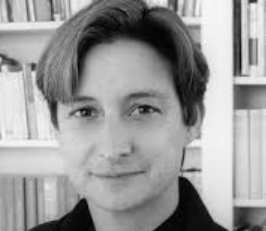
Although it is commonly supposed that war making is the specific activity of nations, the blind rage that motivates war destroys the very social bonds that make nations possible. Of course, it can fortify the nationalism of a nation, producing a provisional coherence bolstered by war and enmity, but it also erodes the social relations that make politics possible. The power of destruction unleashed by war breaks social ties and produces anger, revenge, and distrust ("embitterment") such that it becomes unclear whether reparation is possible, undermining not only those relations that may have been built in the past, but also the future possibility of peaceful coexistence.
▼
Source
source
p. 154
3 months 2 weeks ago
This is the value of the Communities; not what they have done, but the revolution which they indicate as on the way.
3 months 2 weeks ago
They [Christians] believe that the living, dynamic activity of love has been going on in God forever and has created everything else. And that, by the way, is perhaps the most important difference between Christianity and all other religions: that in Christianity God is not an impersonal thing nor a static thing-not even just one person-but a dynamic pulsating activity, a life, a kind of drama, almost, if you will not think me irreverent, a kind of dance ... (The) pattern of this three-personal life is ... the great fountain of energy and beauty spurting up at the very center of reality.
▼
Source
source
Book IV, Chapter 4, "Good Infection"
3 months 2 weeks ago
Quietism is the attitude of people who say, "let others do what I cannot do." The doctrine I am presenting before you is precisely the opposite of this, since it declares that there is no reality except in action. It goes further, indeed, and adds, "Man is nothing else but what he purposes, he exists only in so far as he realizes himself, he is therefore nothing else but the sum of his actions, nothing else but what his life is." Hence we can well understand why some people are horrified by our teaching.
▼
Source
source
p. 41
4 months 2 weeks ago
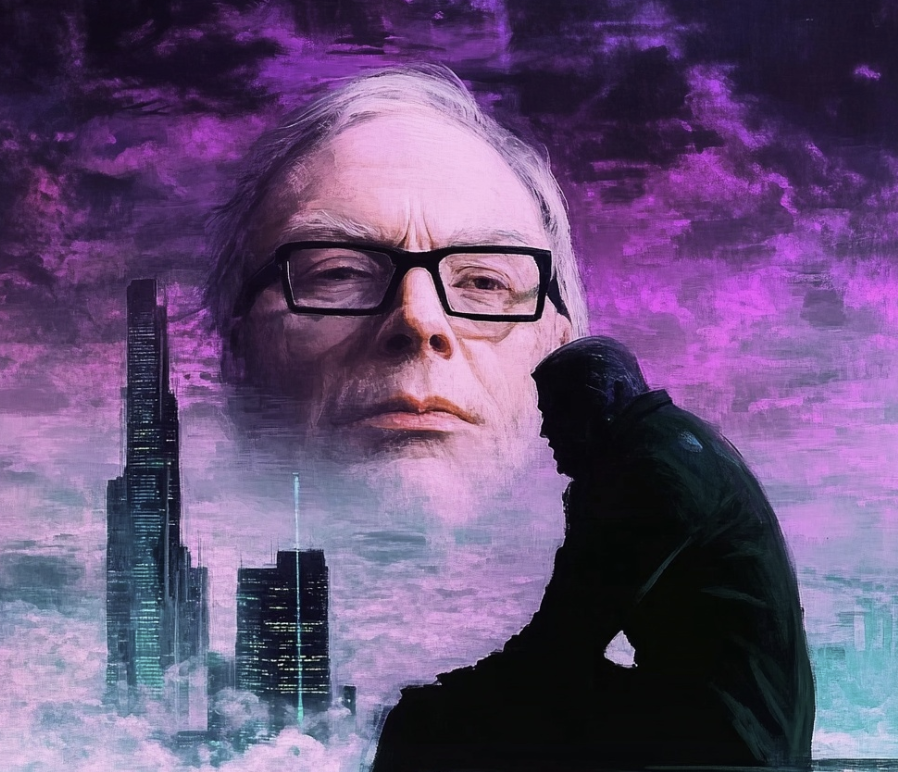
There is no way of being almost funny or mildly funny or fairly funny or tolerably funny. You are either funny or not funny and there is nothing in between. And usually it is the writer who thinks he is funny and the reader who thinks he isn't.
3 months 3 weeks ago
This misplacing hath caused a deficience, or at least a great improficience in the sciences themselves. For the handling of final causes, mixed with the rest in physical inquiries, hath intercepted the severe and diligent inquiry of all real and physical causes, and given men the occasion to stay upon these satisfactory and specious causes, to the great arrest and prejudice of further discovery. For this I find done not only by Plato, who ever anchoreth upon that shore, but by Aristotle, Galen, and others which do usually likewise fall upon these flats of discoursing causes.
▼
Source
source
Book VII, 7
2 days ago
And this is the vote which [Cato] casts concerning them both: "If Caesar wins, I slay myself; if Pompey, I go into exile." What was there for a man to fear who, whether in defeat or in victory, had assigned to himself a doom which might have been assigned to him by his enemies in their utmost rage? So he died by his own decision.

1 week 1 day ago
In all European countries, especially in England, one class of Captains and commanders of men, recognizable as the beginning of a new real and not imaginary "Aristocracy," has already in some measure developed itself: the Captains of Industry;-happily the class who above all, or at least first of all, are wanted in this time. In the doing of material work, we have already men among us that can command bodies of men. And surely, on the other hand, there is no lack of men needing to be commanded: the sad class of brother-men whom we had to describe as "Hodge's emancipated horses," reduced to roving famine,-this too has in all countries developed itself; and, in fatal geometrical progression, is ever more developing itself, with a rapidity which alarms every one. On this ground, if not on all manner of other grounds, it may be truly said, the "Organization of Labor" (not organizable by the mad methods tried hitherto) is the universal vital Problem of the world.
1 month 2 weeks ago
Despite the fact that the doctors treated him, bled him, and gave him medicines to drink, he recovered.
▼
Source
source
[sometimes quoted as "Though the doctors treated him, let his blood, and gave him medications to drink, he nevertheless recovered."] Bk. XV, ch. 12
CivilSimian.com created by AxiomaticPanic, CivilSimian, Kalokagathia