


2 months 1 week ago
Thanks to depression - that alpinism of the indolent - we scale every summit and daydream over every precipice from our bed.

1 month 2 weeks ago
Let your life be pleasing to the multitude, and it can not be so to yourself.
▼
Source
source
Maxim 1075

4 months 2 days ago
The mind itself, its love [of itself] and its knowledge [of itself] are a kind of trinity.
▼
Source
source
(Cambridge: 2002), Book 9, Chapter 4, Section 4, p. 27

2 months 1 week ago
Man is a thinking being. His reason enables him to recognize his own potentialities and those of his world. He is thus not at the mercy of the facts that surround him, but is capable of subjecting them to a higher standard, that of reason.
▼
Source
source
P. 6

2 months 3 weeks ago
We term sleep a death, and yet it is waking that kills us, and destroys those spirits that are the house of life.
▼
Source
source
Section 12

1 month 4 weeks ago
However, the disappearance of domination does not entail freedom. Instead, it makes freedom and constraint coincide. Thus, the achievement-subject gives itself over to compulsive freedom--that is, to the free constraint of maximizing achievement. Excess work and performance escalate into auto-exploitation.
▼
Source
source
Source: Page 11
2 months 1 week ago
Those who have ever valued liberty for its own sake believed that to be free to choose, and not to be chosen for, is an inalienable ingredient in what makes human beings human.

2 months 2 weeks ago
Justice was in all countries originally administered by the priesthood; nor indeed could laws in their first feeble state have either authority or sanction, so as to compel men to relinquish their natural independence, had they not appeared to come down to them enforced by beings of more than human power. The first openings of civility have been everywhere made by religion. Amongst the Romans, the custody and interpretation of the laws continued solely in the college of the pontiffs for above a century.
▼
Source
source
An Essay towards an Abridgment of English History (1757-c. 1763), quoted in The Works of the Right Honourable Edmund Burke, Vol. VI (1856), p. 196

2 months 3 weeks ago
The principle of equality does not destroy the imagination, but lowers its flight to the level of the earth.
▼
Source
source
Book Three, Chapter XI.

3 months 3 weeks ago
My life has been full of terrible misfortunes most of which never happened.
3 months 6 days ago
In adversity, remember to keep an even mind.
▼
Source
source
Book II, ode iii, line 1
2 months 1 week ago
As for [...] Of all passions, that which inclineth men least to break the laws is fear.
▼
Source
source
The Second Part, Chapter 27

3 months 2 weeks ago
The Indian...stands free and unconstrained in Nature, is her inhabitant and not her guest, and wears her easily and gracefully. But the civilized man has the habits of the house. His house is a prison.
▼
Source
source
April 26, 1841
2 months 1 week ago
The more intense a spiritual leader's appetite for power, the more he is concerned to limit it to others.

3 months 2 weeks ago
Stupidity or reason? Oh, there was no choice now. It was imbecility every time.
▼
Source
source
The Gioconda smile, in Mortal Coils, 1921

1 month 2 weeks ago
One can only live while one is intoxicated with life; as soon as one is sober it is impossible not to see that it is all a mere fraud and a stupid fraud! Ch. 4 Variant: It is possible to live only as long as life intoxicates us; once we are sober we cannot help seeing that it is all a delusion, a stupid delusion.
2 months 1 week ago
We have convictions only if we have studied nothing thoroughly.
2 months 3 days ago
The success of most things depends upon knowing how long it will take to succeed.

3 months 2 weeks ago
The philosophy of nature must not be unduly terrestrial; for it, the earth is merely one of the smaller planets of one of the smaller stars of the Milky Way. It would be ridiculous to warp the philosophy of nature in order to bring out results that are pleasing to the tiny parasites of this insignificant planet. Vitalism as a philosophy, and evolutionism, show, in this respect, a lack of sense of proportion and logical relevance. They regard the facts of life, which are personally interesting to us, as having a cosmic significance, not a significance confined to the earth's surface. Optimism and pessimism, as cosmic philosophies, show the same naive humanism; the great world, so far as we know it from the philosophy of nature, is neither good nor bad, and is not concerned to make us happy or unhappy. All such philosophies spring from self-importance and are best corrected by a little astronomy.
3 months 3 weeks ago
When I play with my cat, who knows if I am not a pastime to her more than she is to me?
▼
Source
source
Ch. 12 (tr. Donald M. Frame) , tr. David Wills, 2008

3 months 2 weeks ago
People do not deserve to have good writing, they are so pleased with bad.
▼
Source
source
1841
3 months 2 weeks ago
The only thing that will redeem mankind is co-operation, and the first step towards co-operation lies in the hearts of individuals.
▼
Source
source
p. 212
3 months 2 weeks ago
It seems to me now that mathematics is capable of an artistic excellence as great as that of any music, perhaps greater; not because the pleasure it gives (although very pure) is comparable, either in intensity or in the number of people who feel it, to that of music, but because it gives in absolute perfection that combination, characteristic of great art, of godlike freedom, with the sense of inevitable destiny; because, in fact, it constructs an ideal world where everything is perfect and yet true.
▼
Source
source
Letter to Gilbert Murray, April 3, 1902

4 months 2 weeks ago
My hearers, this discourse has not wandered out into the world to look for conflict, it has not tried to get the better of anybody, it has not even tried to uphold anybody, as though there was battle without. It has spoken to you; not by way of explaining anything to you, but trying to speak secretly with you about your relationship to that secret wisdom mentioned in our text. Oh that nothing may upset you in respect to this, “neither life nor death nor things present nor things to come nor any other creature” (Romans 8:38) –not this discourse, which, though it may have profited you nothing, yet has striven for what after all is the first and the last, to help you have what the Scripture calls “faith in yourself before God.

3 months 2 weeks ago
Take the happiest man, the one most envied by the world, and in nine cases out of ten his inmost consciousness is one of failure. Either his ideals in the line of his achievements are pitched far higher than the achievements themselves, or else he has secret ideals of which the world knows nothing, and in regard to which he inwardly knows himself to be found wanting.
▼
Source
source
Lectures VI and VII, "The Sick Soul"

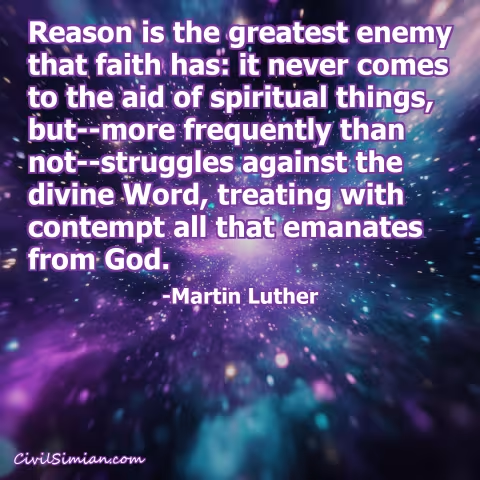

2 months 1 week ago
...whoever is not against us is for us.
▼
Source
source
9:40

1 day ago
Pain he endures, death he awaits.
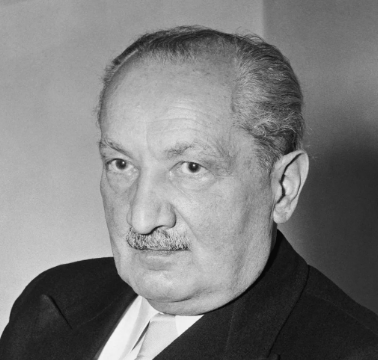
3 months 1 week ago
We ourselves are the entities to be analyzed.
▼
Source
source
Macquarrie & Robinson translation
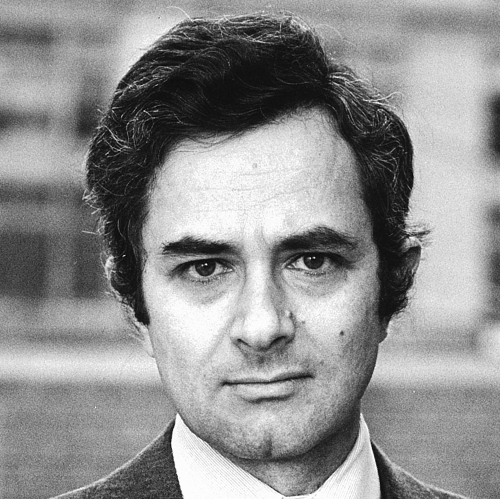
3 months 1 week ago
That is what is meant, I think by the allegation that it is good simply to be alive, even if one is undergoing terrible experiences. The situation is roughly this: There are elements which, if added to one's experience, make life better; there are other elements which, if added to one's experience, make life worse. But what remains when these are set aside is not merely neutral: it is emphatically positive. Therefore life is worth living even when the bad elements of experience are plentiful, and the good ones too meager to outweigh the bad ones on their own. The additional positive weight is supplied by experience itself, rather than by any of its contents.
▼
Source
source
"Death", p. 2. This passage not present in the 1970 version (Nous, IV, no. 1), but present in the 1979 version.
2 months 1 week ago
Who is my mother? and who are my brethren? And he stretched forth his hand toward his disciples, and said, Behold my mother and my brethren! For whosoever shall do the will of my Father which is in heaven, the same is my brother, and sister, and mother.
▼
Source
source
12:48-50 (KJV)

1 month 4 weeks ago
The history of the Romanovs is an Elizabethan tragedy that lasts for three centuries. Its keynote is cruelty, a barbaric, pointless kind of cruelty that has always been common in the East, but that came to Europe only recently, in the time of Hitler.
▼
Source
source
pp. 61-62
1 month 1 week ago
There is but one mode by which man can possess in perpetuity all the happiness which his nature is capable of enjoying, - that is by the union and co-operation of all for the benefit of each. Union and co-operation in war obviously increase the power of the individual a thousand fold. Is there the shadow of a reason why they should not produce equal effects in peace; why the principle of co-operation should not give to men the same superior powers, and advantages, (and much greater) in the creation, preservation, distribution and enjoyment of wealth?

4 months 2 weeks ago
Without art we would be nothing but foreground and live entirely in the spell of that perspective which makes what is closest at hand and most vulgar appear as if it were vast, and reality itself.

1 month ago
Nuclear power started in weaponry. It was designed for war. And any instrument that has its origins in war always has the potential for war. First because the material you need to make bombs, you're multiplying it though nuclear power, you're taking uranium and turn it into plutonium. Second by equipping governments and private companies with this potential, in society you spread this potential, that here is a weapon of mass destruction available. This is exactly what happened with fertilizers. Chemical fertilizers came from explosive factories are increasingly used in terrorist attacks.
▼
Source
source
On nuclear power, as quoted in "Koodankulam Must Be Stopped: Vandana Shiva", DiaNuke

3 months 2 weeks ago
It appears, accordingly, from the experience of all ages and nations, I believe, that the work done by freemen comes cheaper in the end than that performed by slaves.
▼
Source
source
Chapter VIII.
3 months 2 weeks ago
A man must be perfectly crazy who, where there is tolerable security, does not employ all the stock which he commands…
▼
Source
source
Chapter I, p. 313 (see opportunity cost).
3 months 2 weeks ago
The days .... come and go like muffled and veiled figures, sent from a distant friendly party; but they say nothing, and if we do not use the gifts they bring, they carry them as silently away.
▼
Source
source
Works and Days
2 months 1 week ago
The pessimist has to invent new reasons to exist every day: he is a victim of the "meaning" of life.
1 month 3 weeks ago
Analytic philosophers - both in the 'constructivist' camp and in the camp that studies 'the ordinary use of words' - are disturbingly unanimous in regarding 2-valued logic as having a privileged position: privileged, not just in the sense of corresponding to the way we do speak, but in the sense of having no serious rival for logical reasons. If the foregoing analysis is correct, this is a prejudice of the same kind as the famous prejudice in favor of a privileged status for Euclidean geometry (a prejudice that survives in the tendency to cite 'space has three dimensions' as some kind of 'necessary' truth). One can go over from a 2-valued to a 3-valued logic without totally changing the meaning of 'true' and 'false'; and not just in silly ways, like the ones usually cited (e.g. equating truth with high probability, falsity with low probability, and middlehood with 'in between' probability).
▼
Source
source
"Three-valued logic"
1 day ago
Drunkenness is nothing but voluntary madness.
▼
Source
source
Line 18.

3 months 2 weeks ago
It is very important to note that some 2,500 years ago at the least Pythagoras went from Samos to the Ganges to learn geometry...But he would certainly not have undertaken such a strange journey had the reputation of the Brahmins' science not been long established in Europe...
▼
Source
source
Voltaire, Fragments historiques sur l'Inde. Quoted in Gewali, Salil (2013). Great Minds on India. New Delhi: Penguin Random House.
2 months 1 week ago
... Nietzsche's ideas and plans: for example, the idea of giving up the whole wretched academic world to form a secular monastic community.

3 months 1 week ago
I cannot get from the nature of the proposition to the individual logical operations!!! That is, I cannot bring out how far the proposition is the picture of the situation. I am almost inclined to give up all my efforts.
▼
Source
source
Journal entries (12 March 1915 and 15 March 1915) p. 41
4 months 2 weeks ago
Every tradition grows ever more venerable — the more remote its origin, the more confused that origin is. The reverence due to it increases from generation to generation. The tradition finally becomes holy and inspires awe.
2 months 1 week ago
Dialectical thought understands the critical tension between "is" and "ought" first as an ontological condition, pertaining to the structure of Being itself. However, the recognition of this state of Being - its theory - intends from the beginning a concrete practice. Seen in the light of a truth which appears in them falsified or denied, the given facts themselves appear false and negative.
▼
Source
source
p. 133
3 months 6 days ago
We are but dust and shadow.
▼
Source
source
Book IV, ode vii, line 16
2 months 1 week ago
Hereby it is manifest, that during the time men live without a common Power to keep them all in awe, they are in that conditions called Warre; and such a warre, as is of every man, against every man.
▼
Source
source
The First Part, Chapter 13, p. 62
1 month 1 week ago
Believe me, my friends, you are yet very deficient with regard to the best modes of training your children, or of arranging your domestic concerns.
2 months 1 week ago
Life, in that it is life, necessarily entails justice.
▼
Source
source
"Politics and Morality" in Be'ayot (April 1945), as published in A Land of Two Peoples : Martin Buber on Jews and Arabs (1983) edited by Paul Mendes-Flohr, p. 169
CivilSimian.com created by AxiomaticPanic, CivilSimian, Kalokagathia