


4 months 1 week ago
The way of the superior man may be found, in its simple elements, in the intercourse of common men and women; but in its utmost reaches, it shines brightly through Heaven and Earth.

3 months 2 weeks ago
But your crime will be there, one hundred times denied, always there, dragging itself behind you. Then you will finally know that you have committed your life with one throw of the die, once and for all, and there is nothing you can do but tug our crime along until your death. Such is the law, just and unjust, of repentance. Then we will see what will become of your young pride.
▼
Source
source
Clytemnestra to her daughter Electra, Act 1

3 months 2 weeks ago
A life devoted to science is therefore a happy life, and its happiness is derived from the very best sources that are open to dwellers on this troubled and passionate planet.
▼
Source
source
Ch. 2: The Place of Science in a Liberal Education

2 months 1 week ago
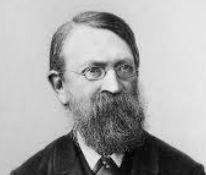
Nature consists of the elements given by the senses. Primitive man first takes out of them certain complexes of these elements that present themselves with a certain stability and are most important to him. The first and oldest words are names for "things". ... The sensations are no "symbols of things". On the contrary the "thing" is a mental symbol for a sensation-complex of relative stability. Not the things, the bodies, but colours, sounds, pressures, times (what we usually call sensations) are the true elements of the world.
▼
Source
source
p. 23, as quoted in Lenin as Philosopher: A Critical Examination of the Philosophical Basis of Leninism (1948) by Anton Pannekoek, p. 454

3 months 3 weeks ago
What defects women have, we must check them for in private, gently by word of mouth, for woman is a frail vessel.
▼
Source
source
Table Talk, quoted in Luther On "Woman"

1 month 2 weeks ago
My main theme is the extension of the nervous system in the electric age, and thus, the complete break with five thousand years of mechanical technology. This I state over and over again. I do not say whether it is a good or bad thing. To do so would be meaningless and arrogant.
▼
Source
source
Letter to Robert Fulford, 1964. Letters of Marshall McLuhan (1987), p. 300

2 months 4 days ago
The devil is an angel too.
▼
Source
source
[Three Exemplary Novels and a Prologue] (1920); Two Mothers
3 months 1 week ago
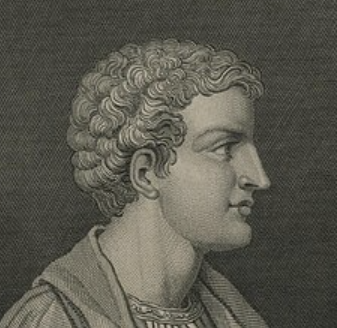
As money grows, care follows it and the hunger for more.
▼
Source
source
Book III, ode xvi, line 17

2 days ago
When we leave you and assemble together by ourselves, we talk freely about his sayings and doings, treating them with the respect which they deserve: in your presence deep silence is observed about him, and thus you lose that greatest of pleasures, the hearing the praises of your son, which I doubt not you would be willing to hand down to all future ages, had you the means of so doing, even at the cost of your own life.

3 months 2 weeks ago
Nothing can be preserved that is not good.
▼
Source
source
Books

1 month 2 weeks ago
I am much more open about categories of gender, and my feminism has been about women's safety from violence, increased literacy, decreased poverty and more equality. I was never against the category of men. "As a Jew, I was taught it was ethically imperative to speak up" in Haaretz.
▼
Source
source
24-Feb-10

2 months 4 weeks ago
Above all things reverence thy Self.
▼
Source
source
Variant translations: Respect yourself above all. As quoted in Divine Harmony: The Life and Teachings of Pythagoras by John Strohmeier and Peter Westbrook. (1999) ISBN 0-9653774-5-8

3 months 3 weeks ago
If you press me to say why I loved him, I can say no more than it was because he was he, and I was I. Variants: If a man urge me to tell wherefore I loved him, I feel it cannot be expressed but by answering: Because it was he, because it was myself. If a man should importune me to give a reason why I loved him, I find it could no otherwise be expressed, than by making answer: because it was he, because it was I.
▼
Source
source
Ch. 28

3 months 3 weeks ago
Thus it may be said that not only the soul, the mirror of an indestructible universe, is indestructible, but also the animal itself, though its mechanism may often perish in part and take off or put on an organic slough.
▼
Source
source
La monadologie (77). Sometimes paraphrased as: The soul is the mirror of an indestructible universe.
2 months 1 week ago
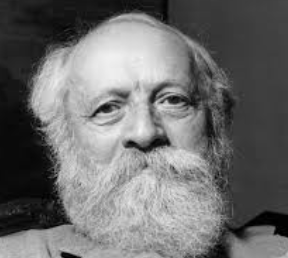
Greatness by nature includes a power, but not a will to power.
▼
Source
source
p. 150
3 months 2 weeks ago
Since the great foundation of fear is pain, the way to harden and fortify children against fear and danger is to accustom them to suffer pain. This 'tis possible will be thought, by kind parents, a very unnatural thing towards their children; and by most, unreasonable...
▼
Source
source
Sec. 115

2 months 3 weeks ago
Everything that makes diversity of kinds, of species, differences, properties... everything that consists in generation, decay, alteration and change is not an entity, but a condition and circumstance of entity and being, which is one, infinite, immobile, subject, matter, life, death, truth, lies, good and evil.
3 months 3 weeks ago
There is a sort of gratification in doing good which makes us rejoice in ourselves.
▼
Source
source
Book III, Ch. 2
3 months 1 week ago
The usage of the words "public" and "public sphere" betrays a multiplicity of concurrent meanings. Their origins go back to various historical phases and, when applied synchronically to the conditions of a bourgeois society that is industrially advanced and constituted as a social-welfare state, they fuse into a clouded amalgam. Yet the very conditions that make the inherited language seem inappropriate appear to require these words, however confused their employment.
▼
Source
source
p. 1 as cited in: Gandy, M (1997) "Ecology, modernity and the intellectual legacy of the Frankfurt School". In: Light, A and Smith, JM, (eds.) Space, Place and Environmental Ethics. p. 240
1 month 2 weeks ago
It is sometimes expedient to forget who we are.
▼
Source
source
Maxim 233

2 months 3 days ago
Attention is the rarest and purest form of generosity.
▼
Source
source
From an April 13, 1942 letter to poet Joë Bousquet, published in their collected correspondence

3 months 1 week ago
A man's thinking goes on within his consciousness in a seclusion in comparison with which any physical seclusion is an exhibition to public view.
▼
Source
source
Pt II, p. 189

4 months 2 weeks ago
Let's not beat around the bush; I love life, that's my real weakness. I love it so much that I am incapable of imagining what is not life.
4 months 1 week ago
Thus intrigues and conspiracies do not arise, and thievery and robbery do not occur; therefore doors need never be locked.
3 months 2 weeks ago
Both in England and on the Continent a graduated property tax (l'impôt progressif) has been advocated, on the avowed ground that the state should use the instrument of taxation as a means of mitigating the inequalities of wealth. I am as desirous as any one that means should be taken to diminish those inequalities, but not so as to relieve the prodigal at the expense of the prudent.To tax the larger incomes at a higher percentage than the smaller is to lay a tax on industry and economy; to impose a penalty on people for having worked harder and saved more than their neighbours. It is not the fortunes which are earned, but those which are unearned, that it is for the public good to place under limitation.
▼
Source
source
Book V, Chapter II
3 months 2 weeks ago
I call upon you, young men, to obey your heart, and be the nobility of this land. In every age of the world, there has been a leading nation, one of a more generous sentiment, whose eminent citizens were willing to stand for the interests of general justice and humanity, at the risk of being called, by the men of the moment, chimerical and fantastic. Which should be that nation but these States? Which should lead that movement, if not New England? Who should lead the leaders, but the Young American?

2 months 1 week ago
Knowledge is the plague of life, and consciousness, an open wound in its heart.

4 months 2 weeks ago
I recognize the necessity of animal experiments with my mind but not with my heart.
2 months 1 week ago
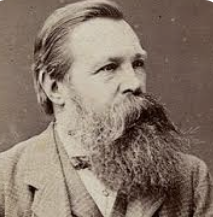
Lassalle. It would be a pity about the fellow because of his great ability, but these goings-on are really too bad. He was always a man one had to keep a devilish sharp eye on and as a real Jew from the Slav border was always to exploit anyone for his own private ends on party pretexts. And then his urge to push his way into polite society, de parvenir, if only for appearance's sake, to disguise the greasy Breslau Jew with all kinds of pomade and paint was always repulsive.
▼
Source
source
Letter to Karl Marx (7 March 1856), quoted in The Collected Works of Karl Marx and Friedrich Engels: Volume 40. Letters 1856-59 (2010), p. 27

2 months 2 weeks ago
Good order is the foundation of all good things.
3 months 2 weeks ago
The Upanishads and the Vedas haunt me. In them I have found eternal compensation, unfathomable power, unbroken peace.
▼
Source
source
Quoted in S. Londhe, A Tribute to Hinduism, 2008
4 months 2 weeks ago
In that daily effort in which intelligence and passion mingle and delight each other, the absurd man discovers a discipline that will make up the greatest of his strengths. The required diligence and doggedness and lucidity thus resemble the conqueror's attitude. To create is likewise to give a shape to one's fate. For all these characters, their work defines them at least as much as it is defined by them. The actor taught us this: There is no frontier between being and appearing.
2 days ago
They have been spoken by Plato, spoken by Zeno, spoken by Chrysippus or by Posidonius, and by a whole host of Stoics as numerous as excellent. I shall show you how men can prove their words to be their own: it is by doing what they have been talking about.
3 months 2 weeks ago
Of all evils of war the greatest is the purely spiritual evil: the hatred, the injustice, the repudiation of truth, the artificial conflict.
▼
Source
source
Justice in War-Time (1916), p. 27
3 months 2 weeks ago
Love is better than hate, because it brings harmony instead of conflict into the desires of the persons concerned. Two people between whom there is love succeed or fail together, but when two people hate each other the success of either is the failure of the other.
3 months 2 weeks ago
A European who goes to New York and Chicago sees the future... when he goes to Asia he sees the past.
▼
Source
source
Ch. 8: Eastern and Western Ideals of Happiness
4 months 2 weeks ago
Now the mass of mankind are plainly... choosing a life like that of brute animals...

1 week 1 day ago
Every pitifulest whipster that walks within a skin has had his head filled with the notion that he is, shall be, or by all human and divine laws ought to be, 'happy.' His wishes, the pitifulest whipster's, are to be fulfilled for him; his days, the pitifulest whipster's, are to flow on in an ever-gentle current of enjoyment, impossible even for the gods. The prophets preach to us, Thou shalt be happy; thou shalt love pleasant things, and find them. The people clamor, Why have we not found pleasant things? ...God's Laws are become a Greatest Happiness Principle. There is no religion; there is no God; man has lost his soul.
▼
Source
source
Bk. III, ch. 4.
1 week 1 day ago
Alas! such is the miseducation of these days, it is only among those that are called the uneducated classes - those educated by experience - that you can look for a Man. Even among these, such a sight is growing daily rarer. My father, in several respects, has not, that I can think of, left his fellow. Perhaps among Scottish peasants what Samuel Johnson was among English authors. I have a sacred pride in my peasant father, and would not exchange him, even now, for any king known to me. Gold and the guinea stamp - the Man and the clothes of the man. Let me thank God for that greatest of blessings, and strive to live worthily of it.
2 days ago
Do you ask me whom I have conquered? Neither the Persians, nor the far-off Medes, nor any warlike race that lies beyond the Dahae; not these, but greed, ambition, and the fear of death that has conquered the conquerors of the world.
1 week 4 days ago
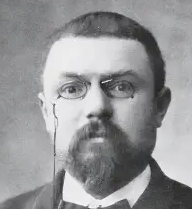
Astronomers... define duration in the following way: time... so defined that Newton's law and that of vis viva [or of the conservation of energy] may be verified. Newton's law is an experimental truth... only approximate... We still have only a definition by approximation.
2 months 3 days ago
Attention consists of suspending our thought, leaving it detached, empty, and ready to be penetrated by the object; it means holding in our minds, within reach of this thought, but on a lower level and not in contact with it, the diverse knowledge we have acquired which we are forced to make use of.

3 months 1 week ago
Brave men were living before Agamemnon.
▼
Source
source
Book IV, ode ix, line 25
4 months 2 days ago
It is difficulties that show what men are.
▼
Source
source
Book I, ch. 24, 1.
2 days ago
Let words proceed as they please, provided only your soul keeps its own sure order, provided your soul is great and holds unruffled to its ideals, pleased with itself on account of the very things which displease others, a soul that makes life the test of its progress, and believes that its knowledge is in exact proportion to its freedom from desire and its freedom from fear.
3 months 1 week ago
He is not poor who has enough of things to use. If it is well with your belly, chest and feet, the wealth of kings can give you nothing more.
▼
Source
source
Book I, epistle xii, line 4
3 months 2 weeks ago
The only purpose for which power can be rightfully exercised over any member of a civilized community, against his will, is to prevent harm to others. His own good, either physical or moral, is not a sufficient warrant.
▼
Source
source
Ch. 1: Introductory
CivilSimian.com created by AxiomaticPanic, CivilSimian, Kalokagathia