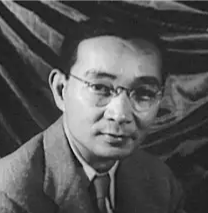
A mellow understanding of life and of human nature is, and always has been, the Chinese ideal of character, and from that understanding other qualities are derived, such as pacifism, contentment, calm and strength of endurance which distinguish the Chinese character.
I strongly suspect that the average reader does not suspect India has as rich a culture, as creative an imagination and wit and humor as any China has to offer, and that India was China's teacher in religion and imaginative literature, and the world's teacher in trigonometry, quadratic equations, grammar, phonetics, Arabian Nights, animal fables, chess, as well as in philosophy, and that she inspired Boccaccio, Goethe, Herder, Schopenhauer, Emerson, and probably also old Aesop.
The creative imagination of the Hindus has conceived no loftier and holier character than Sita; the literature of the world has not produced a higher ideal of womanly love, womanly truth, and womanly devotion.
Besides the noble art of getting things done, there is the noble art of leaving things undone. The wisdom of life consists in the elimination of non-essentials.
0
⚖0
▼Source
source
As quoted in Pearls of Wisdom: A Harvest of Quotations From All Ages (1987) by Jerome Agel and Walter D. Glanze, p. 46.
These influences of my young childhood were greatest: 1, the mountain landscape, 2, my father the impossible idealist, and 3, the upringing of a closely-knit Christian home.
There are two kinds of animals on earth. One kind minds his own business, the other minds other people's business. The former are vegetarians, like cows, sheep and thinking men. The latter are carnivorous, like hawks, tigers and men of action.
0
⚖0
▼Source
source
As quoted by Tai-yi Lin (Lin Yutang's daughter) in her Foreword (26 March 1950) to The Importance of Living, p. x
Our task is not so much discovery as re-discovery. What one needs is not so much thinking as remembering. Sometimes it suffices to sit quietly and listen well, when venerable men have thought before us. Constant forgettings of truths once perceived are the very charm of the human mind; the history of human thought is nothing more than the story of these forgettings and rememberings and forgettings again.
If compelled to indicate my religion on an immigration blank, I might be tempted to put down the word "Taoist," to the amazement of the customs officer who probably never heard of it.