
3 months 3 weeks ago
The primary meaning of the words "modern," "modernity," with which recent times have baptised themselves, brings out very sharply that feeling of "the height of time" which I am at present analysing. "Modern" is what is "in the fashion, "that is to say, the new fashion or modification which has arisen over against the old traditional fashions used in the past. The word "modern" then expresses a consciousness of a new life, superior to the old one, and at the same time an imperative call to be at the height of one's time. For the "modern" man, not to be "modern" means to fall below the historic level.
▼
Source
Chap. III: The Height Of The Times
3 months 3 weeks ago
But the soul which has been polluted, and is impure at the time of her departure, and is the companion and servant of the body always, and is in love with and fascinated by the body and by the desires and pleasures of the body, until she is led to believe that the truth exists only in bodily form, which a man may touch and see and taste and use for the purposes of his lusts—the soul, I mean, accustomed to hate and fear and avoid the intellectual principle, which to the bodily eye is dark and invisible, and can be attained only by philosophy—do you suppose that such a soul as this will depart pure and unalloyed?

3 months 3 weeks ago
What does winter or autumn or spring or summer know of memory. They know nothing of memory. They know that seasons pass and return. They know that they are seasons. That they are time. And they know how to affirm themselves. And they know how to impose themselves. And they know how to maintain themselves, What does autumn know of summer. What sorrows do seasons have. None hate. None love. They just pass.

3 months 3 weeks ago
From the winter of 1821, when I first read Bentham, and especially from the commencement of the Westminster Review, I had what might truly be called an object in life; to be a reformer of the world. My conception of my own happiness was entirely identified with this object. The personal sympathies I wished for were those of fellow labourers in this enterprise. I endeavoured to pick up as many flowers as I could by the way; but as a serious and permanent personal satisfaction to rest upon, my whole reliance was placed on this...
▼
Source
([https://archive.org/details/autobiography01mill/page/132/mode/1up p. 132])
3 months 3 weeks ago
Whatever be the substance which takes possession of such a soul, it will produce the same result, and will change into a pretext for not conforming to any concrete purpose. If it appears as reactionary or anti-liberal it will be in order to affirm that the salvation of the State gives a right to level down all other standards, and to manhandle one's neighbour, above all if one's neighbour is an outstanding personality. But the same happens if it decides to act the revolutionary; the apparent enthusiasm for the manual worker, for the afflicted and for social justice, serves as a mask to facilitate the refusal of all obligations, such as courtesy, truthfulness and, above all, respect or esteem for superior individuals. … As regards other kinds of Dictatorship, we have seen only too well how they flatter the mass-man, by trampling on everything that appeared to be above the common level.
▼
Source
Chapter XV: We Arrive At The Real Question

3 months 3 weeks ago
Her reverence for the divine, her generosity, her inability not only to do wrong but even to conceive of doing it. And the simple way she lived—not in the least like the rich. (Hays translation)
▼
Source
I, 3
3 months 3 weeks ago
However far the phenomena transcend the scope of classical physical explanation, the account of all evidence must be expressed in classical terms. The argument is that simply by the word "experiment" we refer to a situation where we can tell others what we have done and what we have learned and that, therefore, the account of the experimental arrangement and of the results of the observations must be expressed in unambiguous language with suitable application of the terminology of classical physics.
▼
Source
Niels Bohr, "Discussions with Einstein on Epistemological Problems in Atomic Physics," in , Albert Einstein: Philosopher Scientist (1949) pp. 199-241.
3 months 3 weeks ago
[In the world below...] those who appear to have lived neither well not ill, go to the river Acheron, and mount such conveyances as they can get, and are carried in them to the lake, and there they dwell and are purified of their evil deeds, and suffer the penalty of the wrongs which they have done to others, and are absolved, and receive the rewards of their good deeds according to their deserts. But those who appear to be incurable by reason of the greatness of their crimes—who have committed many and terrible deeds of sacrilege, murders foul and violent, or the like—such are hurled into Tartarus, which is their suitable destiny, and they never come out. Those again who have committed crimes, which, although great, are not unpardonable—who in moment of anger, for example, have done violence to a father or a mother, and have repented for the remainder of their lives, or who have taken the life of another under like extenuating circumstances—these are plunged into Tartarus, the pains of which they are compelled to undergo for a year, but at the end of the year the wave casts them forth—mere homicides by way of Cocytus, patricides and matricides by Pyriphlegethon—and they are borne to the Acherusian Lake, and here they lift up their voices and call upon the victims whom they have slain or wronged, to have pity on them, and to receive them, and to let them come out of the river into the lake. And if they prevail, then they come forth and cease from their troubles; but if not, they are carried back again into Tartarus and from thence into the rivers unceasingly, until they obtain mercy from those whom they have wronged: for this is the sentence inflicted upon them by their judges.
3 months 3 weeks ago
Matter that does not remain beneath form, but surrounds it with a halo.
3 months 3 weeks ago
In this third period (as it may be termed) of my mental progress, which now went hand in hand with hers, my opinions gained equally in breadth and depth, I understood more things, and those which I had understood before, I now understood more thoroughly. I had now completely turned back from what there had been of excess in my reaction against Benthamism. I had, at the height of that reaction, certainly become much more indulgent to the common opinions of society and the world, and more willing to be content with seconding the superficial improvement which had begun to take place in those common opinions, than became one whose convictions on so many points, differed fundamentally from them. I was much more inclined, than I can now approve, to put in abeyance the more decidedly heretical part of my opinions, which I now look upon as almost the only ones, the assertion of which tends in any way to regenerate society.
▼
Source
([https://archive.org/details/autobiography01mill/page/230/mode/1up p. 230])
3 months 3 weeks ago
Never esteem anything as of advantage to you that will make you break your word or lose your self-respect.
▼
Source
III, 7

3 months 3 weeks ago
Ethics is inescapable.
▼
Source
Preface, p. xv
3 months 3 weeks ago
The greatest way to live with honor in this world is to be what we pretend to be.
▼
Source
No findable citation to Socrates. Found ascribed to Socrates in [https://books.google.com/books?id=w4zCIPZrniQC&pg=PA51&dq=%22be+what+we+pretend+to+be%22&hl=en&sa=X&ved=0ahUKEwiyvZnCg5HKAhUU5mMKHQIIAIgQ6AEIHTAA#v=onepage&q=%22be%20what%20we%20pretend%20to
3 months 3 weeks ago
To colonize the world with the European race, which is superior to every other race: to make the world accessible and habitable like Europe—such is the sort of enterprise by which the European Parliament should continually keep Europe active and happy
3 months 3 weeks ago
The dominant model is not a good one for understanding the ultimate basis of moral value, for grounding our present moral beliefs or for pointing the way to radical revisions in them. For these tasks, the older, more philosophical model found in Kant and Mill is far better.
▼
Source
Allen W. Wood, Kantian Ethics (2008), Ch. 3. Ethical Theory
3 months 3 weeks ago
When the titanic apparatus of the mass-order has been consolidated, the individual has to serve it, and must from time to time combine with his fellows in order to renovate it. If he wants to make his livelihood by intellectual activity, he will find it very difficult to do this except by satisfying the needs of the many. He must give currency to something that will please the crowd. They seek satisfaction in the pleasures of the table, eroticism, self-assertion; they find no joy in life if one of these gratifications be curtailed. They also desire some means of self-knowledge. They desire to be led in such as way that they can fancy themselves leaders. Without wishing to be free, they would fain be accounted free. One who would please their taste must produce what is really average and commonplace, though not frankly styled such; must glorify or at least justify something as universally human. Whatever is beyond their understanding is uncongenial to them. One who would influence the masses must have recourse to the art of advertisement. The clamour of puffery is to-day requisite even for an intellectual movement. The days of quiet and unpretentious activity seem over and done with. You must keep yourself in the public eye, give lectures, make speeches, arouse a sensation. Yet the mass-apparatus lacks true greatness of representation, lacks solemnity.
3 months 3 weeks ago
Whatever is in any way beautiful hath its source of beauty in itself, and is complete in itself; praise forms no part of it. So it is none the worse nor the better for being praised.
▼
Source
Variant: That which is really beautiful has no need of anything. (trans. George Long) | IV, 20
3 months 3 weeks ago
Inaugurated in 1975 by Peter Singer“s famous pamphlet, ”'Animal Liberation“”, philosophical research into our duties towards animals, the moral rights to be ascribed to them, how it is right to treat them, and which practices — economic, scientific, technological—are consistent with the principles of a normative ethic that includes among its “clients” the grandchildren of Bentham and Kant as much as those of Fido or Pluto, is now vast. (p. 7)

3 months 3 weeks ago
In peace, prepare for war. In war, prepare for peace.
▼
Source
Sometimes erroneously prepended to the opening line "The art of war is of vital importance to the State", but appears to be a variation of the Roman motto "Si vis pacem, para bellum". It is not clear who first misattributed this phrase to Sun Tzu. The ear
3 months 3 weeks ago
Liberty, equality — bad principles! The only true principle for humanity is justice; and justice to the feeble becomes necessarily protection or kindness.
▼
Source
Undated entry of December 1863 or early 1864, as translated by Mrs. Humphry Ward (1893), p. 215
3 months 3 weeks ago
Not to feel exasperated, or defeated, or despondent because your days aren't packed with wise and moral actions. But to get back up when you fail, to celebrate behaving like a human--however imperfectly--and fully embrace the pursuit that you've embarked on.
▼
Source
Flinch not, neither give up nor despair, if the achieving of every act in accordance with right principle is not always continuous with thee. | V, 9 (Hays translation)

3 months 3 weeks ago
A man's honest, earnest opinion is the most precious of all he possesses: let him communicate this, if he is to communicate anything. There is, doubtless a time to speak, and a time to keep silence; yet Fontenelle's celebrated aphorism, I might have my hand full of truth, and would open only my little finger, may be practiced to excess, and the little finger itself kept closed. That reserve, and knowing silence, long so universal among us, is less the fruit of active benevolence, of philosophic tolerance, than of indifference and weak conviction. Honest Scepticism, honest Atheism, is better than that withered lifeless Dilettantism and amateur Eclecticism, which merely toys with all opinions; or than that wicked Machiavelism, which in thought denying every thing, except that Power is Power, in words, for its own wise purposes, loudly believes every thing: of both which miserable habitudes the day, even in England, is wellnigh over.
▼
Source
Review of Historic Survey of German Poetry, interspersed with Various Translations by W. Taylor, in The Edinburgh Review Vol. LIII (1831), p. 178.
3 months 3 weeks ago
Complaints about the social irresponsibility of the intellectual typically concern the intellectual’s tendency to marginalize herself, to move out from one community by interior identification of herself with some other community—for example, another country or historical period. … It is not clear that those who thus marginalize themselves can be criticized for social irresponsibility. One cannot be irresponsible toward a community of which one does not think of oneself as a member. Otherwise runaway slaves and tunnelers under the Berlin Wall would be irresponsible.
▼
Source
“Postmodernist bourgeois liberalism,” Objectivity, Relativism and Truth (Cambridge: 1991), p. 197

3 months 3 weeks ago
Christ has no body [...] but yours. [...] Yours are the feet with which He walks to do good. [...] Yours are the hands with which he blesses all the world.
▼
Source
W:Annie Johnson Flint (25 December 1866 - 8 September 1932) wrote a hymn The World's Bible, which goes | Christ has no hands but our hands, To do His work each day; He has no feet but our feet, To lead men in his way; He has no tongues but our tongues, To

3 months 3 weeks ago
Neither Montaigne in writing his essays, nor DesCartes in building new worlds, nor Burnet in framing an antedeluvian earth, no nor Newton in discovering and establishing the true laws of nature on experiment and a sublimer geometry, felt more intellectual joys; than he feels who is a real patriot, who bends all the force of his understanding, and directs all his thoughts and actions, to the good of his country.
▼
Source
p. 31
3 months 3 weeks ago
Πάντα ἀλλήλοις ἐπιπέπλεκται καὶ ἡ σύνδεσις ἱερά, καὶ σχεδόν τι οὐδὲν ἀλλότριον ἄλλο ἄλλωι· συγκατατέτακται γὰρ καὶ συγκοσμεῖ τὸν αὐτὸν κόσμον. κόσμος τε γὰρ εἷς ἐξ ἁπάντων καὶ θεὸς εἷς δι᾽ ἁπάντων καὶ οὐσία μία καὶ νόμος εἷς, λόγος κοινὸς πάντων τῶν νοερῶν ζώιων, καὶ ἀλήθεια μία, εἴγε καὶ τελειότης μία τῶν ὁμογενῶν καὶ τοῦ αὐτοῦ λόγου μετεχόντων ζώιων.
▼
Source
All things are implicated with one another, and the bond is holy; and there is hardly anything unconnected with any other things. For things have been co-ordinated, and they combine to make up the same universe. For there is one universe made up of all th
3 months 3 weeks ago
Love is ever the beginning of Knowledge as fire is of light.
▼
Source
Essays, Death of Goethe.

3 months 3 weeks ago
Heretics do away with marriages; Psychics accumulate them. The former marry not even once; the latter not only once. What dost thou, Law of the Creator? Between alien eunuchs and thine own grooms, thou complainest as much of the over-obedience of thine own household as of the contempt of strangers.
▼
Source
Chapter 1
3 months 3 weeks ago
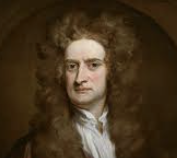
I keep the subject constantly before me, and wait 'till the first dawnings open slowly, by little and little, into a full and clear light.
▼
Source
Reply upon being asked how he made his discoveries, as quoted in "[http://books.google.es/books?id=rYhDAAAAcAAJ&pg=PA3241&dq=I+keep+the+subject+constantly+before+me+and+wait+till+the+first+dawnings+open+little+by+little+into+the+full+light.&hl=es&sa=X&ei=
3 months 3 weeks ago
I think Mr. secretary St. John the greatest young man I ever knew: wit, capacity, beauty, quickness of apprehension, good learning, and an excellent taste; the best orator in the house of commons, admirable conversation, good nature, and good manners; generous, and a despiser of money. His only fault is, talking to his friends in way of complaint of too great load of business, which looks a little like affectation; and he endeavours too much to mix the fine gentleman, and the man of pleasure, with the man of business. What truth and sincerity he may have, I know not.
▼
Source
Jonathan Swift, Letter XXXIII (23 October 1711), A Journal to Stella, quoted in The Works of Jonathan Swift, containing additional letters, tracts, and poems, with notes, and a life of the author, by W. Scott, Volume II (1824), pp. 405–406
3 months 3 weeks ago
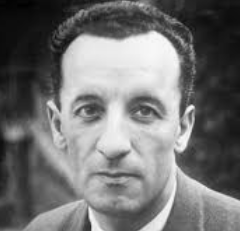
Philosophy is in history, and is never independent of historical discourse. But for the tacit symbolism of life it substitutes, in principle, a conscious symbolism; for a latent meaning, one that is manifest. It is never content to accept its historical situation. It changes this situation by revealing it to itself.
▼
Source
p. 57
3 months 3 weeks ago
Why then dost thou choose to act in the same way? and why dost thou not leave these agitations which are foreign to nature, to those who cause them and those who are moved by them? And why art thou not altogether intent upon the right way of making use of things which happen to thee? for then thou wilt use them well, and they will be material for thee. Only attend to thyself, and resolve to be a good man in every act which thou doest; and remember...
▼
Source
VII, 58
3 months 3 weeks ago
Wonder, indeed, is, on all hands, dying out: it is the sign of uncultivation to wonder.
3 months 3 weeks ago
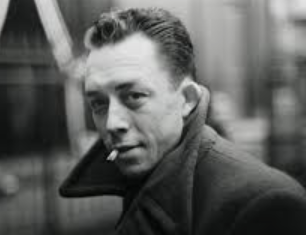
It's better to bet on this life than on the next.

3 months 3 weeks ago
I think putting thieves to death is not lawful; and it is plain and obvious that it is absurd and of ill consequence to the commonwealth that a thief and a murderer should be equally punished; for if a robber sees that his danger is the same if he is convicted of theft as if he were guilty of murder, this will naturally incite him to kill the person whom otherwise he would only have robbed; since, if the punishment is the same, there is more security, and less danger of discovery, when he that can best make it is put out of the way; so that terrifying thieves too much provokes them to cruelty.
▼
Source
Ch. 1 : Discourses of Raphael Hythloday, of the Best State of a Commonwealth
3 months 3 weeks ago
Tact is the knack of making a point without making an enemy.
▼
Source
Actually a statement by American advertising executive and author Howard W. Newton (1903–1951); attributions to Isaac are relatively recent, those to Howard date at least to [https://books.google.com/books?id=-QUcAQAAMAAJ&q=%22Tact+is+the+knack+of+making+
3 months 3 weeks ago
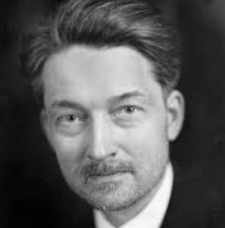
The supernatural light of the spirit is the only night from which the spirit can emerge alive.
▼
Source
p. 288.
3 months 3 weeks ago
The universal nature has no external space; but the wondrous part of her art is that though she has circumscribed herself, everything which is within her which appears to decay and to grow old and to be useless she changes into herself, and again makes other new things from these very same, so that she requires neither substance from without nor wants a place into which she may cast that which decays. She is content then with her own space, and her own matter, and her own art.
▼
Source
VIII, 50

3 months 3 weeks ago
Great joys, why do they bring us sadness? Because there remains from these excesses only a feeling of irrevocable loss and desertion which reaches a high degree of negative intensity. At such moments, instead of a gain, one keenly feels loss. sadness accompanies all those events in which life expends itself. its intensity is equal to its loss. Thus death causes the greatest sadness.
3 months 3 weeks ago
That there should one Man die ignorant who had capacity for Knowledge, this I call a tragedy.
▼
Source
Bk. III, ch. 4.
3 months 3 weeks ago
At any street corner the feeling of absurdity can strike any man in the face.

3 months 3 weeks ago
This is my advice but how welcome to thee I know not.
3 months 3 weeks ago
Diffused knowledge immortalizes itself.
▼
Source
Vindiciæ Gallicæ (1791).
3 months 3 weeks ago
The disparagement of empirical evidence in favor of a metaphysical world of illusion has its origin in the conflict between the emancipated individual of bourgeois society and his fate within that society.
▼
Source
p. 138.
3 months 3 weeks ago
Why dost thou not pray... to give thee the faculty of not fearing any of the things which thou fearest, or of not desiring any of the things which thou desirest, or not being pained at anything, rather than pray that any of these things should not happen or happen?
▼
Source
IX, 40
3 months 3 weeks ago
Saints live in flames; wise men, next to them.

3 months 3 weeks ago
M. Desargues puts me under obligations on account of the pains that it has pleased him to have in me, in that he shows that he is sorry that I do not wish to study more in geometry, but I have resolved to quit only abstract geometry, that is to say, the consideration of questions which serve only to exercise the mind, and this, in order to study another kind of geometry, which has for its object the explanation of the phenomena of nature... You know that all my physics is nothing else than geometry.
▼
Source
Letter to Marin Mersenne (July 27, 1638) as quoted by Florian Cajori, A History of Mathematics (1893) letter dated in The Philosophical Writings of Descartes Vol. 3, The Correspondence (1991) ed. John Cottingham, Robert Stoothoff, Dugald Murdoch
3 months 3 weeks ago
A witty statesman said, you might prove anything by figures.
▼
Source
Ch. 2, Statistics.
3 months 3 weeks ago
A fate is not a punishment.

3 months 3 weeks ago
For the love of gain would reconcile the weaker to the dominion of the stronger, and the possession of capital enabled the more powerful to reduce the smaller cities to subjection.
▼
Source
Book I, 1.8-[3]
CivilSimian.com created by AxiomaticPanic, CivilSimian, Kalokagathia