
3 months 3 weeks ago
Man cannot be wicked without being evil, nor evil without being degraded, nor degraded without being punished, nor punished without being guilty. In short … there is nothing so intrinsically plausible as the theory of original sin.
▼
Source
"Second Dialogue," p. 38

3 months 3 weeks ago
Relatively speaking, law is a product of modern times. For ages and ages mankind lived without any written law, even that graved in symbols upon the entrance stones of a temple. During that period, human relations were simply regulated by customs, habits, and usages, made sacred by constant repetition, and acquired by each person in childhood, exactly as he learned how to obtain his food by hunting, cattle-rearing, or agriculture. All human societies have passed through this primitive phase, and to this day a large proportion of mankind have no written law. Every tribe has its own manners and customs; customary law, as the jurists say. It has social habits, and that suffices to maintain cordial relations between the inhabitants of the village, the members of the tribe or community. Even amongst ourselves — the "civilized" nations — when we leave large towns, and go into the country, we see that there the mutual relations of the inhabitants are still regulated according to ancient and generally accepted customs, and not according to the written law of the legislators.
▼
Source
II
3 months 3 weeks ago
Alcæus mentions Aristodemus in these lines:—’T is money makes the man; and he who ’s noneIs counted neither good nor honourable.
▼
Source
Thales, 8.
3 months 3 weeks ago
I don’t know what the life of a rascal is like since I have never been one, but that of an honest man is abominable. How few men are there whose passage on this stupid planet has been marked by really good and useful acts! I prostrate myself before the one of which one can say: pertransivit bene faciendo; the one who had been able to instruct, console, and relieve his fellows; the one who made great sacrifices for charity; these heroes of silent charity who hide themselves and expect nothing in this world. But what is the ordinary man? And how many are there in a thousand who can ask themselves without terror: what have I done in this world? In what way have I advanced the common good and what will remain of me of good or evil?
▼
Source
Letter to chevalier de Saint-Réal, 21 December 1816, Œuvre critique, xiv, p. 10
3 months 3 weeks ago
We never have a full demonstration, although there is always an underlying reason for the truth, even if it is only perfectly understood by God, who alone penetrated the infinite series in one stroke of the mind.
▼
Source
[http://books.google.com/books?id=oFoCY3xJ8nkC&dq The Shorter Leibniz Texts (2006)] edited by Lloyd H. Strickland, p. 111

3 months 3 weeks ago
I do not speak here of divine truths... because they are infinitely superior to nature: God alone can place them in the soul... I know that he has desired that they should enter from the heart into the mind, and not from the mind into the heart, to humiliate that proud power of reasoning that pretends to the right to be the judge of the things that the will chooses; and to cure this infirm will which is wholly corrupted by its filthy attachments.
3 months 3 weeks ago
It always seems to me extreme rashness on the part of some when they want to make human abilities the measure of what nature can do. On the contrary, there is not a single effect in nature, even the least that exists, such that the most ingenious theorists can arrive at a complete understanding of it. This vain presumption of understanding everything can have no other basis than never understanding anything. For anyone who had experienced just once the perfect understanding of one single thing, and had truly tasted how knowledge is accomplished, would recognize that of the infinity of other truths he understands nothing.
▼
Source
Day One
3 months 3 weeks ago
When we ask ourselves by what means a certain moral level can be maintained in a human or animal society, we find only three such means: the repression of anti-social acts; moral teaching; and the practice of mutual help itself. And as all three have already been put to the test of practice, we can judge them by their effects.As to the impotence of repression — it is sufficiently demonstrated by the disorder of present society and by the necessity of a revolution that we all desire or feel inevitable. In the domain of economy, coercion has led us to industrial servitude; in the domain of politics — to the State, that is to say, to the destruction of all ties that formerly existed among citizens, and to the nation becoming nothing but an incoherent mass of obedient subjects of a central authority.
3 months 3 weeks ago
Aristippus being asked what were the most necessary things for well-born boys to learn, said, "Those things which they will put in practice when they become men."
▼
Source
Aristippus, 4.
3 months 3 weeks ago
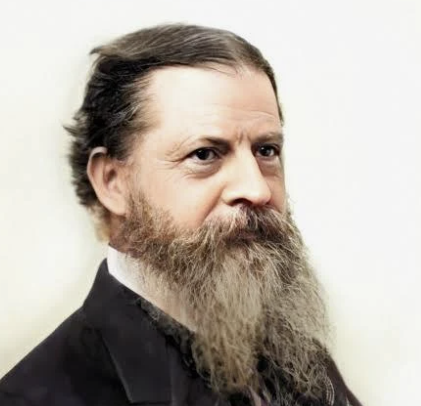
The definition of definition is at bottom just what the maxim of pragmatism expresses.
▼
Source
Letter to William James (8 January 1909)
3 months 3 weeks ago
Nothing is more common than good things: the point in question is only to discriminate them; and it is certain that they are all natural and within our reach and even known to all mankind.
3 months 3 weeks ago
Names and attributes must be accommodated to the essence of things, and not the essence to the names, since things come first and names afterwards.
▼
Source
As quoted in Discoveries and Opinions of Galileo (1957) by Stillman Drake, p. 92 | Variant translation: Names and attributes must be accommodated to the essence of things, and not the essence to the names, because things came first, and their names subseq
3 months 3 weeks ago
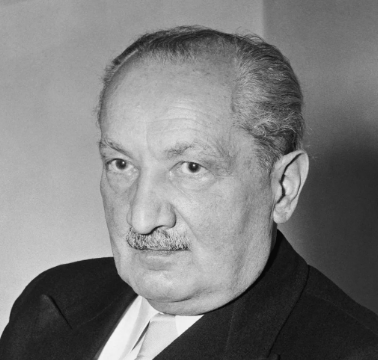
Do the essences of proposition and of the truth determine themselves from out of the essence of the thing, or does the essence of the thing determine itself from out of the essence of the proposition? The question is posed as an either/or. However does this either/or itself suffice? Are the essence of the thing and the essence of the proposition only built as mirror images because both of them together determine themselves from out of the same but deeper lying root? However, what and where can be this common ground for the essence of the thing and of the proposition and of their origin? The unconditioned (Unbedingt)? We stated at the beginning that what conditions the essense of the thing in its thingness can no longer itself be thing and conditioned, it must be an unconditioned (Un-bedingtes). p. 47
3 months 3 weeks ago
The great harm done by bourgeois society, as we have already mentioned, is not only that capitalists seize a large share of the profits of each industrial and commercial enterprise, thus enabling them to live without working, but that all reduction has taken a wrong direction, as it is not carried on with a view to securing well-being to all. For this reason we condemn it.
▼
Source
Ch. 8 : Ways and Means
3 months 3 weeks ago
Diogenes would frequently praise those who were about to marry, and yet did not marry.
▼
Source
Diogenes, 4 (note that this is Diogenes of Sinope).
3 months 3 weeks ago
Ancient philosophy will always hold its own among those who are worthy to judge it, because it forms... a system that is solid and well articulated like the body, whereas all these scattered members of modern philosophy form no system.
▼
Source
Ch. VI Concerning the Sensitive Faculty of Matter
3 months 3 weeks ago
From these two immediate perceptions, we gain a mediate, or inferential perception of the relation of all four instants. This mediate perception is objectively, or as to the object being represented, spread over the four instants; but subjectively, or as itself the subject of duration, it is completely embraced in the second moment. (The reader will observe that I use the word instant to mean a point in time, and moment to mean an infinitesimal duration.
3 months 3 weeks ago
What has happened to those who, like Heidegger, have tried to find their ways in immediacy, in intuition, in nature, would be too sad to retell—and is well known anyway. What is certain is that those pathmarks off the beaten track led indeed nowhere.
▼
Source
Bruno Latour, “Why Has Critique Run out of Steam? From Matters of Fact to Matters of Concern” Critical Inquiry 30, (Winter 2004)
3 months 3 weeks ago
Out of the savage tribe grew up the barbarian village community; and a new, still wider, circle of social customs, habits, and institutions, numbers of which are still alive among ourselves, was developed under the principles of common possession of a given territory and common defence of it, under the jurisdiction of the village folkmote, and in the federation of villages belonging, or supposed to belong, to one stem. And when new requirements induced men to make a new start, they made it in the city, which represented a double network of territorial units (village communities) connected with guilds, these latter arising out of the common prosecution of a given art or craft, or for mutual support and defence.
3 months 3 weeks ago
The mountains, too, at a distance appear airy masses and smooth, but seen near at hand, they are rough.
▼
Source
Pyrrho, 9.

3 months 3 weeks ago
Hegel’s philosophy revolved about the universality of reason; it was a rational system with its every part (the subjective as well as the objective spheres) integrated into a comprehensive whole. Marx shows that capitalist society first put such a universality into practice. P. 286-287
3 months 3 weeks ago
That the true connection could so long be misrepresented is, next to the influence of Hegel and his school, chiefly to be attributed to the resentment excited by Lamettrie's attack upon the Christian morality. People forgot, in consequence, his theoretical writings; and the calmest and most serious of them, including the 'Natural History of the Soul,' were most completely forgotten.
3 months 3 weeks ago
When anything is present to the mind, what is the very first and simplest character to be noted in it, in every case, no matter how little elevated the object may be? Certainly, it is its presentness.
▼
Source
Lecture II : The Universal Categories, § 1 : Presentness, CP 5.44
3 months 3 weeks ago
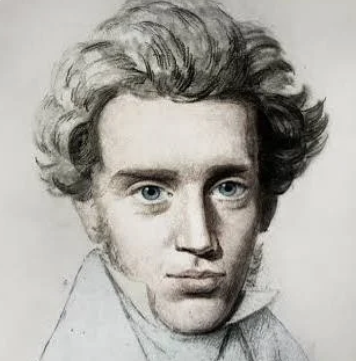
After a considerable walk through the forest, where I became acquainted with several of the little lakes I am so fond of, I came to Hestehaven and Lake Carl. Here is one of the most beautiful regions I have ever seen. The countryside is somewhat isolated and slopes steeply down to the lake, but with the beech forests growing on either side, it is not barren. A growth of rushes forms the background and the lake itself the foreground; a fairly large part of the lake is clear, but a still larger part is overgrown with the large green leaves of the waterlily, under which the fish seemingly try to hide but now and then peek out and flounder about on the surface in order to bathe in sunshine. The land rises on the opposite side, a great beech forest, and in the morning light the lighted areas make a marvelous contrast to the shadowed areas. The church bells call to prayer, but not in a temple made by human hands. If the birds do not need to be reminded to praise God, then ought men not be moved to prayer outside of the church, in the true house of God, where heaven's arch forms the ceiling of the church, where the roar of the storm and the light breezes take the place of the organ's bass and treble, where the singing of the birds make up the congregational hymns of praise, where echo does not repeat the pastor's voice as in the arch of the stone church, but where everything resolves itself in an endless antiphony — Hillerød, July 25, 1835

3 months 3 weeks ago
We cannot doubt that all things are regulated by a supreme Being, who, while he has imprinted on matter forces which show his power, has destined it to execute effects which mark his wisdom... Let us calculate the motion of bodies, but let us also consult the designs of the Intelligence which makes them move.
▼
Source
Les Oeuvres De Mr. De Maupertuis (1752) vol. iv p. 22; as quoted by Philip Edward Bertrand Jourdain, The Principle of Least Action (1913) p. 6.
3 months 3 weeks ago
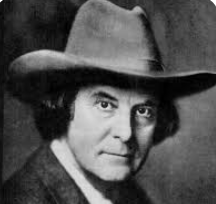
The graveyards are full of people the world could not do without.
▼
Source
[http://books.google.com/books?id=b0kLAQAAIAAJ&q=%22The+graveyards+are+full+of+people+the+world+could+not+do+without%22&pg=PA190#v=onepage The Philistine] (May 1907)
3 months 3 weeks ago
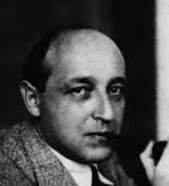
We are again confronted with one of the most vexing aspects of advanced industrial civilization: the rational character of its irrationality. Its productivity and efficiency, its capacity to increase and spread comforts, … the extent to which this civilization transforms the object world into an extension of man's mind and body makes the very notion of alienation questionable. The people recognize themselves in their commodities; they find their soul in their automobile, hi-fi set, split-level home, kitchen equipment. The very mechanism which ties the individual to his society has changed, and social control is anchored in the new needs which it has produced.
▼
Source
p. 9
3 months 3 weeks ago
The particular conception of "ideology" makes its analysis of ideas on a purely psychological level. If it is claimed for instance that an adversary is lying, or that he is concealing or distorting a given factual situation, it is still nevertheless assumed that both parties share common criteria of validity — it is still assumed that it is possible to refute lies and eradicate sources or error by referring to accepted criteria of objective validity common to both parties. The suspicion that one's opponent is the victim of an ideology does not go so far as to exclude him from discussion on the basis of a common theoretical frame of reference. The case is different with the total conception of ideology. When we attribute to one historical epoch one intellectual world and to ourselves another one, or if a certain historically determined social stratum thinks in categories other than our own, we refer not to the isolated cases of thought-content, but to fundamentally divergent thought-systems and to widely differing modes of experience and interpretation.
3 months 3 weeks ago
Peirce, to my knowledge, is original and unique in stressing the problem of studying the rules that limit the class of possible theories. Of course, his concept of abduction, like Lorenz’s biological a priori, has a strongly Kantian flavor, and all derive from the rationalist psychology that concerned itself with the forms, the limits, and the principles that provide “the sinews and connections” for human thought, that underlie “that infinite amount of knowledge of which we are not always conscious,” of which Leibnitz spoke. It is therefore quite natural that we should link these developments to the revival of philosophical grammar, which grew from the same soil as an attempt, quite fruitful and legitimate, to explore one basic facet of human intelligence.
▼
Source
Noam Chomsky, Language and Mind (1968), Chap. 2 : Linguistic contributions to the study of mind: present
3 months 3 weeks ago
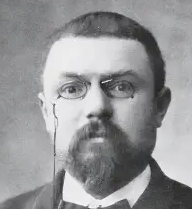
We should say: 'Causes almost identical take almost the same time to produce almost the same effects.'
3 months 3 weeks ago
But this I thought was the meaning of life, that the individual shook off the habit of accepting the favors of difference, should that be tempting, steeled himself against its humiliation, should that weigh down on him, in order to find the universal, what is common to all human beings, to concern oneself only with that. Oh! How beautiful to lose oneself in this way. But then I thought again that in the having of this concern the meaning of life was to be concerned for oneself as if the particular individual were all there was. Oh! How beautiful thus to find oneself in the universal! If the universal is the rule then the individual is the paradigm [corrected from demand]; if the universal is the demand then the universal is the fulfillment; if the universal is everything, if the universal says everything, then the particular individual believes that the everything is said about him-him alone. So if the place and context here did not require signature, none would be needed, for again it is infinitely inconsequential who has said it (as though the favored one said it, the one who was wronged being in no position to say it, since after all they all have it in them to do it).
▼
Source
S. Kierkegaard 1846 Journals, Hannay 1996, VII IB200, p. 252
3 months 3 weeks ago
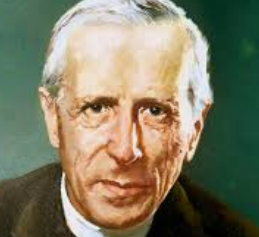
Personally, I stick to my idea that we are watching the birth, more than the death, of a World. The scandal for you, is that England and France should have come to this tragedy because they have sincerely tried the road of peace. But did they not precisely make a mistake on the true meaning of "peace"? Peace cannot mean anything but a HIGHER PROCESS OF CONQUEST. ... The world is bound to belong to its most active elements. ... Just now, the Germans deserve to win because, however bad or mixed is their spirit, they have more spirit than the rest of the world. It is easy to criticize and despise the fifth column. But no spiritual aims or energy will ever succeed, or even deserve to succeed, unless it is able to spread and keep spreading a fifth column.
▼
Source
Letter from Peking (Summer 1940), quoted in The Last European War : September 1939/December 1941 (1976) by John Lukacs, p. 515
3 months 3 weeks ago
A failure is a man who has blundered, but is not able to cash in the experience.
3 months 3 weeks ago
A whole dimension of human activity and passivity has been de-eroticized. The environment from which the individual could obtain pleasure—which he could cathect as gratifying almost as an extended zone of the body—has been rigidly reduced. Consequently, the “universe” of libidinous cathexis is likewise reduced. The effect is a localization and contraction of libido, the reduction of erotic to sexual experience and satisfaction.
▼
Source
p. 73
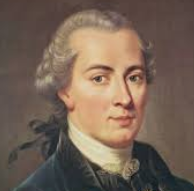
3 months 3 weeks ago
As the analysis of a substantial composite terminates only in a part which is not a whole, that is, in a simple part, so synthesis terminates only in a whole which is not a part, that is, the world.
3 months 3 weeks ago
An old proverb fetched from the outward and visible world says: "Only the man that works gets the bread." Strangely enough this proverb does not aptly apply in that world to which it expressly belongs. For the outward world is subjected to the law of imperfection, and again and again the experience is repeated that he too who does not work gets the bread, and that he who sleeps gets it more abundantly than the man who works. In the outward world everything is made payable to the bearer, this world is in bondage to the law of indifference, and to him who has the ring, the spirit of the ring is obedient, whether he be Noureddin or Aladdin, and he who has the world's treasure, has it, however he got it.
▼
Source
Problemata: Preliminary Expectoration
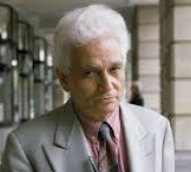
3 months 3 weeks ago
It is also the becoming-space of the spoken chain - which has been called temporal or linear; a becoming-space which makes possible both writing and every correspondence between speech and writing, every passage from one to the other.The activity or productivity connoted by the a of différance refers to the generative movement in the play of differences. The latter are neither fallen from the sky nor inscribed once and for all in a closed system, a static structure that a synchronic and taxonomic operation could exhaust. Differences are the effects of transformations, and from this vantage the theme of différance is incompatible with the static, synchronic, taxonomic, ahistoric motifs in the concept of structure.
▼
Source
p. 28
3 months 3 weeks ago
As a result of changes which, over the last century, have modified our empirically based pictures of the world and hence the moral value of many of its elements, the "human religious ideal" inclines to stress certain tendencies and to express itself in terms which seem, at first sight, no longer to coincide with the "christian religious ideal".
▼
Source
Preface, p. 43
3 months 3 weeks ago
Woman's inaptitude for reasoning has not prevented her from arriving at truth; nor has man's ability to reason prevented him from floundering in absurdity.
3 months 3 weeks ago
By virtue of the universal concept, thought attains mastery over the particular cases. However, the most formalized universe of logic still refers to the most general structure of the given, experienced world; the pure form is still that of the content which it formalizes. The idea of formal logic itself is a historical event in the development of the mental and physical instruments for universal control and calculability. In this undertaking man had to create theoretical harmony out of actual discord, to purge thought from contradictions, to hypostatize identifiable and fungible units in the complex process of society and nature. Under the rule of formal logic, the notion of the conflict between essence and appearance is expendable if not meaningless; the material content is neutralized; the principle of identity is separated from the principle of contradiction (contradictions are the fault of incorrect thinking); final causes are removed from the logical order. Well defined in their scope and function, concepts become instruments of prediction and control. Formal logic is thus the first step on the long road to scientific thought
▼
Source
p. 137
3 months 3 weeks ago
It is difficult for the isolated individual to work himself out of the immaturity which has become almost natural for him. He has even become fond of it and for the time being is incapable of employing his own intelligence, because he has never been allowed to make the attempt. Statutes and formulas, these mechanical tools of a serviceable use, or rather misuse, of his natural faculties, are the ankle-chains of a continuous immaturity. Whoever threw it off would make an uncertain jump over the smallest trench because he is not accustomed to such free movement. Therefore there are only a few who have pursued a firm path and have succeeded in escaping from immaturity by their own cultivation of the mind.
3 months 3 weeks ago
A Roman emperor sitting at the table surrounded by his bodyguard is a magnificent sight, but when the reason is fear, the magnificence pales. So also when the individual does not dare stand taciturnly by his word, does not stand freely and confidently on the pedestal of a conscious act, but is surrounded by a host of deliberations before and after that render him incapable of getting his eye on the action.
▼
Source
Two Ages: The Age of Revolution and the Present Age. A Literary Review. By Soren Kierkegaard, 1846 edited and translated by Howard V. Hong and Edna H. Hong 1978 Princeton University Press P. 68
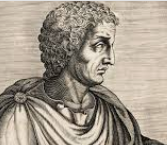
3 months 3 weeks ago
The human features and countenance, although composed of but some ten parts or little more, are so fashioned that among so many thousands of men there are no two in existence who cannot be distinguished from one another.
▼
Source
Book VII, sec. 8.

3 months 3 weeks ago
To travel is to discover that everyone is wrong.
▼
Source
[https://archive.org/details/jestingpilatedia0000huxl/page/214/mode/2up?q=To+travel+is+to+discover+that+everyone+is+wrong Part II: Malaya],
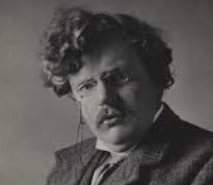
3 months 3 weeks ago
Impartiality is a pompous name for indifference, which is an elegant name for ignorance.
▼
Source
The Speaker (15 December 1900)
3 months 3 weeks ago
I have in this treatise followed the mathematical method, if not with all strictness, at least imitatively, not in order, by a display of profundity, to procure a better reception for it, but because I believe such a system to be quite capable of it, and that perfection may in time be obtained by a cleverer hand, if stimulated by this sketch, mathematical investigators of nature should find it not unimportant to treat the metaphysical portion, which anyway cannot be got rid of, as a special fundamental department of general physics, and to bring it into unison with the mathematical doctrine of motion.
▼
Source
Preface, Tr. Bax (1883)
3 months 3 weeks ago
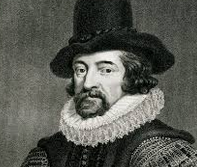
There is no excellent beauty that hath not some strangeness in the proportion.
▼
Source
Of Beauty https://www.authorama.com/essays-of-francis-bacon-43.html
3 months 3 weeks ago
A genius and an Apostle are qualitatively different, they are definitions which each belong in their own spheres: the sphere of immanence, and the sphere of transcendence.
▼
Source
P. 90-91
3 months 3 weeks ago
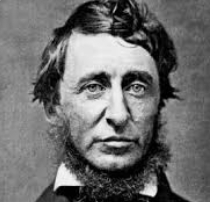
Is the intellect to be regarded as autonomous and self-sufficient, as pursuing ends of its own, and as judging by standards of its own? or is it to be regarded as the servant of alien interests which impose their ends and standards upon it? The modern tendency has been towards the latter or practical interpretation of the knowing faculties.
3 months 3 weeks ago
Music is an ocean, but the repertory is hardly even a lake; it is a pond.
▼
Source
Interview, Time magazine, December 1957
CivilSimian.com created by AxiomaticPanic, CivilSimian, Kalokagathia