
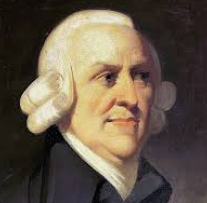
5 months 1 week ago
The administration of the great system of the universe, however, the care of the universal happiness of all rational and sensible beings, is the business of God and not of man. To man is allotted a much humbler department, but one much more suitable to the weakness of his powers, and to the narrowness of his comprehension; the care of his own happiness, of that of his family, his friends, his country: that he is occupied in contemplating the more sublime, can never be an excuse for his neglecting the more humble department.
▼
Source
Section II, Chap. III.

5 months 1 week ago
It is a melancholy truth; yet such is the blessed effect of civilization! the most respectable women are the most oppressed; and, unless they have understandings far superiour to the common run of understandings, taking in both sexes, they must, from being treated like contemptible beings, become contemptible.
▼
Source
Ch. 9
5 months 1 week ago
We may, to be more precise, have to relinquish the notion, explicit or implicit, that changes of paradigm carry scientists and those who learn from them closer and closer to the truth
▼
Source
p. 170

5 months 1 week ago
The belief that torture is always wrong is a prejudice inherited from an obsolete philosophy. We need to shed the belief that human rights are violated when a terrorist is tortured. As Rawls and others have shown, basic freedoms must form a coherent whole. Self-evidently, there can be no right to attack basic human rights. Therefore, once the proper legal procedures are in place, torturing terrorists cannot violate their rights. In fact, in a truly liberal society, terrorists have an inalienable right to be tortured.This is what demonstrates the moral superiority of liberal societies over others, past and present. Other societies have degraded terrorists by subjecting them to lawless and unaccountable power. In the new world that is taking shape, terrorists, although they themselves degrade human rights by practising terrorism, will be afforded the full dignity of due legal process, even while being tortured.
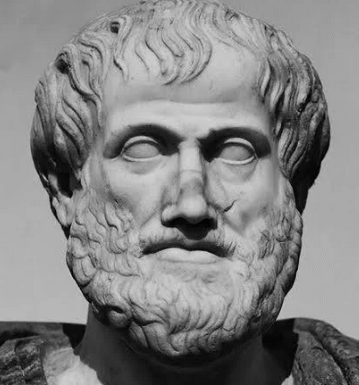
5 months 1 week ago
The refined and active, on the other hand, prefer honour, which I suppose may be said to be the end of the political life. Yet honour is plainly too superficial to be the object of our search, because it appears to depend rather on those who give than on those who receive it, whereas we feel instinctively that the good must be something proper to a man, which cannot easily be taken from him.
▼
Source
(Bk. 1, Chapter III)

5 months 1 week ago
Piecemeal social engineering resembles physical engineering in regarding the ends as beyond the province of technology. (All that technology may say about ends is whether they are compatible with each other or realizable.)
▼
Source
The Poverty of Historicism (1957) Ch. 22 The Unholy Alliance with Utopianism

5 months 1 week ago
Tell people that war is an evil, and they will laugh; for who does not know it? Tell them that patriotism is an evil, and most of them will agree, but with a reservation. "Yes," they will say, "wrong patriotism is an evil; but there is another kind, the kind we hold." But just what this good patriotism is, no one explains.
▼
Source
[http://en.wikisource.org/wiki/Patriotism,_or_Peace%3F Patriotism, or Peace?] (1896), translated by Nathan Haskell Dole | Variant: | I have already several times expressed the thought that in our day the feeling of patriotism is an unnatural, irrational,

5 months 1 week ago
Persecution, then, gives rise to a peculiar technique of writing, and therewith to a peculiar type of literature, in which the truth about all crucial things is presented exclusively between the lines. That literature is addressed, not to all readers, but to trustworthy and intelligent readers only.
▼
Source
p. 25

5 months 1 week ago
Many people are familiar with the campaign to abolish the death penalty. In fact, it has already been abolished in most countries. Even the staunchest advocates of capital punishment acknowledge the fact that the death penalty faces serious challenges. Few people find life without the death penalty difficult to imagine.
▼
Source
Chapter One

5 months 1 week ago
If at times I have thought myself unfortunate, it is because of a confusion, an error. I have mistaken myself for someone else... Who am I really? I am the author of The World as Will and Representation, I am the one who has given an answer to the mystery of Being that will occupy the thinkers of future centuries. That is what I am, and who can dispute it in the years of life that still remain for me?
▼
Source
From The Total Library by Jorge Luis Borges, 1999

5 months 1 week ago
Even more than in a poem, it is the aphorism that the word is god.
5 months 1 week ago
When profit diminishes, merchants are very apt to complain that trade decays; though the diminution of profit is the natural effect of its prosperity, or of a greater stock being employed in it than before.
▼
Source
Chapter IX
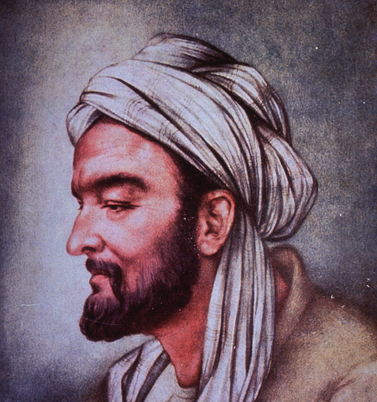
5 months 1 week ago
An ignorant doctor is the aide-de-camp of death.
▼
Source
As quoted in Familiar Medical Quotations (1968) by Maurice B. Strauss
5 months 1 week ago
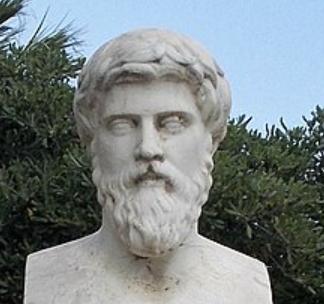
To Harmodius, descended from the ancient Harmodius, when he reviled Iphicrates [a shoemaker's son] for his mean birth, "My nobility," said he, "begins in me, but yours ends in you."
▼
Source
54 Iphicrates
5 months 1 week ago
The heterodox current in Judaism led by Jesus seems to have had no notion of an immortal soul, created by God and then infused into the body: immortality meant being raised from the dead in the body one had in life, then living for ever in a world without decay or corruption. In the Christian religion invented by Paul and Augustine, which was strongly influenced by Plato, immortality meant something quite different – a life out of time, enjoyed by the ‘soul’ or ‘spirit’ of the departed. How this Platonic immortality could preserve anything like the persons that once lived was not made clear.
▼
Source
Cross-correspondences (pp. 32-3)
5 months 1 week ago
Rhetoric is the counterpart of Dialectic. Both alike are concerned with such things as come, more or less, within the general ken of all men and belong to no definite science. Accordingly, all men make use, more or less, of both; for to a certain extent all men attempt to discuss statements and to maintain them, to defend themselves and to attack others.
▼
Source
Book I, pg. 1
5 months 1 week ago
The so-called paradox of freedom is the argument that freedom in the sense of absence of any constraining control must lead to very great restraint, since it makes the bully free to enslave the meek. The idea is, in a slightly different form, and with very different tendency, clearly expressed in Plato. Less well known is the paradox of tolerance: Unlimited tolerance must lead to the disappearance of tolerance. If we extend unlimited tolerance even to those who are intolerant, if we are not prepared to defend a tolerant society against the onslaught of the intolerant, then the tolerant will be destroyed, and tolerance with them. — In this formulation, I do not imply, for instance, that we should always suppress the utterance of intolerant philosophies; as long as we can counter them by rational argument and keep them in check by public opinion, suppression would certainly be unwise. But we should claim the right to suppress them if necessary even by force; for it may easily turn out that they are not prepared to meet us on the level of rational argument, but begin by denouncing all argument; they may forbid their followers to listen to rational argument, because it is deceptive, and teach them to answer arguments by the use of their fists or pistols. We should therefore claim, in the name of tolerance, the right not to tolerate the intolerant. We should claim that any movement preaching intolerance places itself outside the law, and we should consider incitement to intolerance and persecution as criminal, in the same way as we should consider incitement to murder, or to kidnapping, or to the revival of the slave trade, as criminal.
▼
Source
Vol. 1, Notes to the Chapters: Ch. 7, Note 4
5 months 1 week ago
The only thing that we know is that we know nothing — and that is the highest flight of human wisdom.
▼
Source
Book V, Ch. I
5 months 1 week ago
When speaking of a “body of knowledge” or of “the results of research,” e.g., we tacitly assign the same cognitive status to inherited knowledge and to independently acquired knowledge. To counteract this tendency a special effort is required to transform inherited knowledge into genuine knowledge by revitalizing its original discovery, and to discriminate between the genuine and the spurious elements of what claims to be inherited knowledge.
▼
Source
p. 77

5 months 1 week ago
When a whole nation is roaring Patriotism at the top of its voice, I am fain to explore the cleanness of its hands and purity of its heart.
▼
Source
December 10, 1824
5 months 1 week ago
Feminist methodologies, both for research and for organizing, impel us to explore connections that are not always apparent, they drive us to inhabit contradictions and discover what is productive in these contradictions and methods of thought and action; they urge us to think things together that appear to be entirely separate and to disaggregate things that appear to belong naturally together.
5 months 1 week ago
Only what we have not accomplished and what we could not accomplish matters to us, so that what remains of a whole life is only what it will not have been.
5 months 1 week ago
POLITICAL economy, considered as a branch of the science of a statesman or legislator, proposes two distinct objects: first, to provide a plentiful revenue or subsistence for the people, or more properly to enable them to provide such a revenue or subsistence for themselves; and secondly, to supply the state or commonwealth with a revenue sufficient for the public services. It proposes to enrich both the people and the sovereign.
▼
Source
Introduction, p. 459.
5 months 1 week ago
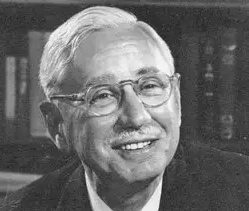
To speak ill of others is a dishonest way of praising ourselves; let us be above such transparent egotism. If you can't say good and encouraging things, say nothing. Nothing is often a good thing to do, and always a clever thing to say.
▼
Source
[https://web.archive.org/web/20130106111821/http://www.willdurant.com/youth.htm We Have a Right To Be Happy Today], commencement address at the Webb School of Claremont, California (7 June 1958)
5 months 1 week ago
When one told Plistarchus that a notorious railer spoke well of him, "I 'll lay my life," said he, "somebody hath told him I am dead, for he can speak well of no man living."
▼
Source
Of Plistarchus
5 months 1 week ago
The idea of evil as it appears in modern secular thought is an inheritance from Christianity. To be sure, rationalists have repudiated the idea; but it is not long before they find they cannot do without it. What has been understood as evil in the past, they insist, is error – a product of ignorance that human beings can overcome. Here they are repeating a Zoroastrian theme, which was absorbed into later versions of monotheism: the belief that ‘as the “lord of creation” man is at the forefront of the contest between the powers of Truth and Untruth.’ But how to account for the fact that humankind is deaf to the voice of reason? At this point rationalists invoke sinister interests – wicked priests, profiteers from superstition, malignant enemies of enlightenment, secular incarnations of the forces of evil. As so often is the case, secular thinking follows a pattern dictated by religion while suppressing religion’s most valuable insights. Modern rationalists reject the idea of evil while being obsessed by it. Seeing themselves as embattled warriors in a struggle against darkness, it has not occurred to them to ask why humankind is so fond of the dark. They are left with the same problem of evil that faces religion. The difference is that religious believers know they face an insoluble difficulty, while secular believers do not. Aware of the evil in themselves, traditional believers know it cannot be expelled from the world by human action. Lacking this saving insight, secular believers dream of creating a higher species. They have not noticed the fatal flaw in their schemes: any such species will be created by actually existing human beings.
▼
Source
The Faith of Puppets: The Faith of Puppets (p. 18-9)
5 months 1 week ago
It is pretty definitely settled, among men competent to form a judgment, that Aristotle was the best educated man that ever walked on the surface of this earth. He is still, as he was in Dante's time, the "master of those that know." It is, therefore, not without reason that we look to him, not only as the best exponent of ancient education, but as one of the worthiest guides and examples in education generally. That we may not lose the advantage of his example, it will be well, before we consider his educational theories, to cast a glance at his life, the process of his development, and his work.
▼
Source
Thomas Davidson, in Aristotle and Ancient Educational Ideals (1892), p. 154
5 months 1 week ago
One of the ideas I had discussed in The Poverty of Historicism was the influence of a prediction upon the event predicted. I had called this the "Oedipus effect", because the oracle played a most important role in the sequence of events which led to the fulfilment of its prophecy. ... For a time I thought that the existence of the Oedipus effect distinguished the social from the natural sciences. But in biology, too—even in molecular biology—expectations often play a role in bringing about what has been expected.
▼
Source
Page 29
5 months 1 week ago
The new commission for the inquiry into the condition of the native tribes in all its branches had been formed and dispatched to its destination with an unusual speed and energy inspired by Alexey Alexandrovitch. Within three months a report was presented. The condition of the native tribes was investigated in its political, administrative, economic, ethnographic, material, and religious aspects. To all these questions there were answers admirably stated, and answers admitting no shade of doubt, since they were not a product of human thought, always liable to error, but were all the product of official activity. The answers were all based on official data furnished by governors and heads of churches, and founded on the reports of district magistrates and ecclesiastical superintendents, founded in their turn on the reports of parochial overseers and parish priests; and so all of these answers were unhesitating and certain. All such questions as, for instance, of the cause of failure of crops, of the adherence of certain tribes to their ancient beliefs, etc.—questions which, but for the convenient intervention of the official machine, are not, and cannot be solved for ages—received full, unhesitating solution.
▼
Source
Part IV, Chapter 6
5 months 1 week ago
Leo Strauss is professor of political philosophy in Chicago, highly respected. Wrote a good book about Hobbes (as well as the one about Spinoza). Now another about natural law. He is a convinced orthodox atheist. Very odd. A truly gifted intellect. I don't like him.
▼
Source
Hannah Arendt, in letter to Karl Jaspers in 1954, published in Hannah Arendt and Karl Jaspers, Correspondence, 1926-1969 (1993)
5 months 1 week ago
The blazing evidence of immortality is our dissatisfaction with any other solution.
▼
Source
July 1855
5 months 1 week ago
if people know about a world historical figure like Angela Y. Davis, it’s because somehow in spite of the dramatic story of her coming to national prominence, arrest, FBI most wanted. And in spite of the actual things that she’s written and said over time, that somehow all Angela Y. Davis was trying to do was get a spot in the university, or become something that would reproduce rather than interrupt the kinds of social relations that made her and her parents radical in the first place. So there’s that. So if we draw forward from when 1970, ’71, when, again, Angela was suddenly catapulted to the global stage and was, as she said, says herself, “Saved by the people.”
▼
Source
Ruth Wilson Gilmore, [https://truthout.org/audio/ruth-wilson-gilmore-on-abolition-the-climate-crisis-and-what-must-be-done/ Interview] with Truthout (2022)
5 months 1 week ago
The world begins and ends with us. Only our consciousness exists, it is everything, and this everything vanishes with it. Dying, we leave nothing. Then why so much fuss around an event that is no such thing?
5 months 1 week ago
Of all those expensive and uncertain projects, however, which bring bankruptcy upon the greater part of the people who engage in in them, there is none perhaps more perfectly ruinous than the search after new silver and gold mines. It is perhaps the most disadvantageous lottery in the world, or the one in which the gain of those who draw the prizes bears the least proportion to the loss of those who draw the blanks: for though the prizes are few and the blanks are many, the common price of a ticket is the whole fortune of a very rich man.
▼
Source
Chapter VII, Part First, p. 610.
5 months 1 week ago
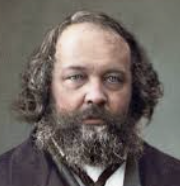
Not official revolutionary commissars in any sort of sashes, but rather revolutionary propagandists are to be dispatched into all the provinces and communes and particularly among the peasants who cannot be revolutionised by principles, nor by the decrees of any dictatorship, but only by the act of revolution itself, that is to say, by the consequences that will inevitably ensure in every commune from complete cessation of the legal and official existence of the state.
5 months 1 week ago
To all Christian governments Christianity was not a rule of means but a means of rule; Christ was for the people, Machiavelli was preferred by the kings. The state in some measure had civilized man, but who would civilize the state?
▼
Source
Chapter 6, p. 229
5 months 1 week ago
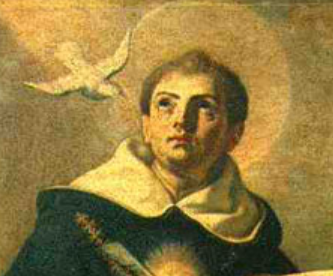
Omne verum a quocumque dicatur a Spiritu Sancto est.
▼
Source
All that is true, from anyone it is said, always comes from the Holy Spirit. | [https://www.ilsole24ore.com/art/i-doni-spirituali-e-teologici-riforma-AENoMRwC Summa Theologiae, I-II, q. 109, a. 1, ad 1]

5 months 1 week ago
So people should abstain from other animals just as they should from the human.
▼
Source
4, 9, 6
5 months 1 week ago
A theory that explains everything, explains nothing.
▼
Source
In [https://books.google.com/books?id=Dy8RAAAAIAAJ&pg=PA28&lpg=PA28&dq=Playfair+%22theory+that+explains+everything+explains+nothing%22&ots=j4p-xWU0mp&sig=ACfU3U0lg4F-Ipn2lmUQZoj3IMi-rfB0jQ&hl=en#v=onepage&q=Playfair%20%22theory%20that%20explains%20everyth
5 months 1 week ago
If one has no vanity in this life of ours, there is no sufficient reason for living.
▼
Source
Ch. 23. This is not, as it is often quoted, a stand-alone Tolstoy epigram, but part of the narration by the novella's jealousy-ridden protagonist Pozdnyshev.

5 months 1 week ago
Marriage is therefore not an ordinary contract, since in terminating it, the two parties cannot return themselves to the same state they were in before entering into it. And if the contract is voluntary at the time it is entered into, it can no longer be voluntary, and almost never is, at the time of its termination, since the party which manifests the desire to dissolve it takes all liberty from the other party to refuse, and has only too many means to force its consent.
5 months 1 week ago
Do not yet see, that, if the single man plant himself indomitably on his instincts, and there abide, the huge world will come round to him.
▼
Source
par. 43

5 months 1 week ago
All wish to live in the nearness of God, but only the Hindus bring it to pass.
▼
Source
Apollonius of Tyana quoted by Philostratus. Quoted in Eliot, Charles, Sir, Hinduism and Buddhism; an historical sketch London, Routledge & K. Paul [1921] volume I p. lxii. Quoted from Londhe, S. (2008). [https://books.google.com/books/about/A_Tribute_to_H
5 months 1 week ago
Whoever asserts a value, must bring its influence to bear. Whoever maintains that it has value regardless of the influence brought to bear by any individual human being who endorses it, is simply cheating.
5 months 1 week ago
There is no art which one government sooner learns of another than that of draining money from the pockets of the people.
▼
Source
Chapter II, Part II, Appendix to Articles I and II.
5 months 1 week ago
You can't satisfy everybody; especially if there are those who will be dissatisfied unless not everybody is satisfied.
▼
Source
Ch. 10 : A Framework for Utopia; The Framework as Utopian Common Ground, p. 320
5 months 1 week ago
The error arises from the learned jurists deceiving themselves and others, by asserting that government is not what it really is, one set of men banded together to oppress another set of men, but, as shown by science, is the representation of the citizens in their collective capacity.
▼
Source
Chapter VI, Attitude of Men of the Present Day to War | Variant translation: Government is an association of men who do violence to the rest of us.

5 months 1 week ago
All breathing, existing, living, sentient creatures should not be slain, nor treated with violence, nor abused, nor tormented, nor driven away.
▼
Source
Ācharanga Sutra, Book 1, lecture 4, lesson 1, as translated by H. Jacobi, quoted in The Boundless Circle : Caring for Creatures and Creation (1996) by Michael W. Fox, p. 262.
5 months 1 week ago
And when his hours are numbered, and the world Is all his own, retiring, as he were not, Leaves, when the sun appears, astonished Art To mimic in slow structures, stone by stone Built in an age, the mad wind's night-work, The frolic architecture of the snow.
▼
Source
The Snow-Storm
5 months 1 week ago
Bourgeois society is ruled by equivalence. It makes the dissimilar comparable by reducing it to abstract quantities. To the enlightenment, that which does not reduce to numbers, and ultimately to the one, becomes illusion.
▼
Source
John Cumming trans., p. 7
CivilSimian.com created by AxiomaticPanic, CivilSimian, Kalokagathia