

5 months 1 week ago
Heraclitus too, a man who was not easily pleased, has praised him; saying, "In Priene there lived Bias the son of Teutamus, whose reputation is higher than that of the others."
5 months 1 week ago
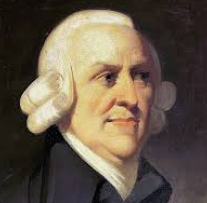
Perhaps no economist will ever again so utterly encompass his age as Adam Smith. Certainly none was ever so serene, so devoid of contumacy, so penetratingly critical without rancor, and so optimistic without being utopian.
▼
Source
Robert Heilbroner, The Worldly Philosophers 7th ed. (1999), Chapter III. The Wonderful World of Adam Smith

5 months 1 week ago
No longer able to believe in the Church religion, whose falsehood they had detected, and incapable of accepting true Christian teaching, which denounced their whole manner of life, these rich and powerful people, stranded without any religious conception of life, involuntarily returned to that pagan view of things which places life's meaning in personal enjoyment. And then among the upper classes what is called the "Renaissance of science and art" took place, which was really not only a denial of every religion, but also an assertion that religion was unnecessary.

5 months 1 week ago
Do not imagine that these most difficult problems can be thoroughly understood by any one of us. This is not the case. At times the truth shines so brilliantly that we perceive it as clear as day. Our nature and habit then draw a veil over our perception, and we return to a darkness almost as dense as before. We are like those who, though beholding frequent flashes of lightning, still find themselves in the thickest darkness of the night. On some the lightning flashes in rapid succession, and they seem to be in continuous light, and their night is as clear as the day. This was the degree of prophetic excellence attained by (Moses) the greatest of prophets, to whom God said," But as for thee, stand thou here by Me" (Deut. v. 31), and of whom it is written" the skin of his face shone," etc. (Exod. xxxiv. 29). [Some perceive the prophetic flash at long intervals; this is the degree of most prophets.] By others only once during the whole night is a flash of lightning perceived. This is the case with those of whom we are informed," They prophesied, and did not prophesy again" (Num. xi. 25). There are some to whom the flashes of lightning appear with varying intervals; others are in the condition of men, whose darkness is illumined not by lightning, but by some kind of crystal or similar stone, or other substances that possess the property of shining during the night; and to them even this small amount of light is not continuous, but now it shines and now it vanishes, as if it were" the flame of the rotating sword."

5 months 1 week ago
Great geniuses have the shortest biographies.
▼
Source
Plato; or, The Philosopher
5 months 1 week ago
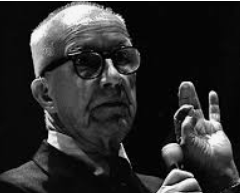
One of my working assumptions which has been proven successful so often as seemingly to qualify it as a reliable tenet is that A problem adequately stated is a problem solved theoretically and immediately, and therefore subsequently to be solved, realistically. Others have probably stated the principle in many ways. The assumption is that the inevitability of a solution's realization is inherent in the interaction of human intellect and the constantly transformative evolution of physical universe. At first the, only subconsciously apprehended, approaching confluences of complex events make themselves known intuitively within the intellectual weather. Then comes a gradually awakening consciousness of the presence of new families of differentiating-out challenging concepts of every day prominence. It is with these randomly patterning families of separate concepts that evolution is about to deal integratively. As a now specific unitary problem it may be disposed of effectively when and if that unified problem becomes "adequately stated" and thereby comprehensibly solvable.
▼
Source
[http://challenge.bfi.org/sites/challenge.bfi.org/files/pdf_files/wdsd_phase1_doc3.pdf World Design Science Decade 1965-1975 Phase I (1965), Document 3 : Comprehensive Thinking, "Venus Proximity Day", p. 33]
5 months 1 week ago
He was a great thinker,—and that was much; but he also made men recognize him as a great thinker, because he was a great master of style,—which was more.
▼
Source
Woodrow Wilson, 'An Old Master', The New Princeton Review, Vol. VI. 1888. July—September—November (1888), pp. 217-218
5 months 1 week ago
The oppression of a majority by a minority, and the demoralization inevitably resulting from it, is a phenomenon that has always occupied me and has done so most particularly of late.
▼
Source
I
5 months 1 week ago
Those who desire to be men in truth, and not brutes, having only the appearance and shape of men, must constantly endeavor to reduce the wants of the body, such as eating, love, drinking, anger, and all manners originating in lust and passion; they must feel ashamed of them and set limits to them for themselves.
▼
Source
Ch.8
5 months 1 week ago
You can never do a kindness too soon, for you never know how soon it will be too late.
▼
Source
Culture
5 months 1 week ago
Each age is characterized by its own astronomical myriads of new, special-case experiences and problems to be stored in freshly born optimum capacity human brains — which storages in turn may disclose to human minds the presence of heretofore undiscovered, unsuspectedly existent eternal generalized principles.
5 months 1 week ago
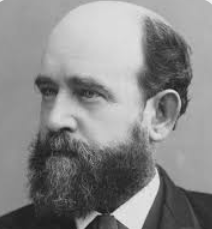
The needs of labor require more than kind words, and are not to be satisfied by such soft phrases as we address to a horse when we want to catch him that we may put a bit in his mouth and a saddle on his back. Let me ask those who are disposed to regard protection as favorable to the aspirations of labor, to consider whether it can be true that what labor needs is to be protected? To admit that labor needs protection is to acknowledge its inferiority; it is to acquiesce in an assumption that degrades the workman to the position of a dependent, and leads logically to the claim that the employee is bound to vote in the interest of the employer who provides him with work. There is something in the very word "protection" that ought to make workingmen cautious of accepting anything presented to them under it. The protection of the masses has in all times been the pretense of tyranny — the plea of monarchy, of aristocracy, of special privilege of every kind. The slave owners justified slavery as protecting the slaves.
▼
Source
Ch. 2
5 months 1 week ago
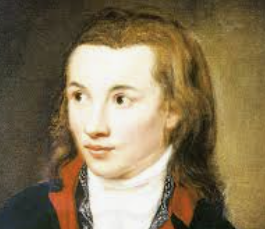
Most observers of the French Revolution, especially the clever and noble ones, have explained it as a life-threatening and contagious illness. They have remained standing with the symptoms and have interpreted these in manifold and contrary ways. Some have regarded it as a merely local ill. The most ingenious opponents have pressed for castration. They well noticed that this alleged illness is nothing other than the crisis of beginning puberty.
▼
Source
Fragment No. 105
5 months 1 week ago
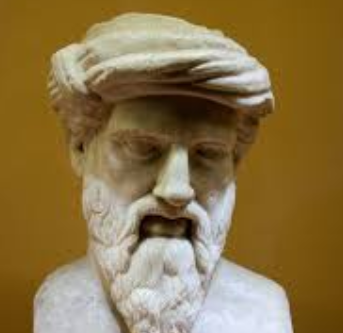
I was Euphorbus at the siege of Troy.
▼
Source
As reported by Heraclides Ponticus (c. 360 BC), and Diogenes Laërtius (Lives and Opinions of Eminent Philosophers, "Pythagoras", Sect. 4), and quoted in Cosmic Optimism: A Study of the Interpretation of Evolution (1949) by Frederick William Conner | Misqu
5 months 1 week ago
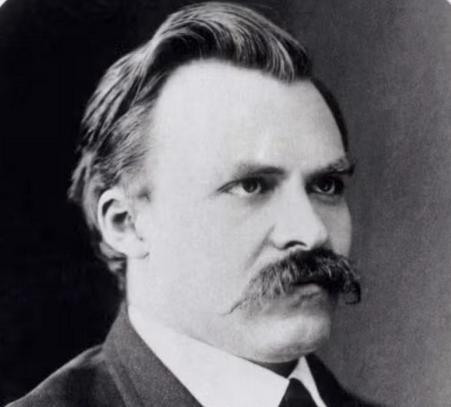
The desert grows: woe to him in whom deserts hide ...
5 months 1 week ago
If a poor person envies a rich person, he is no better than the rich person.
▼
Source
p. 89
5 months 1 week ago
The being which has absolute existence, which has never been and will never be without existence, is not in need of an agent.
▼
Source
Ch.13
5 months 1 week ago
The key to the period appeared to be that the mind had become aware of itself. Men grew reflective and intellectual. There was a new consciousness. The former generations acted under the belief that a shining social prosperity was the beatitude of man, and sacrificed uniformly the citizen to the State. The modern mind believed that the nation existed for the individual, for the guardianship and education of every man. This idea, roughly written in revolutions and national movements, in the mind of the philosopher had far more precision; the individual is the world. This perception is a sword such as was never drawn before. It divides and detaches bone and marrow, soul and body, yea, almost the man from himself. It is the age of severance, of dissociation, of freedom, of analysis, of detachment. Every man for himself. The public speaker disclaims speaking for any other; he answers only for himself. The social sentiments are weak; the sentiment of patriotism is weak; veneration is low; the natural affections feebler than they were. People grow philosophical about native land and parents and. relations. There is an universal resistance to ties rand ligaments once supposed essential to civil society. The new race is stiff, heady and rebellious; they are fanatics in freedom; they hate tolls, taxes, turnpikes, banks, hierarchies, governors, yea, almost laws. They have a neck of unspeakable tenderness; it winces at a hair. They rebel against theological as against political dogmas; against mediation, or saints, or any nobility in the unseen. The age tends to solitude. The association of the time is accidental and momentary and hypocritical, the detachment intrinsic and progressive. The association is for power, merely, — for means; the end being the enlargement and independency of the individual.
▼
Source
p. 529, col. 1
5 months 1 week ago
Neither the great political or financial powers of the world nor the population in general realize that the engineering-chemical-electronic revolution now makes it possible to produce many more technical devices with ever less material. We can now take care of everybody at a higher standard of living than anybody has ever known. It does not have to be "you or me," so selfishness is unnecessary and war is obsolete. This has never been done before. Only twelve years ago technology reached the point where this could be done. Since then it has made it ever so much easier to do.
5 months 1 week ago
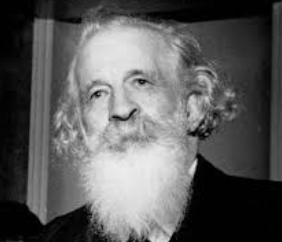
Ideas are refined and multiplied in the commerce of minds. In their splendor, images effect a very simple communion of souls.
▼
Source
Introduction, sect. 4

5 months 1 week ago
I envy no quality of the mind or intellect in others; not genius, power, wit, nor fancy; but, if I could choose what would be most delightful, and, I believe, most useful to me, I should prefer a firm religious belief to every other blessing.
▼
Source
In Josiah Hotchkiss Gilbert, Dictionary of Burning Words of Brilliant Writers (1895), p. 241
5 months 1 week ago
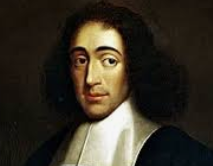
I pass, at length, to the third and perfectly absolute dominion, which we call democracy.
▼
Source
Ch. 11, Of Democracy
5 months 1 week ago
Plants are Children of the Earth; we are Children of the Æther. Our Lungs are properly our Root; we live, when we breathe; we begin our life with breathing.
5 months 1 week ago
Govern your tongue before all other things, following the gods.
▼
Source
Symbol 7
5 months 1 week ago
"Grant me, ye gods, but one certainty," runs Parmenides' prayer, "and if it be but a log's breadth on which to lie. on which to ride upon the sea of uncertainty. Take away everything that comes-to-be, everything lush, colorful, blossoming, illusory, everything that charms and is alive. Take all these for yourselves and grant me but the one and only, poor empty certainty.”
▼
Source
p. 81
5 months 1 week ago
It has been said that a careful reading of Anna Karenina, if it teaches you nothing else, will teach you how to make strawberry jam.
▼
Source
Julian Mitchell, Radio Times (30 October 1976)
5 months 1 week ago
Management Providence, knowledge, and intention are not the same when ascribed to us and when ascribed to God.
▼
Source
Ch.20
5 months 1 week ago
And every man, in love or pride, Of his fate is ever wide.
▼
Source
Nemesis
5 months 1 week ago
But we can do so much now, with so little, that we can take care of everybody. That's why the idea of scarcity is all wrong.
5 months 1 week ago
It is not proper either to have a blunt sword or to use freedom of speech ineffectually. Neither is the sun to be taken from the world, nor freedom of speech from erudition.
▼
Source
As quoted in the translation of Thomas Taylor (1818)
5 months 1 week ago
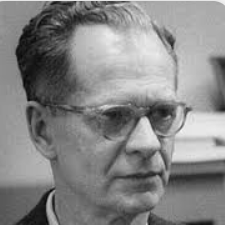
The real question is not whether machines think but whether men do. The mystery which surrounds a thinking machine already surrounds a thinking man.
▼
Source
Contingencies of Reinforcement: A Theoretical Analysis (1969)

5 months 1 week ago
Logic takes care of itself; all we have to do is to look and see how it does it.
▼
Source
Journal entry (13 October 1914), also in Tractatus Logico-Philosophicus (§ 5.47)
5 months 1 week ago
The chief object of the Law, as has been shown by us, is the teaching of truths; to which the truth of the creatio ex nihilo belongs. It is known that the object of the law of Sabbath is to confirm and to establish this principle, as we have shown in this treatise (Part II. chap. xxxi.) In addition to the teaching of truths the Law aims at the removal of injustice from mankind. We have thus proved that the first laws do not refer to burnt-offering and sacrifice, which are of secondary importance.
▼
Source
Ch.32
5 months 1 week ago
Music is the poor man's Parnassus.
▼
Source
Poetry and Imagination
5 months 1 week ago
In spite of all humans' innate interest in the interrelatedness of all experience, long ago these world-power-structure builders learned to shunt all the bright intellectuals and the physically creative into specialist careers. The powerful reserved for themselves the far easier, because innate, comprehensive functioning. All one needs to do is to discover how self-perpetuating is this disease of specialization is to witness the inter-departmental battling for educational funds and the concomitant jealous guarding of the various specializations assigned to a department's salaried experts on each subject in any university.
5 months 1 week ago
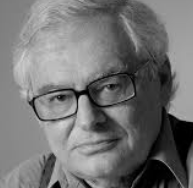
When taken as a way of modeling cognitive architecture, really does represent an approach that is quite different from that of the classical cognitive science that it seeks to replace. Classical models of the mind were derived from the structure of Turing and Von Neumann machines. They are not, of course, committed to the details of these machines as exemplified in Turing's original formulation or in typical commercial computers—only to the basic idea that the kind of computing that is relevant to understanding cognition involves operations on symbols.. In contrast, connectionists propose to design systems that can exhibit intelligent behavior without storing, retrieving, or otherwise operating on structured symbolic expressions. The style of processing carried out in such models is thus strikingly unlike what goes on when conventional machines are computing some function.
▼
Source
Jerry A. Fodor, and Zenon W. Pylyshyn. "Connectionism and cognitive architecture: A critical analysis." Cognition 28.1-2 (1988): 3-71.

5 months 1 week ago
Yet God hath not only granted these faculties, by which we may bear every event without being depressed or broken by it, but like a good prince and a true father, hath placed their exercise above restraint, compulsion, or hindrance, and wholly within our own control.
▼
Source
Book I, ch. 6, § 40.
5 months 1 week ago
Repentance deserveth Pardon.
5 months 1 week ago
The world and life are one. (5.621)
▼
Source
Original German: Die Welt und das Leben sind Eins.

5 months 1 week ago
In political activity, then, men sail a boundless and bottomless sea; there is neither harbour for shelter nor floor for anchorage, neither starting-place nor appointed destination. The enterprise is to keep afloat on an even keel; the sea is both friend and enemy; and the seamanship consists in using the resources of a traditional manner of behaviour in order to make a friend of every hostile occasion.
5 months 1 week ago
I see that sensible men and conscientious men all over the world were of one religion.
▼
Source
The Preacher
5 months 1 week ago
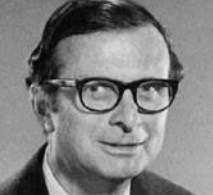
This text is oriented toward human organizations since this has been the emphasis in the practice of O.R. in business and industry.
▼
Source
p. 7
5 months 1 week ago
Be bold to look towards God and say, "Use me henceforward for whatever you want; I am of one mind with you; I am yours; I refuse nothing that seems good to you; lead me where you will; wrap me in what clothes you will."
▼
Source
Book II, ch. 16, § 42
5 months 1 week ago
Pythagoras did not possess a proof of the theorem which bears his name... he was temperamentally uninterested in proofs of this nature, as may be gleaned from... his numerological deductions. ...the Pythagorean theorem was known to Thales. ...the hypotenuse theorem is a direct consequence of the principle of similitude, and... Thales was fully conversant with the theory of similar triangles. On the other hand, there is no doubt that Pythagoras fully appreciated the metaphysical implications. ...this relation ...was to Pythagoras and the Pythagoreans a basic law of nature, and... a brilliant confirmation of their number philosophy.
▼
Source
Tobias Dantzig, The Bequest of the Greeks (1955)
5 months 1 week ago
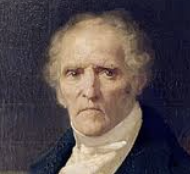
Religious minds, which are distrustful of philosophic dogmas, fall into the error - inculcated by philosophy - of supposing that Providence is limited in its action; that is does not extend to the social world or the social relations of mankind, and that God has not determined upon any plan of social organization for the regulation of those relations. If they had a PROFOUND FAITH IN THE UNIVERSALITY OF PROVIDENCE, they would be convinced that all human needs must have been foreseen and provided for, and especially that the most urgent of them all could not have been overlooked - namely, the need of a social order for the regulation of our industrial and social relations.
▼
Source
The Theory of Social Organization. Harmonian Man: Selected Writings of Charles Fourier, p. 5.
5 months 1 week ago
Philosophy unravels the knots in our thinking; hence its results must be simple, but its activity is as complicated as the knots that it unravels.
▼
Source
Ch. 9 : Philosophy, p. 183

5 months 1 week ago
In the Art of Peace we never attack. An attack is proof that one is out of control. Never run away from any kind of challenge, but do not try to suppress or control an opponent unnaturally. Let attackers come any way they like and then blend with them. Never chase after opponents. Redirect each attack and get firmly behind it.
5 months 1 week ago
No congress, nor mob, nor guillotine, nor fire, nor all together, can avail, to cut out, burn, or destroy the offense of superiority in persons. The superiority in him is inferiority in me.
▼
Source
p. 65
5 months 1 week ago
Knowledge is a potential for a certain type of action, by which we mean that the action would occur if certain tests were run. For example, a library plus its user has knowledge if a certain type of response will be evoked under a given set of stipulations.
▼
Source
p. 11
5 months 1 week ago
The mind celebrates a little triumph whenever it can formulate a truth, however unwelcome to the flesh, or discover an actual force, however unfavourable to given interests.
▼
Source
Ch. IV.: Music
CivilSimian.com created by AxiomaticPanic, CivilSimian, Kalokagathia