
5 months 1 week ago
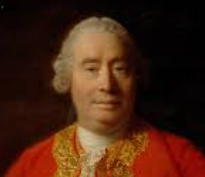
Methinks I am like a man, who having struck on many shoals, and having narrowly escap'd shipwreck in passing a small frith, has yet the temerity to put out to sea in the same leaky weather-beaten vessel, and even carries his ambition so far as to think of compassing the globe under these disadvantageous circumstances.
▼
Source
Part 4, Section 7
5 months 1 week ago
When you do anything from a clear judgment that it ought to be done, never shun the being seen to do it, even though the world should make a wrong supposition about it; for, if you don't act right, shun the action itself; but, if you do, why are you afraid of those who censure you wrongly? (35).
5 months 1 week ago
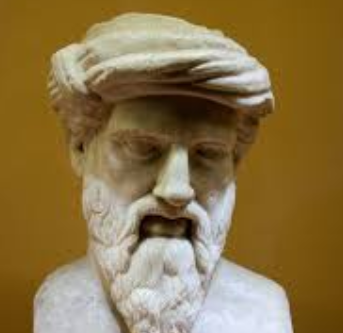
What seems certain is that Pythagoras developed the idea of mathematical logic... He realized that numbers exist independently of the tangible world and therefore their study was untainted by inaccuracies of perception. This meant he could discover truths which were independent of opinion of prejudice and which were more absolute then any previous knowledge.
▼
Source
Simon Singh, Fermat's Last Theorem (1997)

5 months 1 week ago
Thus the Semitic race is to be recognized almost entirely by negative characteristics. It has neither mythology, nor epic, nor science, nor philosophy, nor fiction, nor plastic arts, nor civil life; in everything there is a complete absence of complexity, subtlety or feeling, except for unity. It has no variety in its monotheism.
▼
Source
Renan, E. (1855). Histoire générale et système composée des langues sémitiques. Paris. , quoted in Black Athena: The Afroasiatic Roots of Classical Civilization Vol. I, published in 1987, by Martin Bernal

5 months 1 week ago
So we do sometimes think because it has been found to pay.
▼
Source
§ 470
5 months 1 week ago
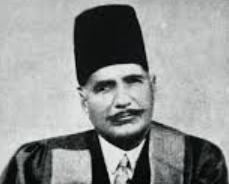
My forefathers were Brahmins. They spent their lives in search of God. I am spending my life in search of Man.
▼
Source
Educational Thinkers [https://books.google.com/books?id=O6Fp2zaQVVMC&pg=PA151&dq=#v=onepage&q&f=false]

5 months 1 week ago
Variation: If a man can write a better book, preach a better sermon, or make a better mousetrap than his neighbor, though he builds his house in the woods the world will make a beaten path to his door.
▼
Source
Investigations have failed to confirm this in Emerson's writings (John H. Lienhard. [http://www.uh.edu/engines/epi1163.htm "A better moustrap"], Engines of our Ingenuity). Also reported as a misattribution in Paul F. Boller, Jr., and John George, They Nev
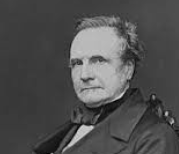
5 months 1 week ago
The first application of this principle [of the division of labor] must have been made in a very early stage of society; for it must soon have been apparent that more comforts and conveniences could be acquired by one man restricting his occupation to the art of making bows, another to that of building houses, a third boats, and so on. This division of labor Into trades was not, however, the result of an opinion that the general riches of the community would be increased by such an arrangement: but it must have arisen from the circumstances, of each individual so employed discovering that he himself could thus make a greater profit of his labour than by pursuing more varied occupations.
▼
Source
p. 170. Ch 19. "On the division of labour"
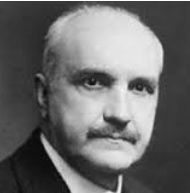
5 months 1 week ago
I like to walk about amidst the beautiful things that adorn the world; but private wealth I should decline, or any sort of personal possessions, because they would take away my liberty.
▼
Source
"The Irony of Liberalism"
5 months 1 week ago
Human reason reduced to its own resources is perfectly worthless, not only for creating but also for preserving any political or religious association, because it only produces disputes, and, to conduct himself well, man needs not problems but beliefs. His cradle should be surrounded by dogmas, and when his reason is awakened, it should find all his opinions ready-made, at least all those relating to his conduct. Nothing is so important to him as prejudices. Let us not take this word in a bad sense. It does not necessarily mean false ideas, but only, in the strict sense of the word, opinions adopted before any examination. Now these sorts of opinions are man’s greatest need, the true elements of his happiness, and the Palladium of empires. Without them, there can be neither worship, nor morality, nor government. There must be a state religion just as there is a state policy; or, rather, religious and political dogmas must be merged and mingled together to form a complete common or national reason strong enough to repress the aberrations of individual reason, which of its nature is the mortal enemy of any association whatever because it produces only divergent opinions.
▼
Source
p. 87
5 months 1 week ago
In our reasonings concerning matter of fact, there are all imaginable degrees of assurance, from the highest certainty to the lowest species of moral evidence. A wise man, therefore, proportions his belief to the evidence.
▼
Source
Section X: Of Miracles; Part I. 87
5 months 1 week ago
If someone associates with a true Pythagorean, what will he will get from him, and in what quantity? I would say: statesmanship, geometry, astronomy, arithmetic, harmonics, music, medicine, complete and god-given prophecy, and also the higher rewards — greatness of mind, of soul, and of manner, steadiness, piety, knowledge of the gods and not just supposition, familiarity with blessed spirits and not just faith, friendship with both gods and spirits, self-sufficiency, persistence, frugality, reduction of essential needs, ease of perception, of movement, and of breath, good color, health, cheerfulness, and immortality.
▼
Source
Apollonius of Tyana, letter to Euphrates, Epp. Apoll. 52
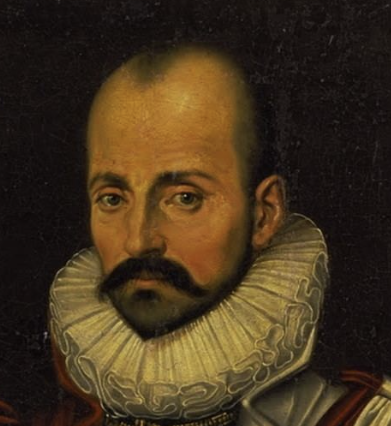
5 months 1 week ago
The good seed that nature plants in us is so slight and so slippery that it cannot withstand the least harm from wrong nourishment.
▼
Source
Part 2
5 months 1 week ago
I squander untold effort making an arrangement of my thoughts that may have no value whatever.
▼
Source
p. 33e

5 months 1 week ago
When devotion to men with an urge for new social organization replaces devotion to men with theological illumination and a way of life pleasing to God, then the actions of the innovator and his formulations are often gauged by their significance for human happiness. Behaviour is examined through the happiness it produces, which is an empirical matter; transcendence is overcome.
▼
Source
p. 327-328
5 months 1 week ago
The earlier views, those of Hobbes or Locke for instance, saw language as an instrument, and understood meaning in terms of designation. Discovering the meaning of words is finding what ideas or things they stood for. ... By contrast, a hermeneutical view requires a very different conception. If we are partly constituted by our self-understanding, and this in turn can be very different according to the various languages which articulate for us a background of distinctions of worth, then language does not only serve to depict ourselves and the world, it also helps constitute our lives. Certain ways of being, of feeling, of relating to each other are only possible given certain linguistic resources.
▼
Source
Human Agency and Language (Cambridge: 1985), pp. 9-10
5 months 1 week ago
The famous George Santayana quote: “Those who forget the past are condemned to repeat it.” That's the thing, though. None of us have forgotten. Darned if we're not repeating it anyway...
▼
Source
[https://www.ajc.com/blog/mark-bradley/confederate-flags-and-noose-what-century-this-anyway/zZ1xCpzku1AUasaQqW7S3I/ Confederate flags and a noose: What century is this, anyway?, By Mark Bradley, The Atlanta Journal-Constitution] (22 June 2020)
5 months 1 week ago
Providence has already begun the punishment of the guilty; more than sixty regicides, the most guilty among them, have already died a violent death.
▼
Source
Chapter X, p. 97
5 months 1 week ago
It is a great mortification to the vanity of man, that his utmost art and industry can never equal the meanest of nature's productions, either for beauty or value. Art is only the under-workman, and is employed to give a few strokes of embellishment to those pieces, which come from the hand of the master
▼
Source
Part I, Essay 15: The Epicurean
5 months 1 week ago
If life becomes hard to bear we think of improvements. But the most important and effective improvement, in our own attitude, hardly occurs to us, and we can decide on this only with the utmost difficulty.
▼
Source
p. 60e

5 months 1 week ago
When a revolutionary situation arises in a country, before the spirit of revolt is sufficiently awakened in the masses to express itself in violent demonstrations in the streets or by rebellions and uprisings, it is through action that minorities succeed in awakening that feeling of independence and that spirit of audacity without which no revolution can come to a head. Men of courage, not satisfied with words, but ever searching for the means to transform them into action, — men of integrity for whom the act is one with the idea, for whom prison, exile, and death are preferable to a life contrary to their principles, — intrepid souls who know that it is necessary to dare in order to succeed, — these are the lonely sentinels who enter the battle long before the masses are sufficiently roused to raise openly the banner of insurrection and to march, arms in hand, to the conquest of their rights.
5 months 1 week ago
Muggeridge: ‘Positivism will deprive man, not only of all objects of religious reverence, but of all objects of the reverence which great philosophers have always, and rightly, received.’ True, Malcolm, except for the 'and rightly' part. In fact the reverence which has been and is accorded, by pre-Positivist man, to such two-legged plagues as Plato, Kant, and Hegel, is merely insane.
▼
Source
[https://https://web.maths.unsw.edu.au/~jim/wrongthoughts.html The Plato Cult and Other Philosophical Follies], 1991. Page 201
5 months 1 week ago
The Christian woman is therefore a supernatural model like the angel. […] At the sight of these figures, however beautiful one can imagine them, no profane thought would dare arise in the heart of a man of taste. One owes them a certain intellectual admiration as pure as their models. Even in their clothing there is something that is not terrestrial. One must see there elegance without elaboration, poverty without ugliness, and, if the subject demands it, pomp without magnificence. They are beautiful like temples.
▼
Source
p. 288
5 months 1 week ago
Look round this universe. What an immense profusion of beings, animated and organised, sensible and active! You admire this prodigious variety and fecundity. But inspect a little more narrowly these living existences, the only beings worth regarding. How hostile and destructive to each other! How insufficient all of them for their own happiness! How contemptible or odious to the spectator! The whole presents nothing but the idea of a blind Nature, impregnated by a great vivifying principle, and pouring forth from her lap, without discernment or parental care, her maimed and abortive children!
▼
Source
Philo to Cleanthes, Part XI
5 months 1 week ago
I began by asking whether Wittgenstein was a spiritual genius. That question really has two parts: was he the spiritually sublime individual – the ‘saint’ – people often said he was? And did he know how to be such an individual, whether or not he was one himself? I think the answer must be no to both questions. His vanity, emotional solipsism and coldness put him well outside the category of the saint; and his engineering (or surgical) approach to his spiritual condition seems to me wrongly conceived, embodying as it does a deep mistake of ethical attention. But a better question might be this: given his nature, did he live a noble and ethically distinguished life? (He clearly lived an impressive and remarkable one.) Here I think we must do him the courtesy of taking him at his word and not allow our natural sentimentality about great men to get in the way of hearing what he actually says about himself. Of Moore's reputation for saintly childlike innocence, Wittgenstein remarked: ‘I can’t understand that, unless it’s also to a child’s credit. For you aren’t talking of the innocence a man has fought for, but of an innocence which comes from a natural absence of temptation.’ If we take seriously Wittgenstein's own repeated assessment of himself as ‘rotten’ and ‘indecent’, as having a ‘wicked heart’ – in whatever way these epithets were meant – then it becomes clear why he regarded his life as a mighty struggle with himself, and what he had to overcome to achieve the moral standing he did. His peculiar greatness comes from that agonising battle between his natural hubris and the humility he craved, between his compulsive devotion to himself and his willed concern for others. The singularity of his spiritual achievement consists in this strained amalgamation of aggressive megalomania and abject self-mortification. Somehow this battle brought something spiritually valuable into the world that had not been there before: an ability, we might say, to attend religiously to the face of another human being – but to do so as if this were the strangest and most impossible thing in the world to achieve.
▼
Source
Colin McGinn, "My Wicked Heart", London Review of Books (22 November 1990)
5 months 1 week ago
To begin with, if man, since his origin, has always lived in societies, the State is but one of the forms of social life, quite recent as far as regards European societies. Men lived thousands of years before the first States were constituted; Greece and Rome existed for centuries before the Macedonian and Roman Empires were built up, and for us modern Europeans the centralized States date but from the sixteenth century. It was only then, after the defeat of the free mediæval Communes had been completed that the mutual insurance company between military, judicial, landlord, and capitalist authority which we call "State," could be fully established.
5 months 1 week ago
He declared that he knew nothing, except the fact of his ignorance.
▼
Source
Socrates, 16.

5 months 1 week ago
In order to enter into a real knowledge of your condition, consider it in this image: A man was cast by a tempest upon an unknown island, the inhabitants of which were in trouble to find their king, who was lost; and having a strong resemblance both in form and face to this king, he was taken for him, and acknowledged in this capacity by all the people.
5 months 1 week ago
The means of production being the collective work of humanity, the product should be the collective property of the race. Individual appropriation is neither just nor serviceable. All belongs to all.
▼
Source
Ch. 1 : Our Riches, p. 61
5 months 1 week ago
He was once asked what a friend is, and his answer was, "One soul abiding in two bodies."
▼
Source
Aristotle, 9.

5 months 1 week ago
A good prescription is still more profitable than an .
▼
Source
(c. 1734) in a successful argument to persuade his father that a medical education was preferred. As quoted by , History of Materialism and Critique of its Present Importance Tr. Ernest Chester Thomas (1882) 2nd edition, Vol. 2, [https://books.google.com/
5 months 1 week ago
A doubtful balance is made between truth and pleasure, and... the knowledge of one and the feeling of the other stir up a combat the success of which is very uncertain, since, in order to judge of it, it would be necessary to know all that passes in the innermost spirit of the man, of which man himself is scarcely ever conscious.
5 months 1 week ago
The sun, with all those planets revolving around it and dependent on it, can still ripen a bunch of grapes as if it had nothing else in the universe to do.
▼
Source
Loose paraphrase of Salviati on [http://law2.umkc.edu/faculty/projects/ftrials/galileo/dialogue3.html Day 3]: "For when the sun draws up some vapors here, or warms a plant there, it draws these and warms this as if it had nothing else to do. Even in ripen
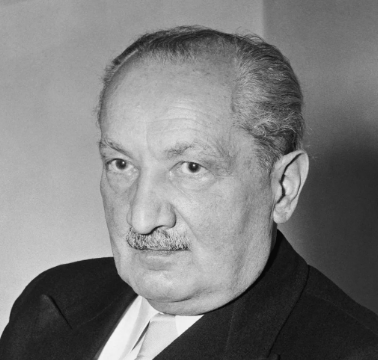
5 months 1 week ago
Transcendence constitutes selfhood.
▼
Source
Essence of Ground (1929)
5 months 1 week ago
We thus see that the over-population fallacy does not stand the very first attempt at submitting it to a closer examination.
5 months 1 week ago
Pythagoras used to say that he had received as a gift from Mercury the perpetual transmigration of his soul, so that it was constantly transmigrating and passing into all sorts of plants or animals.
▼
Source
Pythagoras, 4.
5 months 1 week ago
The sciences that are expressed by numbers or by other small signs, are easily learned; and... this facility rather than its demonstrability is what has made the fortune of algebra.
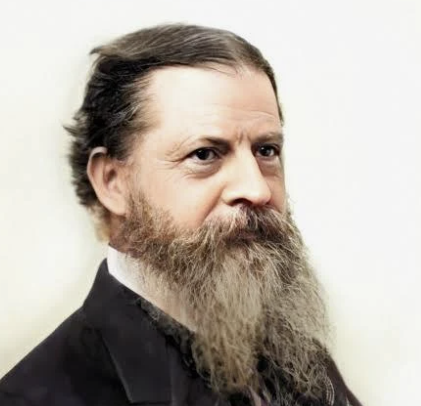
5 months 1 week ago
Now, to say that a lot of objects is finite, is the same as to say that if we pass through the class from one to another we shall necessarily come round to one of those individuals already passed; that is, if every one of the lot is in any one-to-one relation to one of the lot, then to every one of the lot some one is in this same relation.
5 months 1 week ago
Man infinitely surpasses man.
▼
Source
Pope Paul VI, [http://www.vatican.va/content/paul-vi/en/encyclicals/documents/hf_p-vi_enc_26031967_populorum.html
5 months 1 week ago
For anyone who at the end of Western philosophy can and must still question philosophically, the decisive question is no longer merely “What basic character do beings manifest?” or “How may the being of beings be characterized?” but “What is this ‘being’ itself?” The decisive question is that of “the meaning of being,” not merely that of the being of beings.
▼
Source
p. 18

5 months 1 week ago
The first question we should face is: What is the aim of a physical theory? To this question diverse answers have been made, but all of them may be reduced to two main principles:"A physical theory," certain logicians have replied, "has for its object the explanation of a group of laws experimentally established.""A physical theory," other thinkers have said, "is an abstract system whose aim is to summarize and classify logically a group of experimental laws without claiming to explain these laws...Now these two questions — Does there exist a material reality distinct from sensible appearances? and What is the nature of reality? — do not have their source in experimental method, which is acquainted only with sensible appearances and can discover nothing beyond them. The resolution of these questions transcends the methods used by physics; it is the object of metaphysics.Therefore, if the aim of physical theories is to explain experimental laws, theoretical physics is not an autonomous science; it is subordinate to metaphysics...Now, to make physical theories depend on metaphysics is surely not the way to let them enjoy the privilege of universal consent.
5 months 1 week ago
Freedom cannot be bestowed — it must be achieved.
▼
Source
Elbert Hubbard, in his essay on Booker T. Washington in Little Journeys For 1908, p. 21; Franklin D. Roosevelt later used this line on the occasion of the 74th anniversary of the Emancipation Proclamation: "In the truest sense, freedom cannot be bestowed;

5 months 1 week ago
Reason and Revolution, Hegel and the Rise of Social Theory, Herbert Marcuse, London Routledge & Kegan Paul LTD 2nd edition 1941, reprinted 1955
5 months 1 week ago
In the case of colors, there is a tridimensional spread of feelings. Originally all feelings may have been connected in the same way, and the presumption is that the number of dimensions was endless. For development essentially involves a limitation of possibilities. But given a number of dimensions of feeling, all possible varieties are obtainable by varying the intensities of the different elements.

5 months 1 week ago
When a change occurs in Nature, the quantity of action necessary for that change is as small as possible.
5 months 1 week ago
"Should we have an Eleventh Commandment?" asked a youth of the Greatest Living Actress. "Most assuredly, no - we have ten too many now!" answered the divine Sara.
▼
Source
p. 17
5 months 1 week ago
Sociology does not ‘negate’ philosophy, in the sense of taking over the hidden content of philosophy and carrying it into social theory and practice, but sets itself up as a realm apart from philosophy, with a province and truth of its own. Comte is rightly held to be the inaugurator of this separation between philosophy and sociology.
▼
Source
P. 375
5 months 1 week ago
Every bureaucracy, therefore, in accord with the peculiar emphasis on its own position, tends to generalize its own experience and to overlook the fact that the realm of administration and of smoothly functioning order represents only a part of the total political reality. Bureaucratic thought does not deny the possibility of the science of politics, but regards it as identical with the science of administration. Thus irrational factors are overlooked, and when these nevertheless force themselves to the fore, they are treated as "routine matters of state."
5 months 1 week ago
Philosophy, as I understand the word, is a positive theoretical science, and a science in an early stage of development. As such it has no more to do with belief than any other science. Indeed, I am bound to confess that it is at present in so unsettled a condition, that if the ordinary theorems of molecular physics and of archaeology are but the ghosts of beliefs, then to my mind, the doctrines of the philosophers are little better than the ghosts of ghosts. I know this is an extremely heretical opinion.
▼
Source
Lecture II : The Universal Categories, §3. Laws: Nominalism, CP 5.61
5 months 1 week ago
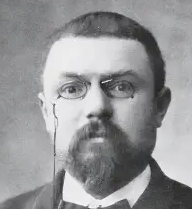
One evening, contrary to my custom, I drank black coffee and could not sleep. Ideas rose in crowds; I felt them collide until pairs interlocked, so to speak, making a stable combination. But the next morning ... I had only to write out the results, which took but a few hours. ... Just at this time I left Caen, where I was then living, to go on a geological excursion under the auspices of the school of mines. The changes of travel made me forget my mathematical work. Having reached Coutances, we entered an omnibus to go some place or other. At the moment when I put my foot on the step the idea came to me, without anything in my former thoughts seeming to have paved the way for it, that the transformations I had used to define the Fuchsian functions were identical with those of non-Euclidean geometry. I did not verify the idea; I should not have had time, as, upon taking my seat in the omnibus, I went on with a conversation already commenced, but I felt a perfect certainty. On my return to Caen, for conscience’ sake I verified the result at my leisure. ... Most striking at first is this appearance of sudden illumination, a manifest sign of long, unconscious prior work. The rôle of this unconscious work in mathematical invention appears to me incontestable ... Often when one works at a hard question, nothing good is accomplished at the first attack. Then one takes a rest, longer or shorter, and sits down anew to the work. During the first half-hour, as before, nothing is found, and then all of a sudden the decisive idea presents itself to the mind.
▼
Source
Poincaré, Henri. "Mathematical creation." The Monist (1910): 321-335. Translated from the French by George Bruce Halsted.
CivilSimian.com created by AxiomaticPanic, CivilSimian, Kalokagathia