

3 months 3 weeks ago
People are not aware how entirely, in former ages, the law of superior strength was the rule of life; how publicly and openly it was avowed, I do not say cynically or shamelessly — for these words imply a feeling that there was something in it to be ashamed of, and no such notion could find a place in the faculties of any person in those ages, except a philosopher or a saint.
▼
Source
Ch. 1

3 months 3 weeks ago
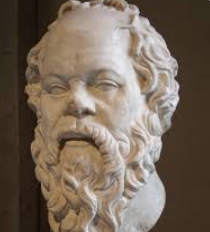
In... "The Education of Children"... Plutarch gives an anecdote of Theocritus, a sophist, as an example of athuroglossos... he is... "a giant in impudence"... strong not because of his reason, or his rhetorical ability... or his ability to pronounce the truth, but only because he is arrogant. ...His fourth trait is... "putting his confidence in bluster." He is confident in thorubos... the noise made by a strong voice, by a scream, a clamor, or uproar. ...The final characteristic ...his confidence in ..."ignorant outspokenness..." ... it lacks mathesis ...—learning or wisdom.
▼
Source
Ref: Plutarch, "The Education of Children", ' (1927) Vol. 1, Tr. Frank Cole Babbit, [https://archive.org/details/plutarchs-moralia-vol.-1-loeb-197/page/n35/mode/1up p. 4,] The Loeb Classical Library, Harvard University Press.
3 months 3 weeks ago
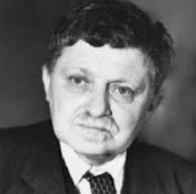
If the entire soul, then, follows without rebellion the part which loves wisdom, the result is that in general each part can carry out its own function—can be just, in other words—and in particular each is able to enjoy pleasures which are its own, the best, and, as far as possible, the truest. ... When one of the other parts takes control, there are two results: it fails to discover its own proper pleasure, and it compels the other parts to pursue a pleasure which is not their own, and not true.
▼
Source
Plato, Republic, T. Griffith, trans. (2000), 587a
3 months 3 weeks ago
The past, when it is merely known historically (that is, as a subject for abstract study), somehow piles itself up outside our real lives. ... I think that one of the duties of a philosopher, if he shows himself worthy of his vocation today, is to attack quite directly those dissimulating forces which are all working toward what might be called the neutralization of the past; and whose conjoint effect consists in arousing in contemporary man a feeling of what I should like to call insulation in time.
▼
Source
p. 39
3 months 3 weeks ago
He regarded it with the feelings due not to a mere mental delusion, but to a great moral evil. He looked upon it as the greatest enemy of morality: first, by setting up factitious excellencies,—belief in creeds, devotional feelings, and ceremonies, not connected with the good of human kind,—and causing these to be accepted as substitutes for genuine virtues: but above all, by radically vitiating the standard of morals; making it consist in doing the will of a being, on whom it lavishes indeed all the phrases of adulation, but whom in sober truth it depicts as eminently hateful.
▼
Source
([https://archive.org/details/autobiography01mill/page/40/mode/1up p. 40])
3 months 3 weeks ago
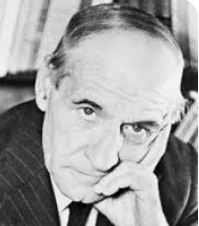
I know well that many of my readers do not think as I do. This also is most natural and confirms the theorem. For although my opinion turn out erroneous, there will always remain the fact that many of those dissentient readers have never given five minutes' thought to this complex matter. How are they going to think as I do? But by believing that they have a right to an opinion on the matter without previous effort to work one out for themselves, they prove patently that they belong to that absurd type of human being which I have called the "rebel mass." It is precisely what I mean by having one's soul obliterated, hermetically closed. Here it would be the special case of intellectual hermetism.
▼
Source
Chap. VIII: The Masses Intervene In Everything, And Why Their Intervention Is Solely By Violence
3 months 3 weeks ago
Will you not allow that I have as much of the spirit of prophecy in me as the swans? For they, when they perceive that they must die, having sung all their life long, do then sing more than ever, rejoicing in the thought that they are about to go away to the god whose ministers they are.

3 months 3 weeks ago
If I respected languages like you do, I wouldn't write at all. El muro de Berlín fue derribado. Why can't I do the same? Desde la torre de Babel, las lenguas han sido siempre una forma de divorciarnos del resto de la humanidad. Poetry must find ways of breaking distance. I'm not reducing my audience. On the contrary, I'm going to have a bigger audience with the common markets — in Europe — in America. And besides, all languages are dialects that are made to break new grounds. I feel like Dante, Petrarca and Boccaccio, and I even feel like Garcilaso forging a new language. Saludo al nuevo siglo, el siglo del nuevo lenguaje de América, y le digo adiós a la retórica separatista y a los atavismos.
3 months 3 weeks ago
For I now saw, or thought I saw, what I had always before received with incredulity—that the habit of analysis has a tendency to wear away the feelings: as indeed it has, when no other mental habit is cultivated, and the analysing spirit remains without its natural complements and correctives.
▼
Source
([https://archive.org/details/autobiography01mill/page/137/mode/1up p. 137])
3 months 3 weeks ago
Scientific truth is characterized by its exactness and the certainty of its predictions. But these admirable qualities are contrived by science at the cost of remaining on a plane of secondary problems. leaving intact the ultimate and decisive questions. … Yet science is but a small part of the human mind and organism. Where it stops, man does not stop.
▼
Source
p. 13

3 months 3 weeks ago
He was a man who looked at what ought to be done, not to the reputation which is got by a man's acts.
▼
Source
I, 16
3 months 3 weeks ago
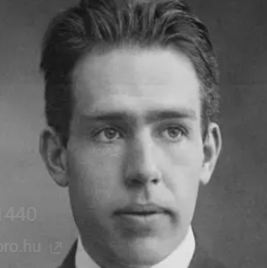
How wonderful that we have met with a paradox. Now we have some hope of making progress.
▼
Source
As quoted in Niels Bohr : The Man, His Science, & the World They Changed (1966) by Ruth Moore, p. 196
3 months 3 weeks ago
I would not have him sorrow at my hard lot, or say at the burial, Thus we lay out Socrates, or, Thus we follow him to the grave or bury him; for false words are not only evil in themselves, but they infect the soul with evil. Be of good cheer then, my good Crito, and say that you are burying my body only, and do with that as is usual, and as you think best.
3 months 3 weeks ago
Fascism as a consequence of its Marxian and Sorelian patrimony . . . conjoined with the influence of contemporary Italian idealism, through which Fascist thought attained maturity, conceives philosophy as praxis.
▼
Source
Origini e dottrina del fascismo, Rome (1929) p. 58, A. James Gregor, The Ideology of Fascism: The Rationale of Totalitarianism, New York: NY, The Free Press (1969) p. 317
3 months 3 weeks ago
The practical reformer has continually to demand that changes be made in things which are supported by powerful and widely-spread feelings, or to question the apparent necessity and indefeasibleness of established facts; and it is often an indispensable part of his argument to show, how these powerful feelings had their origin, and how those facts came to seem necessary and indefeasible. There is therefore a natural hostility between him and a philosophy which discourages the explanation of feelings and moral facts by circumstances and association, and prefers to treat them as ultimate elements of human nature; a philosophy which is addicted to holding up favorite doctrines as intuitive truths, and deems intuition to be the voice of Nature and of God, speaking with an authority higher than that of our reason. In particular, I have long felt that the prevailing tendency to regard all the marked distinctions of human character as innate, and in the main indelible, and to ignore the irresistible proofs that by far the greater part of those differences, whether between individuals, races, or sexes, are such as not only might but naturally would be produced by differences in circumstances, is one of the chief hindrances to the rational treatment of great social questions, and one of the greatest stumbling blocks to human improvement.
▼
Source
([https://archive.org/details/autobiography01mill/page/273/mode/1up pp. 273-274])
3 months 3 weeks ago
Nothing has such power to broaden the mind as the ability to investigate systematically and truly all that comes under thy observation in life.
▼
Source
III, 11

3 months 3 weeks ago
Everyday we act in ways that reflect our ethical judgements.
▼
Source
Chapter 3, From Evolution To Ethics?, p. 69
3 months 3 weeks ago
By all means, marry. If you get a good wife, you'll become happy; if you get a bad one, you'll become a philosopher.
▼
Source
Origin unknown. Attributed to Sydney Smith in Speaker's Handbook of Epigrams and Witticisms (1955) by Herbert Prochnow, p. 190. Variant reported in Why Are You Single? (1949) by Hilda Holland, p. 49: «When asked by a young man whether to marry, Socrates i
3 months 3 weeks ago
There is no repose for the mind except in the absolute; for feeling except in the infinite; for the soul except in the divine. Nothing finite is true, is interesting, is worthy to fix my attention. All that is particular is exclusive, and all that is exclusive repels me. There is nothing non-exclusive but the All; my end is communion with Being through the whole of Being.
3 months 3 weeks ago
His sense of the miseries and wrongs of "the greatest number" was the mainspring of the resolute beneficence of thought and purpose that really made his very life and daily being... Mill would take endless trouble to procure the reversal of an inhuman sentence in a police court; he abhorred insensibility to the sufferings of our fellows in the lower order of creation. He was warm in congratulation on Freeman's attack on field sports published in the Fortnightly (1869). "I honour him," Mill wrote, "for having broken ground—a thing I have been often tempted to do myself, but having so many unpopular causes already on my hands, thought it wiser not to provoke fresh hostility."
▼
Source
pp. 58-59
3 months 3 weeks ago
If the result of a war is to change nothing, but only to destroy, with the mere result that a group of human beings who do not differ notably from the conquered acquires preponderant advantages for the future, there is lacking the affective strength of an existence that has inspired faith, of an existence whose destiny would have been decided by the war.
3 months 3 weeks ago
Love the little trade which thou hast learned, and be content therewith.
▼
Source
IV, 31

3 months 3 weeks ago
Pain is never permanent.
▼
Source
The Book of Positive Quotations (2007) edited by John Cook, Steve Deger, and Leslie Ann Gibson, p. 333
3 months 3 weeks ago
The will localizes us, thought universalizes us. My soul wavers between two, four, six general and contradictory conceptions, for it obeys all the great instincts of human nature, and aspires to the absolute, which can only be realized by a succession of contraries.
▼
Source
As translated in The Private Journal of Henri Frédéric Amiel (1935), p. 238
3 months 3 weeks ago
In a sense, people are our proper occupation. Our job is to do them good and put up with them. But when they obstruct our proper tasks, they become irrelevant to us--like sun, wind, and animals. Our actions may be impeded by them, but there can be no impeding our intentions or our dispositions. Because we can accommodate and adapt. The mind adapts and converts to its own purposes the obstacle to our acting. The impediment to action advances action. What stands in the way becomes the way.
▼
Source
(Hays translation)

3 months 3 weeks ago
I must say, it [the Koran] is as toilsome reading as I ever undertook. A wearisome confused jumble, crude, incondite; endless iterations, long-windedness, entanglement; most crude, incondite; — insupportable stupidity, in short! Nothing but a sense of duty could carry any European through the Koran ... It is the confused ferment of a great rude human soul; rude, untutored, that cannot even read; but fervent, earnest, struggling vehemently to utter itself in words ... We said "stupid:" yet natural stupidity is by no means the character of Mahomet's Book; it is natural uncultivation rather. The man has not studied speaking; in the haste and pressure of continual fighting, has not time to mature himself into fit speech ... The man was an uncultured semi-barbarous Son of Nature, much of the Bedouin still clinging to him: we must take him for that. But for a wretched Simulacrum, a hungry Impostor without eyes or heart ... we will not and cannot take him. Sincerity, in all senses, seems to me the merit of the Koran; what had rendered it precious to the wild Arab men ... Curiously, through these incondite masses of tradition, vituperation, complaint, ejaculation in the Koran, a vein of true direct insight, of what we might almost call poetry, is found straggling.
▼
Source
Thomas Carlyle, "On Heroes, Hero-Worship and the Heroic in History" (1841), pg. 64-67
3 months 3 weeks ago
Almost as soon as I began to study philosophy, I was impressed by the way in which philosophical problems appeared, disappeared, or changed shape, as a result of new assumptions or vocabularies.
▼
Source
Preface

3 months 3 weeks ago
In the first place, how arrogantly do the Marcionites build up their stupid system, bringing forward a new god, as if we were ashamed of the old one! So schoolboys are proud of their new shoes, but their old master beats their strutting vanity out of them.
▼
Source
Book I, Chapter VIII.—Specific Points. The Novelty of Marcion’s God Fatal to His Pretensions. God is from Everlasting, He Cannot Be in Any Wise New.

3 months 3 weeks ago
The minister [Robert Walpole] preaches corruption aloud and constantly, like an impudent missionary of vice.
▼
Source
p. 72
3 months 3 weeks ago
Remember, that to change thy mind upon occasion, and to follow him that is able to rectify thee, is equally ingenuous, as to find out at the first, what is right and just, without help. For of thee nothing is required, that is beyond the extent of thine own deliberation and judgment, and of thine own understanding.
▼
Source
VII, 14
3 months 3 weeks ago
When the oak-tree is felled, the whole forest echoes with it; but a hundred acorns are planted silently by some unnoticed breeze.
▼
Source
On History.
3 months 3 weeks ago
But, presenting to your weakness the gift of the example of His own flesh, the more perfect Adam—that is, Christ, more perfect on this account as well (as on others), that He was more entirely pure—stands before you, if you are willing (to copy Him), as a voluntary celibate in the flesh. If, however, you are unequal (to that perfection), He stands before you a monogamist in spirit, having one Church as His spouse, according to the figure of Adam and of Eve, which (figure) the apostle interprets of that great sacrament of Christ and the Church, (teaching that), through the spiritual, it was analogous to the carnal monogamy.
▼
Source
Chapter 5

3 months 3 weeks ago
We account the Scriptures of God to be the most sublime philosophy. I find more sure remarks of authenticity in the Bible than in any profane history whatever.
▼
Source
Anecdote reported by Dr. Robert Smith, late Master of Trinity College, to his student Richard Watson, as something that Newton expressed when he was writing his Commentary On Daniel. In Watson's Apology for the Bible. London 8vo. (1806), p. 57
3 months 3 weeks ago
Napoleon, far more Italian than French, Italian by race, by instinct, imagination, and souvenir, considers in his plan the future of Italy, and, on casting up the final accounts of his reign, we find that the net profit is for Italy and the net loss is for France.
▼
Source
"[https://archive.org/stream/jstor-25102177/25102177_djvu.txt Napoleon's Views of Religion]" (1891)
3 months 3 weeks ago
Very little is needed to make a happy life.
▼
Source
ἐν ὀλιγίστοις κεῖται τὸ εὐδαιμόνως βιῶσαι | VII, 67
3 months 3 weeks ago
Our grand business undoubtedly is, not to see what lies dimly at a distance, but to do what lies clearly at hand.
3 months 3 weeks ago
Happiness implied a choice, and within that choice a concerted will, a lucid desire.

3 months 3 weeks ago
In no victory do they glory so much as in that which is gained by dexterity and good conduct without bloodshed. In such cases they appoint public triumphs, and erect trophies to the honour of those who have succeeded; for then do they reckon that a man acts suitably to his nature, when he conquers his enemy in such a way as that no other creature but a man could be capable of, and that is by the strength of his understanding. Bears, lions, boars, wolves, and dogs, and all other animals, employ their bodily force one against another, in which, as many of them are superior to men, both in strength and fierceness, so they are all subdued by his reason and understanding.
▼
Source
Ch. 8 : Of Their Military Discipline
3 months 3 weeks ago
With all his sincerity and devotion, the authentic, absolute atheist is after all only an abortive saint, and at the same time, a mistaken revolutionist.
▼
Source
p. 113.
3 months 3 weeks ago
You want praise from people who kick themselves every fifteen minutes, the approval of people who despise themselves. (Is it a sign of self-respect to regret nearly everything you do?) (Hays translation)
▼
Source
VIII, 53

3 months 3 weeks ago
Compared to the refined culture of sclerotic forms and frames, which mask everything, the lyrical mode is utterly barbarian in its expression. Its value resides precisely in its savage quality: it is only blood, sincerity, and fire.
3 months 3 weeks ago
Not only was Thebes built by the music of an Orpheus; but without the music of some inspired Orpheus was no city ever built, no work that man glories-in ever done.
▼
Source
[http://books.google.com/books?id=8nI5AAAAcAAJ&q=%22Not+only+was+Thebes+built+by+the+music+of+an+Orpheus+but+without+the+music+of+some+inspired+Orpheus+was+no+city+ever+built+no+work+that+man+glories+in+ever+done%22&pg=PA182#v=onepage Bk. III], [http://bo
3 months 3 weeks ago
I don't know whether this world has a meaning that transcends it. But I know that I cannot know that meaning and that it is impossible for me just now to know it. What can a meaning outside my condition mean to me? I can understand only in human terms. What I touch, what resists me — that I understand. And these two certainties — my appetite for the absolute and for unity and the impossibility of reducing this world to a rational and reasonable principle — I also know that I cannot reconcile them. What other truth can I admit without lying, without bringing in a hope I lack and which means nothing within the limits of my conditions?

3 months 3 weeks ago
I have two admonitions more to the ingenuous, and well-disposed reader. First that he would not slight my endeavors because of my years, which are but few. It is the custom of most men to measure knowledge by the beard, but look thou rather on the Soul, an essence of that Nature, que ad perfectionem suam curricula temporis non defiderat. Secondly, that he would not conclude any thing rashly concerning the subject of this art, for it is a principle not easily apprehended.
▼
Source
p. 69
3 months 3 weeks ago
Trust arises from the mind's instinctive feeling after fixed realities, after the substance of every shadow, the base of all appearance, the everlasting amid change.
▼
Source
Vol. II, p. 5.
3 months 3 weeks ago
Logical empiricism holds the view, notwithstanding some its assertions, that the forms of knowledge and consequently the relations of man to nature and to other men never change. According to rationalism, too, all subjective and objective potentialities are rooted in insights which the individual already possesses, but rationality uses existing objects as well as the active inner striving and ideas of man to construct standards for the future. In this regard, it is not so closely associated with the present order as is empiricism.
▼
Source
p. 148.
3 months 3 weeks ago
Wilt thou then, my soul, never be good and simple and one and naked, more manifest than the body which surrounds thee? Wilt thou never enjoy an affectionate and contented disposition? Wilt thou never be full and without a want of any kind, longing for nothing more, nor desiring anything, either animate of inanimate, for the enjoyment of pleasures? nor yet desiring time wherein thou shalt have longer enjoyment, or place, or pleasant climate, or society of men with whom thou mayst live in harmony? but wilt thou be satisfied with thy present condition, and pleased with all that is around thee, and wilt thou convince thyself that thou hast everything and that it comes from the gods, that everything is well for thee, and will be well whatever shall please them, and whatever they shall give for the conservation of the perfect living being, the good and just and beautiful, which generates and holds together all things, and contains and embraces all things which are dissolved for the production of other like things? Wilt thou never be such that thou shalt so dwell in community with gods and men as neither to find fault with them at all, nor to be condemned by them?
▼
Source
X, 1
3 months 3 weeks ago
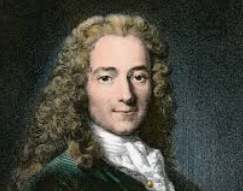
I have received, sir, your new book against the human species, and I thank you for it. You will please people by your manner of telling them the truth about themselves, but you will not alter them. The horrors of that human society—from which in our feebleness and ignorance we expect so many consolations—have never been painted in more striking colours: no one has ever been so witty as you are in trying to turn us into brutes: to read your book makes one long to go on all fours. Since, however, it is now some sixty years since I gave up the practice, I feel that it is unfortunately impossible for me to resume it: I leave this natural habit to those more fit for it than are you and I.
▼
Source
Letter to Jean-Jacques Rousseau, 30 August 30, 1755 [https://books.google.com/books?id=04c9AAAAYAAJ&newbks=1&newbks_redir=0&dq=voltaire%20letters&pg=PA149#v=onepage&q&f=false] | Referring to Rousseau's Discourse on Inequality
3 months 3 weeks ago
Music is everything. God himself is nothing more than an acoustic hallucination.

3 months 3 weeks ago
Thus, all unknown quantities can be expressed in terms of a single quantity, whenever the problem can be constructed by means of circles and straight lines, or by conic sections, or even by some other curve of degree not greater than the third or fourth.But I shall not stop to explain this in more detail, because I should deprive you of the pleasure of mastering it yourself, as well as of the advantage of training your mind by working over it, which is in my opinion the principal benefit to be derived from this science. Because, I find nothing here so difficult that it cannot be worked out by anyone at all familiar with ordinary geometry and with algebra, who will consider carefully all that is set forth in this treatise.
▼
Source
First Book
CivilSimian.com created by AxiomaticPanic, CivilSimian, Kalokagathia