

3 months 3 weeks ago
But the thing a man does practically believe (and this is often enough without asserting it even to himself, much less to others); the thing a man does practically lay to heart, and know for certain, concerning his vital relations to this mysterious Universe, and his duty and destiny there, that is in all cases the primary thing for him, and creatively determines all the rest. That is his religion; or, it may be, his mere scepticism and no-religion: the manner it is in which he feels himself to be spiritually related to the Unseen World or No-World; and I say, if you tell me what that is, you tell me to a very great extent what the man is, what the kind of things he will do is.
3 months 3 weeks ago
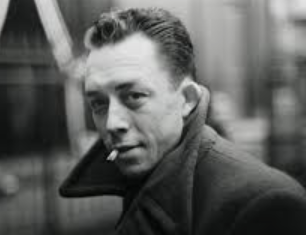
Homer tells us also that Sisyphus had put Death in chains. Pluto could not endure the sight of his deserted, silent empire. He dispatched the god of war, who liberated Death from the hands of her conqueror.

3 months 3 weeks ago
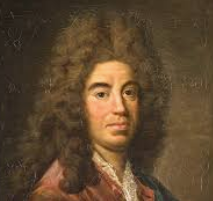
In fine, I have written my work, not as an essay which is to win the applause of the moment, but as a possession for all time.
▼
Source
Book I, 1.22-[4]
3 months 3 weeks ago
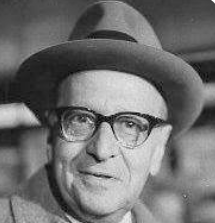
One mark of a second-rate mind is to be always telling stories.
▼
Source
Aphorism 52
3 months 3 weeks ago
The more the concept of reason becomes emasculated, the more easily it lends itself to ideological manipulation and to propagation of even the most blatant lies. … Subjective reason conforms to anything.
▼
Source
pp. 24-25.

3 months 3 weeks ago
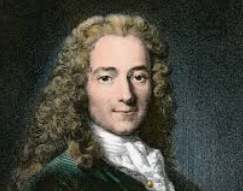
Learn to ask of all actions, “Why are they doing that?” Starting with your own.
▼
Source
X, 37 (Hays translation)
3 months 3 weeks ago
Whoever is suspicious incites treason.
▼
Source
p. 37

3 months 3 weeks ago
Life creates itself in delirium and is undone in ennui.
3 months 3 weeks ago
His Religion is not an easy one: with rigorous fasts, lavations, strict complex formulas, prayers five times a day, and abstinence from wine, it did not "succeed by being an easy religion." As if indeed any religion, or cause holding of religion, could succeed by that! It is a calumny on men to say that they are roused to heroic action by ease, hope of pleasure, recompense, — sugar-plums of any kind, in this world or the next! In the meanest mortal there lies something nobler.
3 months 3 weeks ago
...there are more things to admire in men than to despise.
3 months 3 weeks ago
We must make up our minds to look for our protection not to legal terrors but to careful administration.
▼
Source
Book III, 3.46-[4]
3 months 3 weeks ago
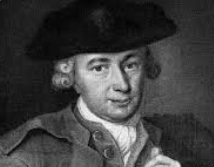
Without language we would have no reason, without reason no religion, and without these three essential aspects of our nature, neither mind nor bond of society.
▼
Source
Sämtliche Werken, ed. Josef Nadler (1949-1957), vol. III, p. 231.
3 months 3 weeks ago
Take away your opinion, and there is taken away the complaint, [...] Take away the complaint, [...] and the hurt is gone
▼
Source
IV. 7, trans. George Long
3 months 3 weeks ago
O love! only a few rays of thy sacred fire radiate in this exhausted world!
▼
Source
p. 136
3 months 3 weeks ago
Life inspires more dread than death — it is life which is the great unknown.
3 months 3 weeks ago
I cannot call this Shakspeare a "Sceptic," as some do; his indifference to the creeds and theological quarrels of his time misleading them. No: neither unpatriotic, though he says little about his Patriotism; nor sceptic, though he says little about his Faith. Such "indifference" was the fruit of his greatness withal: his whole heart was in his own grand sphere of worship (we may call it such); these other controversies, vitally important to other men, were not vital to him.
3 months 3 weeks ago
L'homme enfin n'est pas entièrement coupable — il n'a pas commencé l'histoire — ni tout à fait innocent, puisqu'il la continue.
▼
Source
In the end, man is not entirely guilty — he did not start history. Nor is he wholly innocent — he continues it. | Part 5: Thought at the Meridian (Section: Moderation and Excess)
3 months 3 weeks ago
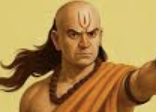
Skills are called hidden treasure as they save like a mother in a foreign country.
3 months 3 weeks ago
Surely no more lucid, unillusioned intelligence has ever applied itself to the writing of history.
▼
Source
J. W. Burrow, A History of Histories: Epics, Chronicles, Romances and Inquiries from Herodotus and Thucydides to the Twentieth Century (2007), p. 51
3 months 3 weeks ago
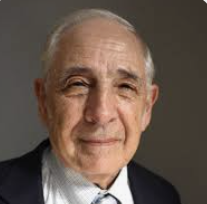
Just acquiring this amount of "education" will not, by itself, make you an educated person, even less will it give you what Oakeshott calls "judgment." But if the manner of instruction is adequate, the student should be able to acquire this much knowledge in a way that combines intellectual openness, critical scrutiny, and logical clarity. If so, learning will not stop when the student leaves the university.
3 months 3 weeks ago
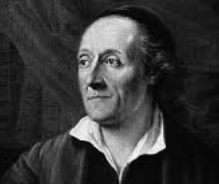
There are but three classes of men — the retrograde, the stationary, the progressive.
▼
Source
No. 371
3 months 3 weeks ago
The object in life is not to be on the side of the majority, but to escape finding oneself in the ranks of the insane.
▼
Source
The first citation appears in a 1946 translation of Leo Tolstoy's Recollections and Essays [https://archive.org/stream/recollectionsand035475mbp/recollectionsand035475mbp_djvu.txt] by Oxford University Press. The claim made that it is from Marcus Aurelius
3 months 3 weeks ago
God is a comedian playing to an audience too afraid to laugh.
▼
Source
"Creator — A comedian whose audience is afraid to laugh." — H.L. Mencken, A Book of Burlesques (1920), p. 203. and A Mencken Chrestomathy (1949), Ch. 30
3 months 3 weeks ago
I thought that the only action a man could perform without shame was to take his life; that he had no right to diminish himself in the succession of days and the inertic of misery. No elect, I kept telling myself, but those who committed suicide.

3 months 3 weeks ago
If this superstitious fear of Spirits were taken away, and with it, Prognostiques from Dreams, false Prophecies, and many other things depending thereon, by which, crafty ambitious persons abuse the simple people, men would be much more fitted then they are for civill Obedience.
▼
Source
The First Part, Chapter 2, p. 8
3 months 3 weeks ago
All that Mankind has done, thought, gained or been: it is lying as in magic preservation in the pages of Books.
3 months 3 weeks ago
As a writer Camus maintained his independence from both friends and enemies in the political and philosophical movements that attempted to subvert his writing to their own ends. ... Camus combines a taut writing style, as well as profound insights on society, with the courage to report back from the abyss of despair, unblinking.
▼
Source
Ottar G. Draugsvold, in Nobel Writers on Writing (2000)

3 months 3 weeks ago
Man should know from this rule that he is cut off from truth.

3 months 3 weeks ago
The diverse natures of men, combined with the necessity to satisfy in some manner the sentiment which desires them to be equal, has had the result that in the democracies they have endeavored to provide the appearance of power in the people and the reality of power in an elite.
▼
Source
p. 97.
3 months 3 weeks ago
Sudden Glory, is the passion which maketh those Grimaces called LAUGHTER.
▼
Source
The First Part, Chapter 6, p. 27 (italics and spelling as per text)
3 months 3 weeks ago
Truly it is a sad thing for a people, as for a man, to fall into Scepticism, into dilettantism, insincerity; not to know Sincerity when they see it. For this world, and for all worlds, what curse is so fatal?
3 months 3 weeks ago
Repentance for one's evil deeds is the safeguard of life.

3 months 3 weeks ago
The destructive character knows only one watchword: make room. And only one activity: clearing away. His need for fresh air and open space is stronger than any hatred.
▼
Source
"The Destructive Character" Frankfurter Zeitung (20 November 1931)
3 months 3 weeks ago
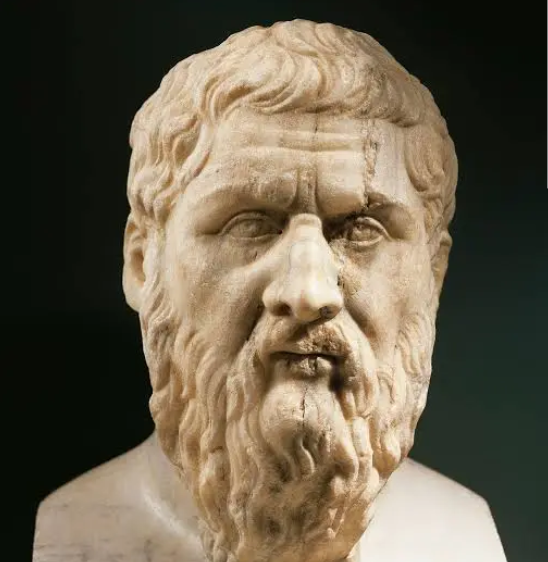
Parnenides: When there is a number of things which seem to you to be great, you may think, as you look at them all, that there is one and the same idea in them, and hence you think the great is one. But if with your mind's eye you regard the absolute great and these many great things in the same way, will not another great appear beyond, by which all these must appear to be great?
▼
Source
132a
3 months 3 weeks ago
Man does not dwell at the centre of things, but is the denizen of an obscure and tiny speck of cosmical matter quite invisible amid the innumerable throng of flaming suns that make up our galaxy.
▼
Source
Ch. 1, p. 15
3 months 3 weeks ago
I believe in the salvation of humanity, in the future of cyanide . . .
3 months 3 weeks ago
From whence it follows, that were the publique and private interest are most closely united, there is the publique most advanced.
▼
Source
The Second Part, Chapter 19, p. 97
3 months 3 weeks ago
And yet I will venture to believe that in no time, since the beginnings of Society, was the lot of those same dumb millions of toilers so entirely unbearable as it is even in the days now passing over us. It is not to die, or even to die of hunger, that makes a man wretched; many men have died; all men must die,—the last exit of us all is in a Fire-Chariot of Pain. But it is to live miserable we know not why; to work sore and yet gain nothing; to be heart-worn, weary, yet isolated, unrelated, girt in with a cold universal Laissez-faire: it is to die slowly all our life long, imprisoned in a deaf, dead, Infinite Injustice, as in the accursed iron belly of a Phalaris' Bull! This is and remains forever intolerable to all men whom God has made. Do we wonder at French Revolutions, Chartisms, Revolts of Three Days? The times, if we will consider them, are really unexampled.
3 months 3 weeks ago
Throw moderation to the winds, and the greatest pleasures bring the greatest pains.
3 months 3 weeks ago
When Bernard Marx tells the Savage he will try to secure permission for him and his mother to visit the Other Place, John is initially pleased and excited. Echoing Miranda in The Tempest, he exclaims: "O brave new world that has such people in it." Heavy irony. Like innocent Miranda, he is eager to embrace a way of life he neither knows nor understands. And of course he comes unstuck. Yet if we swallow such fancy literary conceits, then ultimately the joke is on us. It is only funny in the sense there are "jokes" about Auschwitz. For it is Huxley who neither knows nor understands the glory of what lies ahead. A utopian society in which we are sublimely happy will be far better than we can presently imagine, not worse. And it is we, trapped in the emotional squalor of late-Darwinian antiquity, who neither know nor understand the lives of the god-like super-beings we are destined to become.
▼
Source
"[https://www.huxley.net/ Brave New World? A Defence of Paradise-Engineering]", BLTC Research, 1998

3 months 3 weeks ago
The decline of religion in modern times means simply that religion is no longer the uncontested center and ruler of man's life, and that the Church is no longer the final and unquestioned home and asylum of his being.
▼
Source
Chapter Two, The Encounter With Nothingness, p. 20
3 months 3 weeks ago
Since those who rule in the city do so because they own a lot, I suppose they're unwilling to enact laws to prevent young people who've had no discipline from spending and wasting their wealth, so that by making loans to them, secured by the young people's property, and then calling those loans in, they themselves become even richer and more honored.
▼
Source
555c, G. Grube and C. Reeve, trans., Plato: Complete Works (1997), p. 1166
3 months 3 weeks ago
The strength of faith is... no proof of the objective truth of faith.
3 months 3 weeks ago
But though much may be said to Excuse the Chymists when they write Darkly, and Ænigmatically, about the Preparation of their Elixir, and Some few other grand Arcana, the divulging of which they may upon Grounds Plausible enough esteem unfit; yet when they pretend to teach the General Principles of Natural Philosophers, this Equivocall Way of Writing is not to be endur'd. For in such Speculative Enquiries, where the naked Knowledge of the Truth is the thing Principally aim'd at, what does he teach me worth thanks that does not, if he can, make his Notion intelligible to me, but by Mystical Termes, and Ambiguous Phrases darkens what he should clear up; and makes me add the Trouble of guessing at the sence of what he Equivocally expresses, to that of examining the Truth of what he seems to deliver.
3 months 3 weeks ago
I foresee the day when we shall read nothing but telegrams and prayers.
3 months 3 weeks ago
It is a remarkable fact that, in a history extending over nearly twenty-five hundred years, a considerable part of the most significant writing on political philosophy was done in two periods of only about fifty years each and in two places of quite restricted area. … The Second place was England, and the period was the half century between 1640 and 1690, which produced the works of Hobbes and Locke, together with the works of a host of lesser figures.
▼
Source
George Sabine, "What is a Political Theory?" (1939)
3 months 3 weeks ago
Nature admits no lie.
▼
Source
Latter Day Pamphlet, No. 5.
3 months 3 weeks ago
One might naively suppose that a negative utilitarian would welcome human extinction. But only (trans)humans - or our potential superintelligent successors - are technically capable of phasing out the cruelties of the rest of the living world on Earth. And only (trans)humans - or rather our potential superintelligent successors - are technically capable of assuming stewardship of our entire Hubble volume.
▼
Source
"[https://www.hedweb.com/social-media/pre2014.html Unsorted Postings]", Facebook, pre-2014

3 months 3 weeks ago
Suffice it to say that the God of Israel loves those who disobey for the sake of what is right, and is capable of being pleased when a man has used his freedom to wrestle with him and to prevail, so long as the path on behalf of which he struggles ultimately proves to be the right one in God’s eyes.
3 months 3 weeks ago
Here, first of all men for pure justice famed,And moral virtue, Aristocles lies;And if there e'er has lived one truly wise,This man was wiser still; too great for envy.
▼
Source
The epigram on his tomb, with what Laërtius reported to be his original name, in: {{cite web
CivilSimian.com created by AxiomaticPanic, CivilSimian, Kalokagathia