
4 months 2 weeks ago
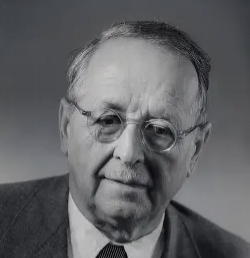
A new development began for relativity theory after 1925 with its absorption into quantum physics. The first great success was scored by Dirac's quantum mechanical equations of the electron, which introduced a new sort of quantities, the spinors, besides the vectors and tensors into our physical theories. ...But difficulties of the gravest kind turned up when one passed from one electron or photon to the interaction among an indeterminate number of such particles. In spite of several advances a final solution of this problem is not yet in sight and may well require a deep modification of the foundation of quantum mechanics, such as would account in the same basic manner for the elementary electric charge e as relativity theory and our present quantum mechanics account for c and h.
▼
Source
Preface to the First American Printing (1950) Note: see Paul Dirac, The Principles of Quantum Mechanics
4 months 2 weeks ago
Time is the primitive form of the stream of consciousness. ...If we project ourselves outside the stream of consciousness and represent its content as an object, it becomes an event happening in time, the separate stages of which stand to one another in the relations of earlier and later.
▼
Source
Introduction
4 months 2 weeks ago
In these days the angel of topology and the devil of abstract algebra fight for the soul of each individual mathematical domain.
▼
Source
Weyl, Hermann. Invariants. Duke Math. J. 5 (1939), no. 3, 489--502. doi:10.1215/S0012-7094-39-00540-5. http://projecteuclid.org/euclid.dmj/1077491405.
4 months 2 weeks ago
First, the physicists in the persons of Faraday and Maxwell, proposed the "electromagnetic field" in contradistinction to matter, as a reality of a different category. Then, during the last century, the mathematicians, ... secretly undermined belief in the evidence of Euclidean Geometry. And now, in our time, there has been unloosed a cataclysm which has swept away space, time, and matter hitherto regarded as the firmest pillars of natural science, but only to make place for a view of things of wider scope and entailing a deeper vision. This revolution was promoted essentially by the thought of one man, Albert Einstein.
▼
Source
Introduction
4 months 2 weeks ago
Einstein's theory of relativity has advanced our ideas of the structure of the cosmos a step further. It is as if a wall which separated us from Truth has collapsed. Wider expanses and greater depths are now exposed to the searching eye of knowledge, regions of which we had not even a presentiment. It has brought us much nearer to grasping the plan that underlies all physical happening.
▼
Source
From the Author's Preface to First Edition
4 months 2 weeks ago
All characteristics of material things as they are presented to us in the acts of external perception (e.g. colour) are endowed with the separateness of spatial extension, but it is only when we build up a single connected real world out of all our experiences that the spatial extension, which is a constituent of every perception, becomes a part of one and the same all-inclusive space. ... every material thing can, without changing content, equally well occupy a position in Space different from its present one. This immediately gives us the property of the homogeneity of space which is the root of the conception, Congruence.
▼
Source
Introduction
4 months 2 weeks ago
We now come to a decisive step of mathematical abstraction: we forget about what the symbols stand for... [The mathematician] need not be idle; there are many operations which he may carry out with these symbols, without ever having to look at the things they stand for.
▼
Source
The Mathematical Way of Thinking
4 months 2 weeks ago
The rapid development of science... has, as it were, burst its old shell, now become too narrow.
▼
Source
Introduction
4 months 2 weeks ago
We cannot hope to give here a final clarification of the essence of fact, judgement, object, property; this task leads into metaphysical abysses; about these one has to seek advice from men whose name cannot be stated without earning a compassionate smile-e.g.
▼
Source
Fichte. Das Kontinuum. Kritische Untersuchungen uber die Grundlagen der Analysis (1918), as quoted/translated by Erhard Scholz, "Philosophy as a Cultural Resource and Medium of Reflection for Hermann Weyl"
4 months 2 weeks ago
It was my wish to present this great subject as an illustration of the itermingling of philosophical, mathematical, and physical thought, a study which is dear to my heart. This could be done only by building up the theory systematically from the foundations, and by restricting attention throughout to the principles. But I have not been able to satisfy these self-imposed requirements: the mathematician predominates at the expense of the philosopher.
▼
Source
From the Author's Preface to First Edition
4 months 2 weeks ago
After Riemann had made known his discoveries, mathematicians busied themselves with working out his system of geometrical ideas formally; chief among these were Christoffel, Ricci, and Levi-Civita. Riemann... clearly left the real development of his ideas in the hands of some subsequent scientist whose genius as a physicist could rise to equal flights with his own as a mathematician. After a lapse of seventy years this mission has been fulfilled by Einstein.
▼
Source
Ch. 2 "The Metrical Continuum"
4 months 2 weeks ago
Physicists and philosophers stick stubbornly to the principles of a mechanistic interpretation of the world after physics has, in its factual structure, already outgrown the latter. They have the same excuse as the inhabitant of the mainland who for the first time travels on the open sea: he will desperately try to stay in sight of the vanishing coast line, as long as there is no other coast in sight, towards which he steers.
▼
Source
"Wissenschaft als symbolische Konstruktion des Menschen" Eranos-Jahrbuch (1948) GA IV, as quoted/translated by Erhard Scholz, "Philosophy as a Cultural Resource and Medium of Reflection for Hermann Weyl"
4 months 2 weeks ago
Recognition of the subjectivity of the qualities of sense is found in Galilei (and also in Descartes and Hobbes) in a form closely related to the principle underlying the constructive mathematical method of our modern physics which repudiates" qualities".
▼
Source
Introduction
4 months 2 weeks ago
Important though the general concepts and propositions may be with which the modern industrious passion for axiomatizing and generalizing has presented us, in algebra perhaps more than anywhere else, nevertheless I am convinced that the special problems in all their complexity constitute the stock and core of mathematics; and to master their difficulties requires on the whole the harder labor.
▼
Source
The Classical Groups
4 months 2 weeks ago
To gaze up from the ruins of the oppressive present towards the stars is to recognise the indestructible world of laws, to strengthen faith in reason, to realise the "harmonia mundi" that transfuses all phenomena, and that never has been, nor will be, disturbed.
▼
Source
From the Author's Preface to Third Edition
4 months 2 weeks ago
Above all, the ominous clouds of those phenomena that we are with varying success seeking to explain by means of the quantum of action, are throwing their shadows over the sphere of physical knowledge, threatening no one knows what new revolution.
▼
Source
Ch. 3 "Relativity of Space and Time"
4 months 2 weeks ago
Symmetry is a vast subject, significant in art and nature. Mathematics lies at its root, and it would be hard to find a better one on which to demonstrate the working of the mathematical intellect.
▼
Source
Symmetry
4 months 2 weeks ago
In the field of philosophy Kant was the first to take the next decisive step towards the point of view that not only the qualities revealed by the senses, but also space and spatial characteristics have no objective significance in the absolute sense; in other words, that space, too, is only a form of our perception.
▼
Source
Introduction
4 months 2 weeks ago
Cartan developed a general scheme of infinitesimal geometry in which Klein's notions were applied to the tangent plane and not to the n-dimensional manifold M itself. On the foundations of general infinitesimal geometry.
▼
Source
Bull. Amer. Math. Soc. 35 (1929) 716-725 doi:10.1090/S0002-9904-1929-04812-2 (quote on p. 716)
4 months 2 weeks ago
A new theory by the author has been added, which draws the physical inferences consequent on the extension of the foundations of geometry beyond Reimann... and represents an attempt to derive from world-geometry not only gravitational but also electromagnetic phenomena. Even if this theory is still only in its infant stage, I feel convinced that it contains no less truth than Einstein's Theory of Gravitation-whether this amount of truth is unlimited or, what is more probable, is bounded by the Quantum Theory.
▼
Source
From the Author's Preface to Third Edition
4 months 2 weeks ago
The scene of action of reality is not a three-dimensional Euclidean space but rather a four-dimensional world, in which space and time are linked together indissolubly. However deep the chasm may be that separates the intuitive nature of space from that of time in our experience, nothing of this qualitative difference enters into the objective world which physics endeavors to crystallize out of direct experience. It is a four-dimensional continuum, which is neither "time" nor "space". Only the consciousness that passes on in one portion of this world experiences the detached piece which comes to meet it and passes behind it as history, that is, as a process that is going forward in time and takes place in space.
▼
Source
Ch. 3 "Relativity of Space and Time"
4 months 2 weeks ago
This letter, if judged by the novelty and profundity of ideas it contains, is perhaps the most substantial piece of writing in the whole literature of mankind.
▼
Source
Symmetry (1952), quote on p. 138; referring to a letter by Évariste Galois to Auguste Chevalier from May 29, 1832, two days before Galois' death, containing a testamentary summary of Galois' discoveries
4 months 2 weeks ago
In the realm of physics it is perhaps only the theory of relativity which has made it quite clear that the two essences, space and time, entering into our intuition, have no place in the world constructed by mathematical physics. Colours are thus "really" not even æther-vibrations, but merely a series of values of mathematical functions in which occur four independent parameters corresponding to the three dimensions of space, and the one of time.
▼
Source
Introduction
4 months 2 weeks ago
On a certain level of generality A which I call the ground level, you have certain theorems that have been proved and certain unsolved problems P of recognised interest. Suppose you discover a generalisation of one of these theorems and thereby rise to a higher level of generality A'. Write it up, but lock it away in a drawer - unless or until it serves to solve one of the problems P on the ground level... But the deeper one drives the spade the harder the digging gets; maybe it has become too hard for us unless we are not given some outside help, be it even by such devilish devices as high-speed computing machines.
▼
Source
At the Princeton Bicentennial, 17-19 December 1946
4 months 2 weeks ago
Space and time are commonly regarded as the forms of existence of the real world, matter as its substance. A definite portion of matter occupies a definite part of space at a definite moment of time. It is in the composite idea of motion that these three fundamental conceptions enter into intimate relationship.
▼
Source
Introduction
4 months 2 weeks ago
In my work, I have always tried to unite the true with the beautiful; but when I had to choose one or the other, I usually chose the beautiful. In a conversation with Freeman Dyson.
▼
Source
Quoted in Chandrasekhar, S. (2010-12-01) . "Beauty and the quest for beauty in science". Physics Today 63 (12): 57-62. ISSN 0031-9228. DOI:10.1063/1.3529003.
4 months 2 weeks ago
It is the nature of a real thing to be inexhaustible in content; we can get an ever deeper insight into this content by the continual addition of new experiences, partly in apparent contradiction, by bringing them into harmony with one another. In this interpretation, things of the real world are approximate ideas. From this arises the empirical character of all our knowledge of reality.
▼
Source
Introduction
4 months 2 weeks ago
The introduction of numbers as coordinates by reference to the particular division scheme of the open one dimensional continuum is an act of violence whose only practical vindication is the special calculatory manageability of the ordinary number continuum with its four basic operations. The topological skeleton determines the connectivity of the manifold in the large.
▼
Source
Philosophy of Mathematics and Natural Science (1949), p. 90
4 months 2 weeks ago
The Greeks made Space the subject-matter of a science of supreme simplicity and certainty. and certainty Out of it grew, in the mind of classical antiquity, the idea of pure science. Geometry became one of the most powerful expressions of that sovereignty of the intellect that inspired the thought of those times. At a later epoch, when the intellectual despotism of the Church... had crumbled, and a wave of scepticism threatened to sweep away all that had seemed most fixed, those who believed in Truth clung to Geometry as to a rock, and it was the highest ideal of every scientist to carry on his science "more geometrico". Matter... could be measured as a quantity and... its characteristic expression as a substance was the Law of Conservation of Matter... This, which has hitherto represented our knowledge of space and matter, and which was in many quarters claimed by philosophers as a priori knowledge, absolutely general and necessary, stands to-day a tottering structure.
▼
Source
Introduction
4 months 2 weeks ago
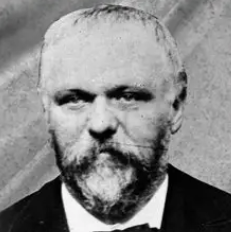
Thus proletarian violence has become an essential factor in Marxism. Let us add once more that, if properly conducted, it will have the result of suppressing parliamentary socialism, which will no longer be able to pose as the leader of the working classes and as the guardian of order.
▼
Source
p. 79
4 months 2 weeks ago
All the future of socialism resides in the autonomous development of workers' syndicates.
▼
Source
As quoted in Essays in Political Philosophy, Vidya Dhar Mahajan, Doaba House, Lahore, 1943 p. 41
4 months 2 weeks ago
In ignoring the important fundamental contribution of the followers of Marx, and by insisting exclusively on the phenomenon of superficial adaptation and variation, Sorel passed in silence over all that was healthy, live and fruitful in the Marxist doctrine.
▼
Source
Lucien Laurat, Marxism and Democracy, 1940, published by the Left Book Club, Victor Gollancz Ltd, London; translated by Edward Fitzgerald. Text online at the Marxists Internet Archive.
4 months 2 weeks ago
Proletarian violence, carried on as a pure and simple manifestation of the sentiment of class struggle, appears thus as a very fine and heroic thing; it is at the service of the immemorial interests of civilization; it is not perhaps the most appropriate method of obtaining immediate material advantages, but it may save the world from barbarism.
▼
Source
p. 85
4 months 2 weeks ago
Myths are not descriptions of things, but expressions of a determination to act... A myth cannot be refuted since it is, at bottom, identical with the convictions of a group, being the expression of these convictions in the language of movement.
▼
Source
p. 28-29 (Letter to Daniel Halevy)
4 months 2 weeks ago
I have no reason to suppose that Lenin gained his ideas from my books; but if that were true, I should be not a little proud of having contribute to the intellectual development of a man who seems to me to be at once the greatest theoretician of socialism since Marx and a statesman whose genius recalls that of Peter the Great.
▼
Source
For Lenin, Soviet Russia, Official Organ of The Russian Soviet Government Bureau, Vol. II, New York: NY, January-June 1920 (April 10, 1920), p. 356
4 months 2 weeks ago
We have the right to conclude from this that syndicalist violence, perpetrated in the course of strikes by proletarians who desire the overthrow of the State, must not be confused with the acts of savagery which the superstition of the State suggested to the revolutionaries of 1793, when they had power in their hands and were able to oppress the conquered - following the principles which they had received from the Church and from the monarchy.
▼
Source
p. 108
4 months 2 weeks ago
Revolutionary syndicalism keeps alive the desire to strike in the masses and only prospers when important strikes, accompanied by violence, take place.
▼
Source
p. 39
4 months 2 weeks ago
Lenin may be proud of what his comrades are doing; the Russian workers are acquiring immortal glory in attempting the realization of what hitherto had been only an abstract idea.....
▼
Source
"For Lenin," Soviet Russia, Official Organ of The Russian Soviet Government Bureau, Vol. II, New York: NY, January-June 1920 (April 10, 1920), p. 356
4 months 2 weeks ago
We must not always attach too much importance to violent attacks on the bourgeoisie; they may be motivated by the desire to reform and to perfect capitalism.
▼
Source
p. 125
4 months 2 weeks ago
And so I am not concerned to justify the perpetrators of violence but to enquire into the function of the violence of the working classes in contemporary socialism.
▼
Source
p. 42
4 months 2 weeks ago
Mussolini is a man no less extraordinary than Lenin. He, too, is a political genius, of a greater reach than all the statesmen of the day, with the only exception of Lenin...
▼
Source
As quoted in The Myth of the Nation and the Vision of Revolution: The Origins of Ideological Polarization in the 20th Century, Jacob L. Talmon, University of California Press (1981) p. 451.
4 months 2 weeks ago
As the State formerly played a most important part in the revolutions that abolished the old economic systems, so it must again be the State that should abolish capitalism.
▼
Source
p. 170
4 months 2 weeks ago
Everyone explains that discussions about Socialism are exceedingly obscure; this obscurity is due, to a large extent, to the fact that contemporary socialists use a terminology which no longer corresponds to their ideas.
▼
Source
p. 47
4 months 2 weeks ago
Mussolini is not an ordinary socialist. You will perhaps see him one day as a leader of a consecrated battalion, saluting the flags of Italy with his sword. He is an Italian of the fifteenth century, a condottiere. He is the only man with the strength to correct the weakness of the government.
▼
Source
As quoted in The Genesis of Georges Sorel, James H. Meisel, Ann Arbor, Wahr (1951), p. 220, n.21
4 months 2 weeks ago
Existing social conditions favour the production of an infinite number of acts of violence and there has been no hesitation in urging the workers not to refrain from brutality when this might do them service.
▼
Source
p. 183
4 months 2 weeks ago
It is very difficult to understand proletarian violence as long as we try to think in terms of the ideas disseminated by bourgeois philosophy; according to this philosophy, violence is a relic of barbarism which is bound to disappear under the progress of enlightenment.
▼
Source
p. 65
4 months 2 weeks ago
Engels feared that the Socialists, in order to gain adherents in the electoral struggles rapidly, would make promises which were contrary to Marxist doctrine. The antisemites told the peasants and the small shopkeepers that they would protect them from the development of capitalism. Engels thought that an imitation of this procedure would be dangerous, since, in his opinion, the social revolution could only be realised when capitalism had almost completely destroyed the small proprietors and small industries; if the Socialists, then, endeavoured to hinder this evolution, they would ultimately compromise their own cause.
▼
Source
Reflections on Violence, London: UK, George Allen & Unwin, (reprinted in Saxony 1925) p. 180
4 months 2 weeks ago
It seems that it was the Jews who had entered the revolutionary movement who are primarily responsible for the terroristic measures blamed upon the bolsheviks. This hypothesis appears to me to be all the more reasonable given that the intervention of the Jews in the Hungarian Soviet Republic has not been a happy one.
▼
Source
p. 290
4 months 2 weeks ago
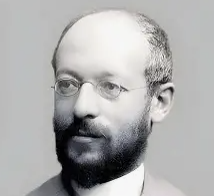
Man's position in the world is defined by the fact that in every dimension of his being and behavior he finds himself at every moment between two boundaries. This condition appears as the formal structure of our existence, filled always with different contents in life's diverse provinces, activities, and destinies. We feel that the content and value of every hour stands between a higher and a lower; every thought between a wiser and a more foolish; every possession between a more extended and a more limited; every deed between a greater and a lesser measure of meaning, adequacy, and morality.
▼
Source
p. 1. Opening line of first essay "Life as Transcendence"
4 months 2 weeks ago
All relationships of people to each other rest, as a matter of course, upon the precondition that they know something about each other. The merchant knows that his correspondent wants to buy at the lowest price and to sell at the highest price. The teacher knows that he may credit to the pupil a certain quality and quantity of information. Within each social stratum the individual knows approximately what measure of culture he has to presuppose in each other individual.
▼
Source
p. 441: First lines of the article.
CivilSimian.com created by AxiomaticPanic, CivilSimian, Kalokagathia